• About The Crew
  • Cooking Through ‘Modernist Cuisine’ At Home

Jet City Gastrophysics

~ Exploring Modernist Cuisine in the Northwest

Jet City Gastrophysics

Category Archives: recipes

The Thesis Dinner, Take One

14 Monday Mar 2011

Posted by jethro in blow shit up, recipes

≈ Leave a comment

Tags

Dinner, Jet City Gastrophysics, menu, thesis dinner

Our First Dinner Taking Shape

Our First Dinner Taking Shape

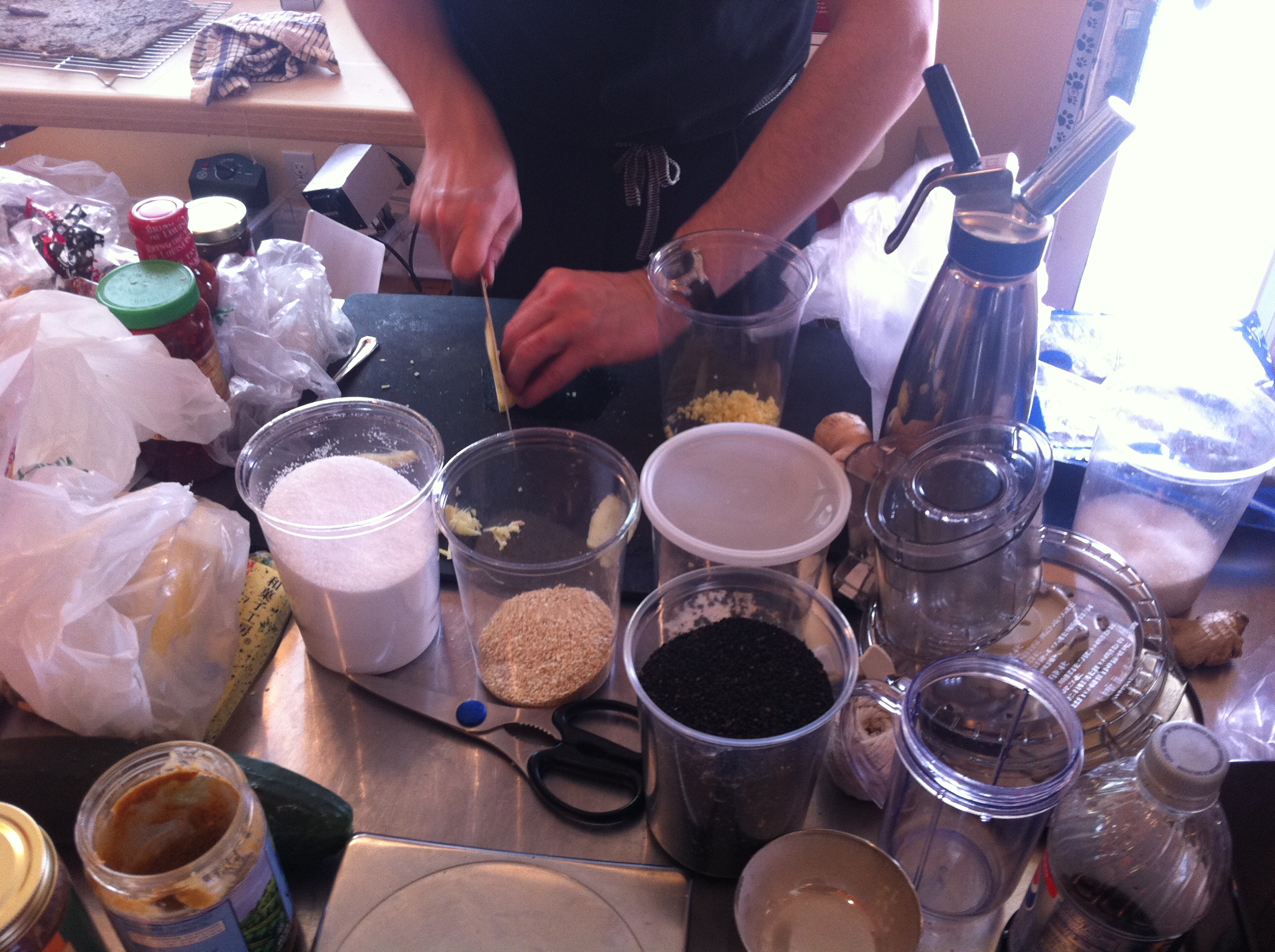
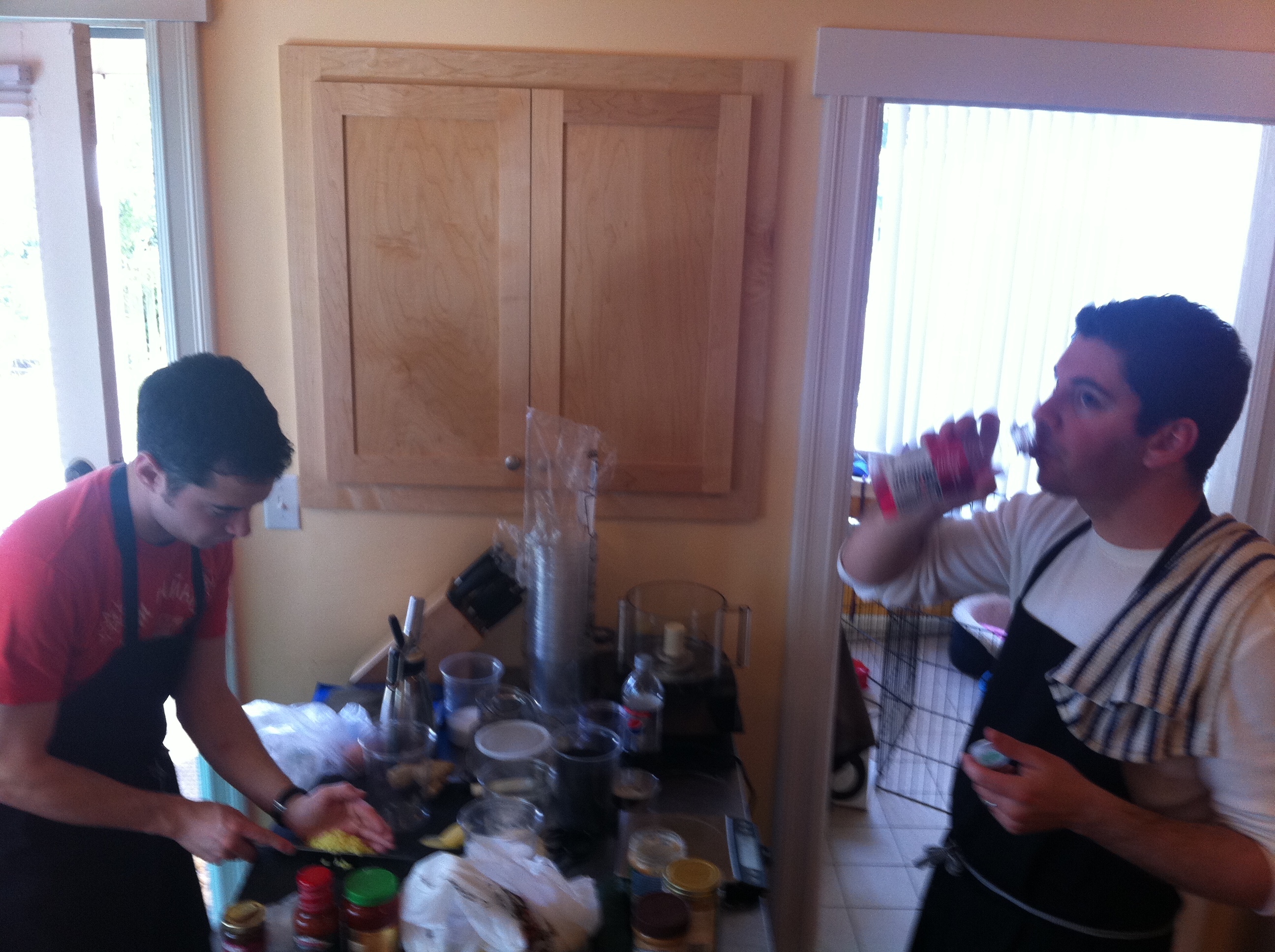
Back in December, we wrote about a special project we chose to embark on.  We decided we would take all of the knowledge we’ve gathered over the months working together and actually apply it to a full blown meal.  We christened it “The Thesis Dinner”.  Last week we finally got together and served a multi-course tasting menu to some close friends and family.

Eric And Scott Cooking Up A Feast

Eric And Scott Cooking Up A Feast

I don’t have any pictures of the dishes, as my camera (that is to say, iPhone) became the de facto DJ of the evening, playing a variety of Latin music, from Ranchera to Tango to Spanish rap.  Luckily, it was documented by a couple of attendees, and you can see the fruits of our labors here and here.

It was great fun serving the meal, and took all day to make it.  We arrived at Scott’s at 9am and left around 10pm.  My feet were killing me by the end of it.  I used to bartend and I forgot about how it is to stand the whole time.  But I suffered through it, poor little old me.

We’re making adjustments to the menu for a very special luncheon version coming up.  It’s an exciting step forward and I can’t wait to see – and taste – the final result.

Pressure Cooker and Ice Cream

Note To Self: Move The Ice Cream Station Away From The Pressure Cooker Station

Jethro

Modernist Cuisine At Home: Pea Butter

28 Monday Feb 2011

Posted by jethro in centrifuge, MC at home, recipes

≈ 22 Comments

Tags

Anjana Shanker, Maxime Bilet, Modernist Cuisine, pea butter

Pea Butter

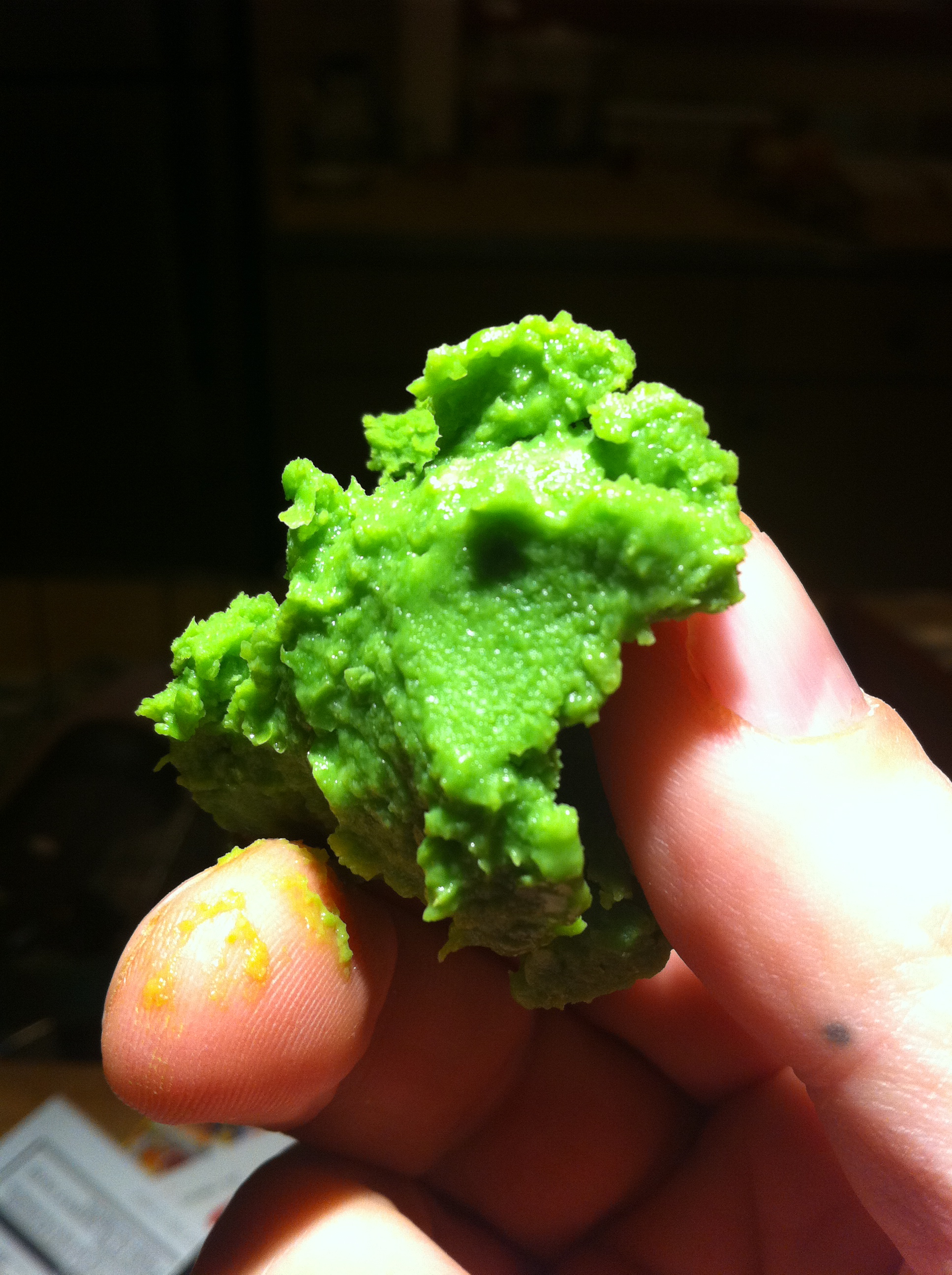
Recently, in a laboratory outside Seattle, I ate a piece of buttered toast that I will remember for the rest of my life. The bread itself was not extraordinary, but it was spread thickly with the brightest-green butter I’ve ever seen. It was not true butter, but rather an extract of pure green peas. Fresh peas are blended to a puree, then spun in a centrifuge at 13 times the force of gravity. The force separates the puree into three discrete layers: on the bottom, a bland puck of starch; on the top, vibrant-colored, seductively sweet pea juice; and separating the two, a thin layer of the pea’s natural fat, pea-green and unctuous.

– Paul Adams, Future of food: Drinkable bagels and beyond

As the first reviews began coming out from the 30 course dinners held by the Modernist Cuisine team, everyone mentioned the pea butter in particular.  A pretty simple recipe, you take pureed peas and spin them in a centrifuge to extract the pea fat.  I gave it a shot at my house, taking a can of peas, blending them, and spinning them for 30 minutes.  Nothing good came of it and the layers did not seem to separate.  I was stumped.

Luckily, I was able to talk with chefs Maxime Bilet and Anjana Shanker at the Modernist Cuisine book launch and they were able to clarify a few things for me:

  1. Use frozen peas
  2. Blend them with nothing else
  3. Spin for 90 minutes

That seems simple enough.  So I went home and went at it.

Visualize Whirled Peas

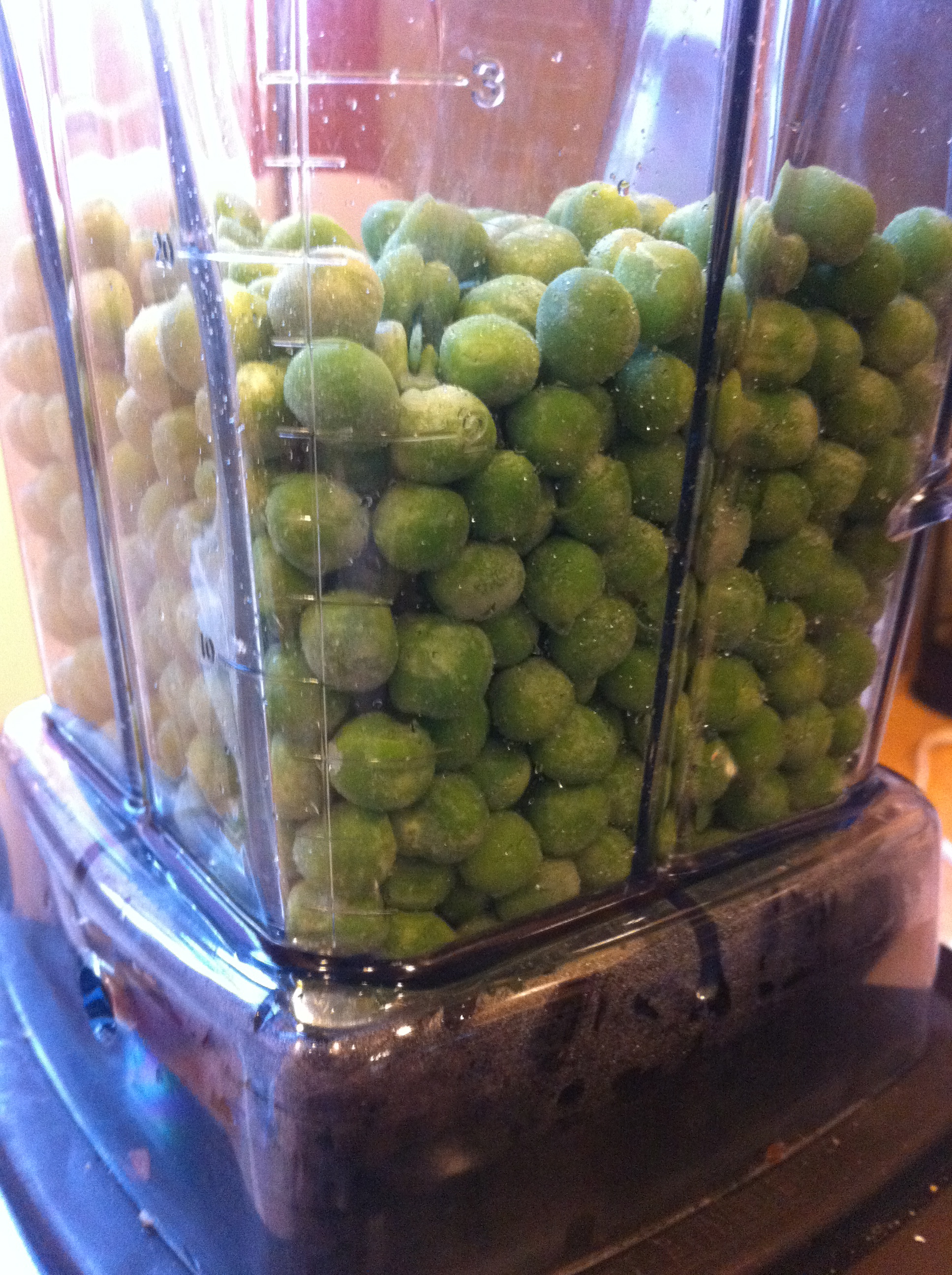
Peas, Unspun

Peas, Unspun

The chefs recommended a bag of high quality organic peas.  My local store had Kroger brand.  Well, hey, I gotta start somewhere.  I brought home a bag and threw them in the Vita-Mix for their first spin of the day.  It ended up being a very bright green frozen powder.  I put the pea dust into one of my centrifuge containers and filled the rest of the containers with water as counterweights.

Frozen Pea Dust
Peas Ready For A Whirl

When talking with Chef Shanker, I asked how powerful their centrifuge was that she used for the pea butter, and she said it was 10,000 g’s.  So I had to calculate how long mine would spin at, since my centrifuge only goes to 1520 g’s.  Since the relationship is linear it’s straightforward to figure out:

10000/1520 = 6.58
6.58 x 90 = 592 min.
592/60 = 9.9 hours

Ten hours in the centrifuge?  Mm.  I started around 3pm and didn’t feel like waiting until 1am to see the results.  So I decided 5 hours was plenty.

Pea-Minus Countdown To Launch
'Fuge RPM

She also mentioned that it was good that I had a refrigeration unit attached. The reason is two fold: 1) so the food doesn’t cook; and 2) it keeps the pellet together, providing better separation.  I checked my centrifuge temperature with and without the refrigeration unit.  Without, the chamber got to 124F. With the unit turned on, it was at about 70F.  So a significant difference to be sure.

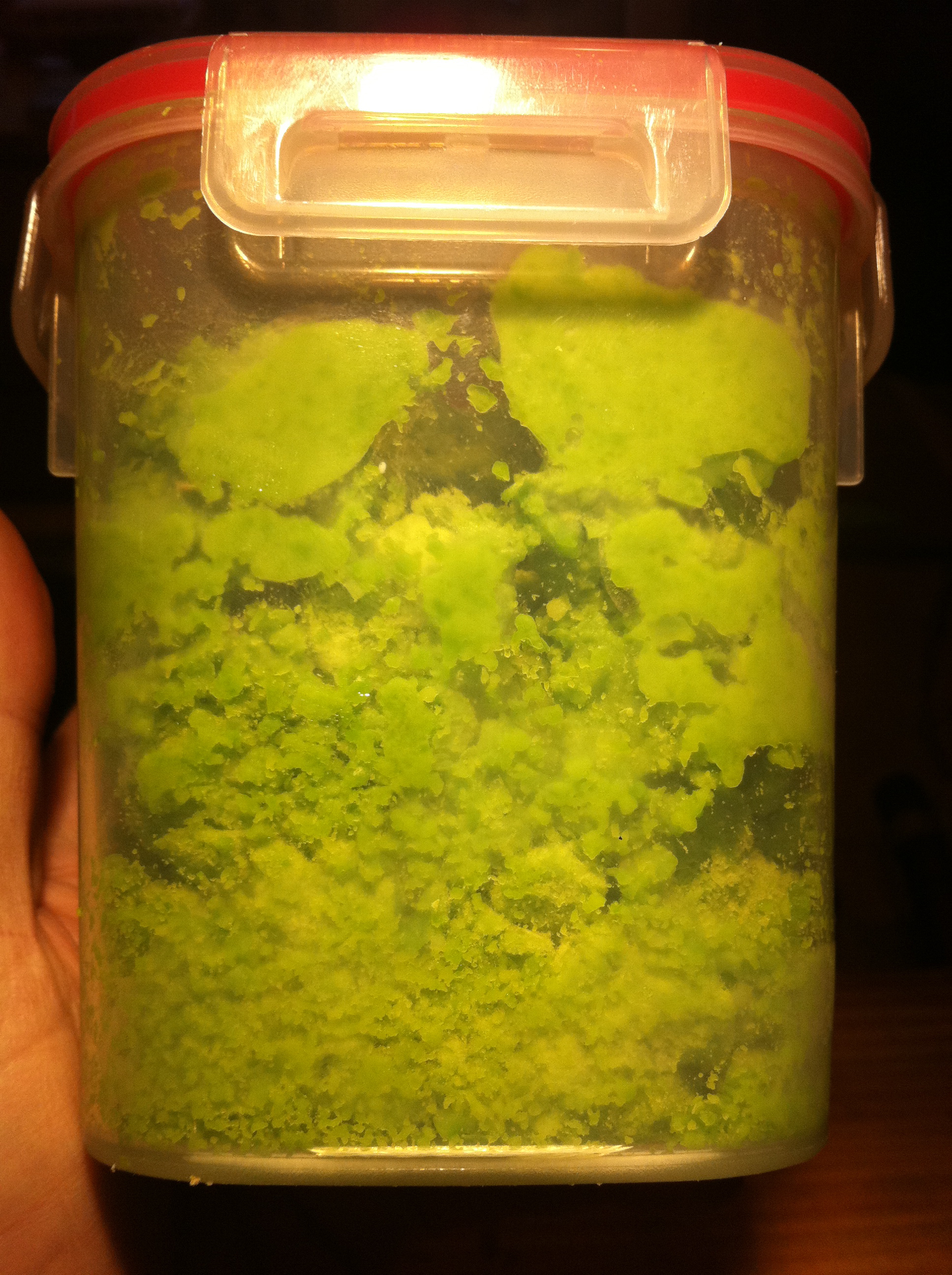
Pea Parts

And after five hours, I pulled out the peas and saw the results.  Three separate layers: a pellet of pea meat, a thin layer of pea fat and a supernate of pea water.

Pea Parts

One thing to note is look at the bottom of the container as compared to the photo of it prior to spinning.  Five hours in the centrifuge completely distended and reshaped it.  Luckily, it didn’t crack open.

I scraped off the fat and put it on a piece of bread.  Pure bright pea flavor.  It’s really, really good.  The pea pellet and pea water were also striking in their own way as well.

Pea Putty
Pea Water

I’m a little concerned about the wear and tear on the centrifuge since I will be needing to be spinning it for long periods of time to get their results, but it performed great for a five hour run.  Cooking of all types teaches you patience, and in this case as in others, the wait is well worth it.

Jethro

Ideas In Food At Home: Watermelon And Coffee

18 Friday Feb 2011

Posted by jethro in recipes, vacuum sealing

≈ 1 Comment

Tags

Aki Kamozawa, coffee, H. Alexander Talbot, Ideas In Food, watermelon

H. Alexander Talbot and Aki Kamozawa run a culinary consulting business called Ideas In Food.  They started a blog in 2004 to showcase their research into food preparation, cooking techniques, and flavor combinations.  Recently, they put it all into their first book, Ideas in Food: Great Recipes and Why They Work, which should quickly be in your hands and on your kitchen bookshelf.  I was looking for a small course to add for a dinner I made a few weeks ago and came across their post for Watermelon and Coffee:

These cubes of watermelon are seasoned with cane sugar, instant coffee and salt. As is they are amazing. When you vacuum seal them and let them marinate for a day their taste potential increases exponentially.

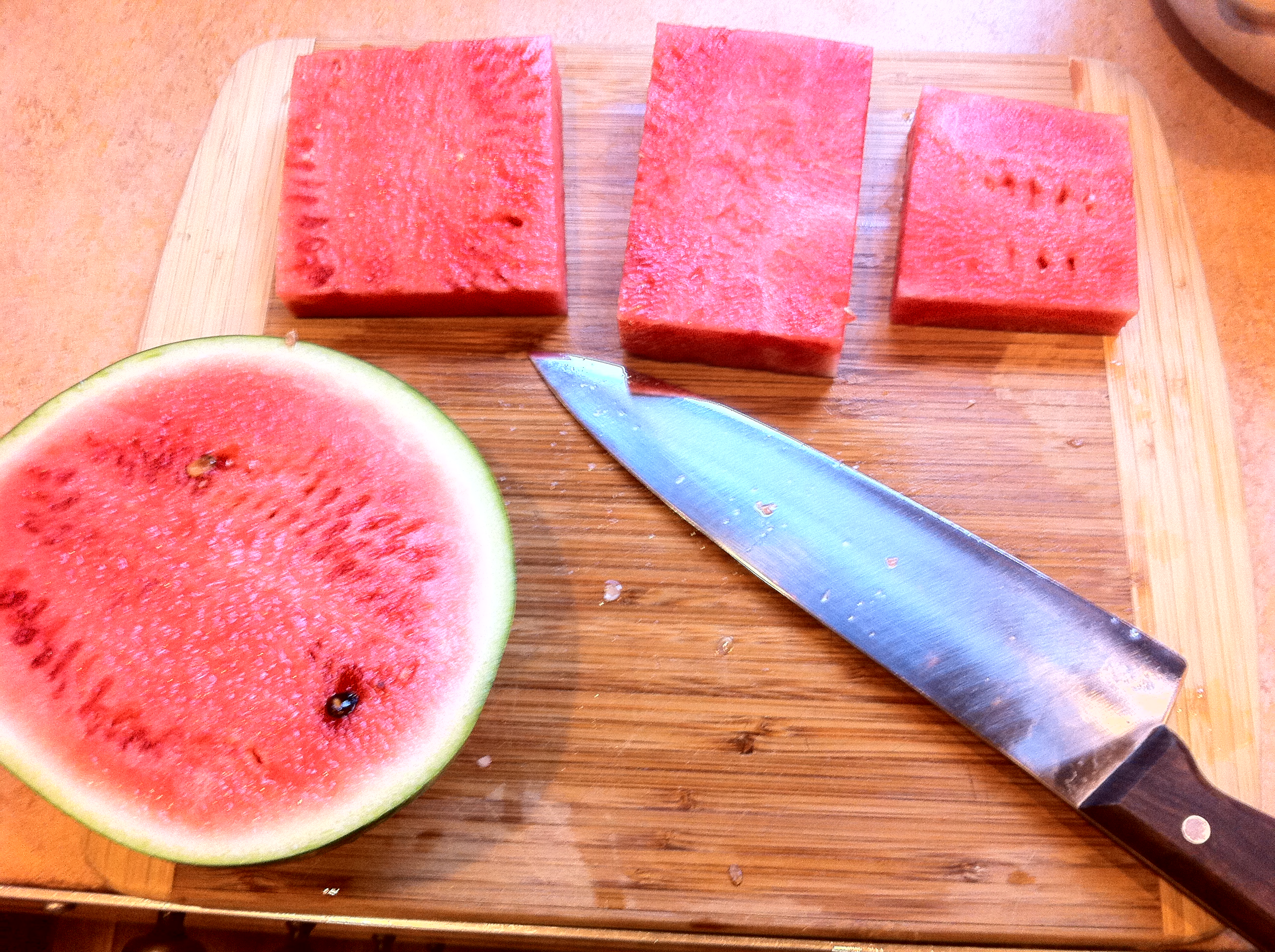
Something quick to bring a little zing to my dinner – perfect.  I found a nice watermelon down at the Pike Place Market, picked up some Via instant coffee from Starbucks and went to work.  Chop. Season. Seal. Sit.  Who said modern cookery is difficult?

Fresh Cut Watermelon
Vacuum Sealed Watermelon

Salty, sweet, bitter – it’s a tantalizing combination for sure.  I think I’ll juice a jalapeño and add it in next time for a spicy kick.  And why not – it’s just another idea in food, right?

Jethro

The Most Pretentious Mac & Cheese Ever

11 Friday Feb 2011

Posted by sheimend in dehydration, maltodextrin, recipes, starches, thickeners

≈ 8 Comments

Tags

beecher's, mac & cheese, mac and cheese, Modernist Cuisine

mac-and-cheese

It is undeniably fashionable, these days, for an upscale restaurant to serve “their take” on macaroni and cheese.  I’ve seen it prepared at least a dozen ways: with wild mushrooms, with truffles, with bleu cheese, with cave-aged gruyere, in mini-cocottes, on oversized platters, broiled, baked, and deep fried.  For the record, there’s nothing wrong with any of these preparations.  In fact, we served a wild mushroom and truffle oil mac & cheese at my wedding!  However, I wanted to take the concept to the extreme and produce the most hyperbolic, modernist version of the dish I could… just to see what happened.  The result: maltodextrin-powdered Beecher’s cheese with a tableside hot cream to make an “instant” sauce.

I originally thought I’d post my results as a joke – an over-the-top preparation that was to comfort food what the Dyson Air Multiplier is to climate control.  However, I was delightfully surprised to find out that this mac & cheese actually tasted fantastic!  The flavors are extremely pure and the consistency of the instant sauce was perfect.  Watch out, Kraft… you’ve got competition.

Makes: 2 snobby servings
Total kitchen time: 4 hours (45 minutes working time)

For the Powdered Cheese:

  • 100g Beecher’s Flagship (or Smoked Flagship, if you prefer), grated
  • 30g water
  • .4g sodium citrate
  • 200g (+15g) tapioca maltodextrin
  1. Preheat your oven to its lowest setting (180-220°F).
  2. Combine the cheese, water and sodium citrate in a small saucepan.  Heat on low until completely melted.  Stir to ensure evenness.
  3. Transfer the cheese mixture to a small food processor and add 200g of tapioca maltodextrin and process until it forms a paste.  If you can’t fit all of the tapioca maltodextrin at once, add half and process, then add the remainder.
  4. Spread the paste in a thin, even layer onto a silicone baking sheet.  Bake until dry and brittle, 2-3 hours.
  5. Crumble the cheese mixture into a food processor, or preferably a clean, electric coffee grinder.  Process until the mixture becomes a fine powder.  If necessary, add an additional 15g of tapioca maltodextrin.  The mixture should have the same texture as the powdered cheese in instant macaroni and cheese.

For the dish:

  • 1 cup pipe rigate (or any other type of macaroni you’d like)
  • 1/4 cup heavy cream
  • Hawaiian black lava salt
  • 2 sprigs thyme
  1. Cook the pasta according to the instructions on the box.
  2. Meanwhile, heat the heavy cream to a simmer.  Just before serving, divide the cream into two mini sauce pots (I used glass port sippers, shown in the photo).
  3. To plate, sprinkle a two tablespoons of the cheese powder into a small bowl.  Top with pasta, sprinkle with a pinch of black lava salt, and garnish with thyme.  To finish the dish tableside, pour over the hot cream and stir well to make the cheese sauce.

I owe a big thanks to Maxime Bilet (author of Modernist Cuisine) for giving me a hand with the powdered cheese recipe.  If you aren’t up for ordering a pound of maltodextrin online, you can also use my simplified powdered cheese recipe from the Beecher’s Cheddar Cheetos article I wrote for Seattle Weekly.  However, tapioca maltodextrin (N-Zorbit) is pretty handy stuff for turning liquids into powders, and is a staple in modernist kitchens.

Scott

Alinea At Home: Salad, Red Wine Vinaigrette

04 Friday Feb 2011

Posted by jethro in recipes

≈ 1 Comment

Tags

Alinea, granita, Grant Achatz, red wine vinegar, salad

Alinea's Ice Salad

Perfectly pristine ingredients, combined sensibly and cooked properly, are what make Italian food taste so good.

– Mario Batali

Simplicity. Fresh ingredients. Straightforward cooking techniques.  This is what defines Italian cooking.  This is also what one does not think of at all when considering Modernist Cuisine.  What might come to mind instead: thirty components manipulated ten ways beyond recognition and put together in an abstract form to be contemplated philosophically before tasting (emphasis on tasting, not actually eating).  But as the genius of Grant Achatz demonstrates,  the principles of Italian cooking can be applied in novel and unforeseen ways.

Take the humble granita, for example.  It’s a simple Italian dessert, where you take fruit juice, or perhaps wine or coffee, mix it with sugar and freeze it.  You break up the ice into a slush and serve it.  Easy and delicious.  Chef Achatz’ spin: why not turn a salad into a granita?  Yes.  Why not?

Creating A Savory Granita

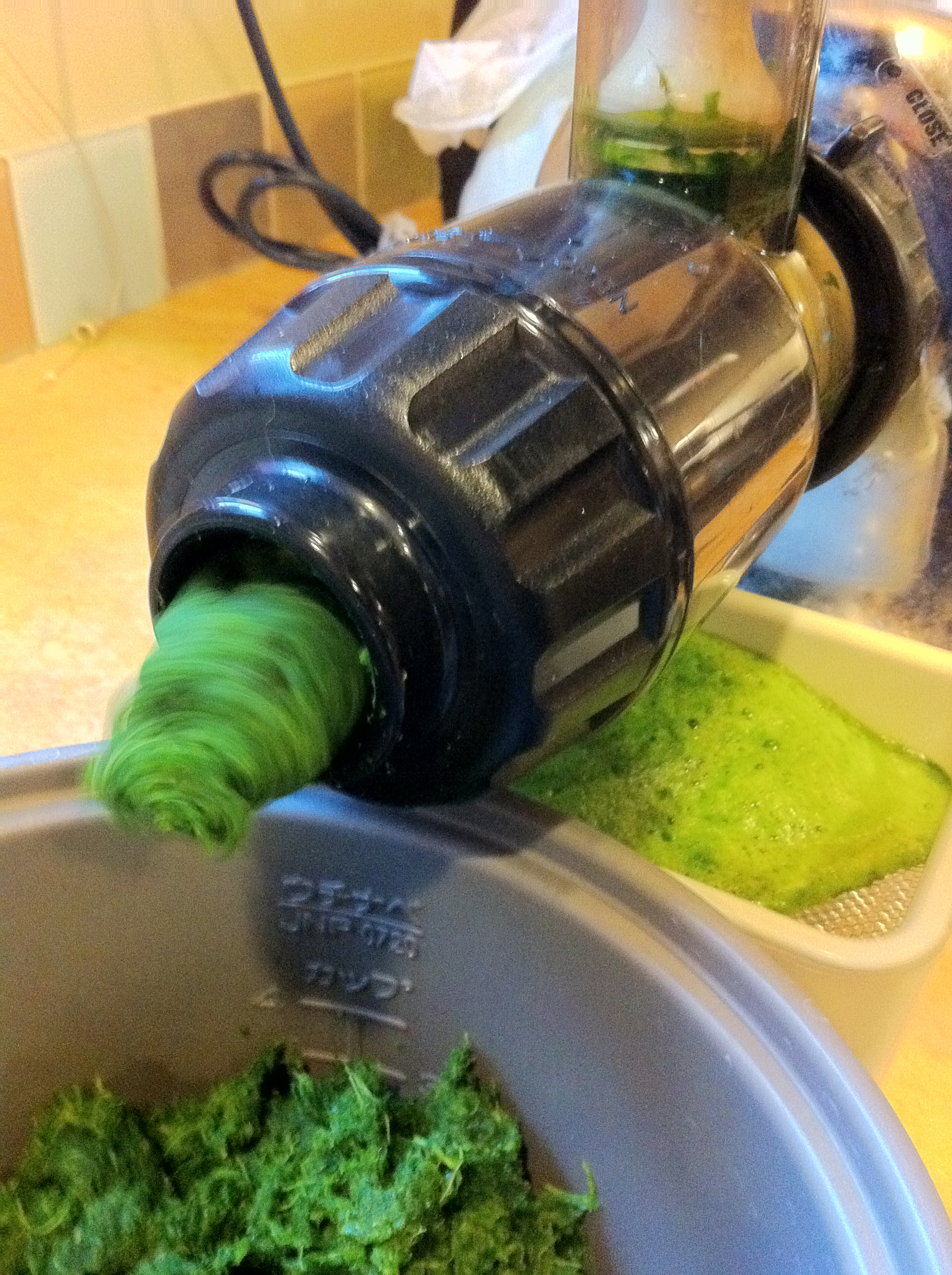
It couldn’t be easier really.  Take some spinach, arugula and romaine, and juice them all together.

Juicing Greens
Verdant Juices

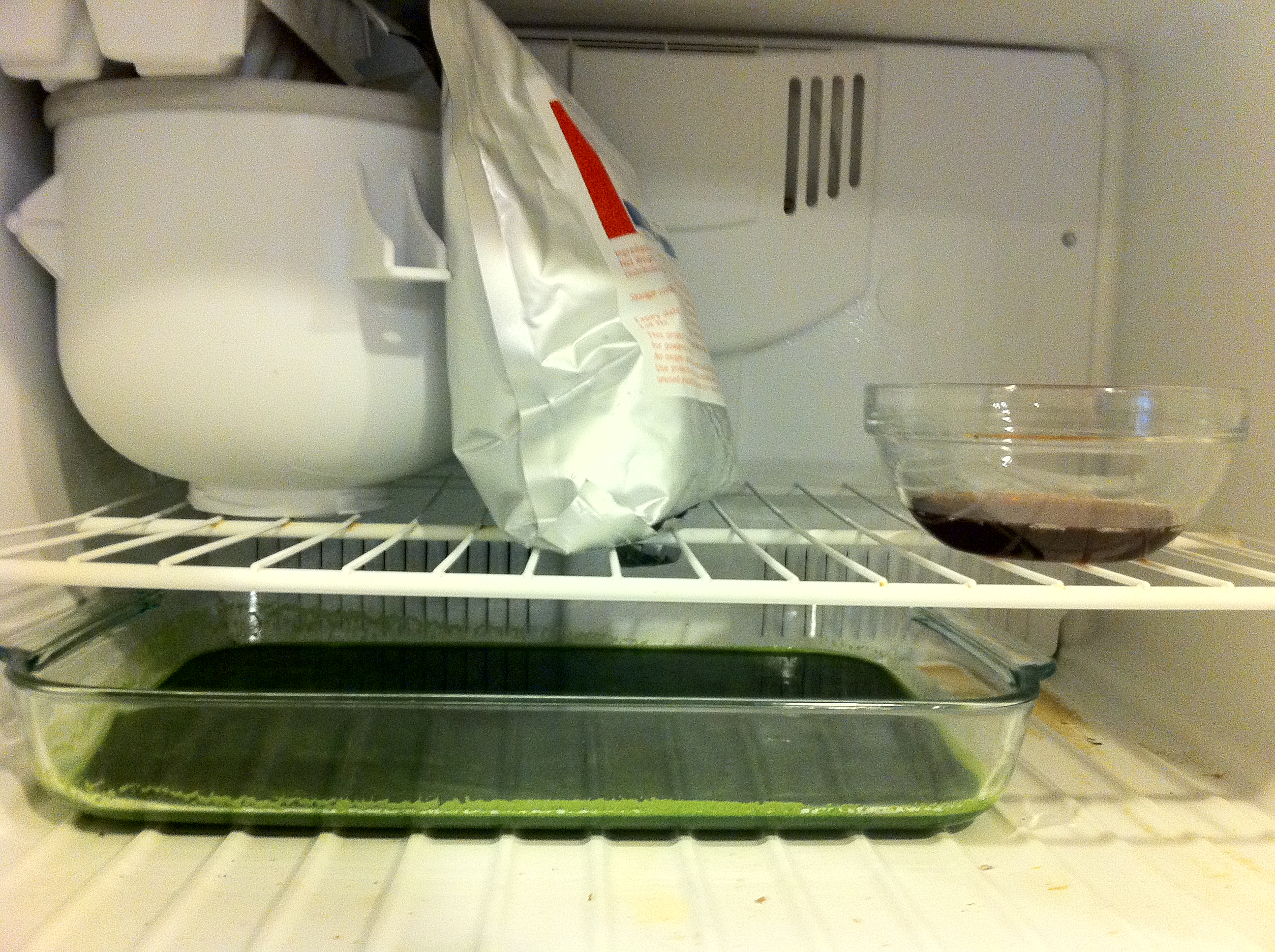
Add some salt, pour into a tray, and freeze.  Then you take some red wine vinegar, add some salt, and freeze that too.

Freezing a Salad

Freezing a Salad. Also, an ice cream maker attachment and a bag of transglutaminase. An everyday freezer.

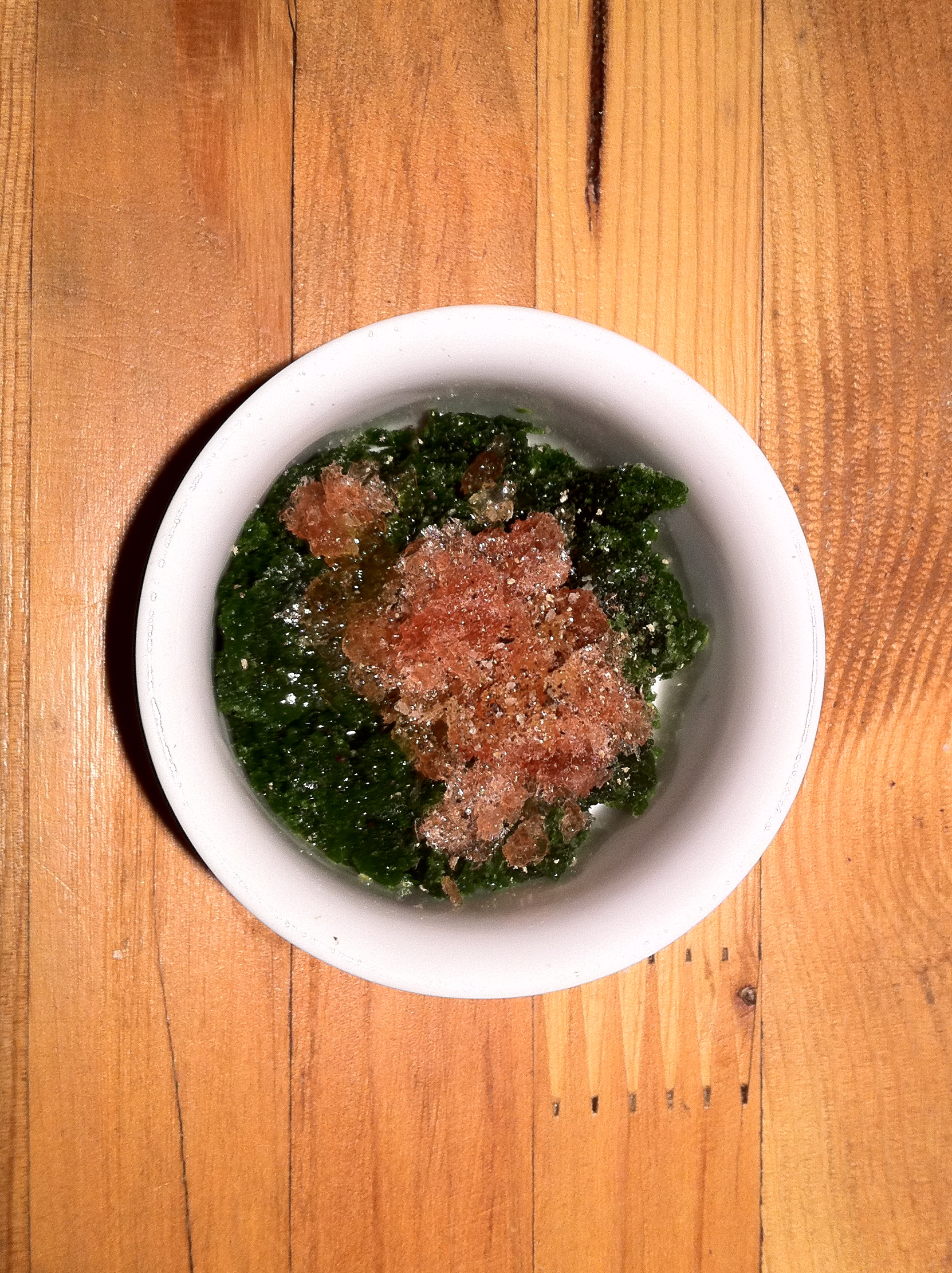
Once frozen, you take a fork to it and create a salad slush.  Actually, mine was pretty frickin’ frozen, so I spent a few minutes stabbing at it repeatedly with a fork, breaking the ice up into an acceptable slushy texture.  The funny part was ice flecks were flying all around as I was doing this.  Once I was done, I looked around and saw little droplets of bright green chlorophyll all over the counter and floor.  A quick cleanup followed so I wouldn’t be left with polka dot stains throughout my kitchen.

Creating Salad Slush
Lettuce Ice

Break up the red wine vinegar ice as well and you’re pretty much done.  Put down some lettuce ice, then some red wine vinegar ice, add a dash of olive oil, salt and pepper.  And your salad is complete.  An unique experience, your mouth is totally confused by the combination of the flavor, texture and temperature.  But yet it’s familiar too.  It manages to surprise, delight and yet be comforting at the same time.  Simple and straightforward.  And thoroughly, undeniably modern.

An Ice Cold Salad
Jethro

How to make Pacojet-Style Frozen Desserts at Home

09 Sunday Jan 2011

Posted by sheimend in foams, recipes, thickeners

≈ 2 Comments

Tags

dry ice, foam, Pacojet, sorbet, versawhip

pacojet-style frozen dessert
If you’ve ever been in an upscale restaurant and ordered a sorbet or ice cream with a consistency that seemed to defy the laws of physics, it was probably made in a Pacojet.  This $4000 machine is a staple in many restaurant and hotel kitchens for its ability to produce exceptionally smooth and creamy desserts and savory dishes.  However, if I’m going to drop four grand on a kitchen machine, it damned well better take voice commands and wear a skimpy outfit.

My method uses dry ice for instant freezing and Xanthan Gum, a popular soy-based gluten substitute, as a thickener for a more velvety texture.  In addition, I’ve added a small amount of Versawhip, which creates a subtle but stable foam, giving the finished product the unexpected lightness usually associated with mousses.  You can substitute the sorbet base of your choice, following the same basic steps.

Makes: about 6 cups
Total kitchen time: 10 minutes

Shopping list:

  • 20 oz. canned pineapple (crushed, slices, or chunks), including juice
  • 6 oz. fresh raspberries
  • 1 oz. (a small shot) St. Germain Elderflower Liqueur (optional)
  • 3 tbsp. sugar
  • 2 tsp. Xanthan gum (also available in the baking aisle at better grocery stores. Look for the Bob’s Red Mill label)
  • 1/2 tsp. Versawhip
  • 1 lb. dry ice, crushed into 1/2” or smaller chunks


  1. Combine the pineapple (including juice), raspberries, St. Germain and sugar in the bowl of a large food processor.  Process for one minute or until smooth.
  2. Add the Xanthan gum and Versawhip and process until combined.
  3. With the food processor running, add the dry ice and continue processing another 1-2 minutes, or until the sound of the dry ice cracking has stopped.
  4. Remove from the food processor and serve, or store in the freezer.  Can be made 2 days in advance.

It is true that the Pacojet doesn’t require any added thickeners to achieve its magic consistency.  However, it does require you to freeze your sorbet mix at –20C for 24 hours before churning.  I’d love to do a blind taste test comparison between this method and the Pacojet. As soon as I trip over a pile of cash, I’ll let you know how the test turns out.

Scott

Noma At Home: Spruce Oil, Butter, Vinegar and Spice

07 Friday Jan 2011

Posted by jethro in recipes

≈ 3 Comments

Tags

Noma, René Redzepi, spruce butter, spruce oil, spruce spice, spruce vinegar

Spruce Ingredients

Clockwise From Top: Spruce Oil, Spruce Butter, Spruce Spice, Spruce Vinegar

Each year more than 100 million trees are produced for Christmas worldwide. Considering that it takes 8 to 12 years to produce a decent-sized tree, it seems pointless simply to discard this bounty after only a few weeks of using it as ornamentation. I don’t mean to sermonize. I want only to point out that food is everywhere, that a tree is more than a symbol or a decoration: it is delicious food.

This year, let’s all butcher the tree.
– René Redzepi

So evangelized Chef René Redzepi in his Christmas Eve Op-Ed piece in the New York Times, giving recipes and ideas on how to use spruce as food.  Now, I realize he wrote that he didn’t mean to sermonize, but with that last sentence, it is reasonable to say that he wanted to make converts, therefore I think to say he is evangelizing is perfectly legitimate.  Just to be clear. Anyway, at least he made one convert.  Me.

I have never had any spruce-scented dishes, and with all the verdant and lush greenery that surrounds us here, I thought it would be a perfect tool to use in creating a dish that evoked the Great Northwest.  But I don’t ‘do’ Christmas.  I didn’t have a tree standing in my living room, ready to be fleeced of its needles for sustenance.  Like the chanterelle mushrooms last autumn, I’d have to go foraging for one.

On The Public Denuding Of A Discarded Christmas Tree For Food

It was a few days after New Year’s, and I was strolling down the street toward my local coffee shop when it appeared before me, discarded and forgotten. My newest food source.

Urban Food Foraging

Should I Strip This Bare Of Needles In Public? I Should.

I went back home, grabbed a plastic bag, returned and began to pull needles by the handful into the bag.  In broad daylight. Next to a high school.  And a Boy Scouts office.  Kids walked past with their backpacks.  Cars pulled out of the Boy Scouts parking lot and drove past.  I was very aware of how strange I must have looked denuding a discarded tree on the side of the road, but thought I would be totally ignored for that very reason.  I was correct.  Soon, though, my discomfort got the best of me and I felt I had gotten enough. Yet, I returned after dark to get some more. Foolhardy? Completely ridiculous? Perhaps. But I had to keep in the spirit of the opinion piece.  Waste not, want not!

SprucE Butter

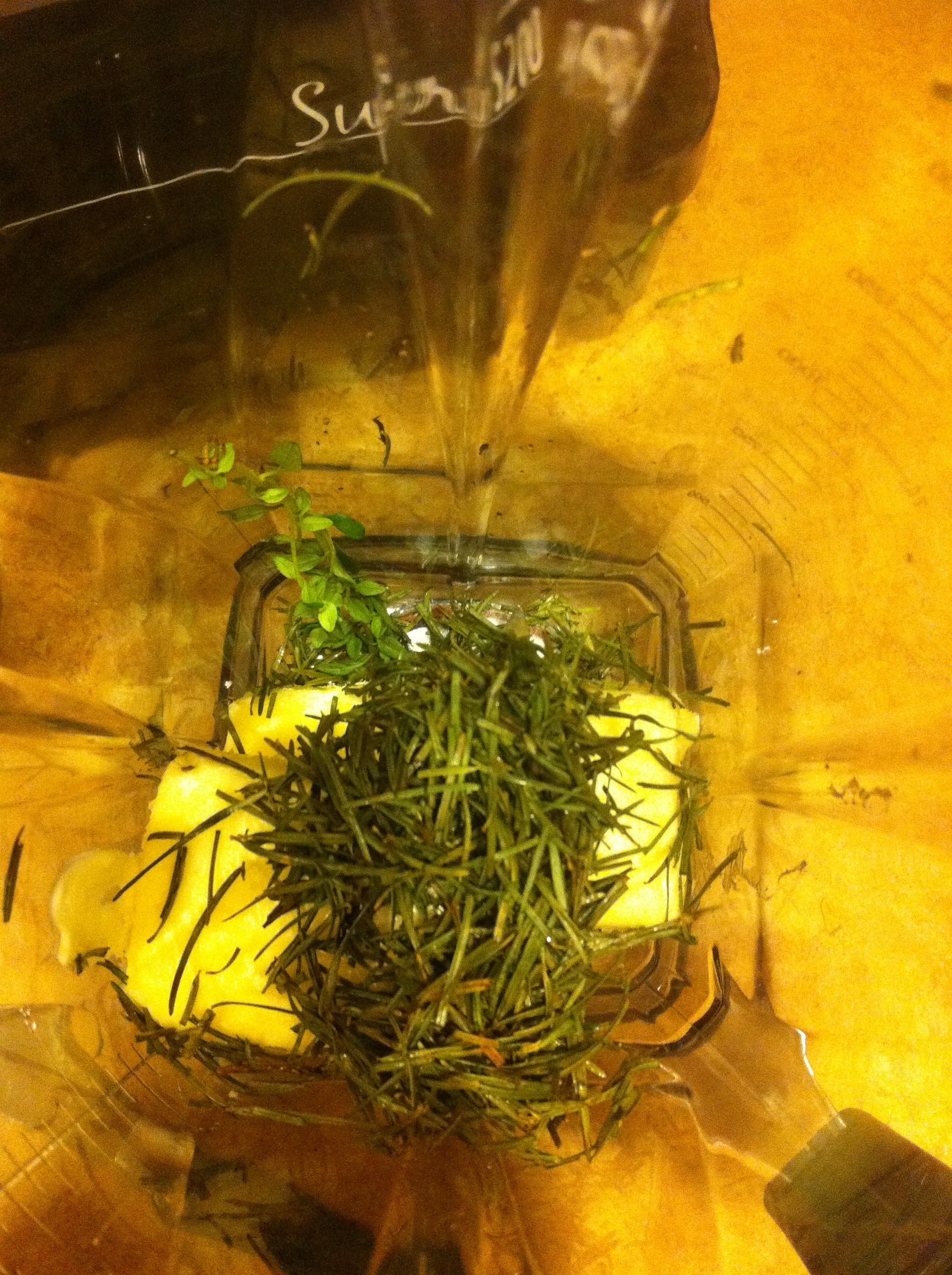
With my new batch of needles, I went to work.  I washed them and threw a few tablespoons in with some butter and lemon thyme into my VitaMix and let her rip.

Making Spruce Butter

I strained the liquid into a container and threw it in the fridge.  An hour later, spruce butter.  I’m a frickin’ genius.

Spruce Oil

Wait, no I am not.  This one I managed to screw up.  The recipe calls for 3.5 ounces of needles.  This is a lot of needles!  It also calls for 3.5 ounces of vinegar.  That’s it?  Mm.

Needles and Vinegar

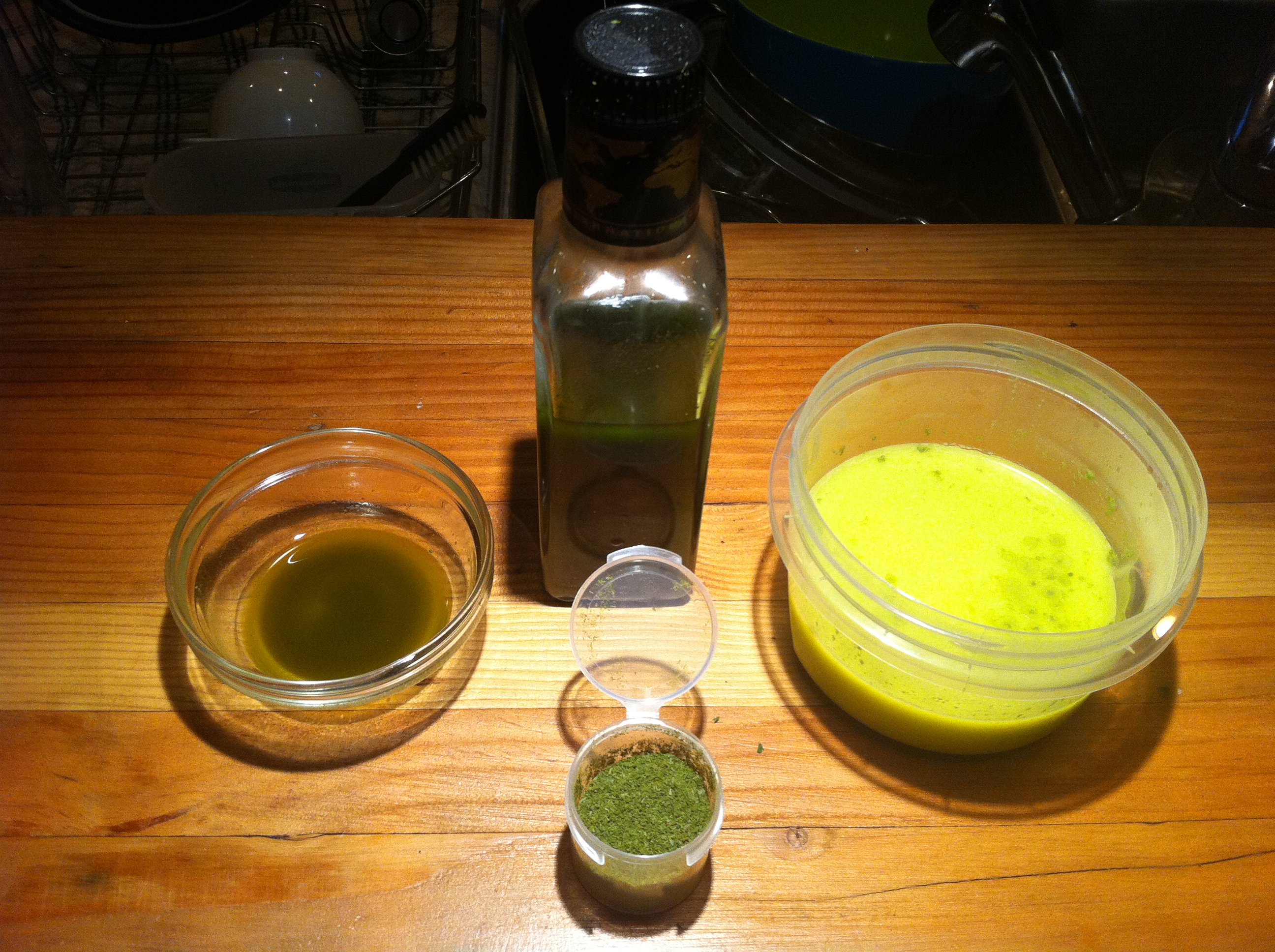
3 1/2 oz. of vinegar for that many needles?

It was such a tiny amount I went ahead and doubled it.  And for my efforts?  A little thimble full of spruce vinegar.  What a waste of needles!  I am NOT stalking my neighborhood for more trees.  It’s way after Christmas, anyways.  Man.

A little bit of spruce vinegar

Spruce Oil

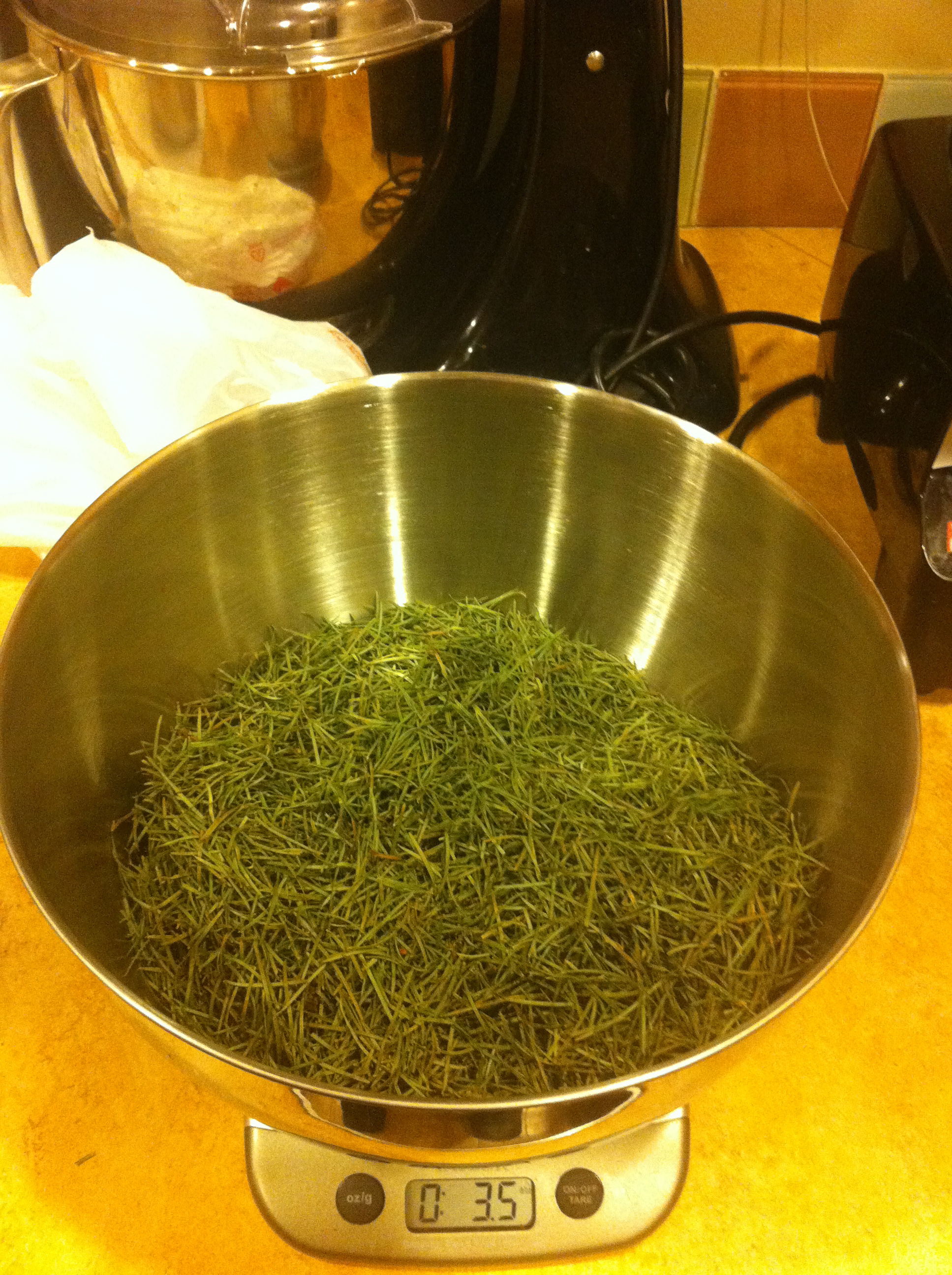
So next up was spruce oil.  First, I weighed out my 3.5 ounces of needles and blanched them.

Bowl of Spruce Needles
Then I added 1 1/4 cup of grapeseed oil.  Wait.  1 1/4 cups.  That makes sense.  I bet the New York Times printed the recipe wrong for the vinegar.  It must have been 1 1/4 cups of vinegar.  Ack.  If I had done the oil first, I would have seen that and made the adjustment.  Ah well.  Anyhow, the oil turned out great.

Spruce Spice

I took some needles and grinded them in my coffee bean grinder.  Exciting!

Sprucing Up A Meal

So now I had my spruce ingredients – what to make?  I riffed off a couple of ideas some friends had for a dish – pork chops with a sour apple chutney and honey roasted root vegetables.  Me?  Sous vide bison rib eye with a cranberry spruce chutney and a honey roasted root vegetable puree.  Booyah!

Sous vide bison rib eye with cranberry spruce chutney and a honey roasted root vegetable purée

After cooking this up, I read the comments on the opinion piece and everyone was pointing out how Christmas trees could be covered in flame retardant and who else knows what.  I did find mine just lying on the side of the road.  Yes, well. I’m still alive so I guess I was lucky.  I think a short drive to the mountains would be a better method next time.  You know, actually, if you get a Christmas tree next year, go cut it down yourself.  You never know if you’re going to eat it later.

Jethro

Modernist Cuisine At Home: Smooth Purees, Part II

21 Tuesday Dec 2010

Posted by jethro in MC at home, recipes

≈ 1 Comment

Tags

asparagus, broccoli, Modernist Cuisine, VitaMix

Picking up where I left off from last month, I finished making the rest of the puree recipes from the PDF excerpt of Modernist Cuisine.  Well, almost all of it.  Two remaining recipes involved being sauteed and then blended in a commercial blender.  One required boiling and a Pacojet.  A Pacojet, which quickly purees frozen products to produce a very fine consistency, can be found used online.  For around $2900.  This is out of reach for this home cook, so it will have to wait until, oh, a miracle occurs.

In that last post, I had some issues getting a truly smooth puree.  Then, lo and behold, none other than Dr. Myhrvold himself, the author of Modernist Cuisine, kindly commented that I needed a commercial blender – in particular, a VitaMix – to get the results I was looking for.  How did he know?  He had his team re-test all the purees.  I can just imagine how the chefs felt, having to re-do their work because some frickin’ home cook blogger couldn’t nail it down.  Chefs, if you’re reading this, my apologies.  Just having lots of fun over here!

So I needed to find a VitaMix.  They sell for around $450 new, but that’s pretty steep.  I needed to find one used.  So to the Internet I went.  $300 was the going rate most of the time, but I, master of the bargain, was able to find one at a yard sale for $100!  So take heart, home cooks – miracles do occur.  Just keep your eyes peeled.

And with my VitaMix in hand, I was ready to conquer the next set of purees.

One: Asparagus

Bad Puree

Not So Smooth

As what seems to be a pattern for me, I learned something valuable about cooking this week by messing it up. This time it was over phrasing.  In particular, the instruction “thinly sliced”.  For me, thinly slicing asparagus implies lengthwise.  Otherwise, it would have said “thinly chop”, right?  I don’t think so.  In the first round, the thin stringy fibers of the inside of the asparagus refused to be finely blended, leaving choppy floss and an uneven texture.  So I went back to the store, bought some more, and sliced them appropriately.

Cooking Asparagus

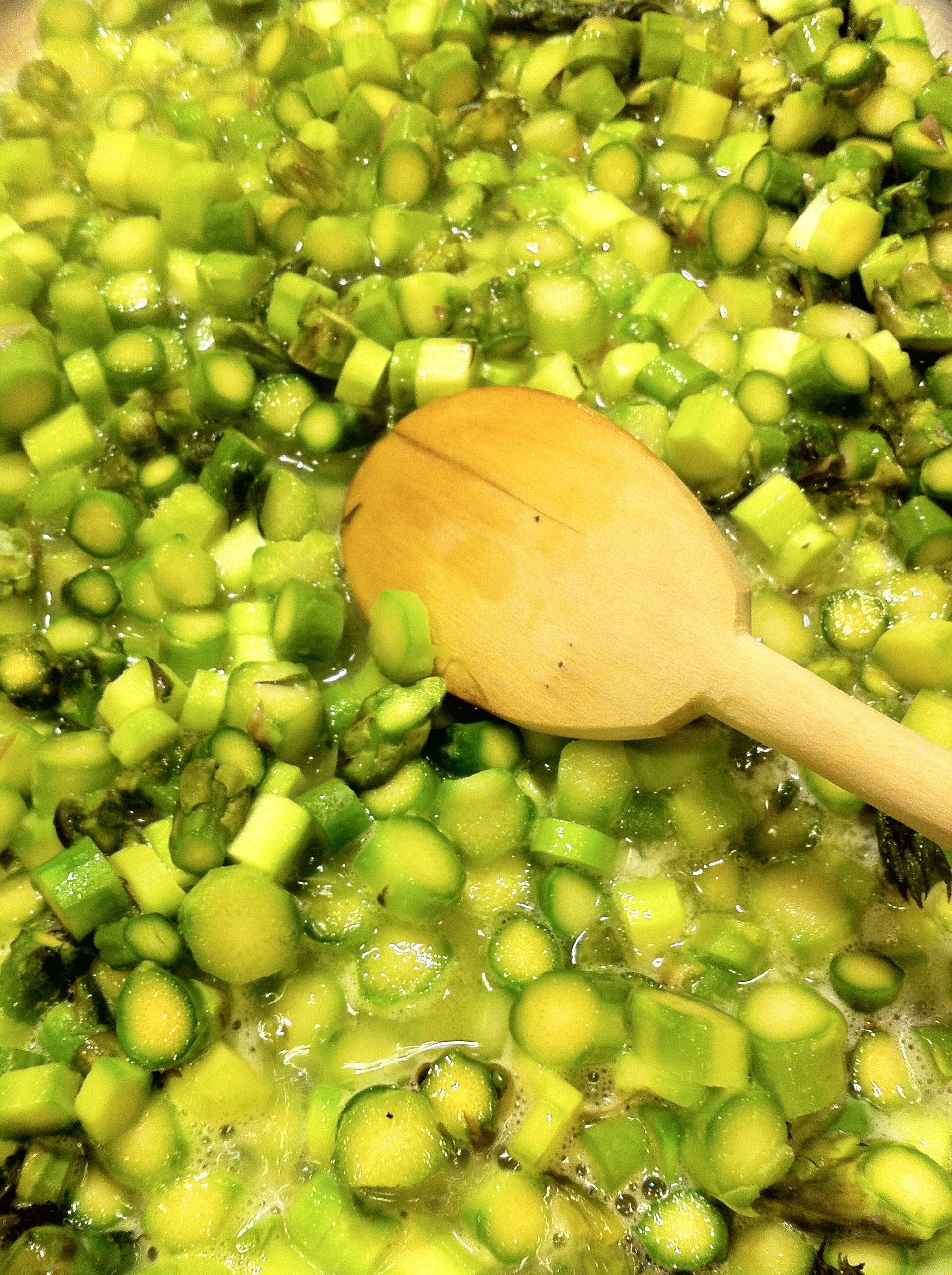
I gave them a go in my new VitaMix and the smoothest, most beautiful bright green puree presented itself.  These Vitamix’s are awesome!

Smooth Asparagus

This Is Some Seriously Smooth Asparagus

I served it with a 24 hour sous vide pork belly for a dinner with friends and it went over famously.  If you have a VitaMix, go make some. Now.

Two: Broccoli

Broccoli Stems

The final puree called for broccoli stems.  At my local chain supermarket, they cut off the stems because they rightly assume the vast majority will just throw it away for the good stuff – the florets.  But as always my trusty Asian grocery store came through and had nice thick stems to use.

I followed the directions, which were very straightforward – saute on medium heat for 12 minutes with a neutral oil.  I looked through my cabinet: canola, pumpkin seed, avocado, olive, peanut…and grapeseed.  There’s a nice neutral standard.  After cooking I put them in the blender and gave them the spin of their life.

A Proper Blender

About To Be Liquified In A Proper Blender

And once again I was rewarded with a thick, creamy, smooth vegetable puree. On the parametric recipe, the asparagus and broccoli recipes point to other pages for reference in the cookbook.  I wonder what they help illuminate.  I know the purees taste great on their own, but I bet it would be fun to do some inverse spherification on them as well.  Maybe that’s what the other pages suggest.  Maybe not.  I’ll have to wait until March 2011 like everyone else.  But I do know that’s what’s up next in my kitchen.

Smooth Stems

Jethro

Modernist Cuisine At Home: Dragon Fruit Chips

09 Thursday Dec 2010

Posted by jethro in MC at home, recipes, sous vide, starches

≈ 4 Comments

Tags

chips, corn starch, dragon fruit, Modernist Cuisine

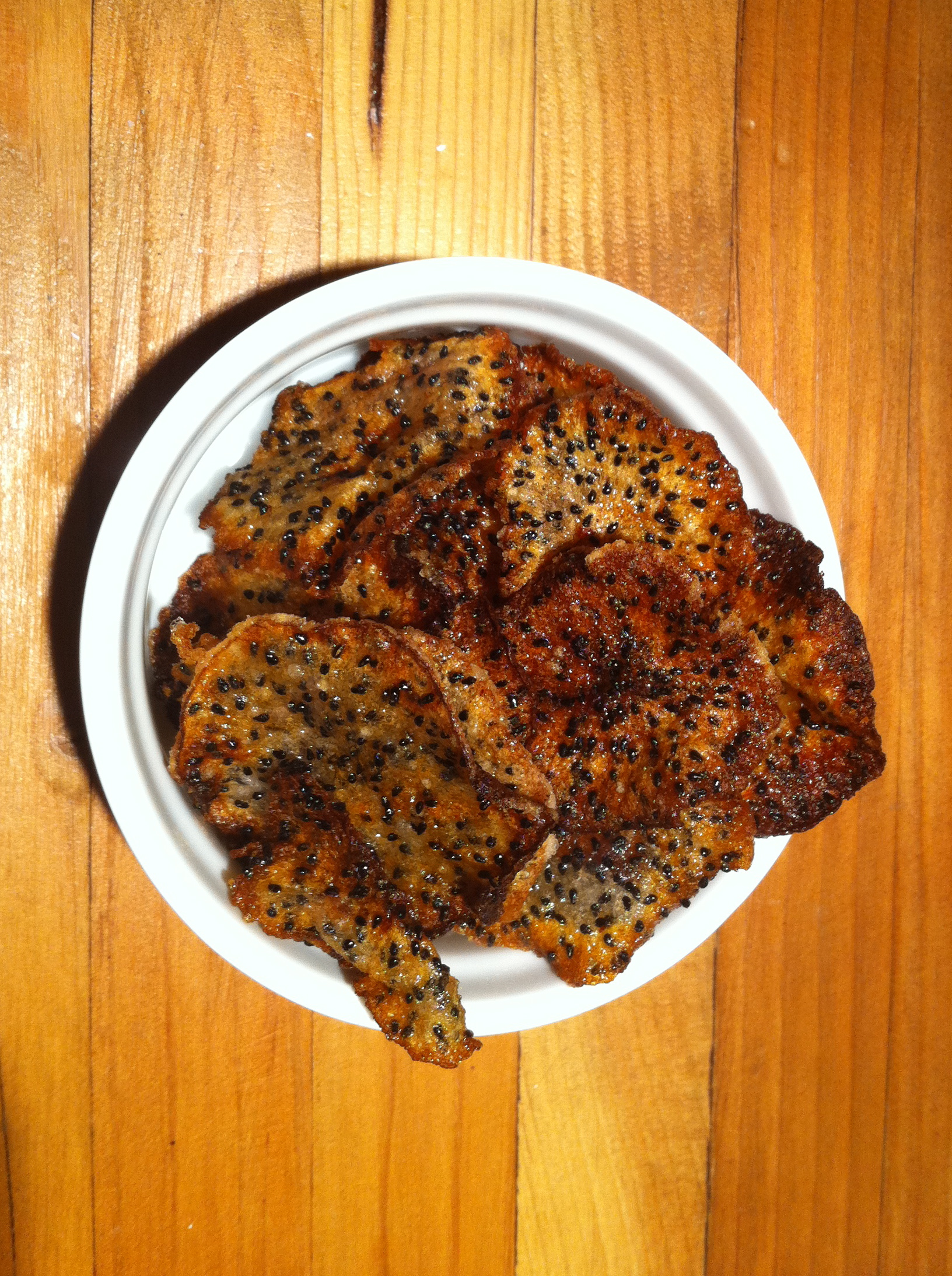
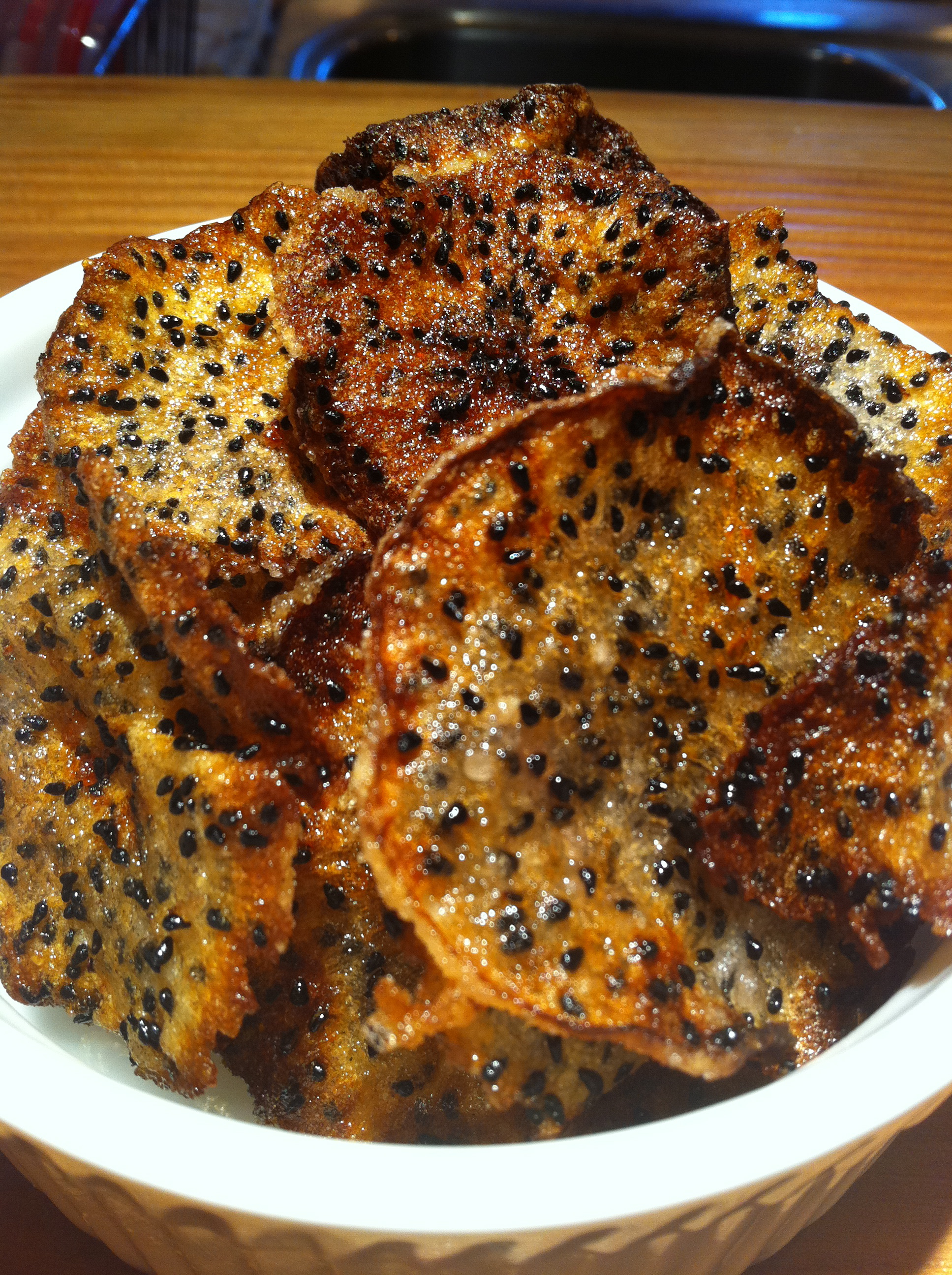
Bowl of Dragonfruit Chips

About a month ago the team at Intellectual Ventures put up an interesting blog post about frying watermelon to make watermelon chips.  With nothing more fancy than a vacuum sealer, this seemed like a perfect recipe to try out at home.

The concept behind the watermelon chip is that starch is what makes a chip a chip, whether it’s corn or potato or even parsnip and taro.  Fruit, however, does not have the high starch content that these vegetables have (yes, a potato is a vegetable).  Using vacuum compression, starch can be infused into the fruit, and make it suitable for frying.  They settled on watermelon.  I decided on dragon fruit.

Fruit Fry

The steps are simple enough:

  1. Thinly slice the fruit
  2. Apply a starch slurry to the fruit
  3. Vacuum seal and let rest for 30 minutes
  4. Deep fry

I went to my local Asian supermarket and nabbed a dragon fruit.  I then had it thinly sliced on a meat slicer.  Here I pulled some strings: I don’t have a slicer at home, so asked my best friend who owns a bar if I could come in and borrow his for a minute.  I’m sure I could have just cut it thinly myself, but I wanted to nail it.  Sometimes it’s more fun to make it more complicated.

Next up was starch.  In the blog post, Chef Zhu says he’s using something and water.  Did he say Crisco?  Or maybe Cryscoat?  One check on the web and it turns out that Cryscoat is a “nickel-containing zinc phosphate for steel and zinc-coated steel, applied by spray or immersion prior to painting”.  So, probably not that.  Screw it I thought – I’ll just use the cornstarch in my cabinet.  Sometimes it’s easier to not make things too complicated.

Starch Slurry

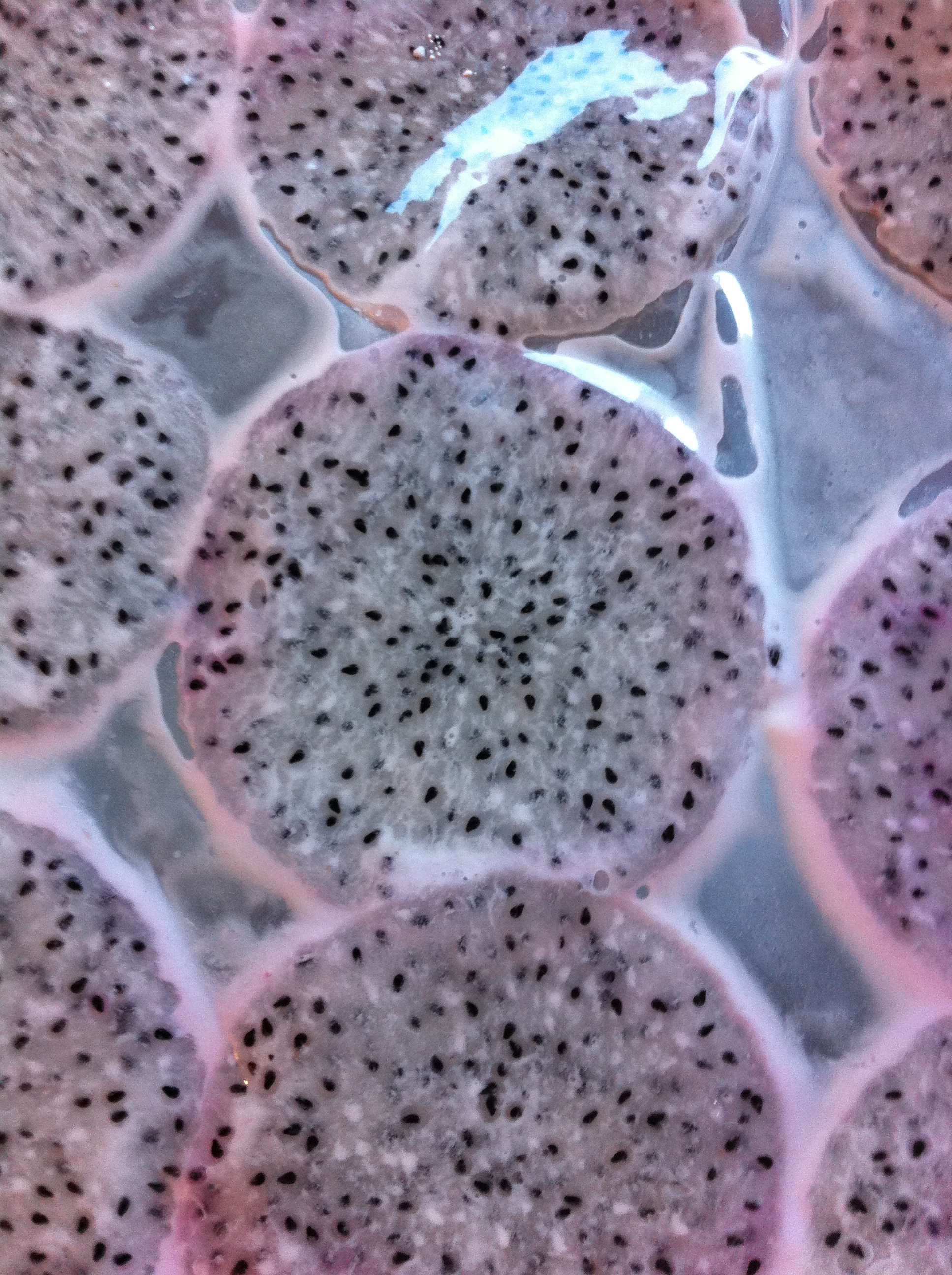
I took the dragon fruit slices, which were awfully thin and delicate, applied the starch to either side, and placed them in a sealing bag.  Which I then sealed up.

Compressed Dragonfruit

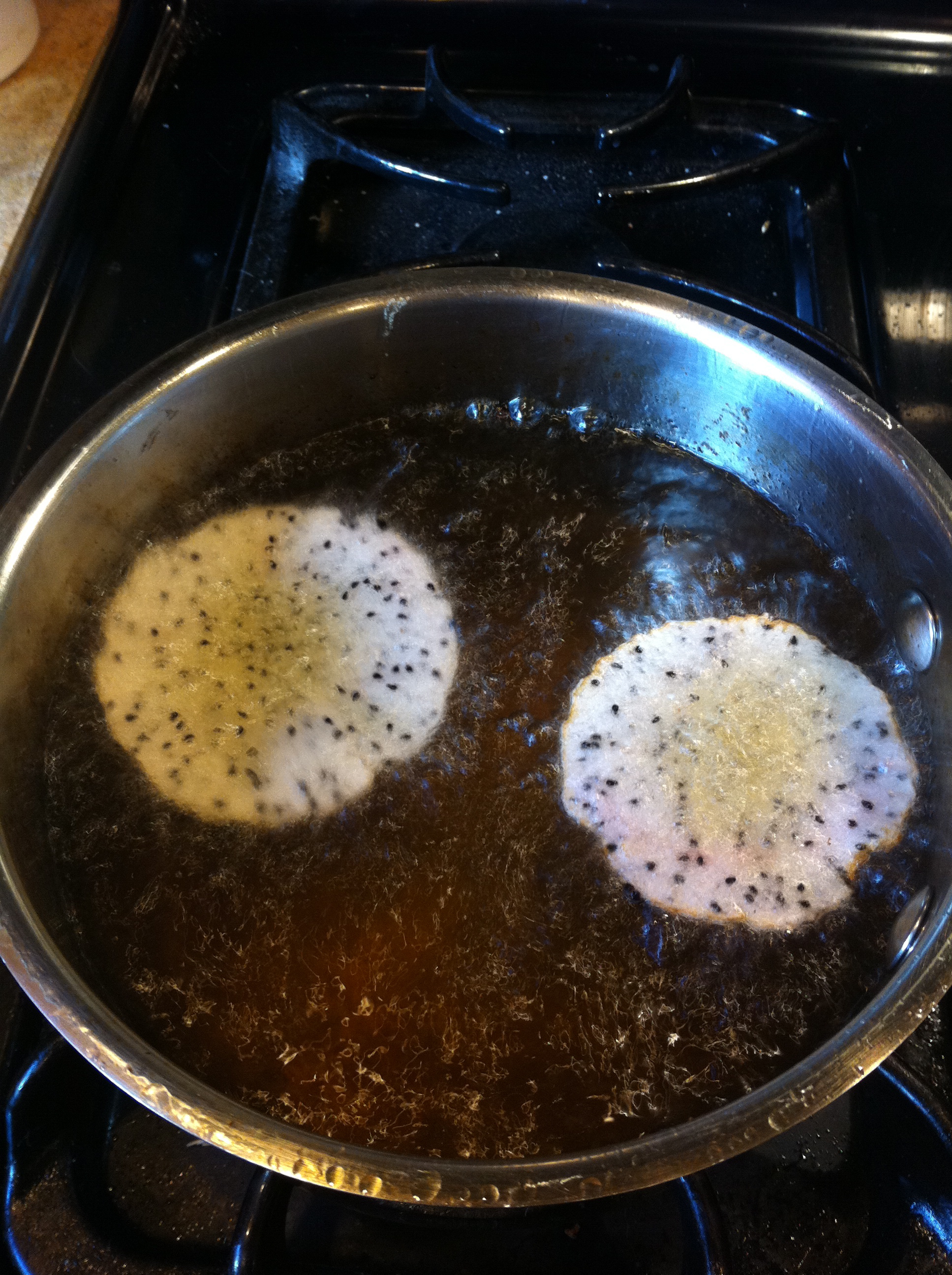
After 30 minutes I fried them up on the stove.  They liked to stick together so I found it easier, though more time consuming, to only do 2 or 3 at a time.

Dragonfruit Frying

And after I let them dry out and crisp up, I had some amazing dragon fruit chips.  The sweetness of the fruit came through, with the added texture of the seeds, which also imparted a sesame-like flavor to the chip.  Excellent and delicious.

I’m looking forward to their completed cookbook to see what other ideas they have for transforming foods into flavors and textures they’ve never been before.  In the meantime, however, I’ll just try and cook the examples they keep throwing out at us.

Dragonfruit Chips

Jethro

Following Ferran: Cooking From El Practico

30 Tuesday Nov 2010

Posted by jethro in recipes

≈ 1 Comment

Tags

El Practico, Ferran Adria, flank steak, pork fat, potato stew

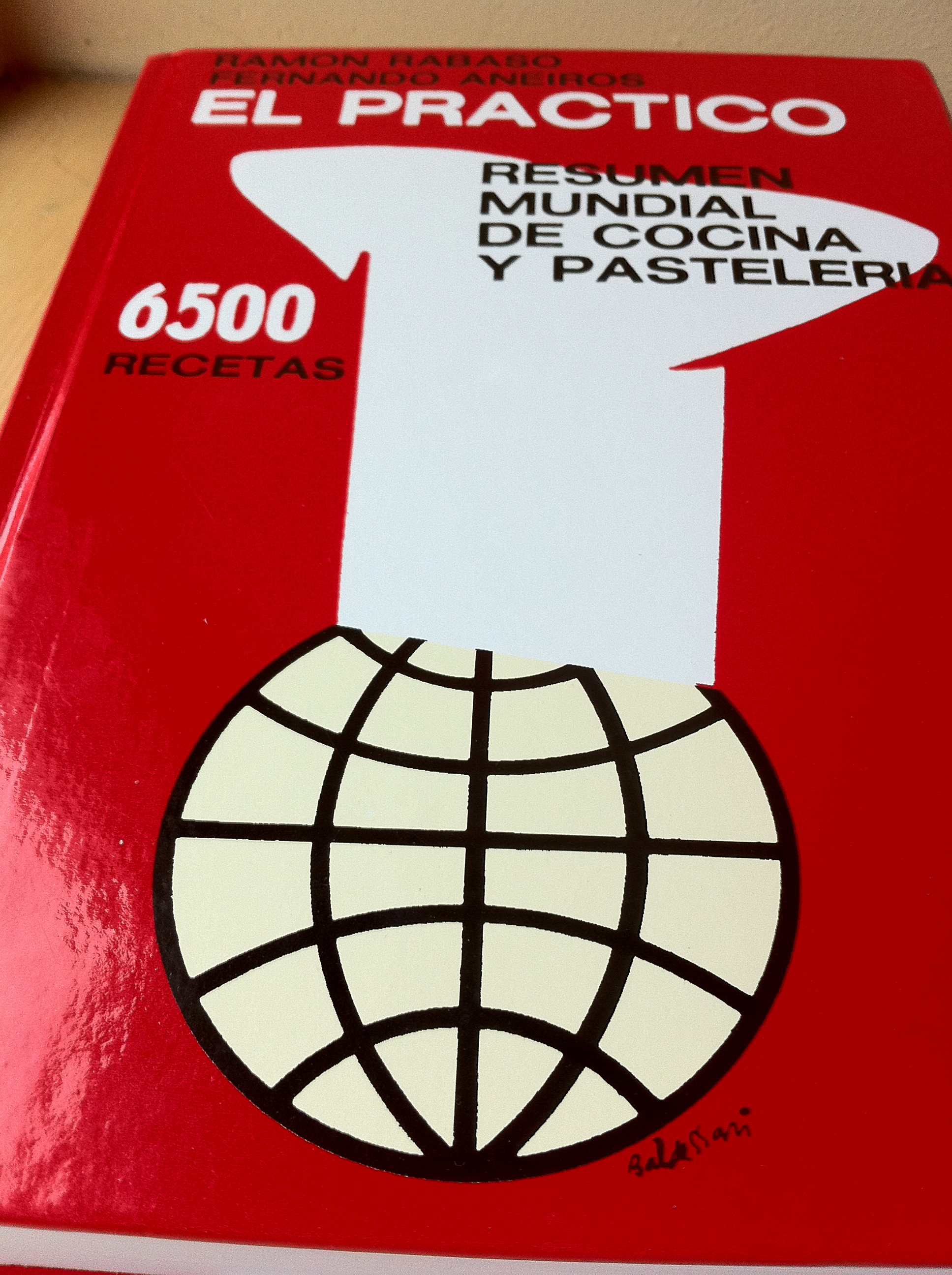
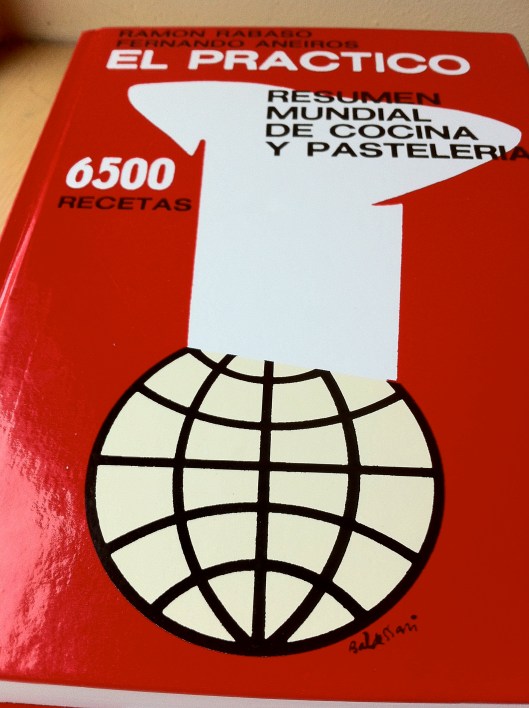
El Practico

…I am grateful to him for having given me a big fat book five hundred pages long to read and learn.  A book of classic recipes, sixty-five hundred of them, a mix of traditional Spanish cooking and dishes heavily influenced by French cuisine…I still have the book.  It has a red hardback cover. It is called El Practico.  The pages are frayed.  The spine is cracked.  But I have it in a prominent place, always at hand, in my laboratory workshop in Barcelona.

–  Ferran Adria, The Big Red Book, or El Practico from How I Learned To Cook

Ferran Adria began his cooking career by landing a job in a hotel kitchen in order to save money to spend a summer partying in Ibiza.  Ibiza is a hedonist island wonderland just off the coast of Spain. It’s a wild, endless fiesta filled with bars, babes and beaches.

I know this.  I spent a weekend there about ten years ago.  My last night there I danced until dawn at Space, an indoor/outdoor club where airplanes from the nearby airport would launch overhead, sending the crowd into a frenzy.  I barely made it out alive.  Spainards are a different breed when it comes to being “a friend of the party”.  I can’t imagine an entire summer there.  Although I did try my best.

One can understand the motivation for a soccer obsessed high school dropout like Ferran. So he took the job as a dishwasher.  The cook, Miguel Moy, had a short temper and would explode at the slightest deviation from the expected way of doing things.  With his demand for excellence, he gave Ferran a copy of El Practico to memorize.

The first food Ferran ever cooked by himself for other people was a stew of flank steak and potatoes that he prepared one evening for the staff meal.

– Colman Andrews, Ferran

The first dish I learned to make was a potato stew. Miguel did not trust me at this stage to cook for the clientele. This was the food for the staff of the hotel…

–  Adria, The Big Red Book

When I read these passages, I thought I could gain an unique insight into the methods of the best chef in the world by creating his first dish. So I decided to hunt down El Practico, find the recipe for potato stew, and cook it up.  And, as always, things got more complicated than they seemed.

Hunting Down The Stew

The first step was finding the cookbook itself.  I had to hunt down the author’s names to make sure I was going to buy the right book.  I briefly lived in Madrid (around the same time as my trip to Ibiza),  so I used my connections there to find the book in a local shop.  Alas, no luck.  So I went online. It took a while but I finally found a copy, and after debating the price for a few days, finally let my culinary curiosity get the better of me and ordered it.

They had a difficult time fulfilling the order and it didn’t land on my doorstep for about six weeks.  I was very excited when it finally arrived in the mail.

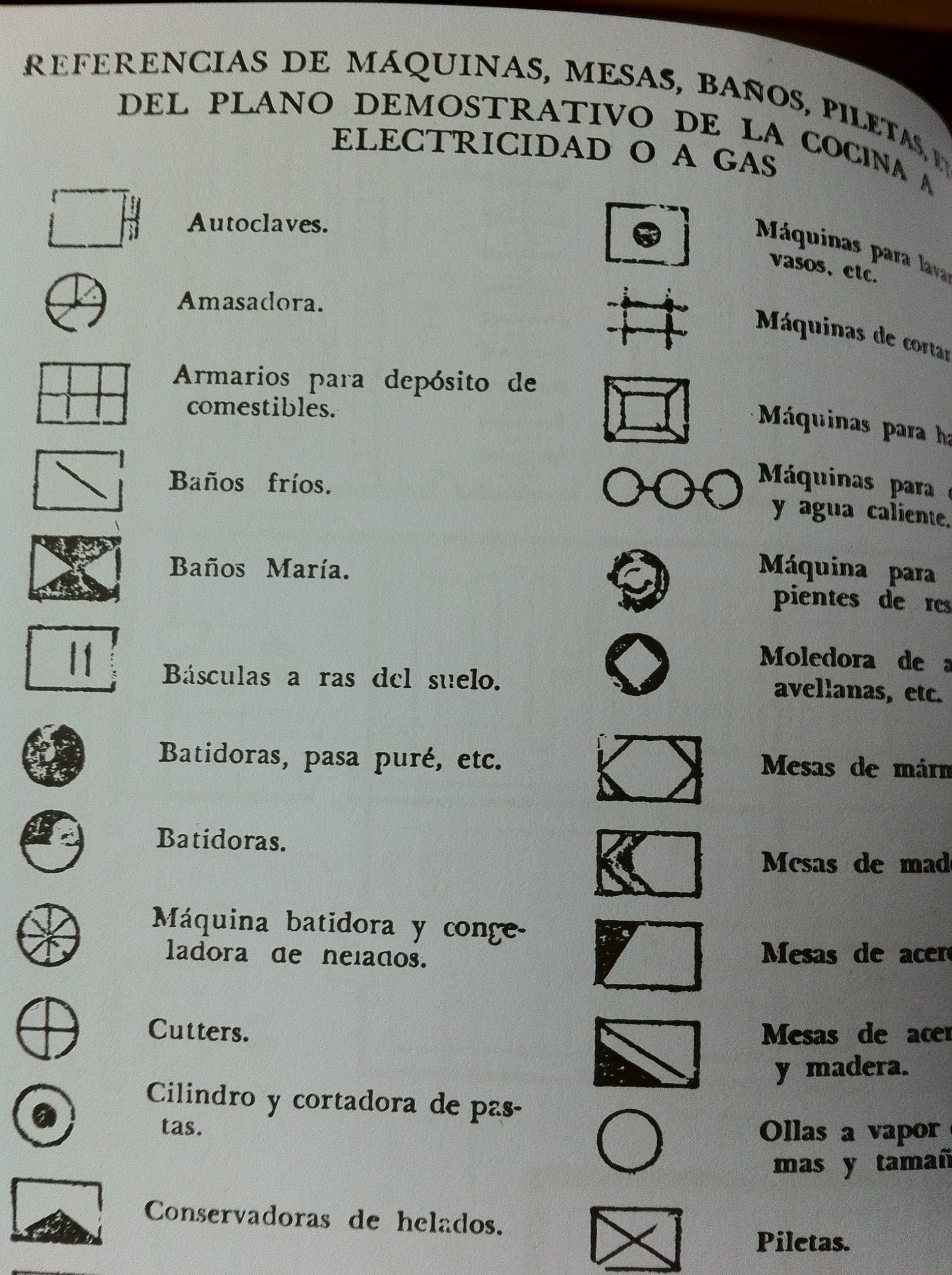
One thing I noticed right away was at the beginning of the book.  A page full of symbols, representing what I gathered were elements of a professional kitchen.

Graphic Chart from El Practico

This page immediately reminded me of something I saw in A Day at elBulli: a set of symbols used to classify different product families of ingredients.

elBulli Graphic Chart

Could have this system received its original inspiration from the pages of El Practico?  I do not know, but the similarities are striking.

So there I was, holding Ferran Adria’s prized cookbook in my hands, the cookbook that inspired him to become a better cook, to become the best cook. I flipped through the pages.  A cornucopia of culinary knowledge.

If only I could read Spanish fluently.

I knew ‘potato’ was patatas in Spanish, so I looked it up in the book’s index, and flipped to page 449, where they had five and a half pages of short recipes for potato dishes.  117 dishes, to be exact.  Which was the stew?  I found that caldo means ‘broth’, so I read and re-read all 117 dishes looking for the word caldo.  I found three: Lard, Paysanne, and Savoyarde.  The only one that had meat in it was Lard, which had bacon.  OK, bacon – kind of like jamón serrano, I thought.  It’s not flank steak, but it’s close.  Perhaps this was his first dish.  But it seemed less like soup and more like a potato side dish.  Maybe I was looking in the wrong section.  So I turned to Sopas, or ‘Soups’.  Once again, as far as I could tell, no luck.

Next I turned to my Spanish speaking friends and asked what they would call Potato Stew with Flank Steak. Perhaps it was cocido, consome, or caldo. Maybe for meat they used churrasco, bistec, or filete.  Look for estofado or guiso. It could be in French: ragoût de pommes de terre or pot au feu.  And so I kept ‘reading’, searching for a recipe that would have all the elements I was looking for: potatoes, stew, and flank steak.

Ferran was right – a lot of the dishes in El Practico are French (and published in Buenos Aires by the way, so not really a Spanish cookbook at all).  I came up with an idea: I could use my copy of Larousse Gastronomique to read the French recipes to see if they were what I was looking for.  Finally, on page 323, I found a meat dish that could be served as a stew, which contained potatoes: Navarin.  Navarin is a French ragoût (or stew) of lamb or mutton.  I figured he could have substituted flank steak for lamb.  It didn’t have to perfect – it was for a staff meal after all, right?  It must be it.

From Spanish To English To Food

The Recipe

El Practico was first published in 1928, so the recipes reflect that: no measurements or steps, just short conversational sentences on how to put it all together.  A good set up for a dishwasher making his first stew, as it allows a lot of leeway. I translated the recipe with the help of Google and my meager Spanish cooking vocabulary.

Pedazos de pecho, paleta, etc. de cordero o carnero.  Sazonar con pimienta y sal. Saltear a la grasa de cerdo.  Escurrir.  Deglacer al vino blanco.

Brisket pieces, chuck, etc. lamb or mutton. Season with pepper and salt. Saute the pork fat. Drain. Deglaze with white wine.

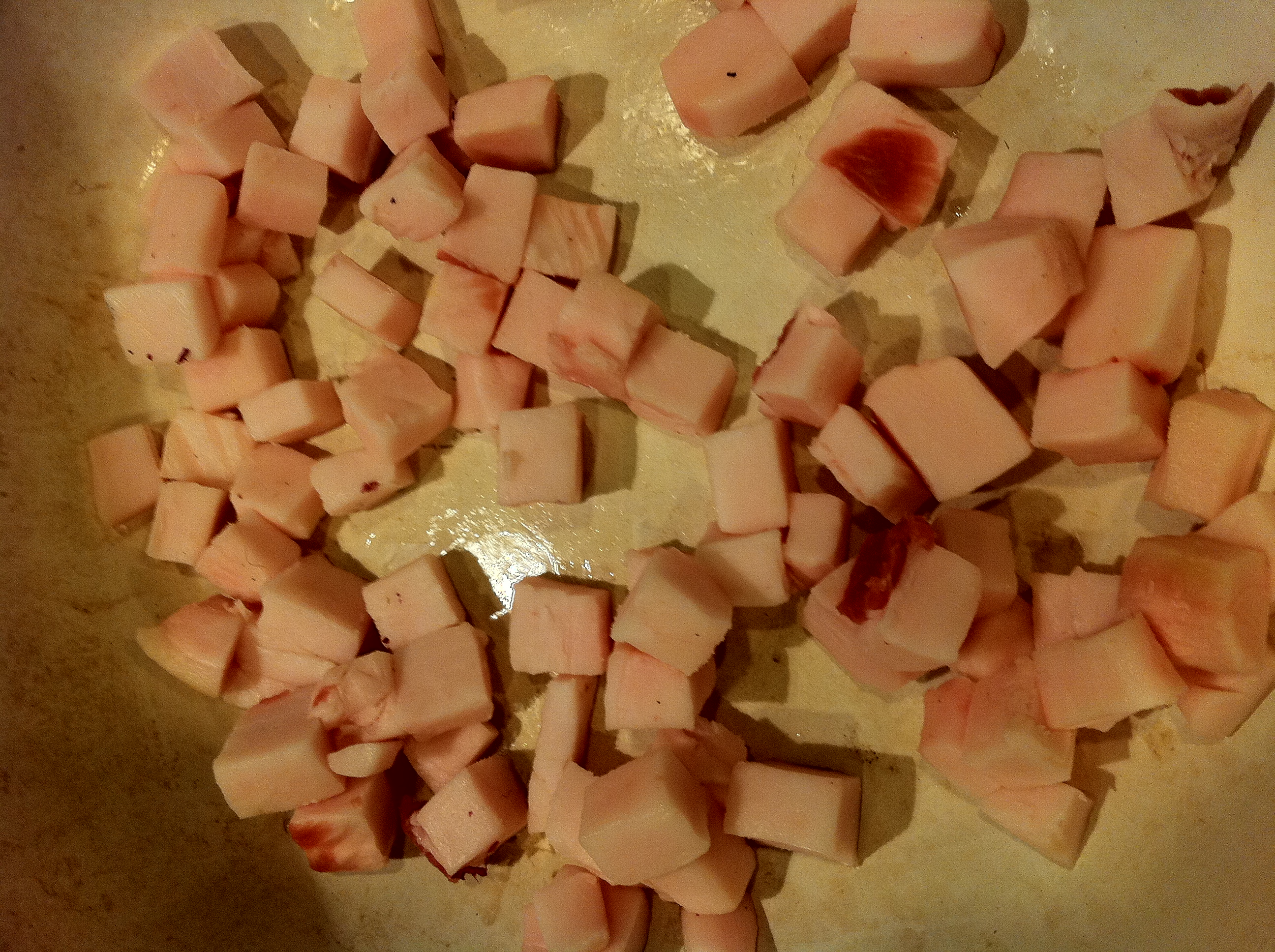
Pork fat.  For most people, that would entail some research to find and purchase.  I, however, live right next to an Asian grocery store.  I knew, having never bought it before, that they would have it.  Sure enough, they did.  So I began cooking it up.
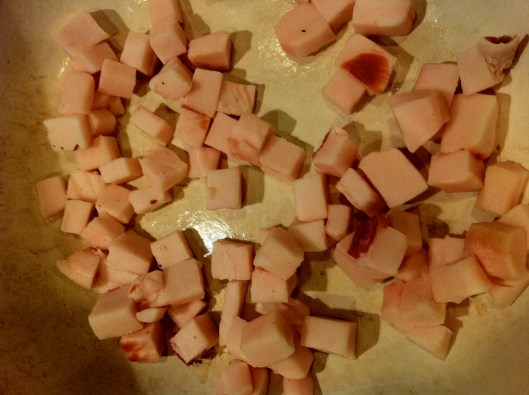
Pork Fat

Next came sauteed onions, the flank steak, potatoes and a bouquet garni (what else could give it away as a French dish?).  I also added pearl onions, turnips and carrots.  No need to follow it to the letter.  I mean, I’m just cooking a staff meal.
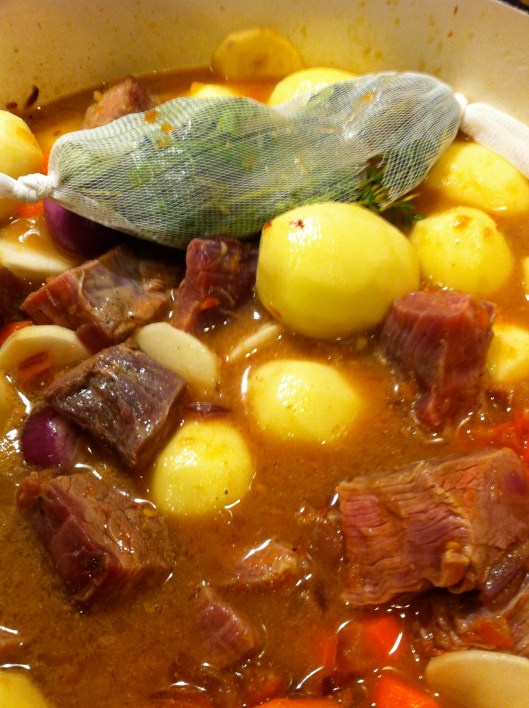
After it cooked for a while, I removed all the meat and vegetables to another dish, reduced the stock, and added it back to let it simmer a while longer.  And soon I had a potato stew with flank steak.  Ferran Adria’s first dish.

What I learned was his cooking, like most all Western chefs, is informed by French techniques. Having spherified coffee, root beer and melon juice earlier this year, it was enlightening to return to Ferran Adria’s roots, and see, like all artists, that he began with the basics, and it is from that foundation that he has launched his culinary innovations.

And that foundation, I might add, is pretty tasty.
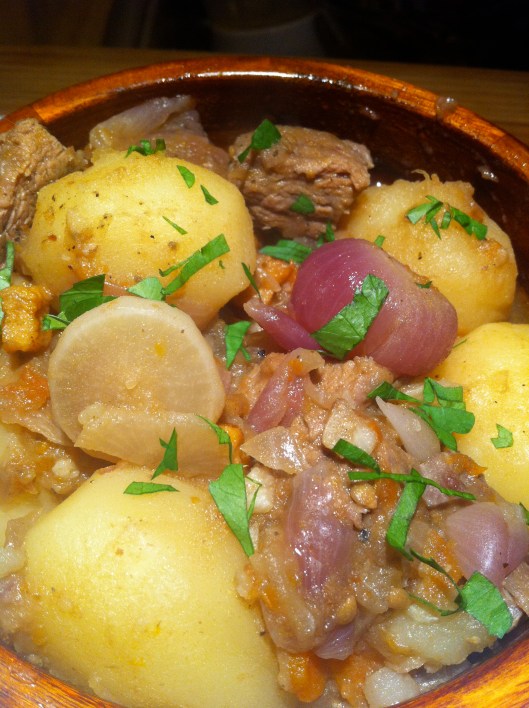
Jethro
← Older posts
Newer posts →

Search

Categories

From the Twitterverse

Tweets by jcgastrophysics

Feed Yourself

  • RSS - Posts

Recent Posts

  • Ferran In America
  • That One Time We Applied For A Food Patent
  • Ideas In Food At Home: Coffee Onion Rings
  • BOOM: Sansaire Circulator Raises $823k On Kickstarter
  • Dining Northwest Style at The Willows Inn
  • Sansaire, The $199 Circulator: A Brief History
  • Modernist Cuisine At Home: Barbeque Rubs And Another Sauce
  • Modernist Cuisine At Home: More Barbeque Sauces
  • The Price Of Cooking Modernist Cuisine, Part IV: More Gadgets, Ingredients and Resources
  • Modernist Cuisine At Home: Compressed Melon Terrine
  • That One Time We Were Nominated For Best Culinary Science Blog
  • Gastrophysics Labs Closes Doors; Reopens As A “Kitchen”

From the Archives

  • March 2014
  • November 2013
  • September 2013
  • August 2013
  • July 2013
  • May 2013
  • April 2013
  • March 2013
  • February 2013
  • January 2013
  • December 2012
  • November 2012
  • October 2012
  • September 2012
  • August 2012
  • July 2012
  • June 2012
  • May 2012
  • April 2012
  • March 2012
  • February 2012
  • January 2012
  • December 2011
  • November 2011
  • October 2011
  • September 2011
  • August 2011
  • July 2011
  • June 2011
  • May 2011
  • April 2011
  • March 2011
  • February 2011
  • January 2011
  • December 2010
  • November 2010
  • October 2010
  • September 2010
  • August 2010

Blogroll

  • A Practical Guide to Sous Vide Cooking
  • Alinea At Home
  • Chef Rubber
  • Cooking Issues
  • eGullet
  • Eric Rivera's Cooking Blog
  • Ideas In Food
  • Khymos
  • L'epicerie
  • LeSanctuaire
  • Modernist Cuisine
  • Modernist Pantry
  • Seattle Food Geek
  • Studio Kitchen
  • The Alinea Project
  • Willequipped
  • Willpowder

  • ericriveracooks's avatar ericriveracooks
  • jethro's avatar jethro
  • sheimend's avatar sheimend

Blog at WordPress.com.

Privacy & Cookies: This site uses cookies. By continuing to use this website, you agree to their use.
To find out more, including how to control cookies, see here: Cookie Policy
  • Subscribe Subscribed
    • Jet City Gastrophysics
    • Join 161 other subscribers
    • Already have a WordPress.com account? Log in now.
    • Jet City Gastrophysics
    • Subscribe Subscribed
    • Sign up
    • Log in
    • Report this content
    • View site in Reader
    • Manage subscriptions
    • Collapse this bar
 

Loading Comments...