How to make Pacojet-Style Frozen Desserts at Home

Tags

, , , ,

pacojet-style frozen dessert
If you’ve ever been in an upscale restaurant and ordered a sorbet or ice cream with a consistency that seemed to defy the laws of physics, it was probably made in a Pacojet.  This $4000 machine is a staple in many restaurant and hotel kitchens for its ability to produce exceptionally smooth and creamy desserts and savory dishes.  However, if I’m going to drop four grand on a kitchen machine, it damned well better take voice commands and wear a skimpy outfit.

My method uses dry ice for instant freezing and Xanthan Gum, a popular soy-based gluten substitute, as a thickener for a more velvety texture.  In addition, I’ve added a small amount of Versawhip, which creates a subtle but stable foam, giving the finished product the unexpected lightness usually associated with mousses.  You can substitute the sorbet base of your choice, following the same basic steps.

Makes: about 6 cups
Total kitchen time: 10 minutes

Shopping list:

  • 20 oz. canned pineapple (crushed, slices, or chunks), including juice
  • 6 oz. fresh raspberries
  • 1 oz. (a small shot) St. Germain Elderflower Liqueur (optional)
  • 3 tbsp. sugar
  • 2 tsp. Xanthan gum (also available in the baking aisle at better grocery stores. Look for the Bob’s Red Mill label)
  • 1/2 tsp. Versawhip
  • 1 lb. dry ice, crushed into 1/2” or smaller chunks


  1. Combine the pineapple (including juice), raspberries, St. Germain and sugar in the bowl of a large food processor.  Process for one minute or until smooth.
  2. Add the Xanthan gum and Versawhip and process until combined.
  3. With the food processor running, add the dry ice and continue processing another 1-2 minutes, or until the sound of the dry ice cracking has stopped.
  4. Remove from the food processor and serve, or store in the freezer.  Can be made 2 days in advance.

It is true that the Pacojet doesn’t require any added thickeners to achieve its magic consistency.  However, it does require you to freeze your sorbet mix at –20C for 24 hours before churning.  I’d love to do a blind taste test comparison between this method and the Pacojet. As soon as I trip over a pile of cash, I’ll let you know how the test turns out.

Scott

Noma At Home: Spruce Oil, Butter, Vinegar and Spice

Tags

, , , , ,

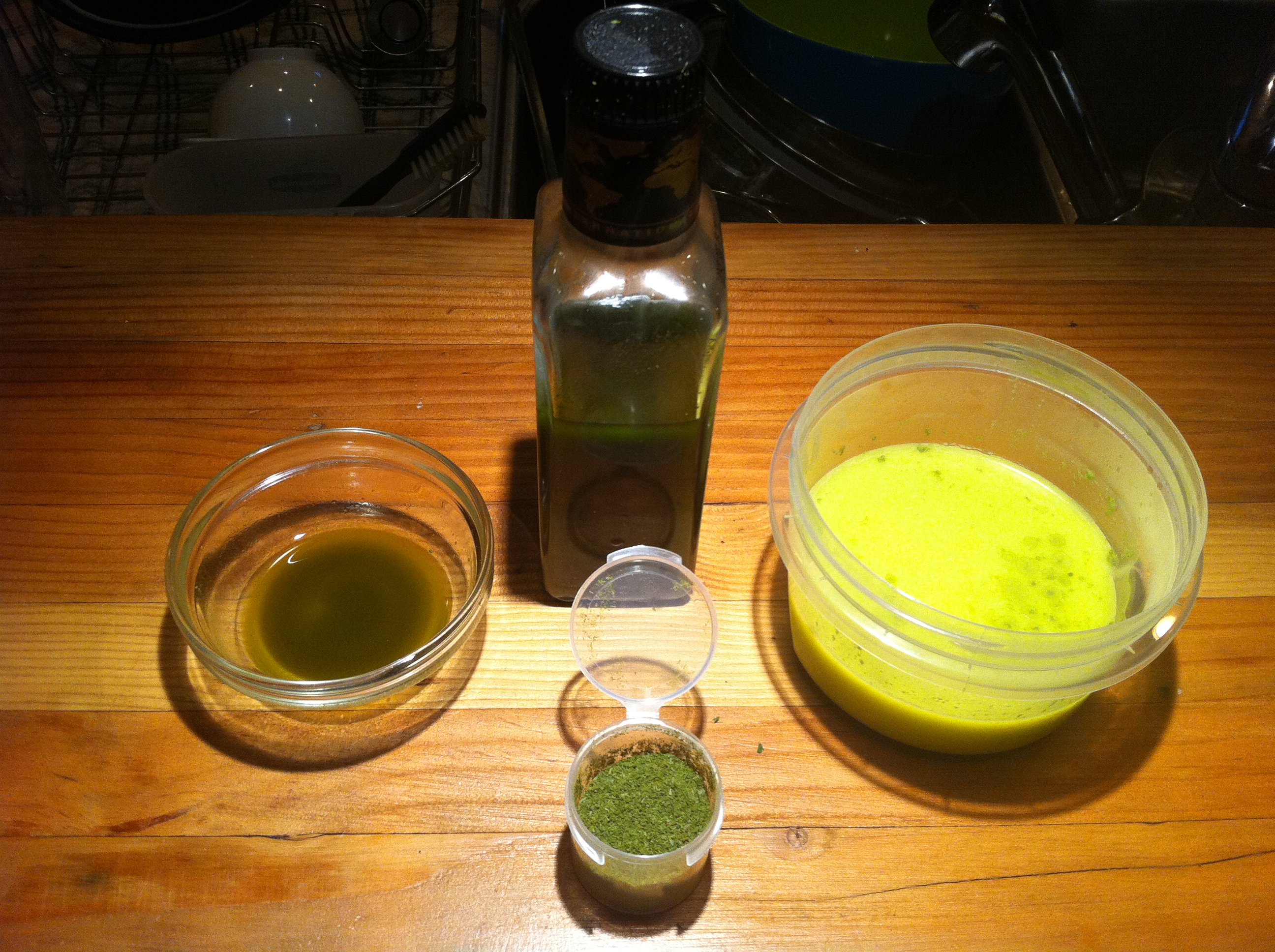
Spruce Ingredients

Clockwise From Top: Spruce Oil, Spruce Butter, Spruce Spice, Spruce Vinegar

Each year more than 100 million trees are produced for Christmas worldwide. Considering that it takes 8 to 12 years to produce a decent-sized tree, it seems pointless simply to discard this bounty after only a few weeks of using it as ornamentation. I don’t mean to sermonize. I want only to point out that food is everywhere, that a tree is more than a symbol or a decoration: it is delicious food.

This year, let’s all butcher the tree.
– René Redzepi

So evangelized Chef René Redzepi in his Christmas Eve Op-Ed piece in the New York Times, giving recipes and ideas on how to use spruce as food.  Now, I realize he wrote that he didn’t mean to sermonize, but with that last sentence, it is reasonable to say that he wanted to make converts, therefore I think to say he is evangelizing is perfectly legitimate.  Just to be clear. Anyway, at least he made one convert.  Me.

I have never had any spruce-scented dishes, and with all the verdant and lush greenery that surrounds us here, I thought it would be a perfect tool to use in creating a dish that evoked the Great Northwest.  But I don’t ‘do’ Christmas.  I didn’t have a tree standing in my living room, ready to be fleeced of its needles for sustenance.  Like the chanterelle mushrooms last autumn, I’d have to go foraging for one.

On The Public Denuding Of A Discarded Christmas Tree For Food

It was a few days after New Year’s, and I was strolling down the street toward my local coffee shop when it appeared before me, discarded and forgotten. My newest food source.

Urban Food Foraging

Should I Strip This Bare Of Needles In Public? I Should.

I went back home, grabbed a plastic bag, returned and began to pull needles by the handful into the bag.  In broad daylight. Next to a high school.  And a Boy Scouts office.  Kids walked past with their backpacks.  Cars pulled out of the Boy Scouts parking lot and drove past.  I was very aware of how strange I must have looked denuding a discarded tree on the side of the road, but thought I would be totally ignored for that very reason.  I was correct.  Soon, though, my discomfort got the best of me and I felt I had gotten enough. Yet, I returned after dark to get some more. Foolhardy? Completely ridiculous? Perhaps. But I had to keep in the spirit of the opinion piece.  Waste not, want not!

SprucE Butter

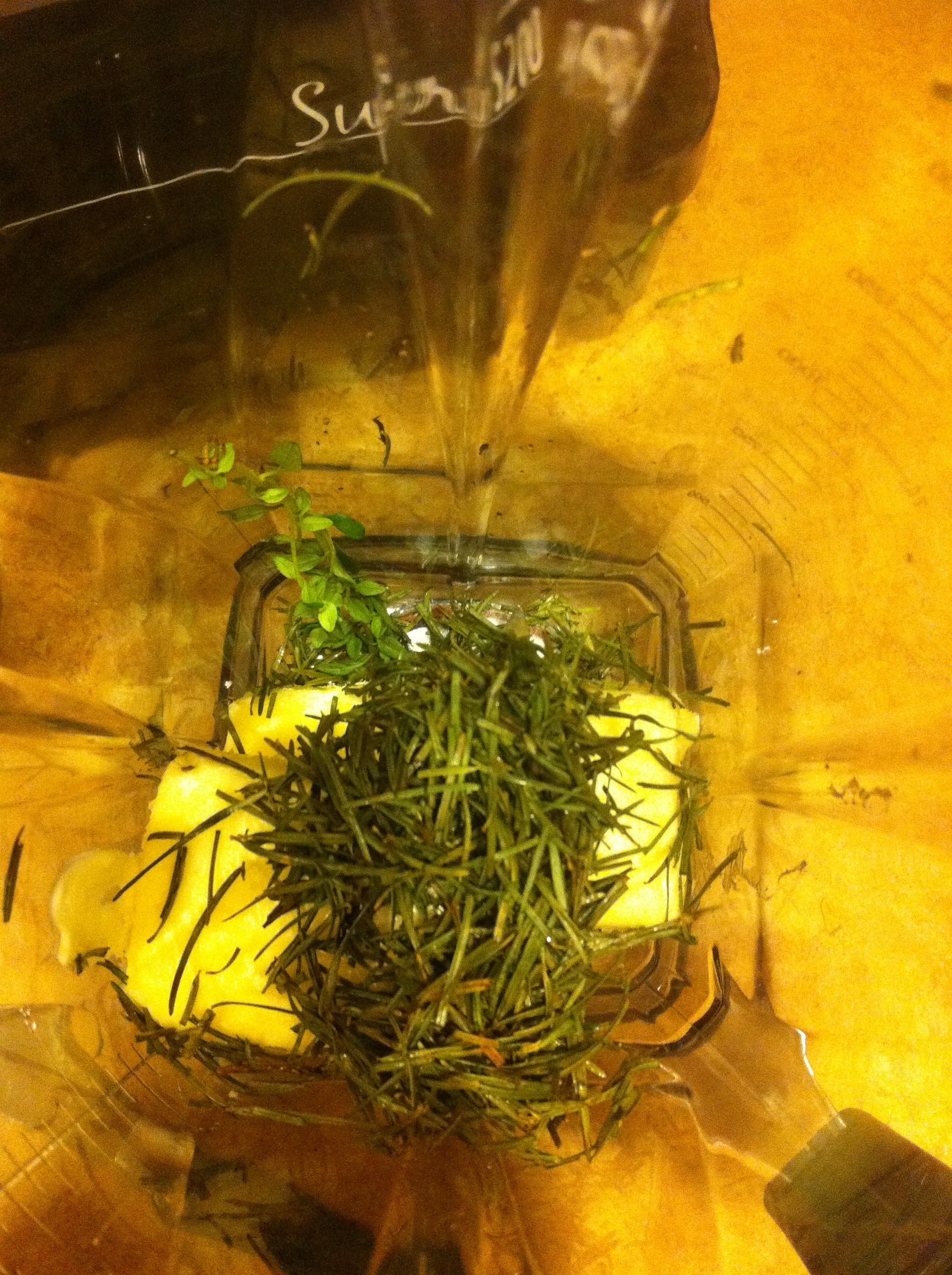
With my new batch of needles, I went to work.  I washed them and threw a few tablespoons in with some butter and lemon thyme into my VitaMix and let her rip.

Making Spruce Butter

I strained the liquid into a container and threw it in the fridge.  An hour later, spruce butter.  I’m a frickin’ genius.

Spruce Oil

Wait, no I am not.  This one I managed to screw up.  The recipe calls for 3.5 ounces of needles.  This is a lot of needles!  It also calls for 3.5 ounces of vinegar.  That’s it?  Mm.

Needles and Vinegar

3 1/2 oz. of vinegar for that many needles?

It was such a tiny amount I went ahead and doubled it.  And for my efforts?  A little thimble full of spruce vinegar.  What a waste of needles!  I am NOT stalking my neighborhood for more trees.  It’s way after Christmas, anyways.  Man.

A little bit of spruce vinegar

Spruce Oil

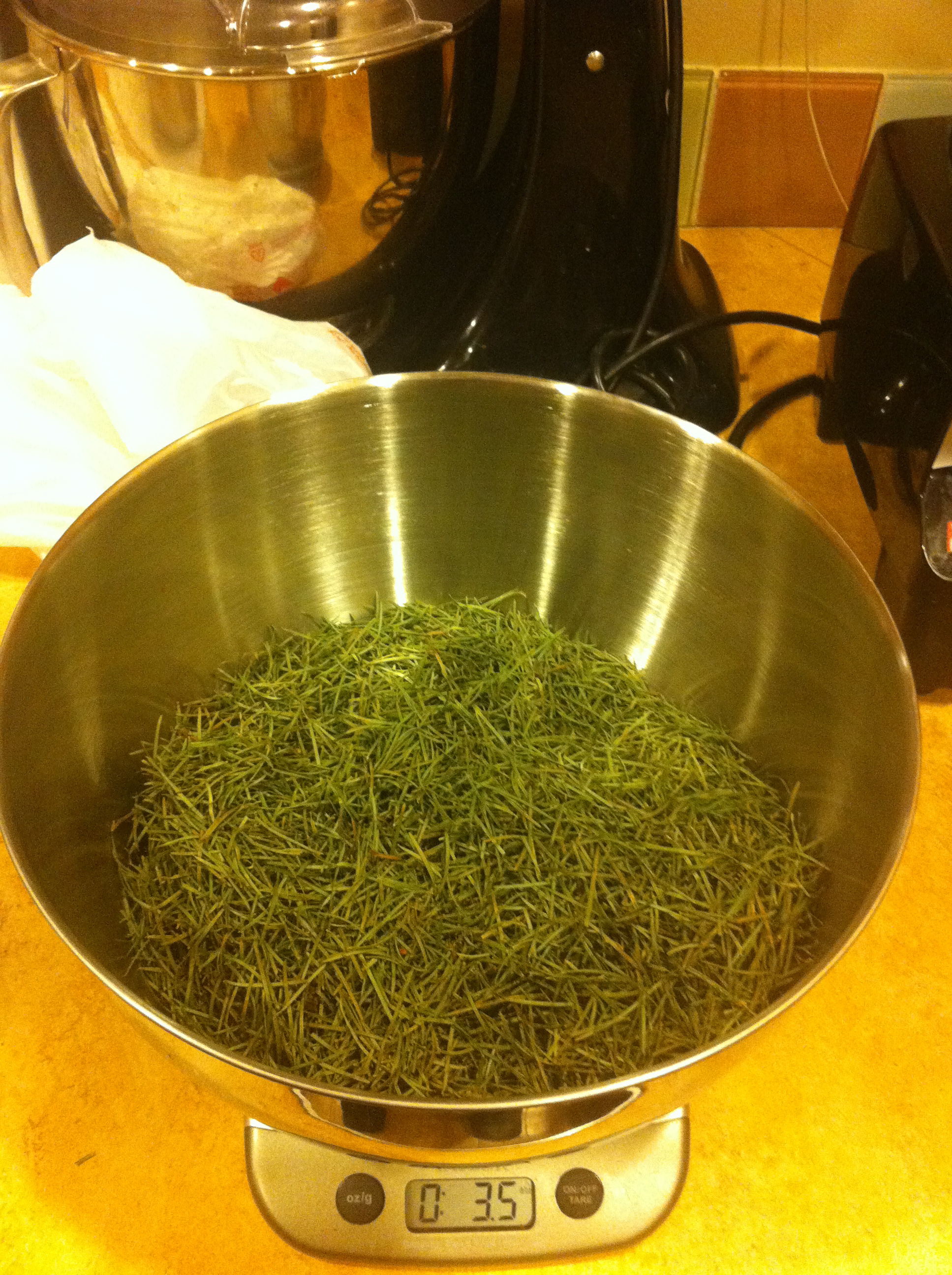
So next up was spruce oil.  First, I weighed out my 3.5 ounces of needles and blanched them.

Bowl of Spruce Needles
Then I added 1 1/4 cup of grapeseed oil.  Wait.  1 1/4 cups.  That makes sense.  I bet the New York Times printed the recipe wrong for the vinegar.  It must have been 1 1/4 cups of vinegar.  Ack.  If I had done the oil first, I would have seen that and made the adjustment.  Ah well.  Anyhow, the oil turned out great.

Spruce Spice

I took some needles and grinded them in my coffee bean grinder.  Exciting!

Sprucing Up A Meal

So now I had my spruce ingredients – what to make?  I riffed off a couple of ideas some friends had for a dish – pork chops with a sour apple chutney and honey roasted root vegetables.  Me?  Sous vide bison rib eye with a cranberry spruce chutney and a honey roasted root vegetable puree.  Booyah!

Sous vide bison rib eye with cranberry spruce chutney and a honey roasted root vegetable purée

After cooking this up, I read the comments on the opinion piece and everyone was pointing out how Christmas trees could be covered in flame retardant and who else knows what.  I did find mine just lying on the side of the road.  Yes, well. I’m still alive so I guess I was lucky.  I think a short drive to the mountains would be a better method next time.  You know, actually, if you get a Christmas tree next year, go cut it down yourself.  You never know if you’re going to eat it later.

Jethro

An Evening With Bob Tate & Friends

Tags

, , , ,

A little over a year ago I did a post on knives after Bob Tate came to my culinary school to do a talk (here is the original post…click).  My friend, Jethro (click), knows Bob Tate and offered to get our little group of gastronauts together to go see the art of knife sharpening up close and personal.

I still use Bob’s tips to this day and it was really amazing to be invited into his home where he does the knife sharpening and has honed his own skills. He trained under Bob Kramer who has his own signature series for Shun so it was honor just to be around Mr. Tate to at least get a glimpse into the mastery that is knife sharpening.

We each brought a knife for Bob to sharpen for us…… Seriously Jethro…..a pink knife?!?!?!  Uh….. Anyway, Scott brought his shiny Shun knife (middle) and I brought my money maker Mercer knife (right) for a little honing and sharpening action.

Bob showed us a few new projects he was up to and how he can create serrated knives and even sharpen them.  It was amazing to watch him take a $2 knife and turn it into something usable and extremely sharp…..Eric “likes” the degree of sharpness.

I have a really weird attachment to my knife. It’s not expensive or special but it’s been along for the ride while I’ve moved through and cut thousands of things with it.  When I first started using it I had no idea what I was doing…..it was too big……it was heavy…..it wasn’t my 7 inch santoku that I was used to using.  I stuck with it and now I treat it like a really great friend of mine.  I sharpen it myself because I don’t trust anyone else to even touch it but when I was in the home of Bob Tate I let him have it……I guess it’s kind of like dropping your kid off at a baby sitter…..weird stuff.

Bob sharpened up the pink knife and while I saw him doing it I noticed how he moved the knife over the belt gently.  He asked me not to film his finishing process and not really talk about it since it was something he had learned from Bob Kramer and it really is the difference from him doing something amazing or just entrusting your knife to that random clerk at that one store with the French name downtown.

He finishes and tests every knife by doing the newspaper test.

That folks, is the sharpest pink knife in the world!!!! He finished Scott’s knife and my knife and it was like picking up your dog from the groomer….looks new….smells nice (what?)……knife is all excited to cut stuff……

Look at that shiny new edge.

No matter where I go, where I cook, or what knife I buy, Bob Tate is my knife sharpening guy.

Eric

Modernist Cuisine At Home: Smooth Purees, Part II

Tags

, , ,

Picking up where I left off from last month, I finished making the rest of the puree recipes from the PDF excerpt of Modernist Cuisine.  Well, almost all of it.  Two remaining recipes involved being sauteed and then blended in a commercial blender.  One required boiling and a Pacojet.  A Pacojet, which quickly purees frozen products to produce a very fine consistency, can be found used online.  For around $2900.  This is out of reach for this home cook, so it will have to wait until, oh, a miracle occurs.

In that last post, I had some issues getting a truly smooth puree.  Then, lo and behold, none other than Dr. Myhrvold himself, the author of Modernist Cuisine, kindly commented that I needed a commercial blender – in particular, a VitaMix – to get the results I was looking for.  How did he know?  He had his team re-test all the purees.  I can just imagine how the chefs felt, having to re-do their work because some frickin’ home cook blogger couldn’t nail it down.  Chefs, if you’re reading this, my apologies.  Just having lots of fun over here!

So I needed to find a VitaMix.  They sell for around $450 new, but that’s pretty steep.  I needed to find one used.  So to the Internet I went.  $300 was the going rate most of the time, but I, master of the bargain, was able to find one at a yard sale for $100!  So take heart, home cooks – miracles do occur.  Just keep your eyes peeled.

And with my VitaMix in hand, I was ready to conquer the next set of purees.

One: Asparagus

Bad Puree

Not So Smooth

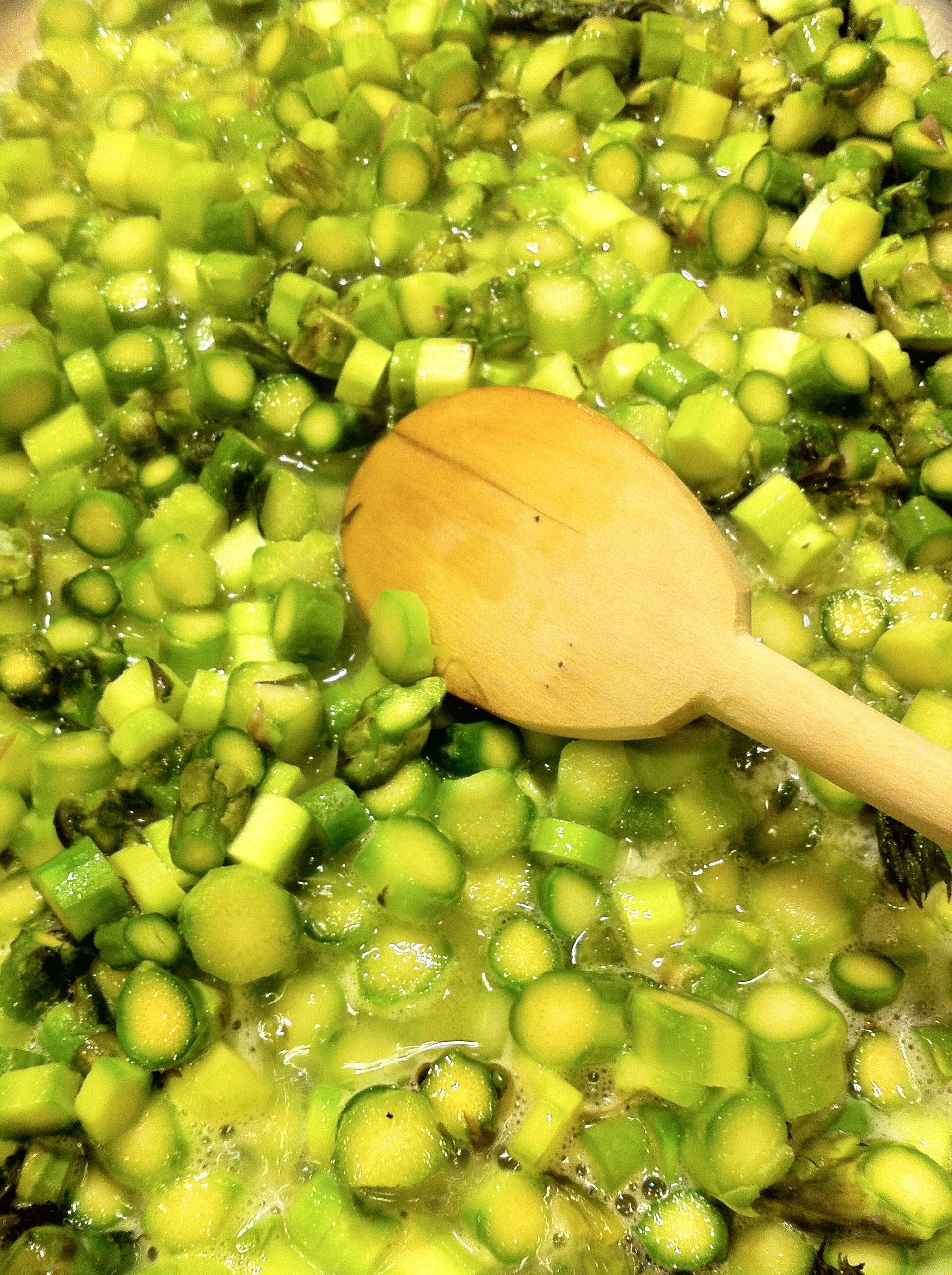
As what seems to be a pattern for me, I learned something valuable about cooking this week by messing it up. This time it was over phrasing.  In particular, the instruction “thinly sliced”.  For me, thinly slicing asparagus implies lengthwise.  Otherwise, it would have said “thinly chop”, right?  I don’t think so.  In the first round, the thin stringy fibers of the inside of the asparagus refused to be finely blended, leaving choppy floss and an uneven texture.  So I went back to the store, bought some more, and sliced them appropriately.

Cooking Asparagus

I gave them a go in my new VitaMix and the smoothest, most beautiful bright green puree presented itself.  These Vitamix’s are awesome!

Smooth Asparagus

This Is Some Seriously Smooth Asparagus

I served it with a 24 hour sous vide pork belly for a dinner with friends and it went over famously.  If you have a VitaMix, go make some. Now.

Two: Broccoli

Broccoli Stems

The final puree called for broccoli stems.  At my local chain supermarket, they cut off the stems because they rightly assume the vast majority will just throw it away for the good stuff – the florets.  But as always my trusty Asian grocery store came through and had nice thick stems to use.

I followed the directions, which were very straightforward – saute on medium heat for 12 minutes with a neutral oil.  I looked through my cabinet: canola, pumpkin seed, avocado, olive, peanut…and grapeseed.  There’s a nice neutral standard.  After cooking I put them in the blender and gave them the spin of their life.

A Proper Blender

About To Be Liquified In A Proper Blender

And once again I was rewarded with a thick, creamy, smooth vegetable puree. On the parametric recipe, the asparagus and broccoli recipes point to other pages for reference in the cookbook.  I wonder what they help illuminate.  I know the purees taste great on their own, but I bet it would be fun to do some inverse spherification on them as well.  Maybe that’s what the other pages suggest.  Maybe not.  I’ll have to wait until March 2011 like everyone else.  But I do know that’s what’s up next in my kitchen.

Smooth Stems

Jethro

You Spin Me Right Round: Enter The Centrifuge

Tags

, ,

Spin Me Round

A couple of months back, I had a happy sequence of events.  First, I got a raise.  Always a cause for celebration.  Then, the Modernist Cuisine cookbook publishing date was moved from December 15th to March 15th.  Not exactly happy news, but I did set aside $500 to buy it (it has since been reduced to $451.25) that I now had freed up.  And soon after that, I found a centrifuge.

When I had a chance to speak with Chef Maxime Bilet about cooking my way through his upcoming book, he said if I really wanted to do it, I needed to get a centrifuge.  I was totally expecting him to say an immersion circulator.  Perhaps it was obvious that I should already have one.  But OK then.  I began surfing the Internet to see what I could find (the centrifuge posts at Cooking Issues were of great help in focusing in on what I should look for).  Most used centrifuges that have the volume I needed (as opposed to desktop centrifuges that only spin small test tubes) cost around $1000 – $2000 plus freight shipping on top of that.  Way too much to justify.

But I kept looking and stumbled upon a used laboratory equipment company in Seattle that was going out of business.  They had centrifuges in excellent condition going for cheap. I went to the warehouse to check them out and drove away with a frickin’ centrifuge in the back of my car.  A refrigerated unit at that. For $500!

The Unit
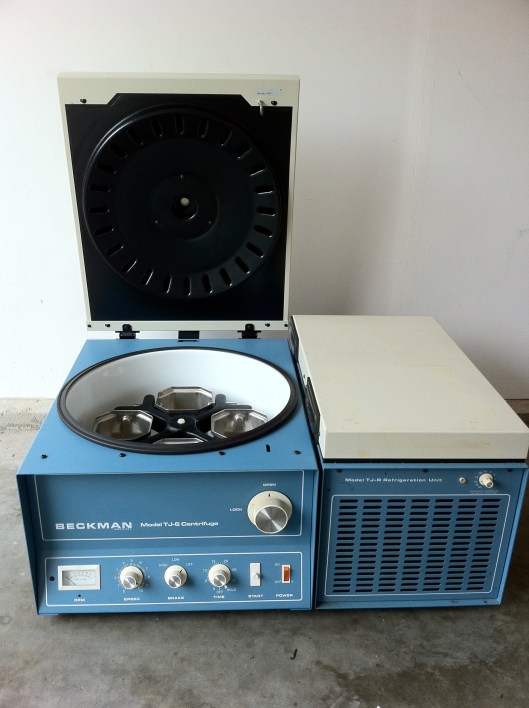
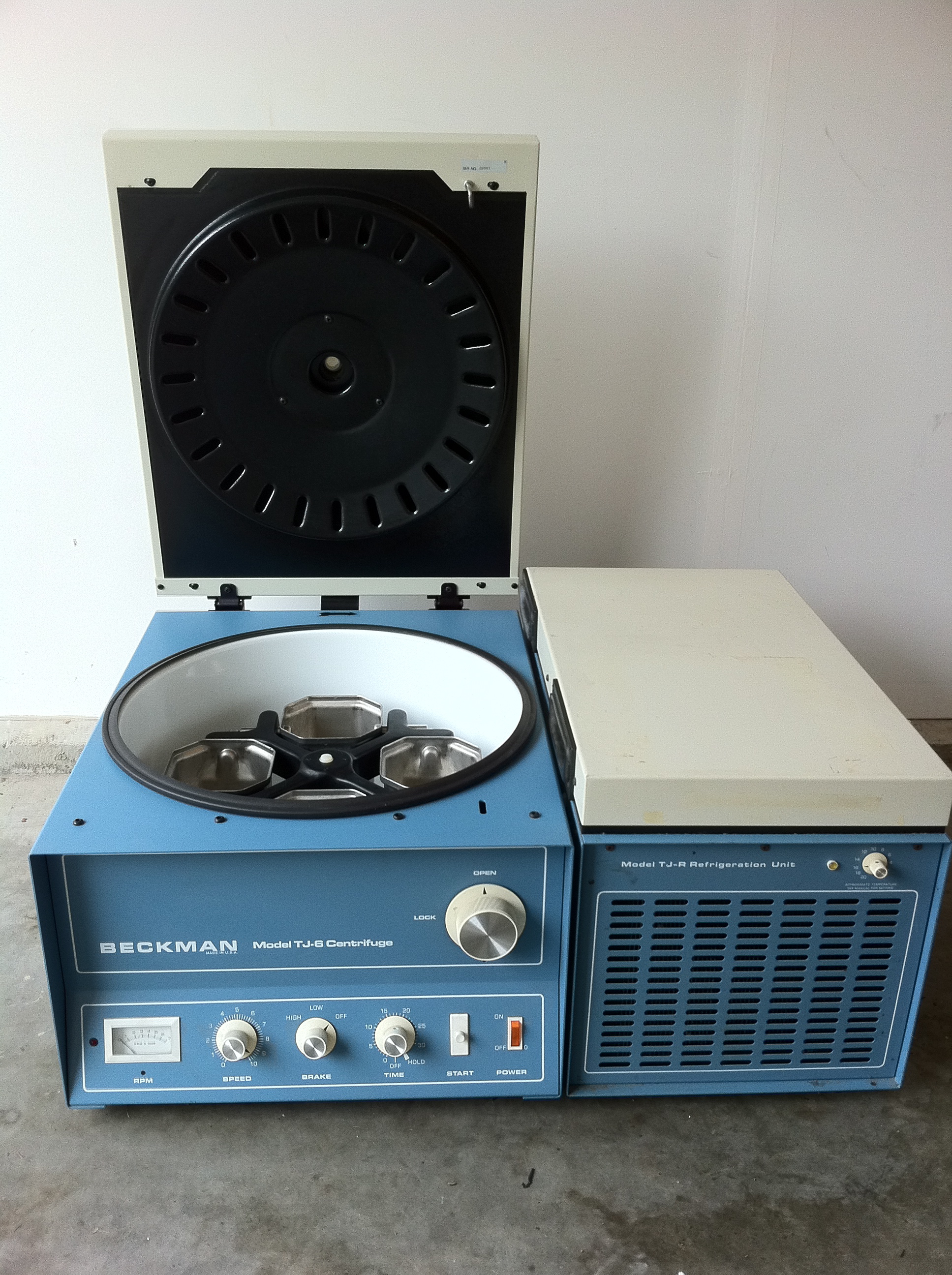
The Beckman TJ-6 Centrifuge

An Investment In Future Deliciousness

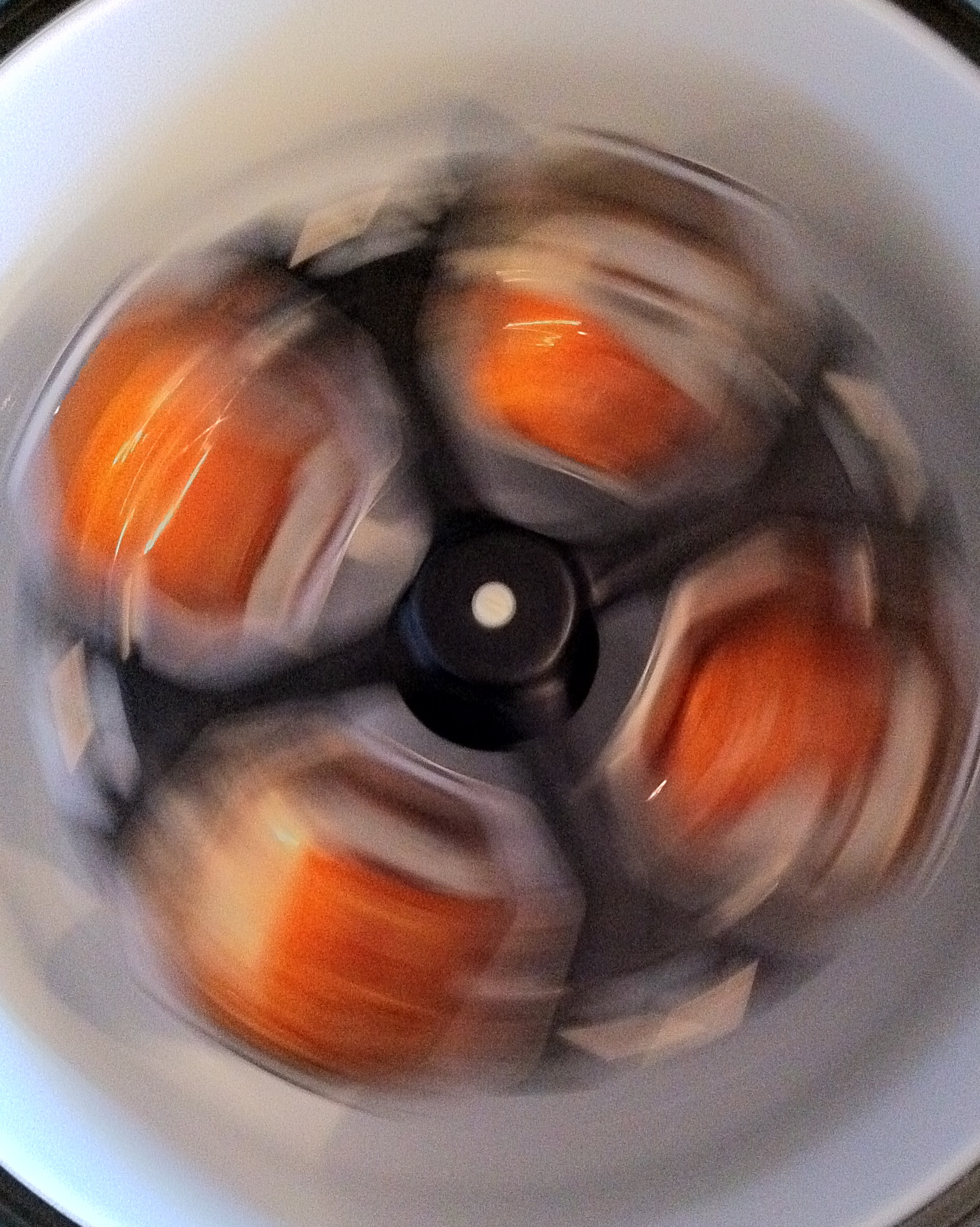
The centrifuge I found was a Beckman TJ-6 with a TJ-R refrigeration unit.  It has four buckets that hold up to 2 liters (about 8.4 cups).  It gets up to 2700 rpm, or 1520 g’s.  It is a large metal beast with a cool 60’s style simplicity.  They really don’t make things like they used to.

The Cooking Issues guy’s tabletop centrifuge pulls about 4000 g’s.  Chef Bilet didn’t think it would be an issue to separate things, but only that I would have to spin longer.  Well, only one way to find out.

The Search For Spin

Now, I should step back for a moment and answer the question: why do I need a centrifuge in the first place?  A centrifuge’s principle purpose is to separate substances based on density.  Heavier substances, called the pellet, collect at the bottom, while lighter substances, or supernate, collect at the top.  Culinary purposes include extracting oils from nuts and separating cream from milk.

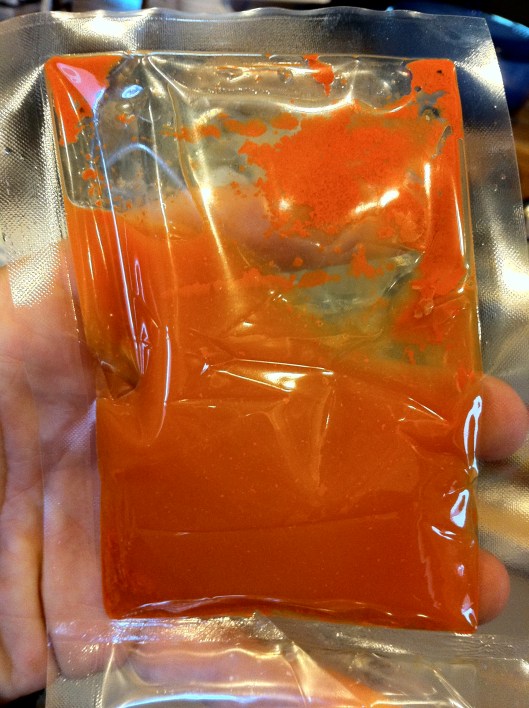
To use my new beast, however, I needed to find suitable containers for the food to be spun in.  The guys over at Cooking Issues settled on sealed vacuum bags.  I tried the bags I had on hand using some carrot juice, but they were too small so the pellet and supernate wouldn’t separate fully.
False Start

A False Start

I searched my local supermarkets and found some small Ziploc containers that fit into the buckets nicely.  The lids were just a bit too wide, but the body was good enough.  I filled them up and spun them.  Turns out it was not good enough.  I immediately heard a crack inside the machine. Centrifuges can be very dangerous with objects spinning at such high speeds.  It is said what you pay for in a centrifuge is the housing in case of an accident.  And accidents do happen.

I immediately turned it off and left the room.  After a couple of minutes, I came back in and checked to see what had happened.  The problem was the centrifuge worked perfectly: as it created over 1500 g’s, the sides of the lids were crushed and the containers snugly fit themselves into the bottom of the buckets.

I kept searching and found some plastic containers at Storables that fit in the buckets and didn’t crush when spun.  Finally I could start seeing what this ‘fuge could do.

Procuring Pellets And Supernate

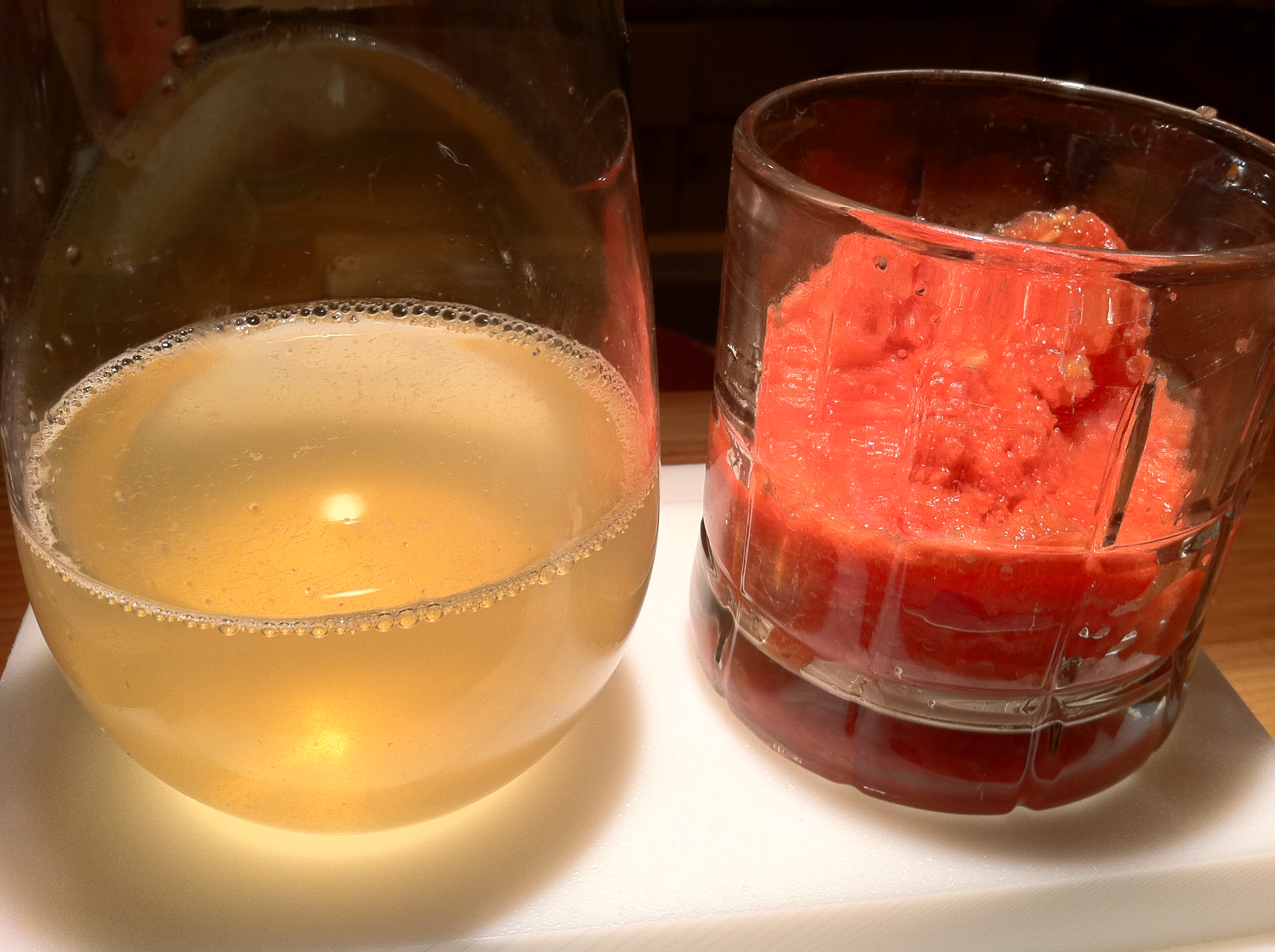
One use of a centrifuge: ‘instant’ tomato water.  Usually you let a puree of tomatoes sit in a cheesecloth over a bowl for 8 to 24 hours.  With a centrifuge: 30 minutes or less.

Tomato Water and Paste

Tomato Water and Paste

You also end up with a nice tomato paste to use however you wish.  I made a caprese martini: an instant liquor infusion of basil and vodka with spun tomato water in a chilled martini glass lined with olive oil and salt.  Deliciously awesome. So good my best friend put it on the menu at his bar.  New Cookery finds its way to the masses!

I also took the sous vide apple puree I made and spun it.  The result: a thick sweet apple syrup.  The ‘pellet’ of apple puree left was incredibly thick and just as good as before.

Apple Syrup

I’ve also taken fresh carrot juice and ‘fuged it.  I was left with a thin carrot paste at the bottom of the containers.
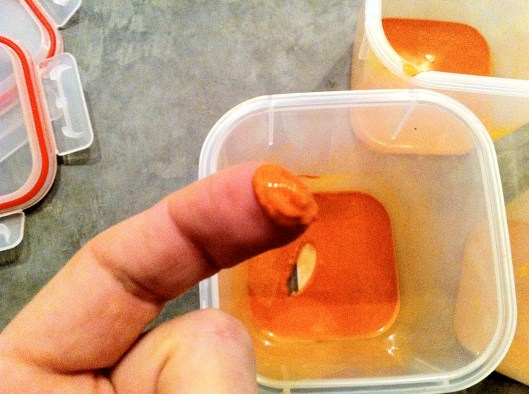
Carrot Paste

I didn’t know exactly what to do, if anything, with it.  I remembered watching Katsuya Fukushima and Ruben Garcia from Minibar on Iron Chef and they said something interesting on their approach to cooking: “The fish talk to us and say, we want to be cooked that way.”  So I looked at this paste and said “what does this look like”?  And it looked like paint.  I guess it wanted me to paint with it. So, I did.
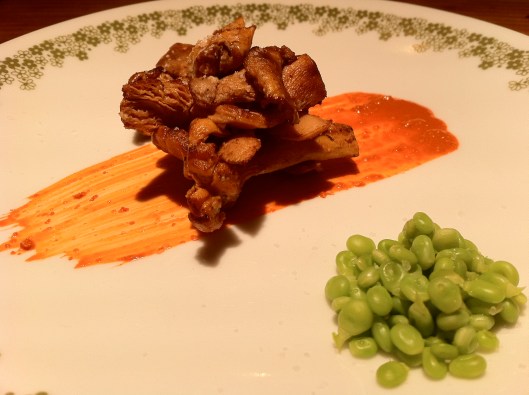
Chanterelle Mushrooms with Peas and Carrot

A Little Snack: Chanterelle Mushrooms with Sugar Snap Pea Ovules and Carrot...Streak?

A streak of carrot paste, topped with hand foraged chanterelle mushrooms and the seeds (or ovules) from sugar snap peas.  It was great.

But I also realized I have fallen off the deep end.  I mean, I centrifuged carrot juice and took sugar snap peas and de-seeded them by hand just for a small meal alone at my house.  I’m done for. I’ve lost the plot. I’ve been spun crazy.

Jethro
Video: DIY Cotton Candy Machine from a Blender and a Tin Can

Tags

, , , , , , ,

Do try this at home, but don’t burn your house down!

This turned out to be one of the more dangerous machines I’ve ever built.  The goal was to make a cotton candy machine out of parts I had lying around.  The finished product was an aggressive, 1/2 horsepower, 4000°F beast of a machine that lasted long enough to prove itself before dying of awesomeness.

If you want to build a cotton candy machine at home, all you need is:

  • A tin can, like a tuna or dog food can
  • A drill with a very small drill bit
  • A motor (ex, your drill, an old CD player, a blender)
  • A heat source, such as a propane torch, a lighter, or the coils from an old toaster
  • A bucket to catch the cotton candy, or alternately a sheet of paper to wrap around the assembly
  • Sugar

Follow the steps in the video to see just how easy this machine is to build.  Oh, and don’t forget… safety first.  My favorite part of this project was setting up a blast shield in front of the camera before we turned on the machine.

cotton candy build
Special thanks to Victor (@sphing) for filming!

Scott

Modernist Cuisine At Home: Dragon Fruit Chips

Tags

, , ,

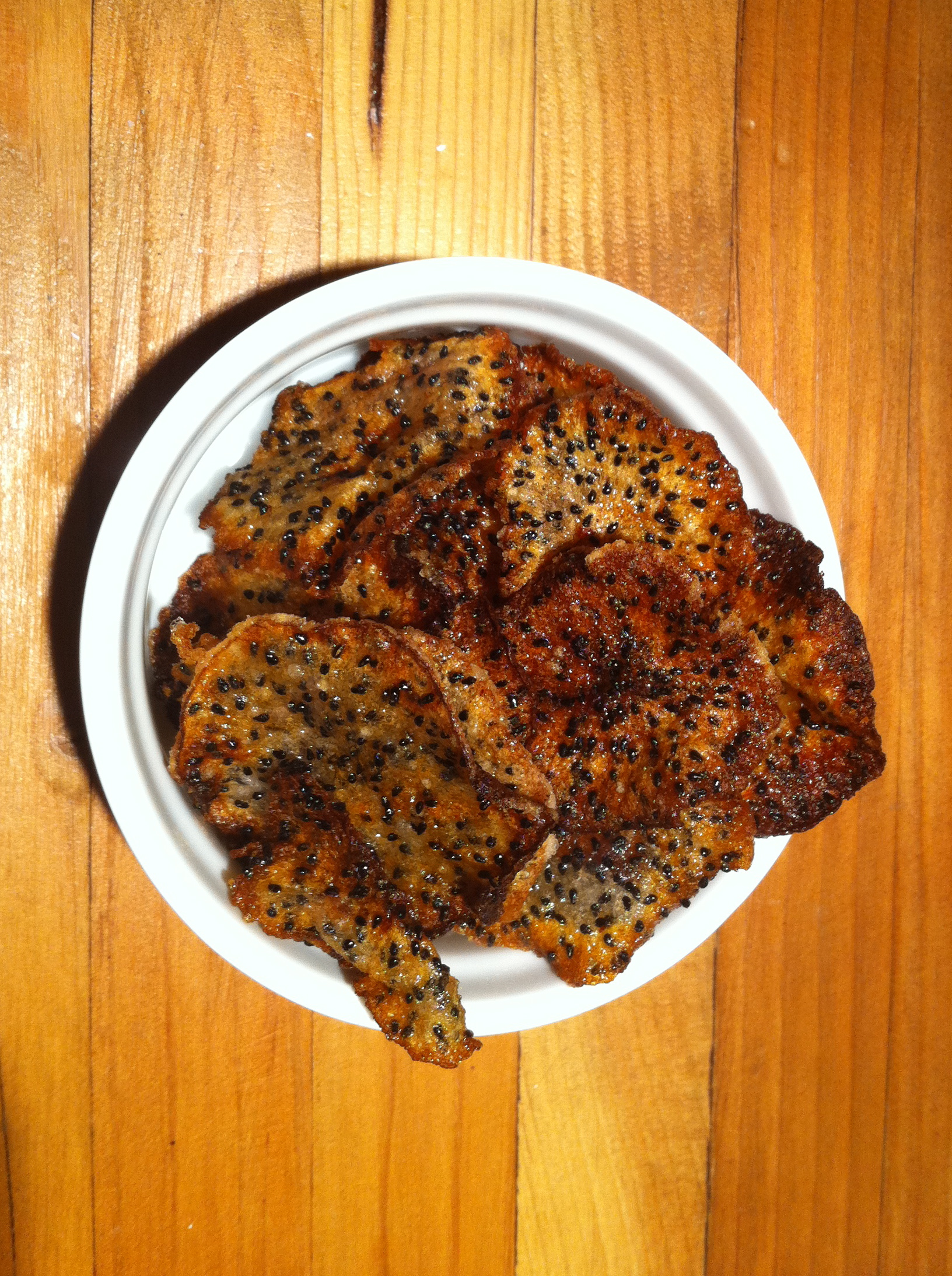
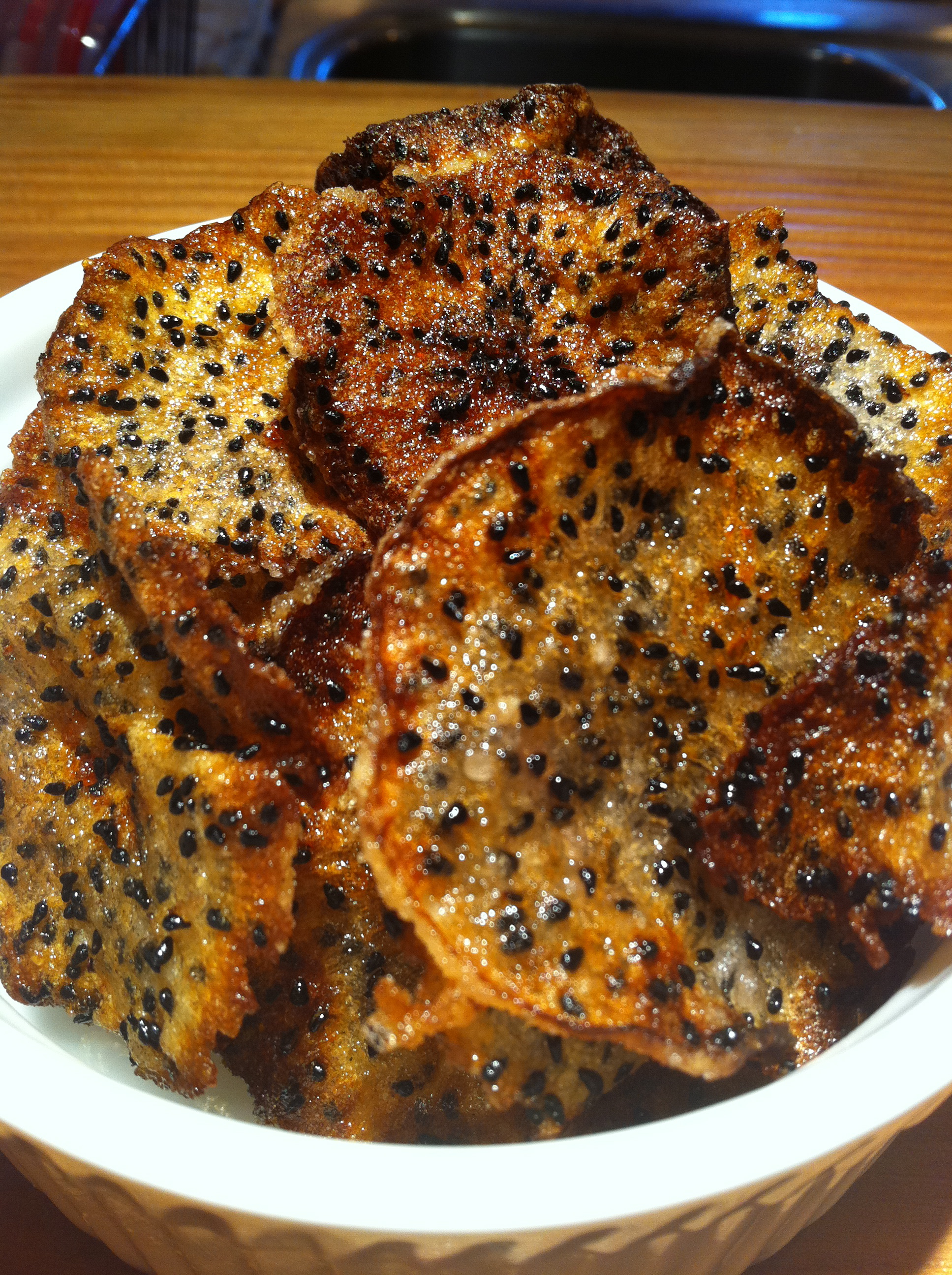
Bowl of Dragonfruit Chips

About a month ago the team at Intellectual Ventures put up an interesting blog post about frying watermelon to make watermelon chips.  With nothing more fancy than a vacuum sealer, this seemed like a perfect recipe to try out at home.

The concept behind the watermelon chip is that starch is what makes a chip a chip, whether it’s corn or potato or even parsnip and taro.  Fruit, however, does not have the high starch content that these vegetables have (yes, a potato is a vegetable).  Using vacuum compression, starch can be infused into the fruit, and make it suitable for frying.  They settled on watermelon.  I decided on dragon fruit.

Fruit Fry

The steps are simple enough:

  1. Thinly slice the fruit
  2. Apply a starch slurry to the fruit
  3. Vacuum seal and let rest for 30 minutes
  4. Deep fry

I went to my local Asian supermarket and nabbed a dragon fruit.  I then had it thinly sliced on a meat slicer.  Here I pulled some strings: I don’t have a slicer at home, so asked my best friend who owns a bar if I could come in and borrow his for a minute.  I’m sure I could have just cut it thinly myself, but I wanted to nail it.  Sometimes it’s more fun to make it more complicated.

Next up was starch.  In the blog post, Chef Zhu says he’s using something and water.  Did he say Crisco?  Or maybe Cryscoat?  One check on the web and it turns out that Cryscoat is a “nickel-containing zinc phosphate for steel and zinc-coated steel, applied by spray or immersion prior to painting”.  So, probably not that.  Screw it I thought – I’ll just use the cornstarch in my cabinet.  Sometimes it’s easier to not make things too complicated.

Starch Slurry

I took the dragon fruit slices, which were awfully thin and delicate, applied the starch to either side, and placed them in a sealing bag.  Which I then sealed up.

Compressed Dragonfruit

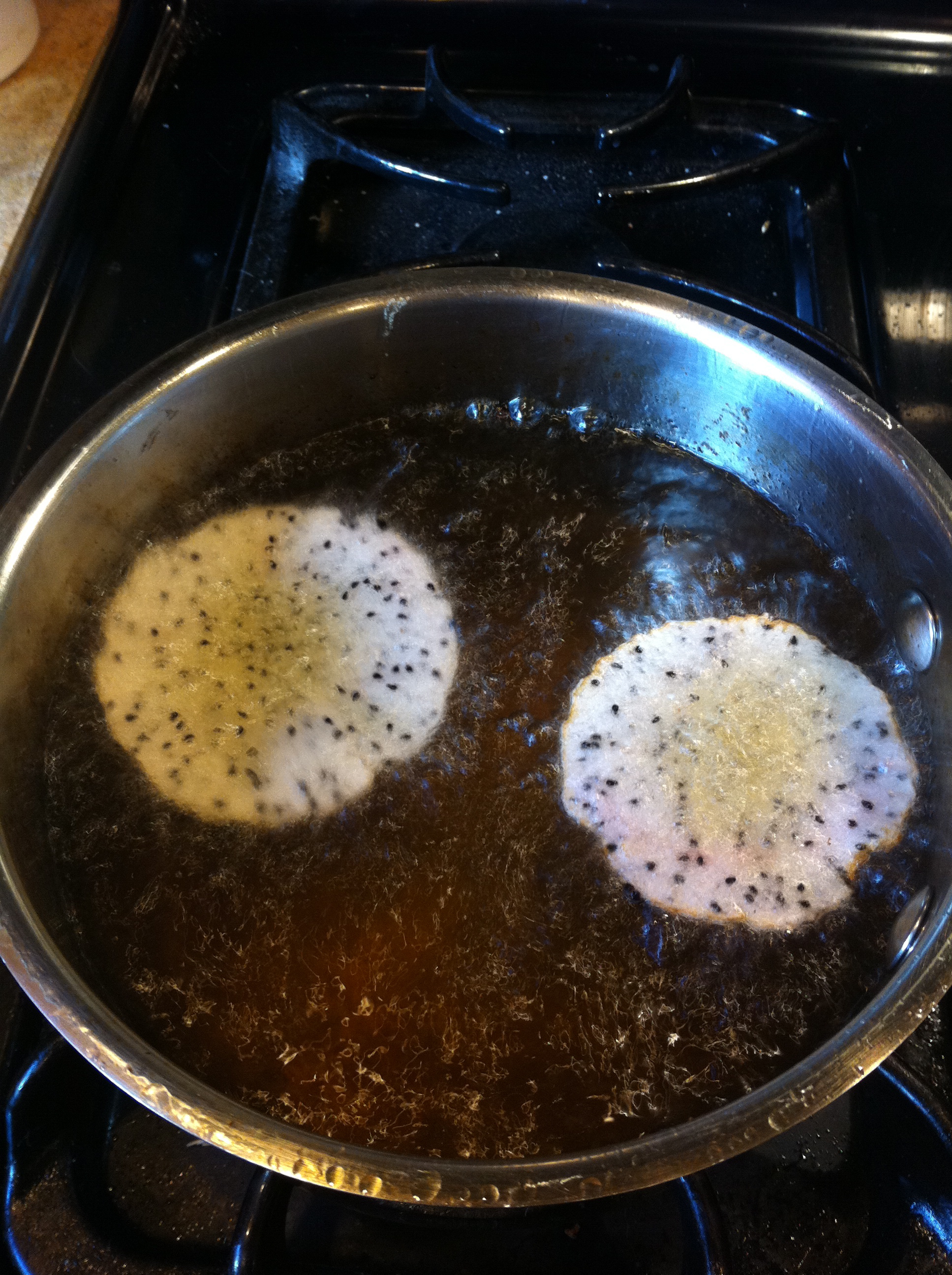
After 30 minutes I fried them up on the stove.  They liked to stick together so I found it easier, though more time consuming, to only do 2 or 3 at a time.

Dragonfruit Frying

And after I let them dry out and crisp up, I had some amazing dragon fruit chips.  The sweetness of the fruit came through, with the added texture of the seeds, which also imparted a sesame-like flavor to the chip.  Excellent and delicious.

I’m looking forward to their completed cookbook to see what other ideas they have for transforming foods into flavors and textures they’ve never been before.  In the meantime, however, I’ll just try and cook the examples they keep throwing out at us.

Dragonfruit Chips

Jethro
Meeting Eight: Putting It All Together

Your Jet City Gastrophysics Crew

Your Jet City Gastrophysics Crew

Eric, Scott and I met for our eighth meeting at the end of November to start putting together everything we’ve learned together over the year for a master project.  A thesis project, if you will.

Putting It All Together

Putting It All Together

We’re pretty excited about it and we’ll post more about it in the future.  Otherwise, I was the happy recipient of the latest version of Scott’s DIY immersion circulator.  This one is cased in aluminum, otherwise known as ‘Jethro Proofed’ because of my unique ability to break things.

Circulator 3.0

Scott's Latest Version of the DIY Circulator

We also exchanged other early Christmas gifts as well as distributing our collection of foodstuffs amongst ourselves: fresh ceylon cinnamon from Costa Rica, homemade chocolates, transglutaminase, sodium alginate, Ultratex 3 and maltrodextrin.  Teamwork has its benefits.

Powder Exchange

Our next few meetings will be concerned with our developing thesis project, so we’ll wait to post on the project as a whole instead of meeting updates.  We’re looking forward to it!

Jethro

Top Food Geek Christmas Gifts of 2010

Tags

, , , , ,

food geek christmas gifts
The season of giving is upon us, and that means it’s time to start Christmas shopping for the food geek in your life.  Let’s face it: he (or she… but who are we kidding, it’s a he) is hard to shop for.  He already owns 4 kinds of microplanes, he’s got more cookbooks than Barnes & Noble, and his spice rack is organized by atomic weight.  A waffle iron just isn’t gonna cut it this year.

For just that reason, I’ve rounded up the best and geekiest kitchen gifts of 2010.  And, if you’re feeling extra generous, I also threw in a few “luxury items” sure to induce a Christmas morning nerdgasm.

Books

2010 was a great year for cookbooks.  In fact, all of the books below are new this year, with the exception of Modernist Cuisine, which is available for preorder but won’t ship until March.  At $475, it’s not exactly a stocking stuffer, but you can spread out the joy by wrapping each of the five volumes separately.

Modernist Cooking “Ingredients”

If the food geek on your Christmas list is dying to pull off the latest techniques, he’ll need some ingredients.  I’ve found the WillPowder brand to be a great value for the price.

Essential Kitchen Gear

Who doesn’t like playing with new toys?  Over the last year, prices of induction cooktops have plummeted.  They are a great way to expand your stovetop capacity, and they’re extremely energy efficient for heating small quantities of food.

In My Dreams…

Some guys dream of sports cars, some guys dream of rotor/stater homogenizers.  Here is the equipment in the kitchen of my dreams.

Scott