Tags
 30 of these.
Eric
12 Thursday May 2011
Posted in curing, dehydration, emulsions, gels, hyrocolloids, maltodextrin, starches, thickeners, transglutaminase, vacuum sealing
Tags
30 of these.
Eric
11 Friday Feb 2011
Posted in dehydration, maltodextrin, recipes, starches, thickeners

It is undeniably fashionable, these days, for an upscale restaurant to serve “their take” on macaroni and cheese. I’ve seen it prepared at least a dozen ways: with wild mushrooms, with truffles, with bleu cheese, with cave-aged gruyere, in mini-cocottes, on oversized platters, broiled, baked, and deep fried. For the record, there’s nothing wrong with any of these preparations. In fact, we served a wild mushroom and truffle oil mac & cheese at my wedding! However, I wanted to take the concept to the extreme and produce the most hyperbolic, modernist version of the dish I could… just to see what happened. The result: maltodextrin-powdered Beecher’s cheese with a tableside hot cream to make an “instant” sauce.
I originally thought I’d post my results as a joke – an over-the-top preparation that was to comfort food what the Dyson Air Multiplier is to climate control. However, I was delightfully surprised to find out that this mac & cheese actually tasted fantastic! The flavors are extremely pure and the consistency of the instant sauce was perfect. Watch out, Kraft… you’ve got competition.
Makes: 2 snobby servings
Total kitchen time: 4 hours (45 minutes working time)
For the Powdered Cheese:
For the dish:
I owe a big thanks to Maxime Bilet (author of Modernist Cuisine) for giving me a hand with the powdered cheese recipe. If you aren’t up for ordering a pound of maltodextrin online, you can also use my simplified powdered cheese recipe from the Beecher’s Cheddar Cheetos article I wrote for Seattle Weekly. However, tapioca maltodextrin (N-Zorbit) is pretty handy stuff for turning liquids into powders, and is a staple in modernist kitchens.
Scott
09 Sunday Jan 2011
Posted in foams, recipes, thickeners

If you’ve ever been in an upscale restaurant and ordered a sorbet or ice cream with a consistency that seemed to defy the laws of physics, it was probably made in a Pacojet. This $4000 machine is a staple in many restaurant and hotel kitchens for its ability to produce exceptionally smooth and creamy desserts and savory dishes. However, if I’m going to drop four grand on a kitchen machine, it damned well better take voice commands and wear a skimpy outfit.
My method uses dry ice for instant freezing and Xanthan Gum, a popular soy-based gluten substitute, as a thickener for a more velvety texture. In addition, I’ve added a small amount of Versawhip, which creates a subtle but stable foam, giving the finished product the unexpected lightness usually associated with mousses. You can substitute the sorbet base of your choice, following the same basic steps.
Makes: about 6 cups
Total kitchen time: 10 minutes
Shopping list:
It is true that the Pacojet doesn’t require any added thickeners to achieve its magic consistency. However, it does require you to freeze your sorbet mix at –20C for 24 hours before churning. I’d love to do a blind taste test comparison between this method and the Pacojet. As soon as I trip over a pile of cash, I’ll let you know how the test turns out.
Scott
20 Wednesday Oct 2010
Posted in hyrocolloids, sous vide, thickeners, vacuum sealing
Tags

Aw yes, lobster mushrooms. They look like cooked lobsters on the outside and they have a nice meaty texture when cooked…..

Put some salt and pepper on the oxtail and braise it with some veal stock and smoked ham hock…..yes, excellent. It’s going to be a ragout for the pasta.


Make some fresh rosemary pasta then cut it and work on something else. (Duck eggs, rosemary, “00″, Semolina, Contadina, Water)

Mushrooms, golden beets, and butternut squash go into bags so they can have a meeting with the immersion circulator for a while. I made a terrine with that carrot ginger soup using agar, took about 3 hours to set.
Well, I’m ready to go so let’s start cooking stuff!
First up is a brown butter brioche with sauce rouille and pickled vegetables.

Next is a carrot/ginger terrine with sous vide butter poached lobster mushrooms, golden beets, butternut squash, and shaved fennel served with a caramelized fig sauce with reduced sherry and contadina extra virgin olive oil.

Finally, an oxtail and smoked ham hock ragout over rosemary/duck egg pasta.

Another successful dinner at my place. See you next week!
Eric
22 Wednesday Sep 2010
Posted in foams, gels, hyrocolloids, liquid nitrogen, spherification, thickeners, transglutaminase
Tags
chicken skin, corn, Denver, Ian Kleinman, ice cream, salmon, seaweed
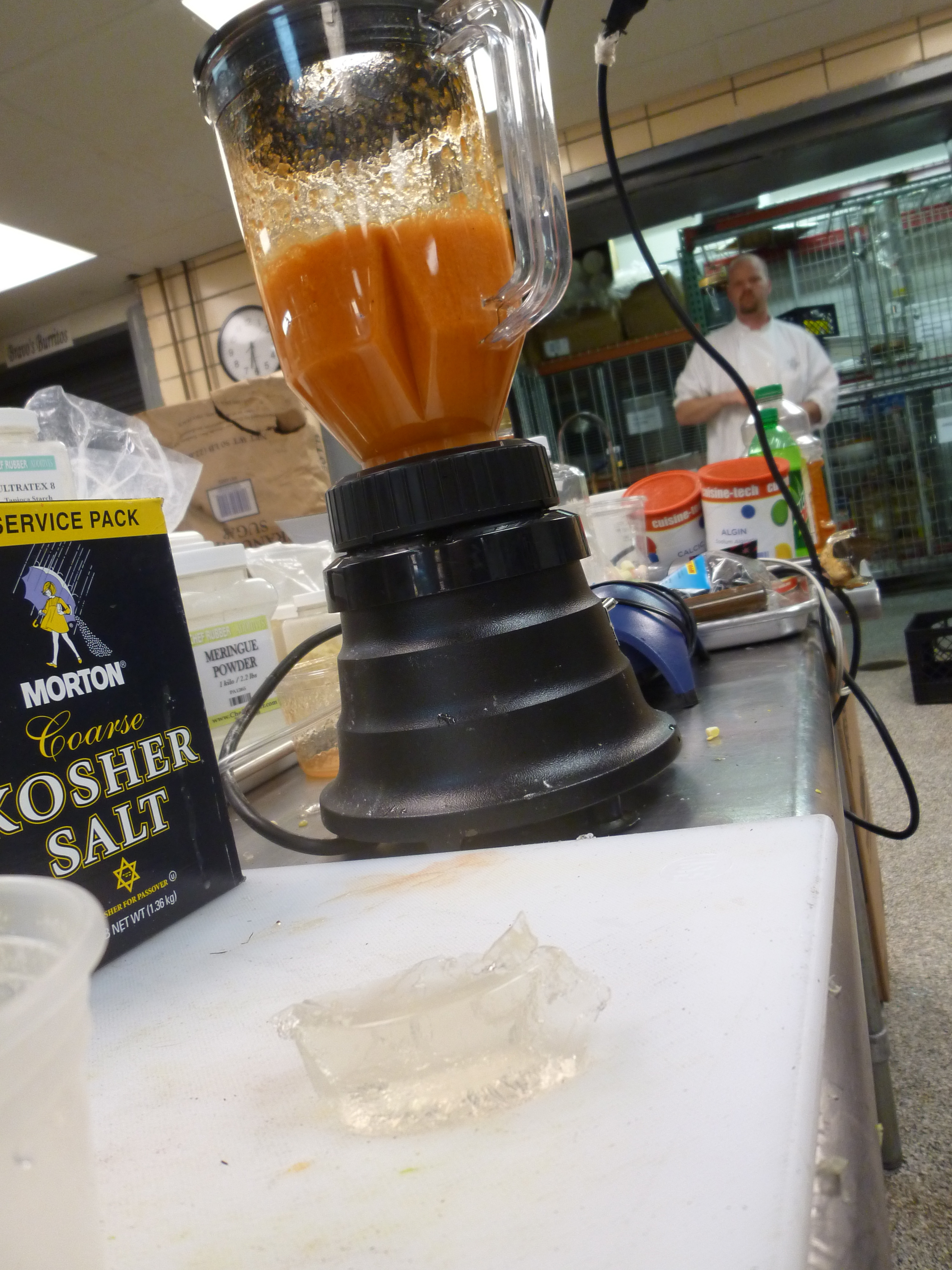
Chef Ian Kleinman (with gelatin and a blender)
I had to spend the month of May in Denver, CO this year because of work. I grew up there, so I had family and friends to entertain myself, and was able to put my brother’s, sister’s and mother’s kitchens all to good use. But I also wanted to eat the local cuisine, and the more experimental side at that. Biker Jim’s Gourmet Hot Dog Stand was certainly a great find, but I wanted to see some more “extended techniques” as well. I searched for a restaurant that could satisfy my cravings and found, to my surprise, a hotel restaurant in Westminster, CO.
Westminster is a suburb of Denver, and could be Anywhere, USA: strip malls, parking lots and franchise stores. Nothing suggests it could be a hotbed of Modern Cuisine. But apparently at O’s Steak and Seafood at the Westin Hotel, they had let a chef run wild: Ian Kleinman. He was doing a tasting menu once a week. As a matter of fact, over the last two years, he was able to push out over 100 of these menus. In a suburban hotel! Excited, I was ready to make my reservation. But there turned out to be a problem. He no longer worked there.
Apparently he had left just months earlier. Well, this was a drag. I researched some more to see if he was still in town, working at another restaurant. It turns out he had started his own catering company, The Inventing Room. “We will work with any budget” his website read. I wonder if he’d cater a dinner for one? I gave him a call.
I got him on the phone and explained that I wanted a single dinner catered, but I wanted to watch him cook the entire thing. In the course of our conversation, it went from dinner to a cooking lesson. This is WAY more than I had hoped for! I said I wanted to focus on different molecular techniques, the more outlandish the better. He obliged.
I met him at the commissary kitchen where he prepares his meals for The Inventing Room. He had already been there preparing and had laid out his ingredients for us to work with.

Not Your Mother's Spice Cabinet
We riffed out a couple of dishes that would use a variety of basic techniques: spherification, culinary foam and flash freezing with liquid nitrogen. As its centerpiece, we would use transglutaminase (also known as TG or ‘meat glue’) for what could now be considered a classic Modern Cuisine idea: salmon wrapped in chicken skin.
Now most would brush a slurry of TG directly on the salmon and wrap the skin onto the fish. Chef Kleinman took a different approach. After applying TG to a bunch of chicken skin, he rolled the skin up into a ball, wrapped it in plastic wrap and stuck it in the freezer. He had created a small ham of pure chicken skin. He took it to the meat slicer to make thin even slices.

We took the slices and made little chicken skin ravioli with salmon centers.

And then we fried the little suckers.
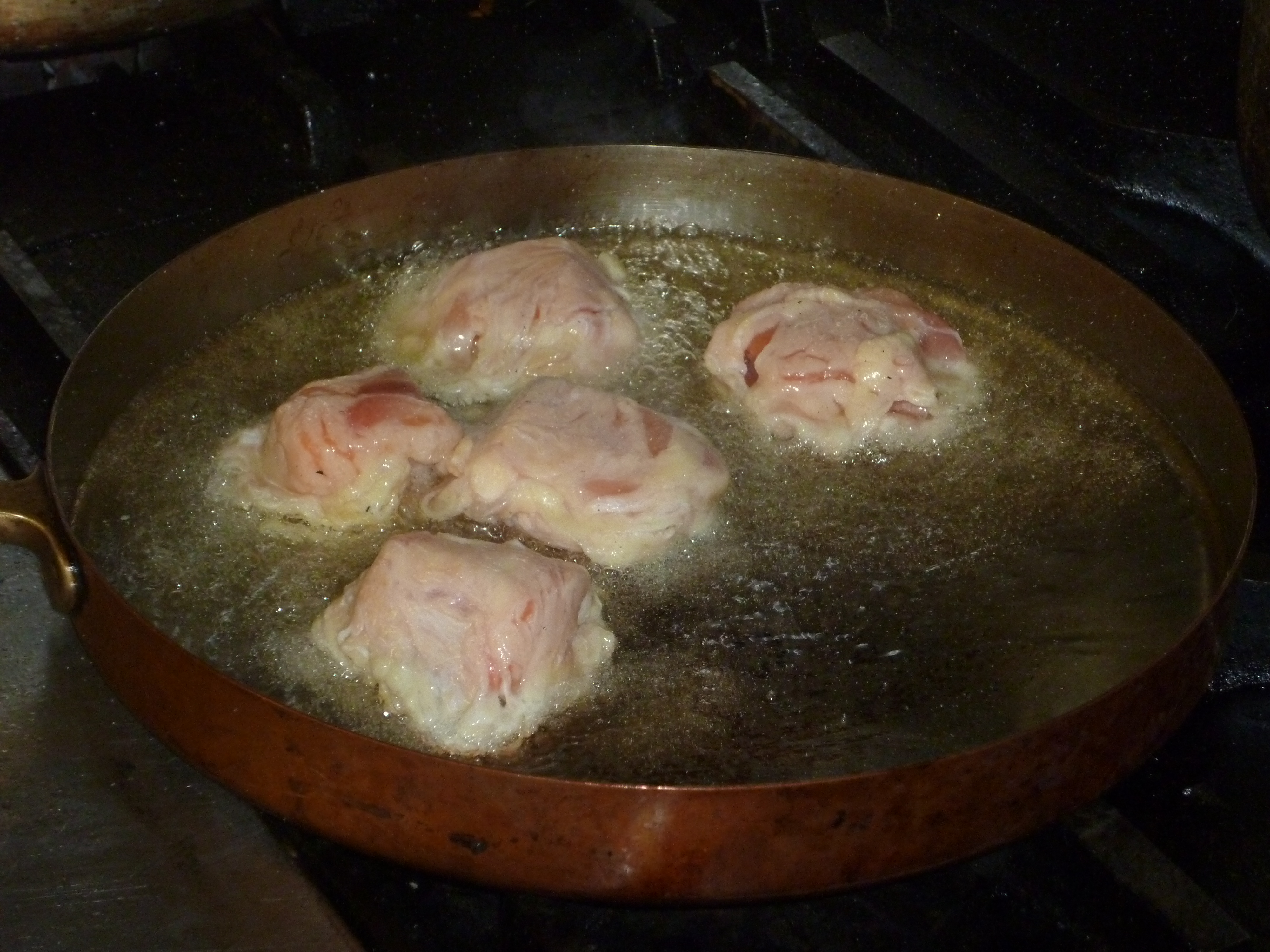
We plated it with a gelatin based sauce, which we transformed into a foam as well by adding a little lethicin. Now usually you would use an immersion blender to foam it up. But Chef Kleinman tends to think out of the box. He loves going to hardware stores to find equipment and figure out culinary uses for them. For instance, he’s taken chalk line markers to dispense candy powders. For our foam, he let an aquarium air pump doing his foaming for him while he attended to other things.

An Aquarium Air Pump Performing Automated Foaming
Next up we went with another modern classic: liquid nitrogen ice cream. He had a huge amount of ice cream base to work from, and we decided to try something unique: a corn ice cream with caramelized cactus.
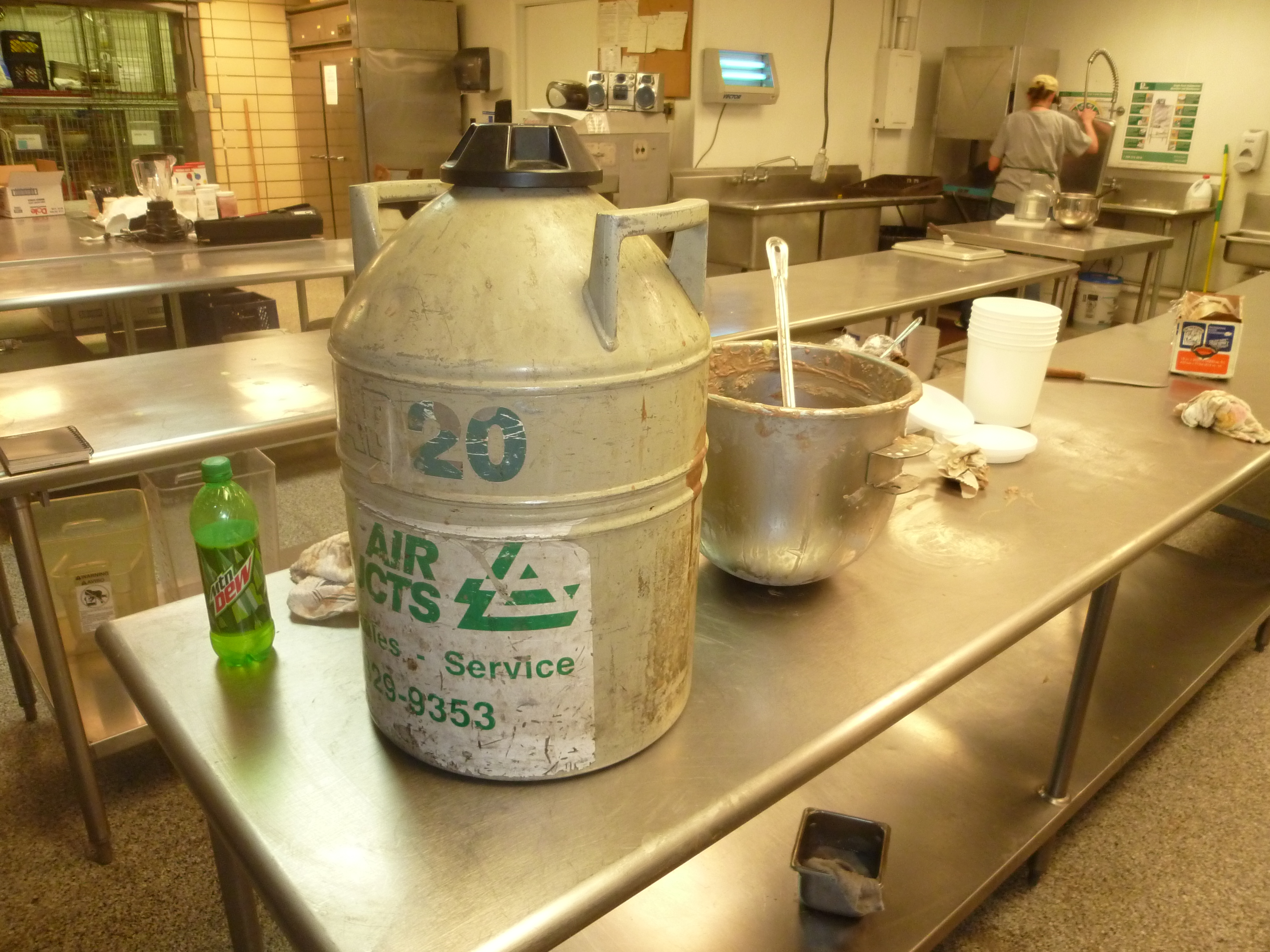
After throwing together some caviar (the key: the mixture should be ‘snotty’ before dropping into the calcium chloride water bath) we flash froze some seaweed as well. And our dishes were complete.
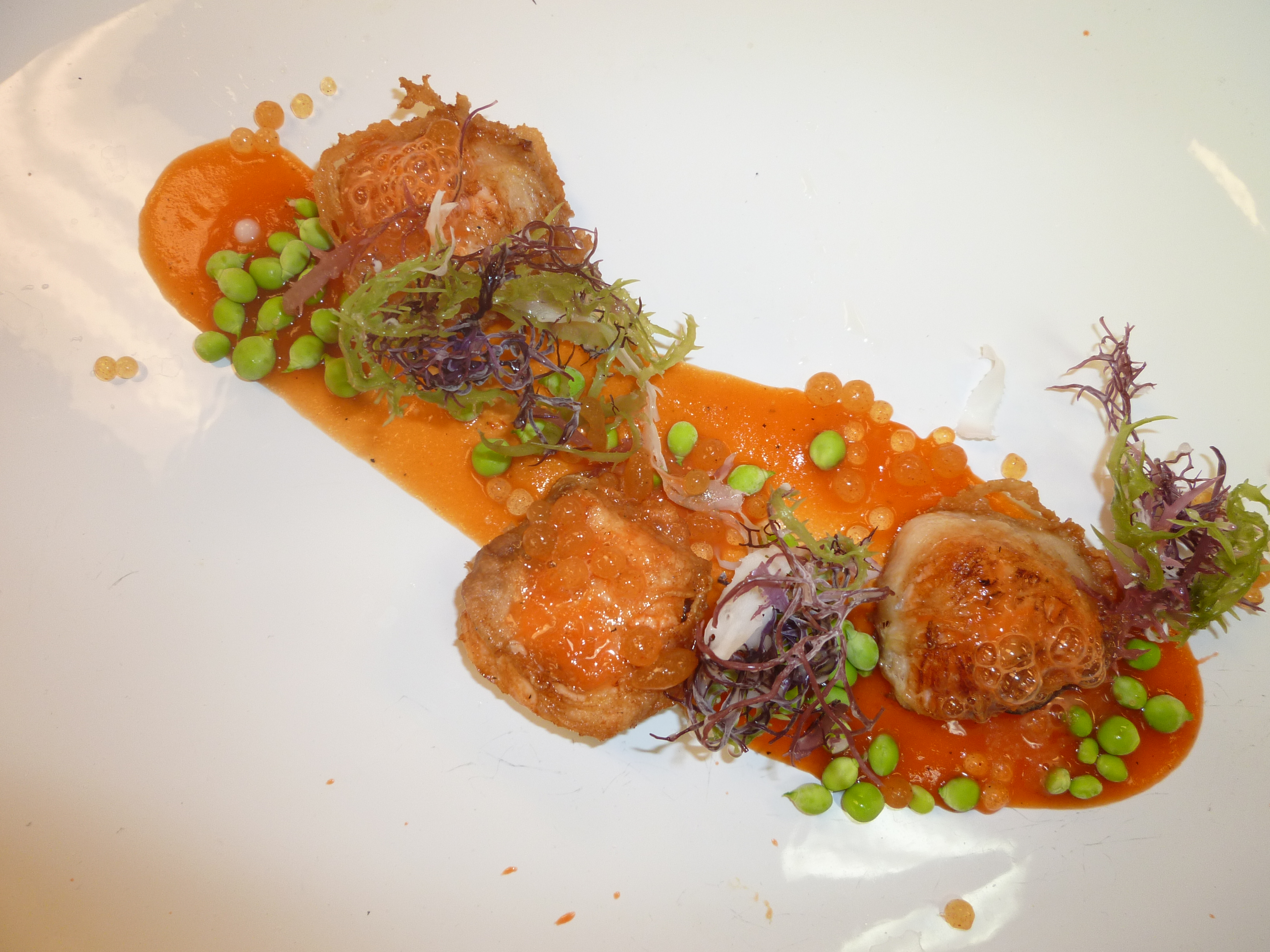
Chicken Skinned Salmon with Carrot Foam, Caviar, Peas, Seaweed
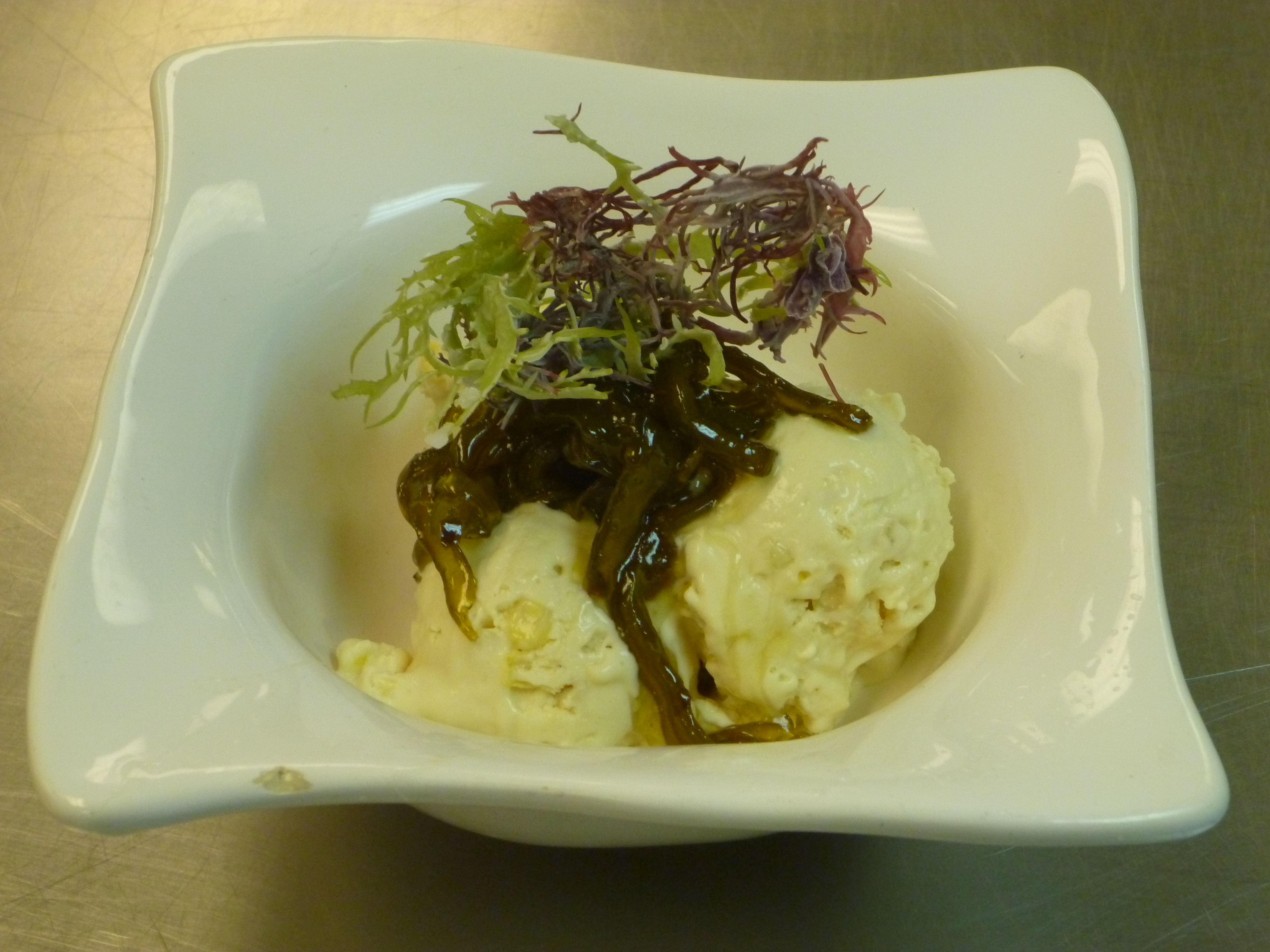
Liquid Nitrogen Corn Ice Cream with Carmelized Cactus and Seaweed
The salmon in chicken skin was incredibly tasty and the ice cream with cactus was a pleasant surprise to both of us, since we were food pairing on the fly. It was a fantastic experience and I am very grateful that he allowed me into the kitchen to see his approach to this kind of cooking.
You can follow Chef Kleinman’s culinary exploits at his blog, Food 102. Thanks again, Chef!
Jethro
 Jet City Gastrophysics