• About The Crew
  • Cooking Through ‘Modernist Cuisine’ At Home

Jet City Gastrophysics

~ Exploring Modernist Cuisine in the Northwest

Jet City Gastrophysics

Tag Archives: Modernist Cuisine

Modernist Cuisine At Home: Ham And Cheese Omelet

22 Friday Apr 2011

Posted by jethro in centrifuge, combi oven, emulsions, gels, MC at home, recipes

≈ 8 Comments

Tags

brown butter, constructed cheese, eggs, gruyere, ham, Modernist Cuisine, omelet

Ham and Cheese Omelet

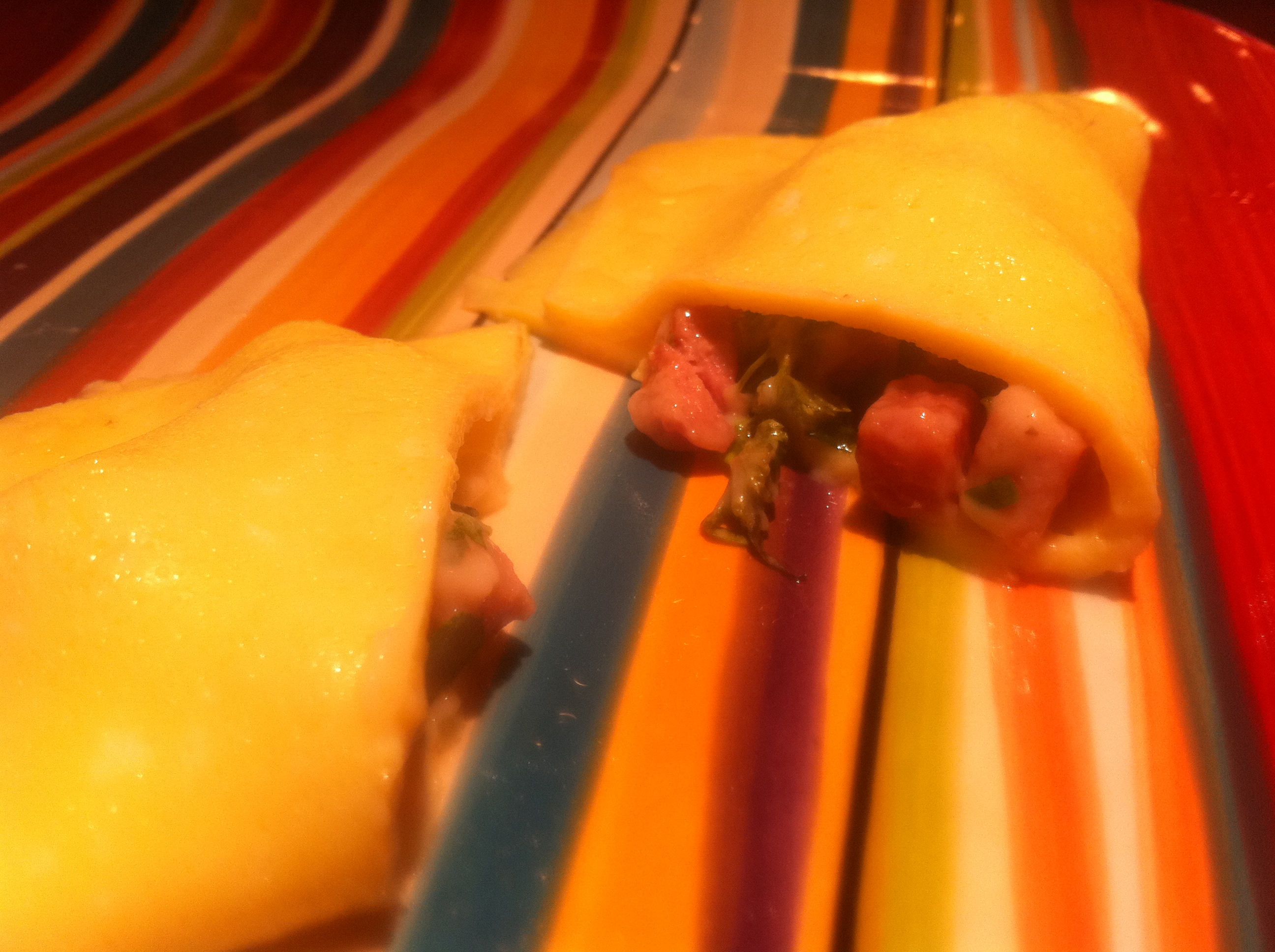
Now, brethren, let us turn to Book Four, Chapter Fourteen, Page Ninety-Five of The Work, and construct ourselves a tasty little omelet. Three components need to be prepared in particular: the eggs, the cheese, and the butter.  Ah, the wonderful world of dairy gels.  We shall go in reverse order.

Continue reading →

Shrimp in Cocktail Leather

12 Tuesday Apr 2011

Posted by sheimend in dehydration

≈ 1 Comment

Tags

cocktail, cocktail sauce, dehydrator, leather, Modernist Cuisine, shrimp, shrimp cocktail

shrimp cocktail
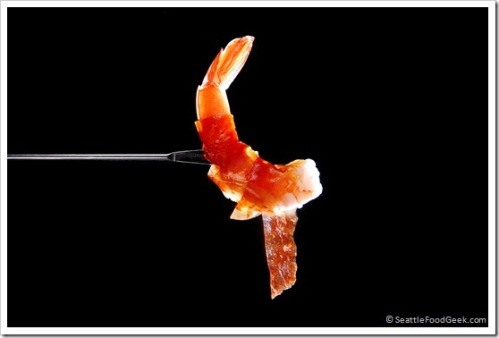
Although the title sounds like the beginning of a bad personals ad, this recipe couldn’t be more innocuous.  I wanted to play with the notion of a classic shrimp cocktail, and somewhat by accident (and inspired by a brainstorming session with Jethro), I realized that I could dehydrate cocktail sauce and produce something that looked quite a bit like prosciutto.  Prosciutto-wrapped shrimp is a great dish on its own, and on first glance, that’s what this dish might appear to be.  However, in a single bite, you’ll quickly identify the unmistakable flavor of cocktail sauce.

Method:

  1. Spread cocktail sauce (bottled or homemade – I’ll admit to using bottled) in a thin, even layer on a piece of parchment.  Make the layer just thick enough that there are no holes or gaps in coverage.
  2. Dehydrate in a food dehydrator at 135F for 2-3 hours or until it is dry to the touch.  If you don’t have a dehydrator, you may be able to achieve similar results in a low oven with the door cracked slightly.
  3. Carefully peel the parchment away from the dehydrated cocktail sauce.  It will peel away just like a fruit leather.  Place the cocktail “leathers” on a silpat or another sheet of parchment – they will stick to counters and cutting boards.
  4. Cut the leather into strips, 3/4” wide by 7” long (for medium shrimp – adjust the size as needed).
  5. Cook shrimp using the method of your choice.  Refrigerate until cool.  Wrap the shrimp in cocktail leather.  Serve, and watch for the look of surprise on the faces of your guests.

Scott

GUNS, GUITARS AND GASTRONOMY: A Conversation with Grant Achatz and Nick Kokonas of Alinea

22 Tuesday Mar 2011

Posted by jethro in blow shit up, uncategorized

≈ 6 Comments

Tags

Alinea, Aviary, Grant Achatz, guitars, guns, interview, Modernist Cuisine, Next Restaurant, Nick Kokonas

Grant Achatz and Nick Kokonas

Grant Achatz and Nick Kokonas

Grant Achatz and Nick Kokonas of Chicago’s Alinea, named the best restaurant in the country, dropped by Seattle last week to promote their new book Life, on the Line.  Scott, aka Seattle Food Geek, was scheduled to do the interview but could not make it. I was asked to fill in for him.  Due to my complete lack of experience and professionalism, a freewheeling conversation ensued, and we discussed everything from their book, hunting, and music to their newest projects about to launch in Chicago: a restaurant called Next, and its companion bar, Aviary.

Nick Kokonas: So, Jethro’s not a food writer, he’s subbing for a food writer.
Grant Achatz: Thank god.
NK: So you know what that means?  Actual intelligent questions that we haven’t had.
So, any questions you don’t want to answer, just say “fuck you”, and whatever.
NK: You’re going to get like, twelve “fuck you’s”.
GA: Ah, come on…
NK to GA: By the way, I finally read that interview. Joe Satriani? That’s where you went with that?
GA: The guy can play guitar, man.
NK: Yeah, in ’84.

Continue reading →

Modernist Cuisine At Home: Combi Oven Rib Eye

21 Monday Mar 2011

Posted by jethro in combi oven, MC at home, recipes

≈ 3 Comments

Tags

combi oven, gaggenau, Modernist Cuisine, rib eye

Continuing my awesome ability to find super deals on the Internet, I stumbled across a posting on Craigslist for an unused Gaggenau combi oven for under a grand.  That’s a chunk of change no matter how you slice it, but considering these things go for $3000, it was quite a find.  There had to be something wrong with it.  I went to take a look and heard the story: the guy bought the oven at an auction from an appliance store that went out of business, collecting a wide variety of gadgetry for he and his girlfriend’s dream kitchen.  Then, she left him, and headed back to China.  He was trying to get rid of all of it.  No scratches and everything seemed to look good – so I went for it.   A few days later with the help of my neighbor, and I had it installed and, thankfully, working up above my fridge.

Gaggenau Combi Oven

My New Toy: A Gaggenau Combi Oven

Continue reading →

Modernist Cuisine At Home: Pea Butter

28 Monday Feb 2011

Posted by jethro in centrifuge, MC at home, recipes

≈ 22 Comments

Tags

Anjana Shanker, Maxime Bilet, Modernist Cuisine, pea butter

Pea Butter

Recently, in a laboratory outside Seattle, I ate a piece of buttered toast that I will remember for the rest of my life. The bread itself was not extraordinary, but it was spread thickly with the brightest-green butter I’ve ever seen. It was not true butter, but rather an extract of pure green peas. Fresh peas are blended to a puree, then spun in a centrifuge at 13 times the force of gravity. The force separates the puree into three discrete layers: on the bottom, a bland puck of starch; on the top, vibrant-colored, seductively sweet pea juice; and separating the two, a thin layer of the pea’s natural fat, pea-green and unctuous.

– Paul Adams, Future of food: Drinkable bagels and beyond

As the first reviews began coming out from the 30 course dinners held by the Modernist Cuisine team, everyone mentioned the pea butter in particular.  A pretty simple recipe, you take pureed peas and spin them in a centrifuge to extract the pea fat.  I gave it a shot at my house, taking a can of peas, blending them, and spinning them for 30 minutes.  Nothing good came of it and the layers did not seem to separate.  I was stumped.

Luckily, I was able to talk with chefs Maxime Bilet and Anjana Shanker at the Modernist Cuisine book launch and they were able to clarify a few things for me:

  1. Use frozen peas
  2. Blend them with nothing else
  3. Spin for 90 minutes

That seems simple enough.  So I went home and went at it.

Visualize Whirled Peas

Peas, Unspun

Peas, Unspun

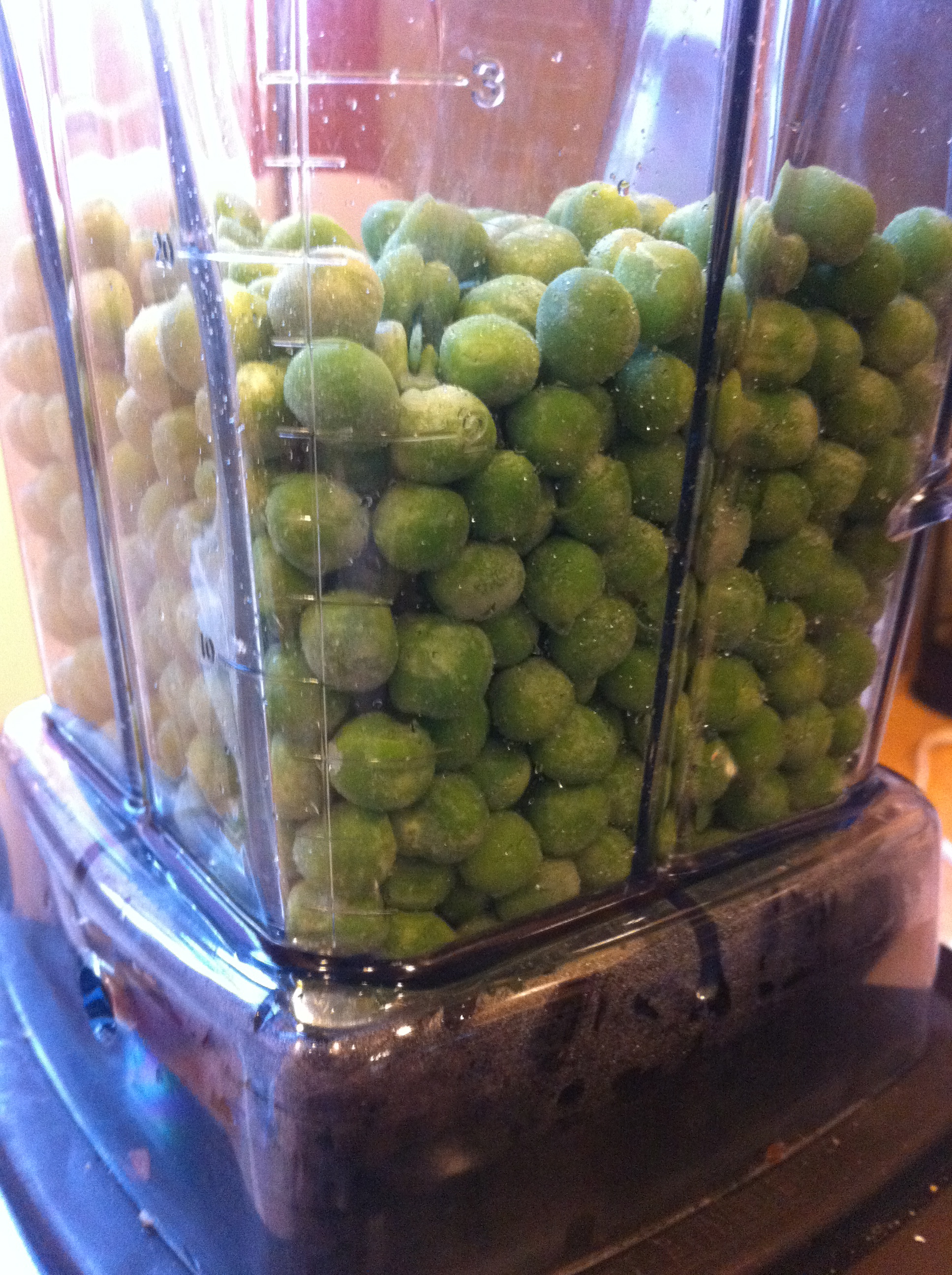
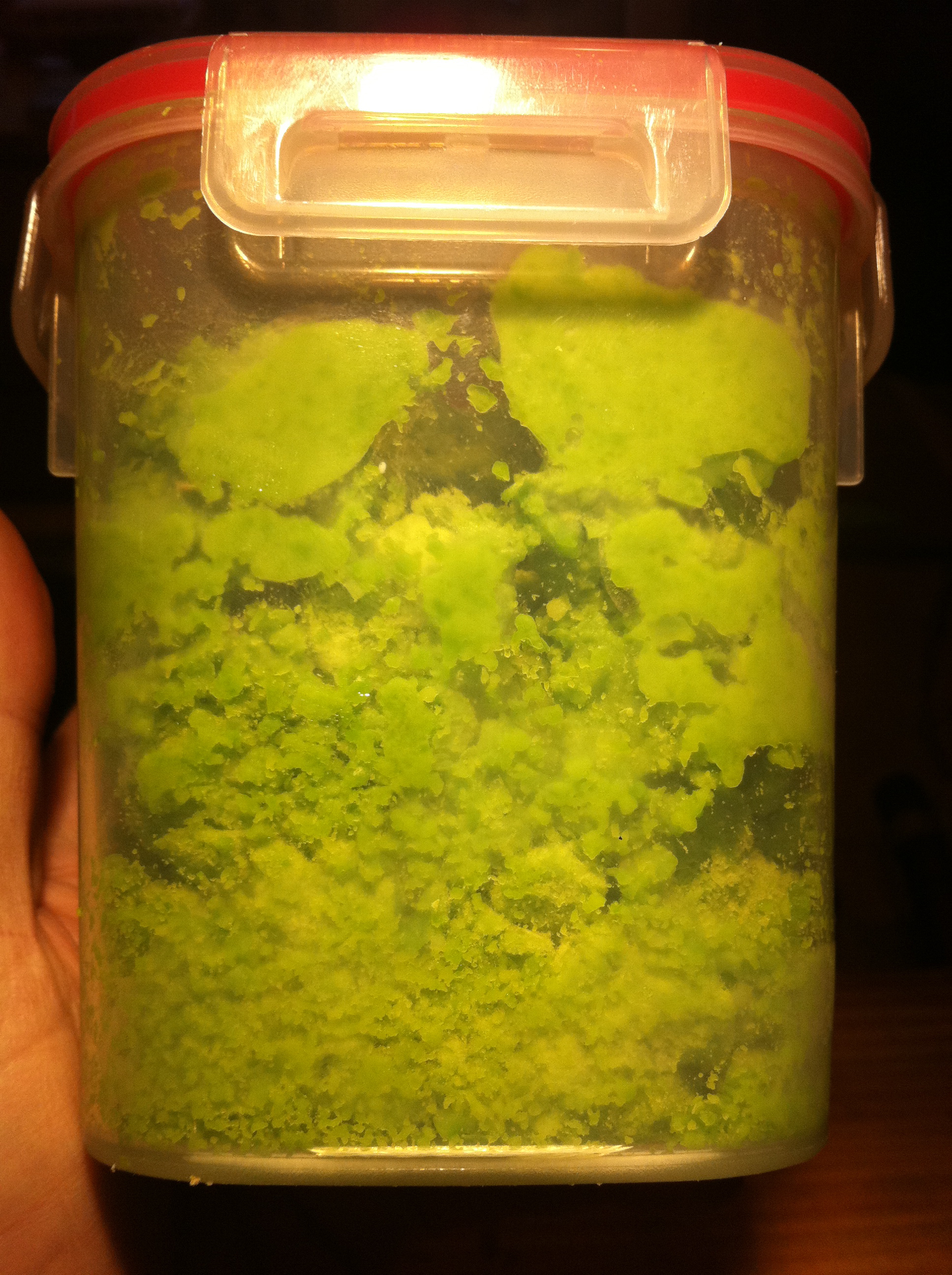
The chefs recommended a bag of high quality organic peas.  My local store had Kroger brand.  Well, hey, I gotta start somewhere.  I brought home a bag and threw them in the Vita-Mix for their first spin of the day.  It ended up being a very bright green frozen powder.  I put the pea dust into one of my centrifuge containers and filled the rest of the containers with water as counterweights.

Frozen Pea Dust
Peas Ready For A Whirl

When talking with Chef Shanker, I asked how powerful their centrifuge was that she used for the pea butter, and she said it was 10,000 g’s.  So I had to calculate how long mine would spin at, since my centrifuge only goes to 1520 g’s.  Since the relationship is linear it’s straightforward to figure out:

10000/1520 = 6.58
6.58 x 90 = 592 min.
592/60 = 9.9 hours

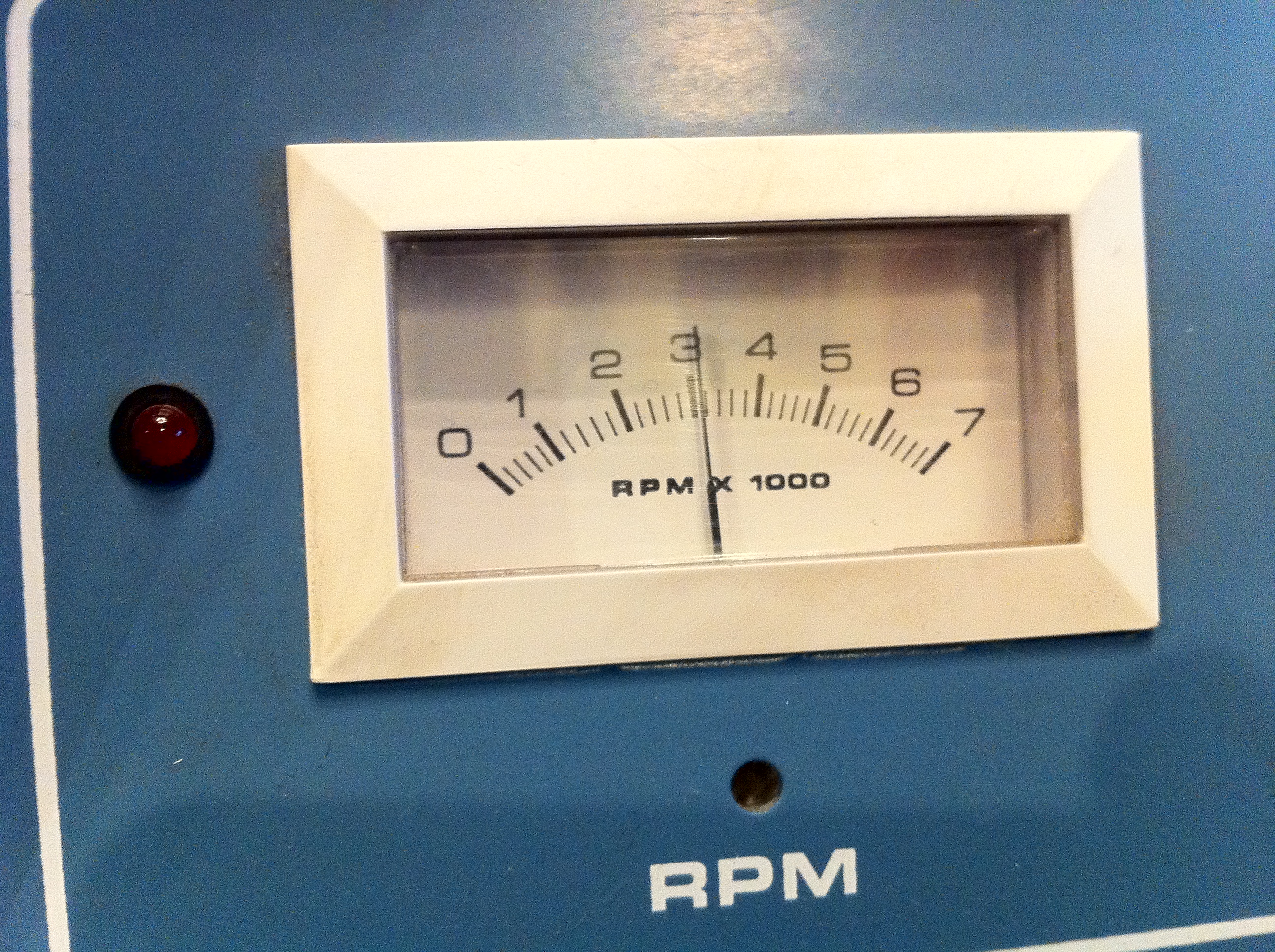
Ten hours in the centrifuge?  Mm.  I started around 3pm and didn’t feel like waiting until 1am to see the results.  So I decided 5 hours was plenty.

Pea-Minus Countdown To Launch
'Fuge RPM

She also mentioned that it was good that I had a refrigeration unit attached. The reason is two fold: 1) so the food doesn’t cook; and 2) it keeps the pellet together, providing better separation.  I checked my centrifuge temperature with and without the refrigeration unit.  Without, the chamber got to 124F. With the unit turned on, it was at about 70F.  So a significant difference to be sure.

Pea Parts

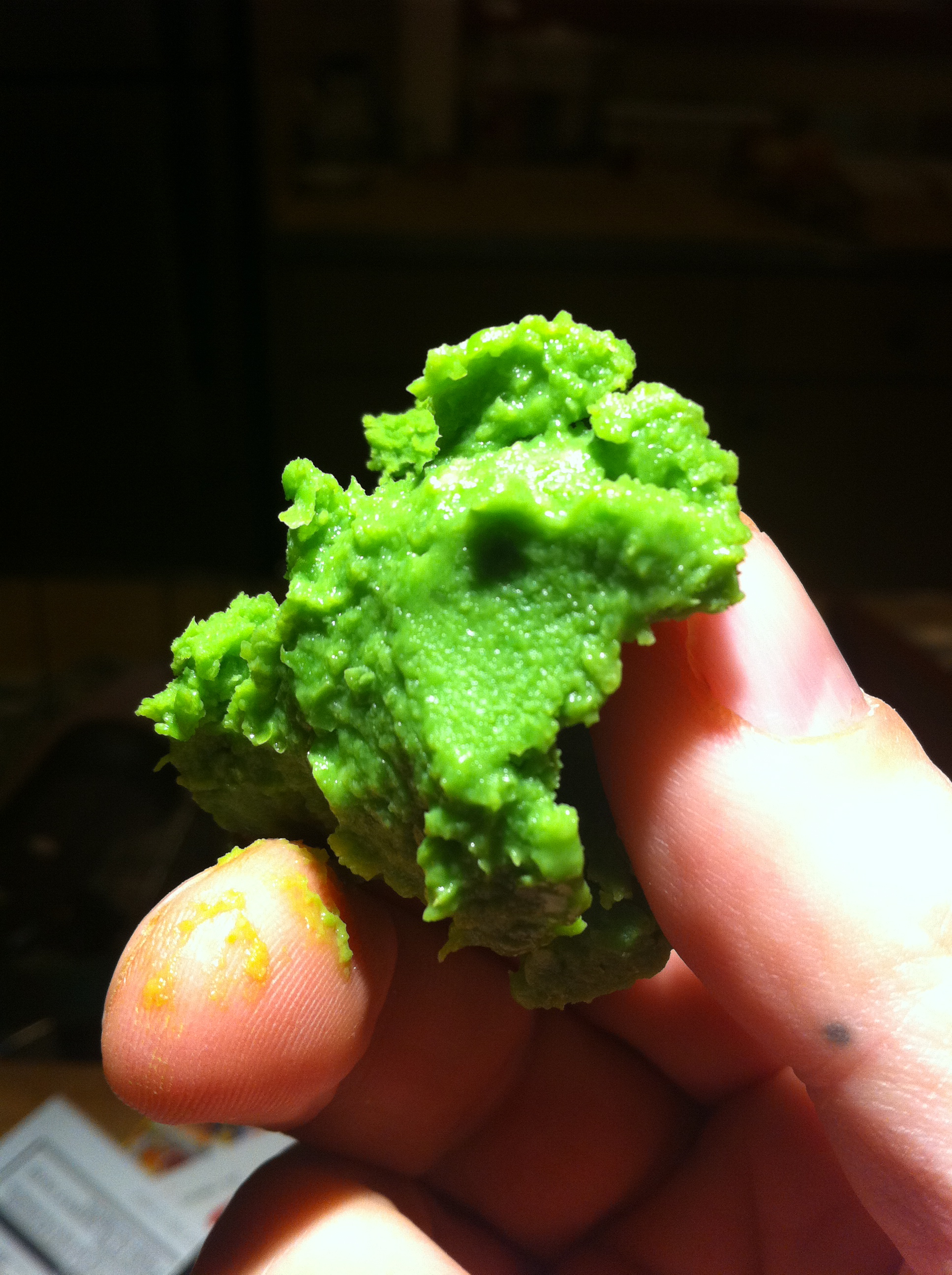
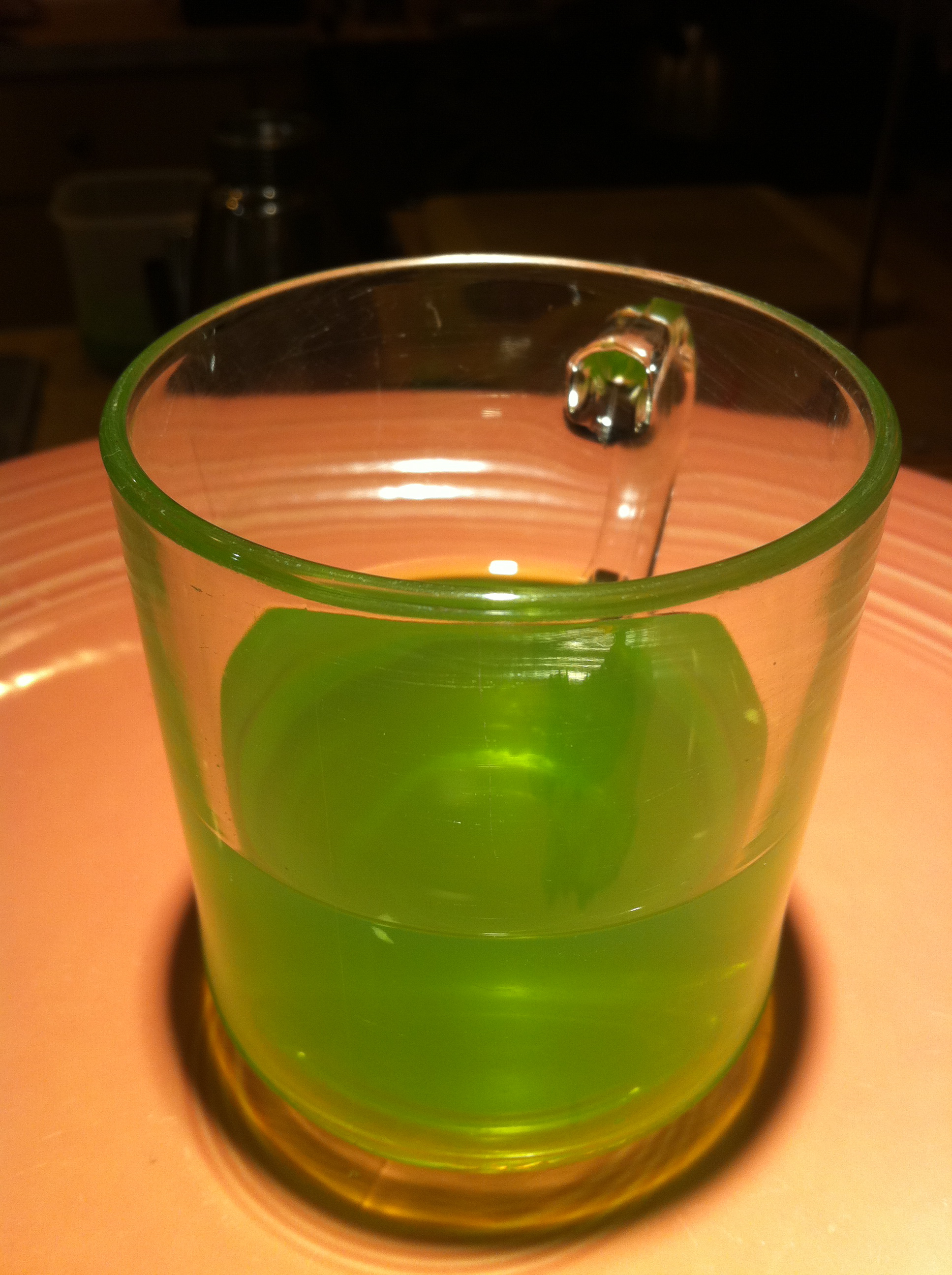
And after five hours, I pulled out the peas and saw the results.  Three separate layers: a pellet of pea meat, a thin layer of pea fat and a supernate of pea water.

Pea Parts

One thing to note is look at the bottom of the container as compared to the photo of it prior to spinning.  Five hours in the centrifuge completely distended and reshaped it.  Luckily, it didn’t crack open.

I scraped off the fat and put it on a piece of bread.  Pure bright pea flavor.  It’s really, really good.  The pea pellet and pea water were also striking in their own way as well.

Pea Putty
Pea Water

I’m a little concerned about the wear and tear on the centrifuge since I will be needing to be spinning it for long periods of time to get their results, but it performed great for a five hour run.  Cooking of all types teaches you patience, and in this case as in others, the wait is well worth it.

Jethro

The Modernist Cuisine Book Launch

24 Thursday Feb 2011

Posted by jethro in cookbook

≈ 4 Comments

Tags

book launch, hyperdecanting, Modernist Cuisine, Nathan Myhrvold, salt, Tom Douglas

Modernist Cuisine Book Launch

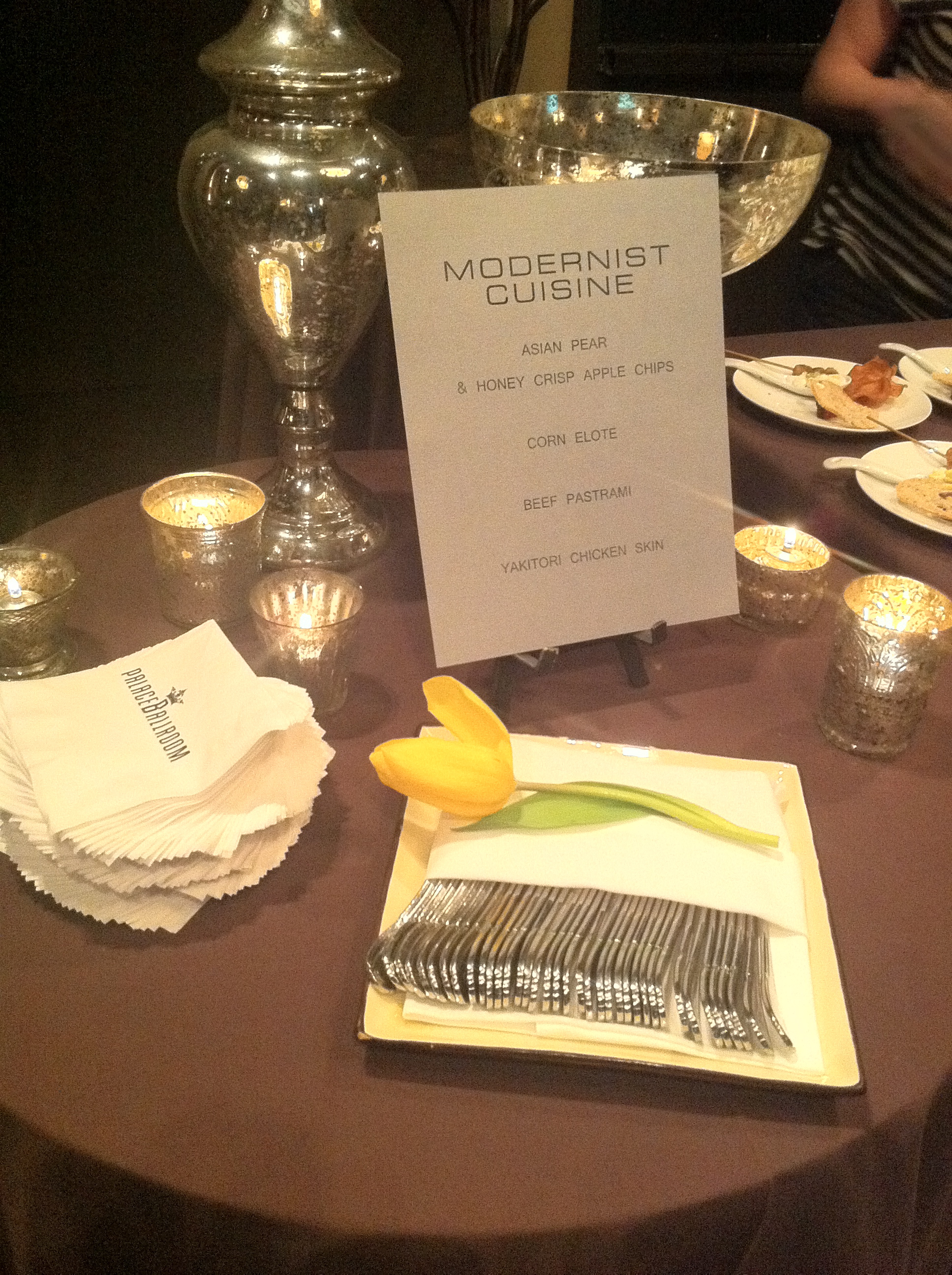
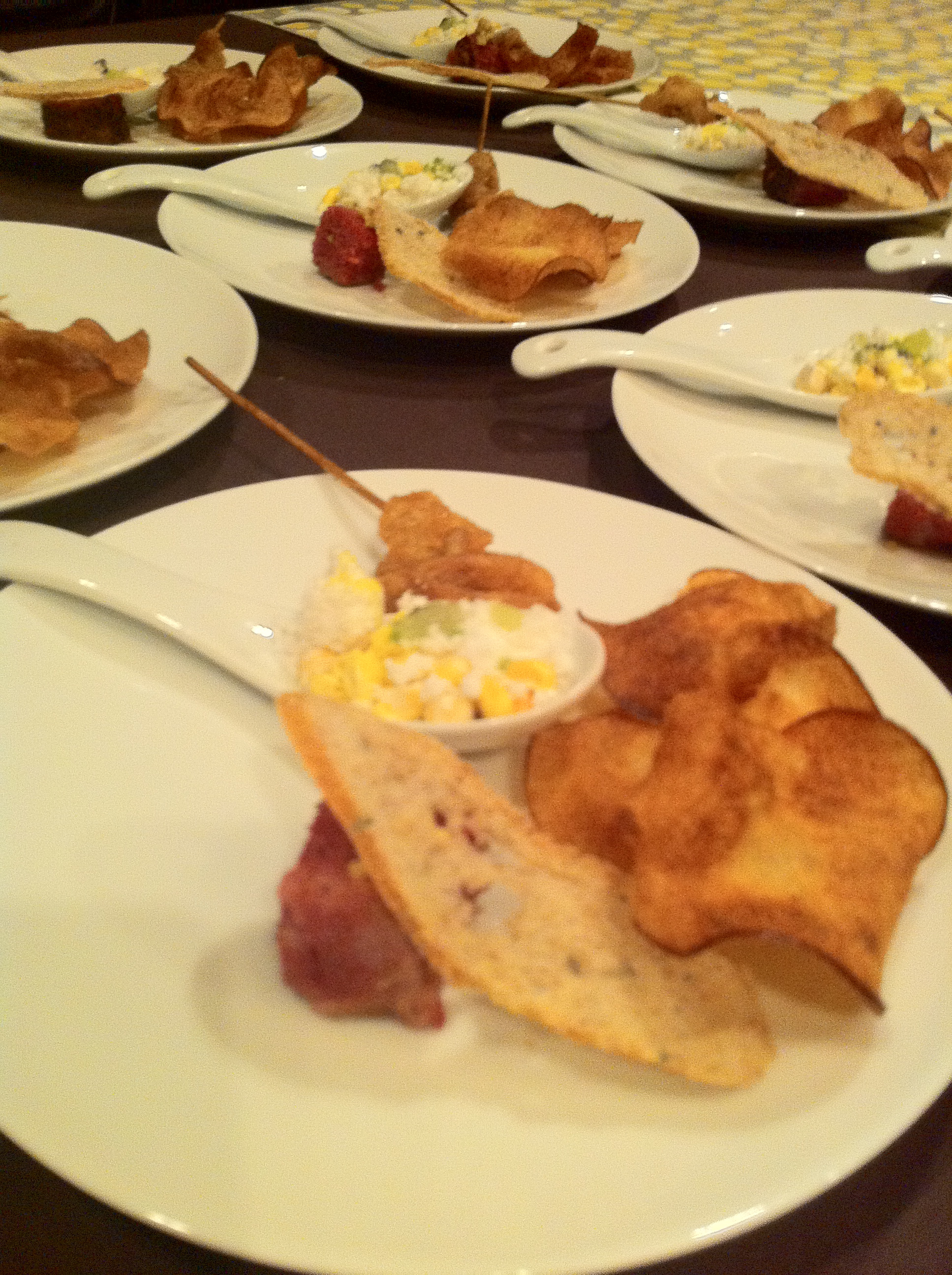
I was one of the lucky 100 or so people to attend the launch of the upcoming cookbook Modernist Cuisine in Seattle earlier this week.  It was held at the Palace Ballroom in downtown Seattle.  A small tasting plate was served as well as a couple of drink tickets for wine.  The pastrami was fatty and tender and delicious.  The Asian pear and apple chips were bright and sweet, without the nutty overtones from my batch of dragon fruit chips I made.

The Menu
The Dish

We were invited to take our seats.

The Seating Arrangments

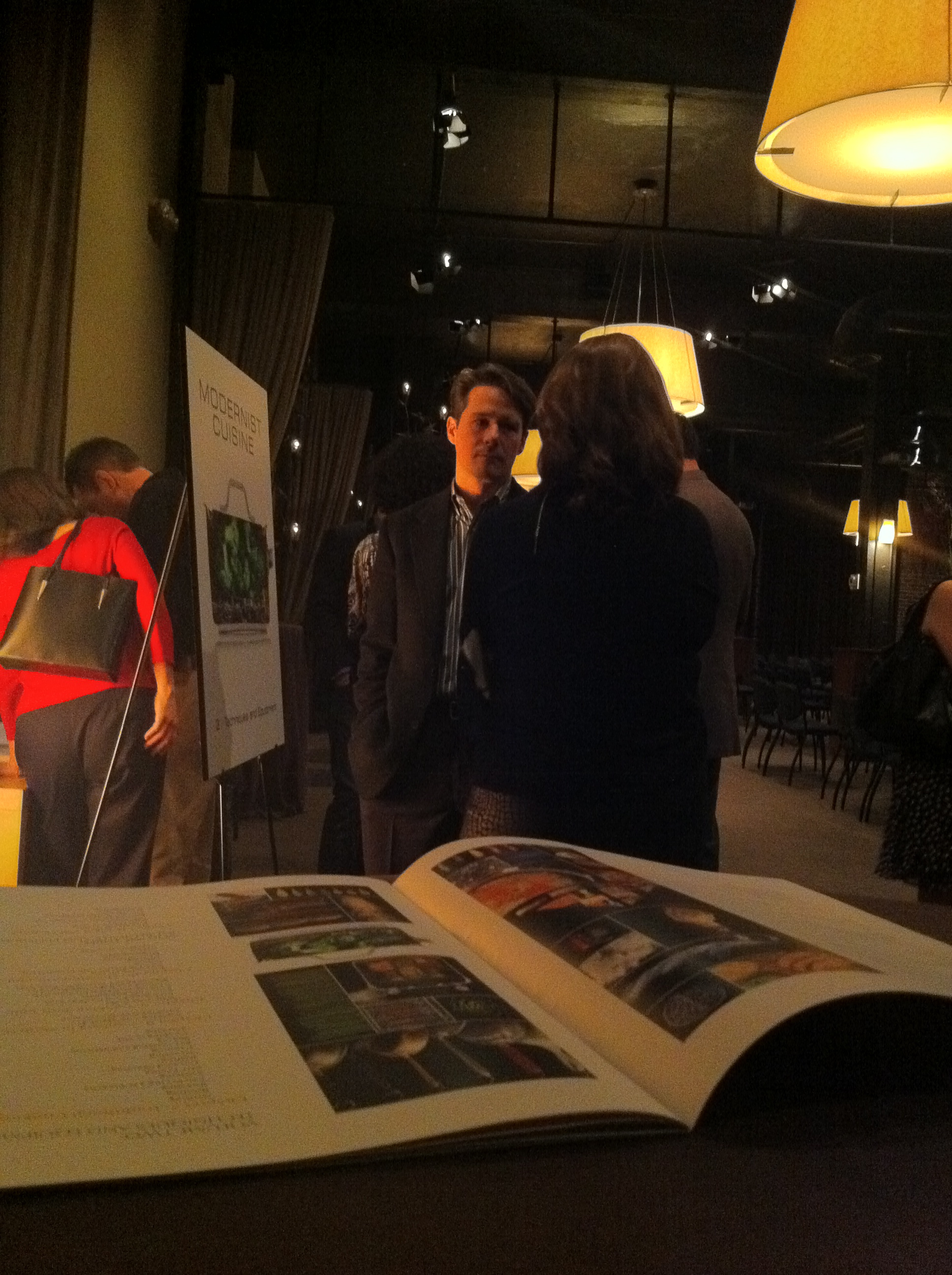
Seattle chef (and Palace Ballroom owner) Tom Douglas was the MC for the evening.  He introduced Nathan Myhrvold, who took us through a chapter by chapter review of the five volumes of the book.

Dr. Myhrvold Going Over The Book

Dr. Myhrvold Going Over The Book, While A Woman In Front Of Me Senses My Phone Close To Her Face

He showed us a lot of interesting portions of the book: a full page photograph of E. coli; maps of regional BBQ styles from the US Southeast and curries of India that resembled battle maps with arrows going to and fro; a simple recipe for carrot soup using a pressure cooker and a blender as well.  And there were slow motion films using their state of the art camera capturing liquid nitrogen floating along a surface and a water balloon exploding.  The depth and breadth of the book is really staggering (you can see some of their films on YouTube).

He also tossed out little nuggets of info throughout his talk.  Two stuck out in particular.  One is the use of salt.  They studied it, and found a very simple ratio for proper salting: 1%, or .75% if you’re sensitive.  That’s it.  It’s so deceptively simple that I’m sure some people will take issue with it.  Cooking is generally so intuitive, that such direct explanations might make a cook feel like the magic, the artistry of cooking is being shelved for direct measurements.  I think it just makes it that much easier to make delicious food and allows the cook to focus on other components of their dishes to elevate their flavor and presentation.  As a matter of fact, Dr. Myhrvold pointed out that the book doesn’t go into detail about flavor pairing and that there isn’t a lot of research available on the subject.  I guess they have another book to do.

Another little trick he told us about is hyperdecanting.  To quickly decant a bottle of wine, pour it into a blender and blend on high for 30 seconds.  He said he did this to a bottle of Spanish wine given to him by Spanish royalty in front of them.  They were mortified, but after a blind taste test, they always chose the hyperdecanted wine.  They quickly called their winery in Spain and in rapidfire Spanish said “blahblahblahBLENDERblahblahblahBLENDER”.  That got a good laugh from the audience.

Afterwards Tom Douglas had the co-authors, Maxime Bilet and Chris Young, join Dr. Myhrvold on stage and had a Q and A session.  Questions were asked about health department codes (the FDA apparently doesn’t like unsolicited advice), self publication (publishers would have only run 2000, over 3000 have already been pre-ordered), and various other things that I can’t recall.  Tom Douglas wrapped it up and said he was getting a copy of Modernist Cuisine for each of his chefs.  That’s a boss worth working for!

People mingled a bit more, asking questions from all the chefs who worked on the book. A couple copies of the book along with some excerpts were also out for people to page through and look at.  Everyone finished their drinks, and then it was off into the rainy Seattle night.

A Cookbook Excerpt

Jethro

The Most Pretentious Mac & Cheese Ever

11 Friday Feb 2011

Posted by sheimend in dehydration, maltodextrin, recipes, starches, thickeners

≈ 8 Comments

Tags

beecher's, mac & cheese, mac and cheese, Modernist Cuisine

mac-and-cheese

It is undeniably fashionable, these days, for an upscale restaurant to serve “their take” on macaroni and cheese.  I’ve seen it prepared at least a dozen ways: with wild mushrooms, with truffles, with bleu cheese, with cave-aged gruyere, in mini-cocottes, on oversized platters, broiled, baked, and deep fried.  For the record, there’s nothing wrong with any of these preparations.  In fact, we served a wild mushroom and truffle oil mac & cheese at my wedding!  However, I wanted to take the concept to the extreme and produce the most hyperbolic, modernist version of the dish I could… just to see what happened.  The result: maltodextrin-powdered Beecher’s cheese with a tableside hot cream to make an “instant” sauce.

I originally thought I’d post my results as a joke – an over-the-top preparation that was to comfort food what the Dyson Air Multiplier is to climate control.  However, I was delightfully surprised to find out that this mac & cheese actually tasted fantastic!  The flavors are extremely pure and the consistency of the instant sauce was perfect.  Watch out, Kraft… you’ve got competition.

Makes: 2 snobby servings
Total kitchen time: 4 hours (45 minutes working time)

For the Powdered Cheese:

  • 100g Beecher’s Flagship (or Smoked Flagship, if you prefer), grated
  • 30g water
  • .4g sodium citrate
  • 200g (+15g) tapioca maltodextrin
  1. Preheat your oven to its lowest setting (180-220°F).
  2. Combine the cheese, water and sodium citrate in a small saucepan.  Heat on low until completely melted.  Stir to ensure evenness.
  3. Transfer the cheese mixture to a small food processor and add 200g of tapioca maltodextrin and process until it forms a paste.  If you can’t fit all of the tapioca maltodextrin at once, add half and process, then add the remainder.
  4. Spread the paste in a thin, even layer onto a silicone baking sheet.  Bake until dry and brittle, 2-3 hours.
  5. Crumble the cheese mixture into a food processor, or preferably a clean, electric coffee grinder.  Process until the mixture becomes a fine powder.  If necessary, add an additional 15g of tapioca maltodextrin.  The mixture should have the same texture as the powdered cheese in instant macaroni and cheese.

For the dish:

  • 1 cup pipe rigate (or any other type of macaroni you’d like)
  • 1/4 cup heavy cream
  • Hawaiian black lava salt
  • 2 sprigs thyme
  1. Cook the pasta according to the instructions on the box.
  2. Meanwhile, heat the heavy cream to a simmer.  Just before serving, divide the cream into two mini sauce pots (I used glass port sippers, shown in the photo).
  3. To plate, sprinkle a two tablespoons of the cheese powder into a small bowl.  Top with pasta, sprinkle with a pinch of black lava salt, and garnish with thyme.  To finish the dish tableside, pour over the hot cream and stir well to make the cheese sauce.

I owe a big thanks to Maxime Bilet (author of Modernist Cuisine) for giving me a hand with the powdered cheese recipe.  If you aren’t up for ordering a pound of maltodextrin online, you can also use my simplified powdered cheese recipe from the Beecher’s Cheddar Cheetos article I wrote for Seattle Weekly.  However, tapioca maltodextrin (N-Zorbit) is pretty handy stuff for turning liquids into powders, and is a staple in modernist kitchens.

Scott

If you didn’t already think we were dorks…

08 Tuesday Feb 2011

Posted by sheimend in uncategorized

≈ 2 Comments

Tags

Modernist Cuisine

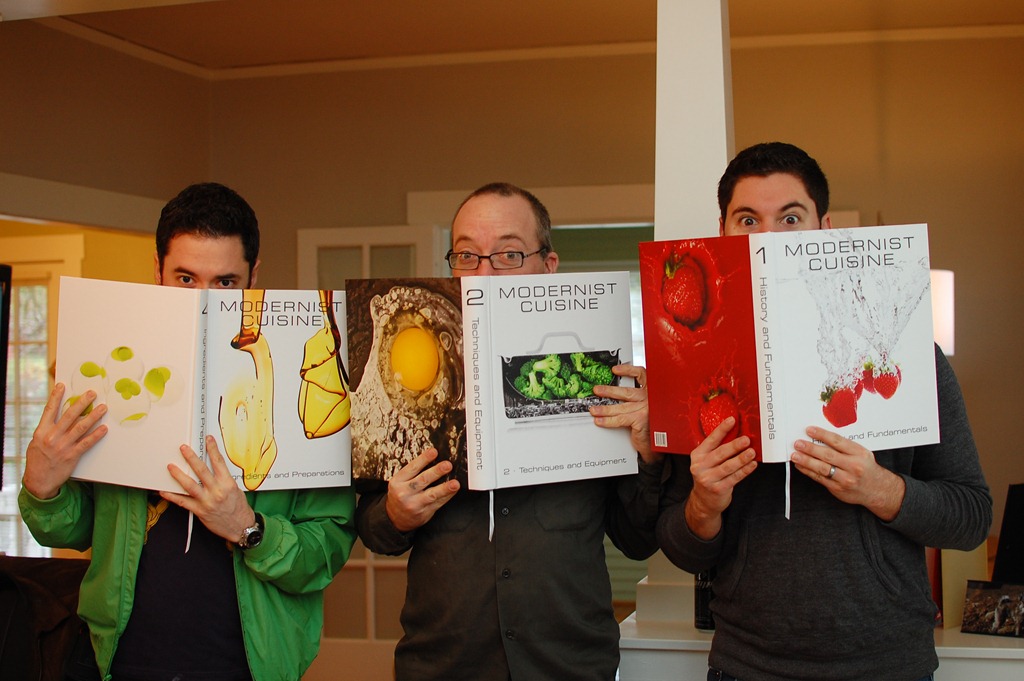
DSC_0087
This was the G-rated picture of us with the books.  Let’s just say the subject matter is… provocative.

Scott

Modernist Cuisine At Home: Smooth Purees, Part II

21 Tuesday Dec 2010

Posted by jethro in MC at home, recipes

≈ 1 Comment

Tags

asparagus, broccoli, Modernist Cuisine, VitaMix

Picking up where I left off from last month, I finished making the rest of the puree recipes from the PDF excerpt of Modernist Cuisine.  Well, almost all of it.  Two remaining recipes involved being sauteed and then blended in a commercial blender.  One required boiling and a Pacojet.  A Pacojet, which quickly purees frozen products to produce a very fine consistency, can be found used online.  For around $2900.  This is out of reach for this home cook, so it will have to wait until, oh, a miracle occurs.

In that last post, I had some issues getting a truly smooth puree.  Then, lo and behold, none other than Dr. Myhrvold himself, the author of Modernist Cuisine, kindly commented that I needed a commercial blender – in particular, a VitaMix – to get the results I was looking for.  How did he know?  He had his team re-test all the purees.  I can just imagine how the chefs felt, having to re-do their work because some frickin’ home cook blogger couldn’t nail it down.  Chefs, if you’re reading this, my apologies.  Just having lots of fun over here!

So I needed to find a VitaMix.  They sell for around $450 new, but that’s pretty steep.  I needed to find one used.  So to the Internet I went.  $300 was the going rate most of the time, but I, master of the bargain, was able to find one at a yard sale for $100!  So take heart, home cooks – miracles do occur.  Just keep your eyes peeled.

And with my VitaMix in hand, I was ready to conquer the next set of purees.

One: Asparagus

Bad Puree

Not So Smooth

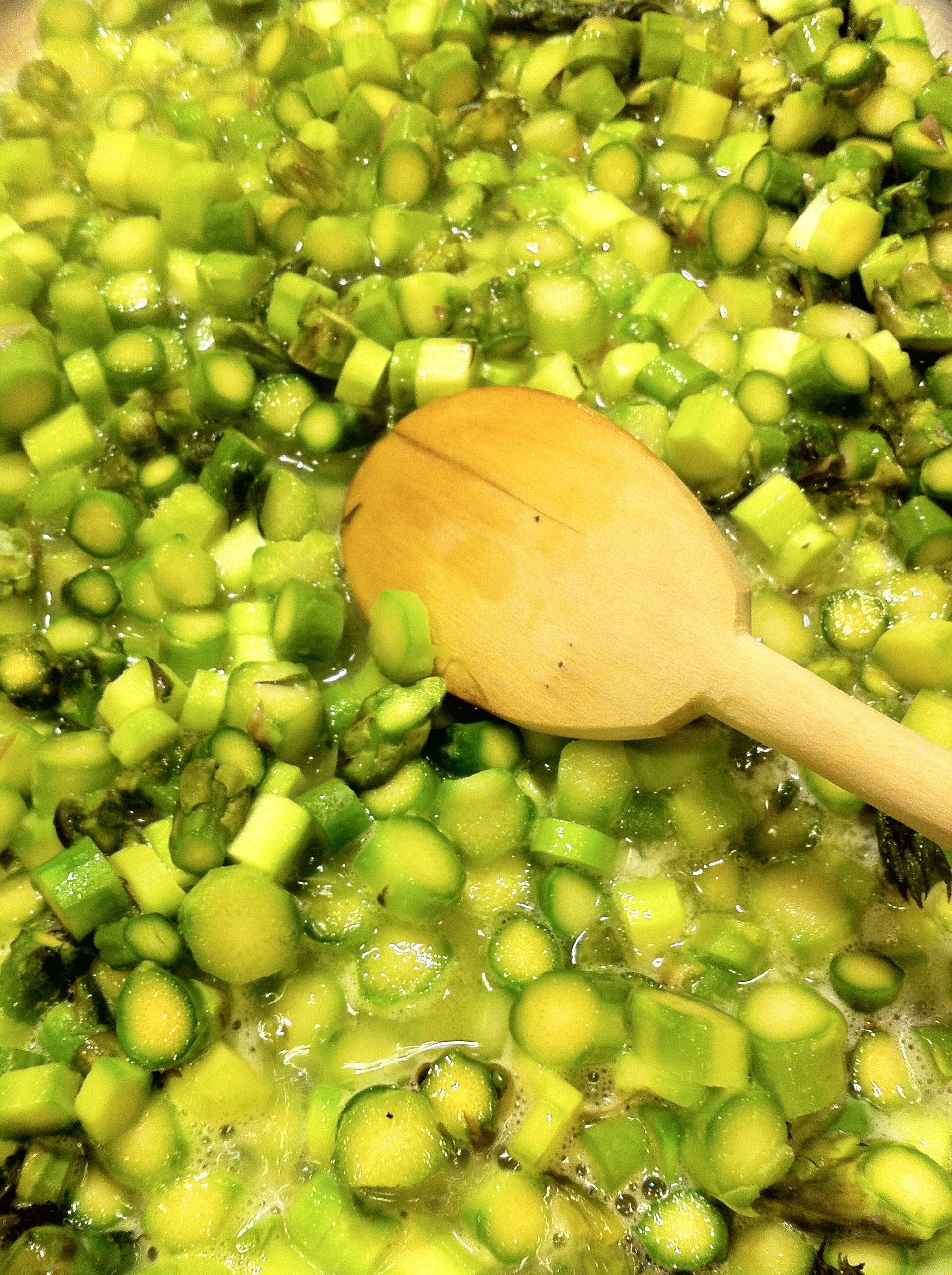
As what seems to be a pattern for me, I learned something valuable about cooking this week by messing it up. This time it was over phrasing.  In particular, the instruction “thinly sliced”.  For me, thinly slicing asparagus implies lengthwise.  Otherwise, it would have said “thinly chop”, right?  I don’t think so.  In the first round, the thin stringy fibers of the inside of the asparagus refused to be finely blended, leaving choppy floss and an uneven texture.  So I went back to the store, bought some more, and sliced them appropriately.

Cooking Asparagus

I gave them a go in my new VitaMix and the smoothest, most beautiful bright green puree presented itself.  These Vitamix’s are awesome!
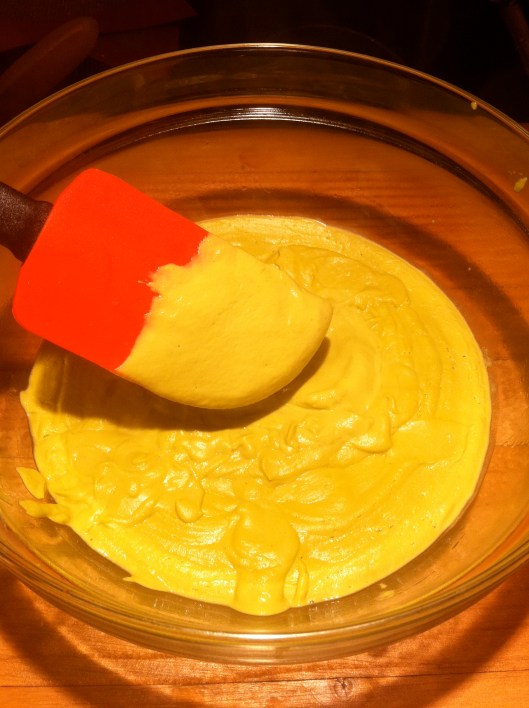
Smooth Asparagus

This Is Some Seriously Smooth Asparagus

I served it with a 24 hour sous vide pork belly for a dinner with friends and it went over famously.  If you have a VitaMix, go make some. Now.

Two: Broccoli

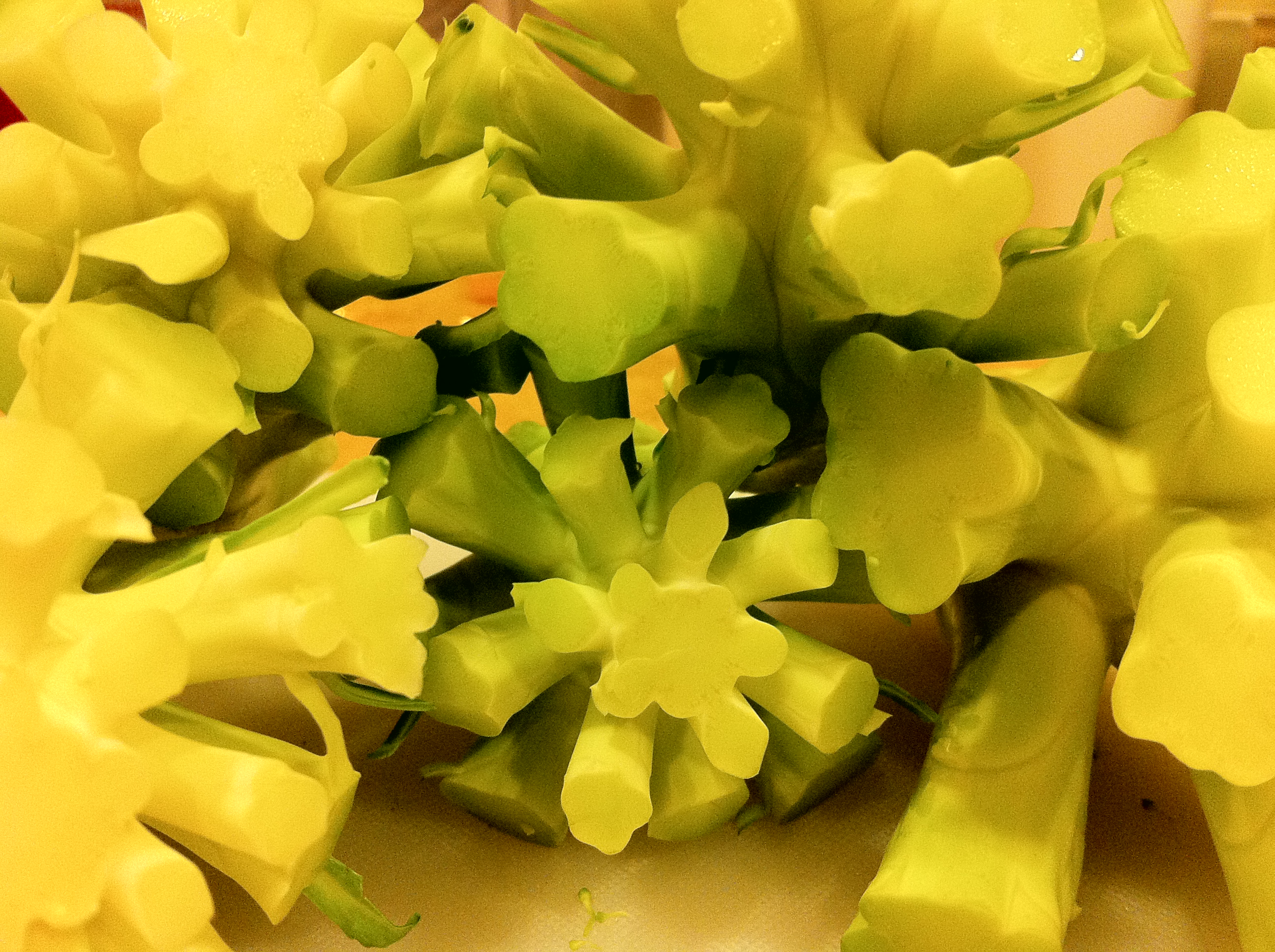
Broccoli Stems

The final puree called for broccoli stems.  At my local chain supermarket, they cut off the stems because they rightly assume the vast majority will just throw it away for the good stuff – the florets.  But as always my trusty Asian grocery store came through and had nice thick stems to use.

I followed the directions, which were very straightforward – saute on medium heat for 12 minutes with a neutral oil.  I looked through my cabinet: canola, pumpkin seed, avocado, olive, peanut…and grapeseed.  There’s a nice neutral standard.  After cooking I put them in the blender and gave them the spin of their life.

A Proper Blender

About To Be Liquified In A Proper Blender

And once again I was rewarded with a thick, creamy, smooth vegetable puree. On the parametric recipe, the asparagus and broccoli recipes point to other pages for reference in the cookbook.  I wonder what they help illuminate.  I know the purees taste great on their own, but I bet it would be fun to do some inverse spherification on them as well.  Maybe that’s what the other pages suggest.  Maybe not.  I’ll have to wait until March 2011 like everyone else.  But I do know that’s what’s up next in my kitchen.
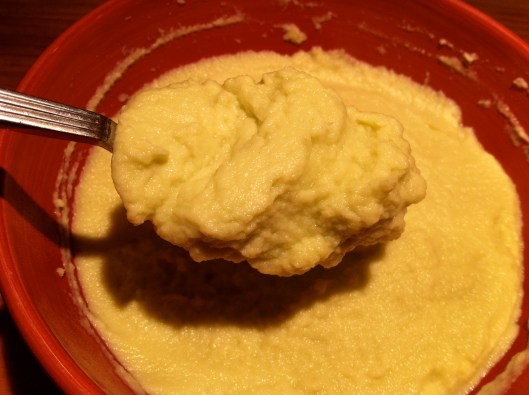
Smooth Stems

Jethro
Modernist Cuisine At Home: Dragon Fruit Chips

09 Thursday Dec 2010

Posted by jethro in MC at home, recipes, sous vide, starches

≈ 4 Comments

Tags

chips, corn starch, dragon fruit, Modernist Cuisine

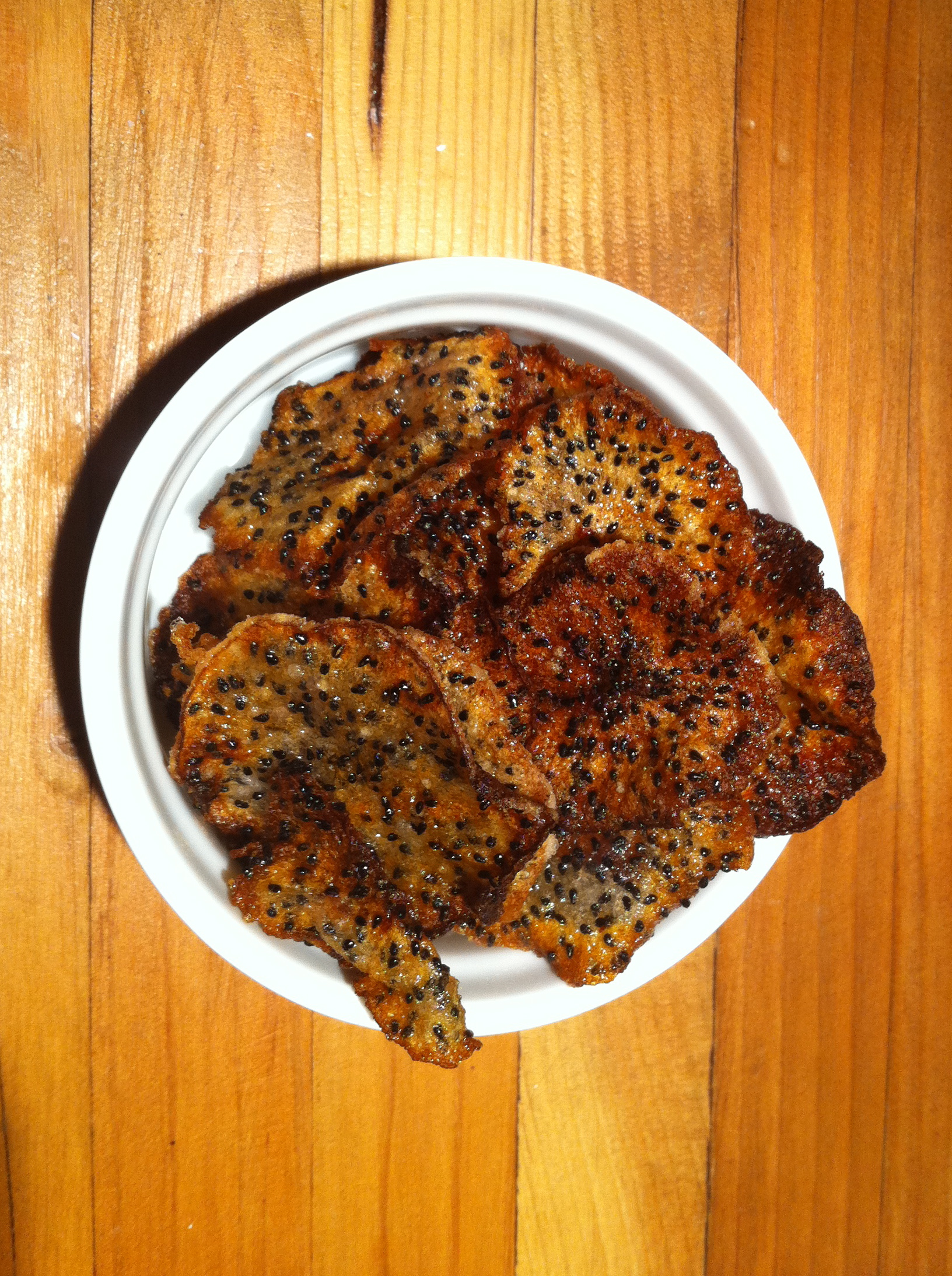
Bowl of Dragonfruit Chips

About a month ago the team at Intellectual Ventures put up an interesting blog post about frying watermelon to make watermelon chips.  With nothing more fancy than a vacuum sealer, this seemed like a perfect recipe to try out at home.

The concept behind the watermelon chip is that starch is what makes a chip a chip, whether it’s corn or potato or even parsnip and taro.  Fruit, however, does not have the high starch content that these vegetables have (yes, a potato is a vegetable).  Using vacuum compression, starch can be infused into the fruit, and make it suitable for frying.  They settled on watermelon.  I decided on dragon fruit.

Fruit Fry

The steps are simple enough:

  1. Thinly slice the fruit
  2. Apply a starch slurry to the fruit
  3. Vacuum seal and let rest for 30 minutes
  4. Deep fry

I went to my local Asian supermarket and nabbed a dragon fruit.  I then had it thinly sliced on a meat slicer.  Here I pulled some strings: I don’t have a slicer at home, so asked my best friend who owns a bar if I could come in and borrow his for a minute.  I’m sure I could have just cut it thinly myself, but I wanted to nail it.  Sometimes it’s more fun to make it more complicated.

Next up was starch.  In the blog post, Chef Zhu says he’s using something and water.  Did he say Crisco?  Or maybe Cryscoat?  One check on the web and it turns out that Cryscoat is a “nickel-containing zinc phosphate for steel and zinc-coated steel, applied by spray or immersion prior to painting”.  So, probably not that.  Screw it I thought – I’ll just use the cornstarch in my cabinet.  Sometimes it’s easier to not make things too complicated.

Starch Slurry

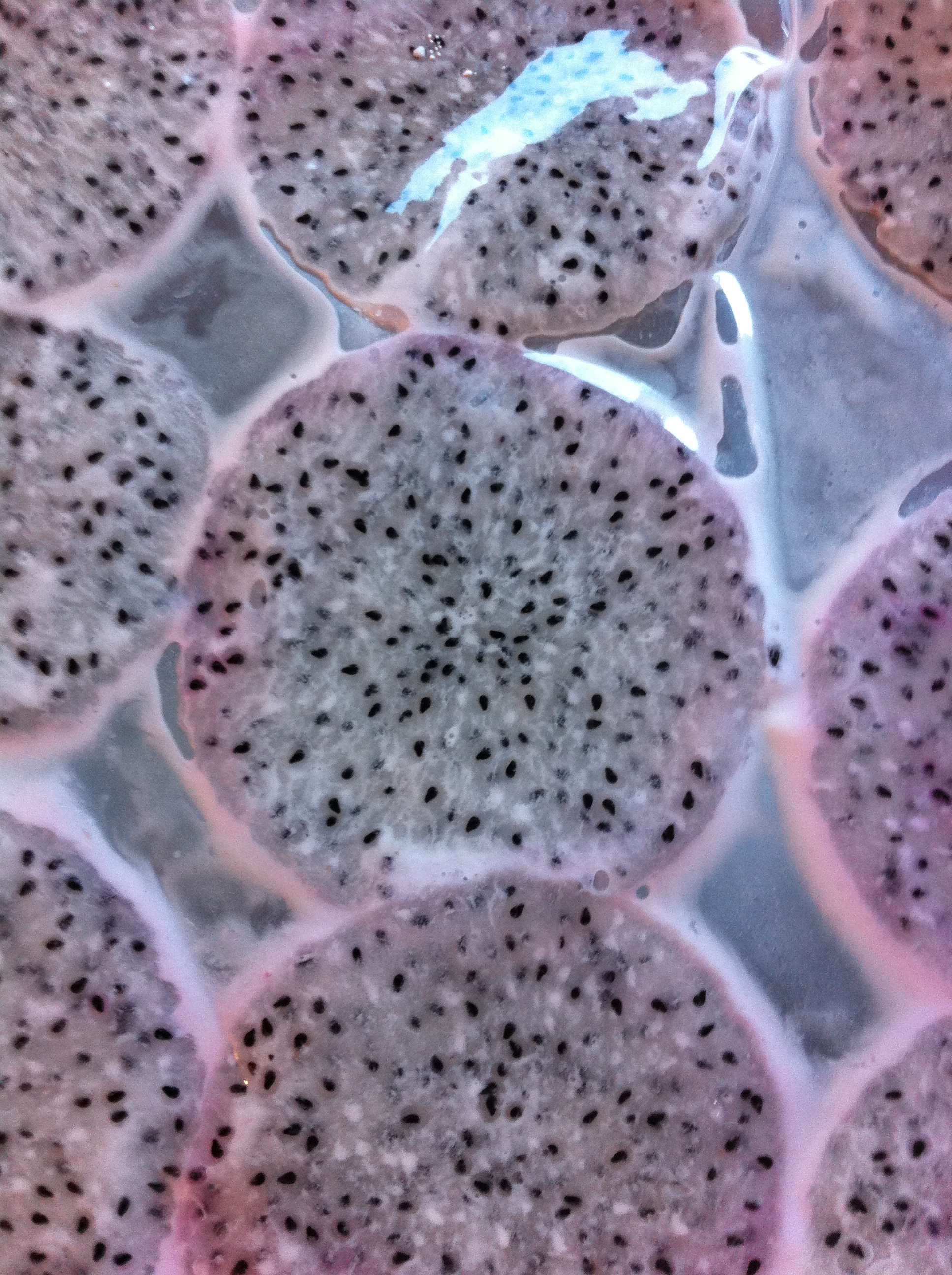
I took the dragon fruit slices, which were awfully thin and delicate, applied the starch to either side, and placed them in a sealing bag.  Which I then sealed up.

Compressed Dragonfruit

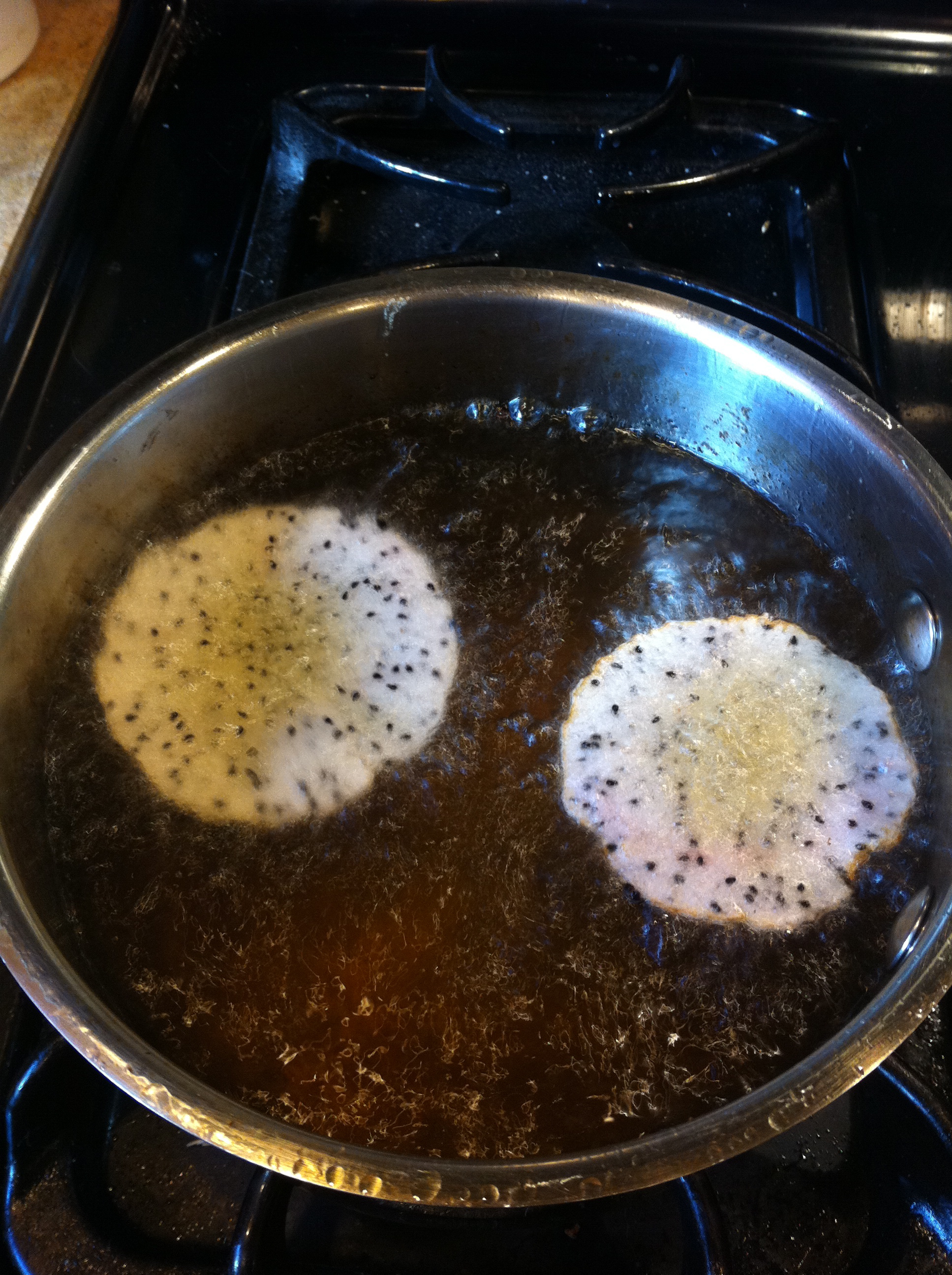
After 30 minutes I fried them up on the stove.  They liked to stick together so I found it easier, though more time consuming, to only do 2 or 3 at a time.

Dragonfruit Frying

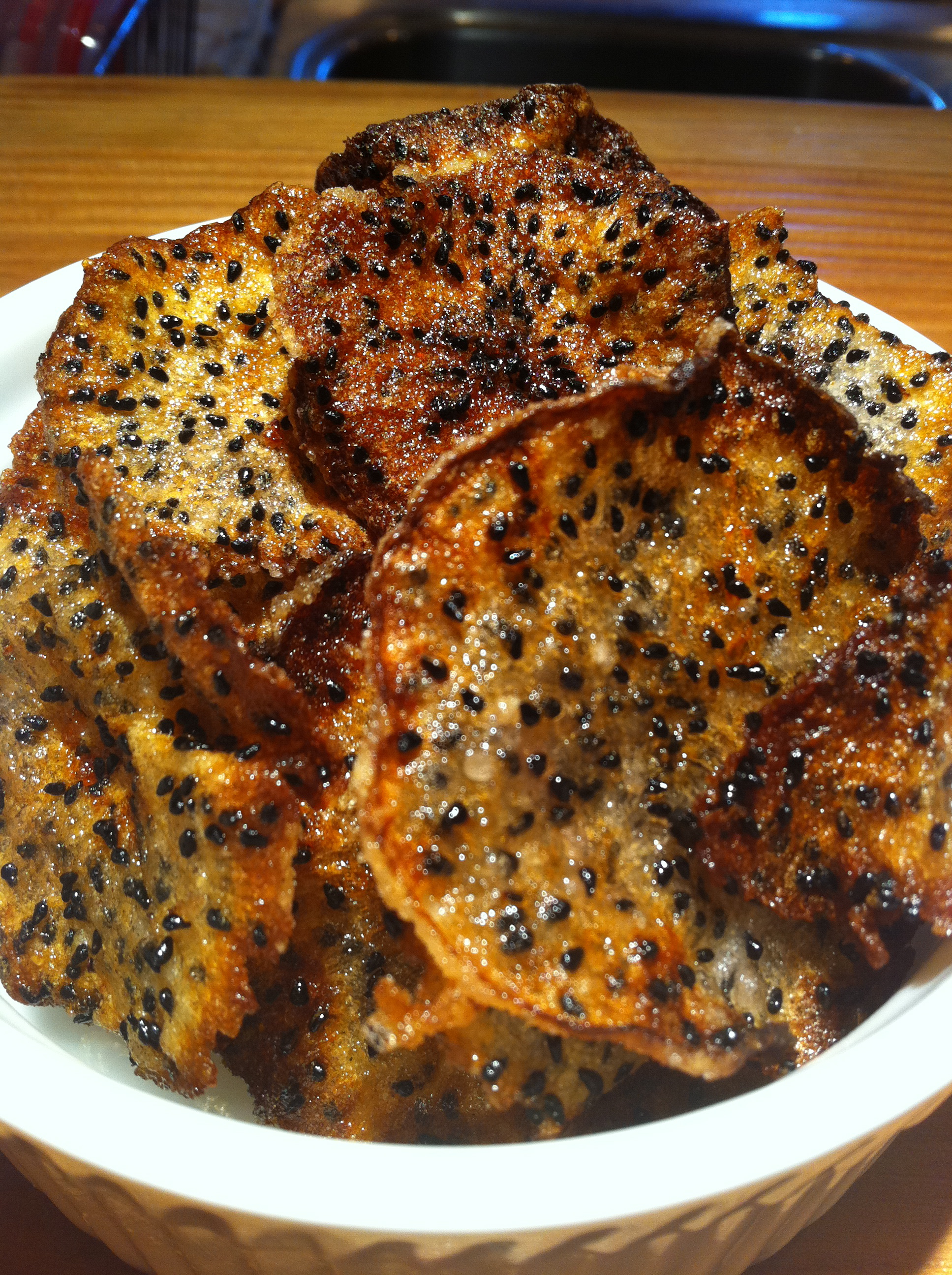
And after I let them dry out and crisp up, I had some amazing dragon fruit chips.  The sweetness of the fruit came through, with the added texture of the seeds, which also imparted a sesame-like flavor to the chip.  Excellent and delicious.

I’m looking forward to their completed cookbook to see what other ideas they have for transforming foods into flavors and textures they’ve never been before.  In the meantime, however, I’ll just try and cook the examples they keep throwing out at us.

Dragonfruit Chips

Jethro
← Older posts
Newer posts →

Search

Categories

From the Twitterverse

Tweets by jcgastrophysics

Feed Yourself

  • RSS - Posts

Recent Posts

  • Ferran In America
  • That One Time We Applied For A Food Patent
  • Ideas In Food At Home: Coffee Onion Rings
  • BOOM: Sansaire Circulator Raises $823k On Kickstarter
  • Dining Northwest Style at The Willows Inn
  • Sansaire, The $199 Circulator: A Brief History
  • Modernist Cuisine At Home: Barbeque Rubs And Another Sauce
  • Modernist Cuisine At Home: More Barbeque Sauces
  • The Price Of Cooking Modernist Cuisine, Part IV: More Gadgets, Ingredients and Resources
  • Modernist Cuisine At Home: Compressed Melon Terrine
  • That One Time We Were Nominated For Best Culinary Science Blog
  • Gastrophysics Labs Closes Doors; Reopens As A “Kitchen”

From the Archives

  • March 2014
  • November 2013
  • September 2013
  • August 2013
  • July 2013
  • May 2013
  • April 2013
  • March 2013
  • February 2013
  • January 2013
  • December 2012
  • November 2012
  • October 2012
  • September 2012
  • August 2012
  • July 2012
  • June 2012
  • May 2012
  • April 2012
  • March 2012
  • February 2012
  • January 2012
  • December 2011
  • November 2011
  • October 2011
  • September 2011
  • August 2011
  • July 2011
  • June 2011
  • May 2011
  • April 2011
  • March 2011
  • February 2011
  • January 2011
  • December 2010
  • November 2010
  • October 2010
  • September 2010
  • August 2010

Blogroll

  • A Practical Guide to Sous Vide Cooking
  • Alinea At Home
  • Chef Rubber
  • Cooking Issues
  • eGullet
  • Eric Rivera's Cooking Blog
  • Ideas In Food
  • Khymos
  • L'epicerie
  • LeSanctuaire
  • Modernist Cuisine
  • Modernist Pantry
  • Seattle Food Geek
  • Studio Kitchen
  • The Alinea Project
  • Willequipped
  • Willpowder

  • ericriveracooks's avatar ericriveracooks
  • jethro's avatar jethro
  • sheimend's avatar sheimend

Create a free website or blog at WordPress.com.

Privacy & Cookies: This site uses cookies. By continuing to use this website, you agree to their use.
To find out more, including how to control cookies, see here: Cookie Policy
  • Subscribe Subscribed
    • Jet City Gastrophysics
    • Join 161 other subscribers
    • Already have a WordPress.com account? Log in now.
    • Jet City Gastrophysics
    • Subscribe Subscribed
    • Sign up
    • Log in
    • Report this content
    • View site in Reader
    • Manage subscriptions
    • Collapse this bar
 

Loading Comments...