
Is Burger King going to market Modernist Cuisine’s ultimate cheeseburger, or is Modernist Cuisine going to reveal the secret recipe for the Whopper? Mm.
20 Saturday Nov 2010
Posted in uncategorized
Is Burger King going to market Modernist Cuisine’s ultimate cheeseburger, or is Modernist Cuisine going to reveal the secret recipe for the Whopper? Mm.
12 Friday Nov 2010
Posted in MC at home, recipes, sous vide, vacuum sealing
Tags

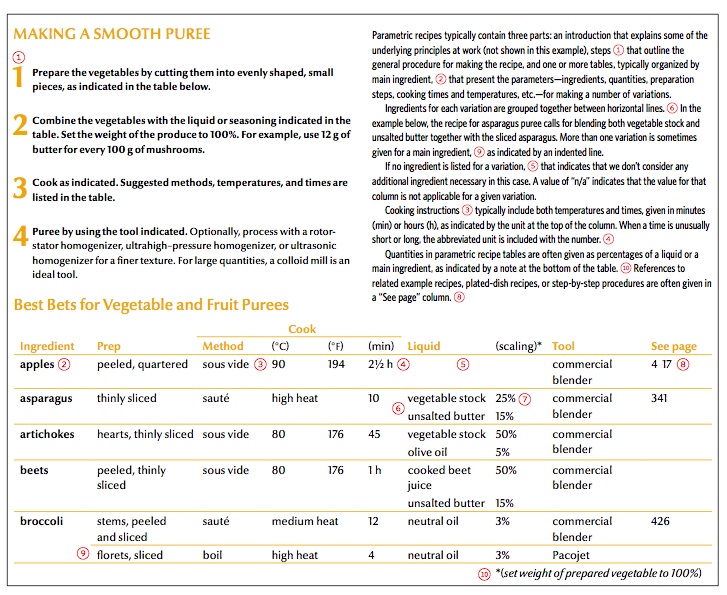
Last month I began to cook my way through the upcoming Modernist Cuisine cookbook by using their PDF excerpt they made available for download. Out of the three recipe examples given, only two have enough information to make them in their entirety. First I created their recipe for instant hollandaise. Next up: their selection of recipes for smooth purees. Out of the five fruits and vegetables listed, three are prepared sous vide. I decided to do those first, because any chance to use my vacuum sealer makes it worthwhile for it to take up a huge chunk of my counter space. The saute recipes will be covered in Part II.
Let's Get Smooth
The recipe for pureed fruits and vegetables is an example of what they call a parametric recipe. This type of recipe gives a basic concept with several variations in an at-a-glance format. This way you can understand the basic concept and run with it. As they say in the excerpt:
We feel the parametric recipe is a strong concept for an instructional cookbook. Such a recipe does more than merely suggest methods for making one dish the same way again and again— it reveals the pattern and reasoning behind the chosen ingredients and methods, and thus makes it clearer how to apply those lessons in other circumstances. The parametric recipe thus takes the master recipe to a more detailed level, and serves as a launching point that allows you to change ingredients and quantities in a number of ways to produce dozens of variations.
That’s right up my alley – taking these new techniques and understanding the fundamental idea behind them, so they can be applied to whatever I’m cooking. I love this book already, and it’s only a PDF file.

Well, wouldn’t you know it. Artichokes are out of season around here at the moment (the peak season is August through October). But we have a variety of different grocers; there must be someone who has some. Sure enough, Whole Foods had some packaged baby artichokes available. Is one package enough? I eyeballed it and thought it looked OK to me.
The process was simple enough: get the hearts out and thinly slice them, vacuum seal them with vegetable stock and olive oil, and drop them in a sous vide bath. The scaling directions are so great. You set the veggie to 100%, and add the other ingredients in the correct proportion, no matter how big or small the quantity. In my case, these baby artichokes didn’t give up much in the way of meat, but I dutifully went ahead and prepared them.
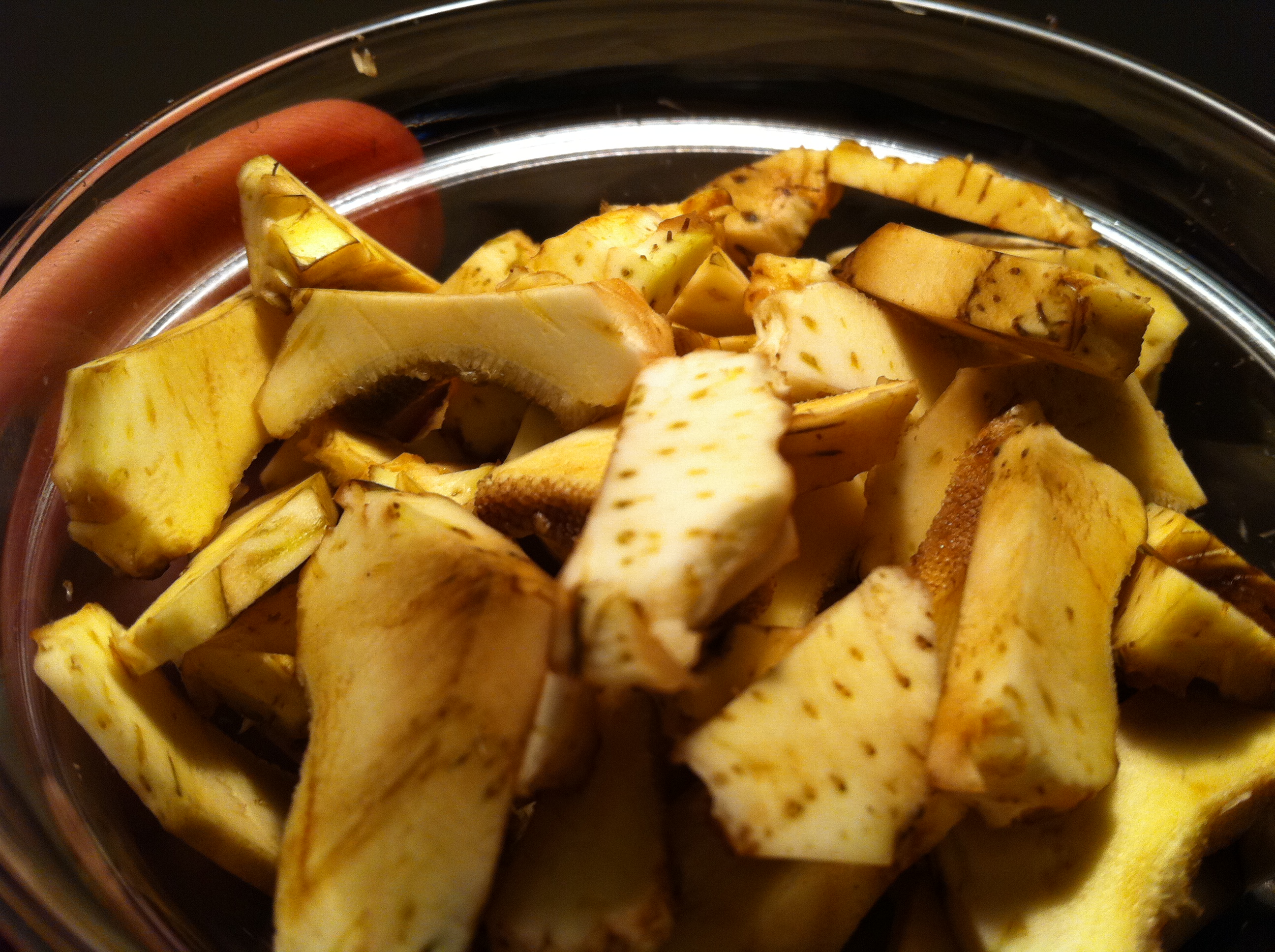
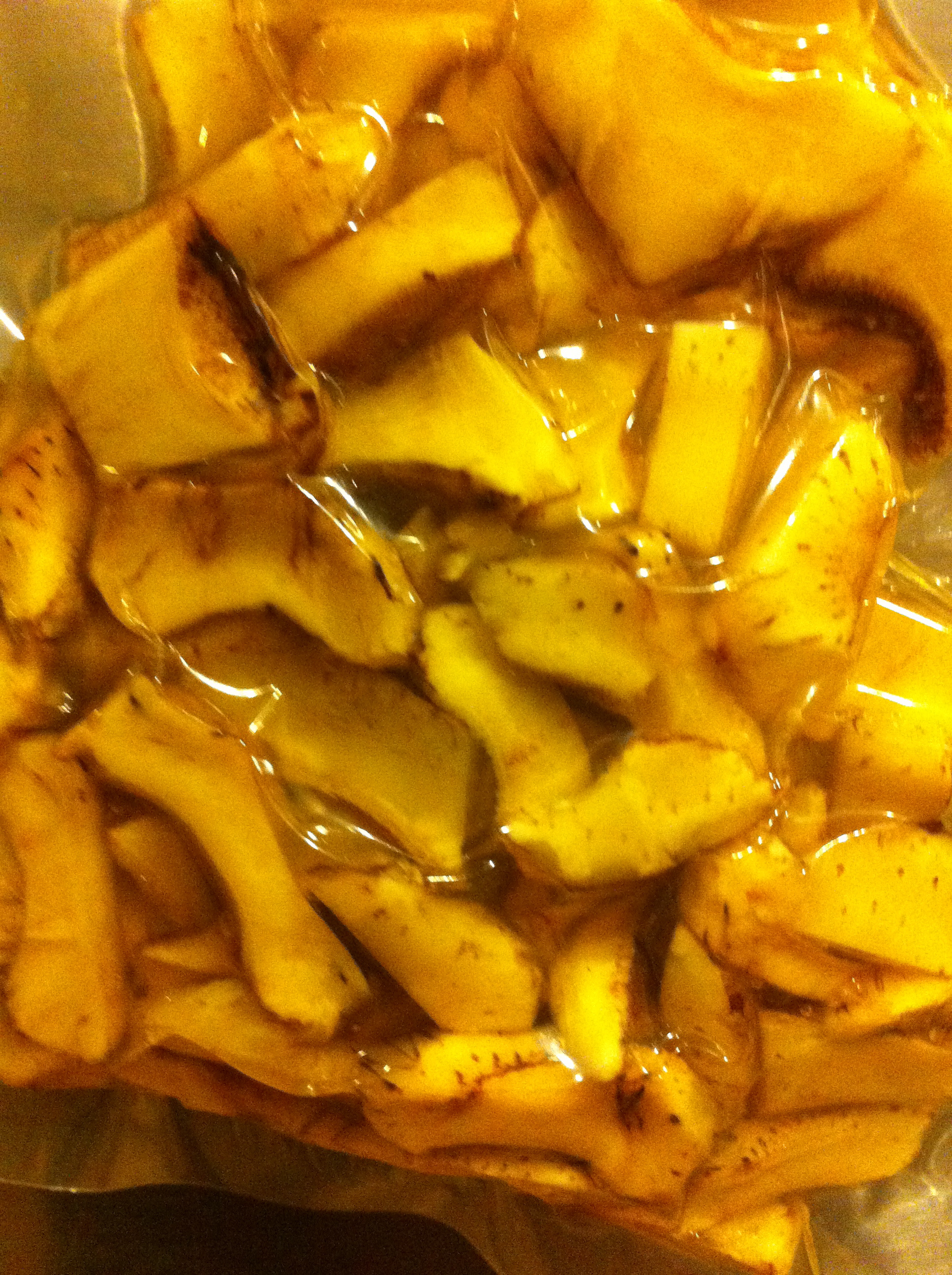
After sitting in the water bath for 45 minutes, I put them in the blender, and promptly had my first puree fail.
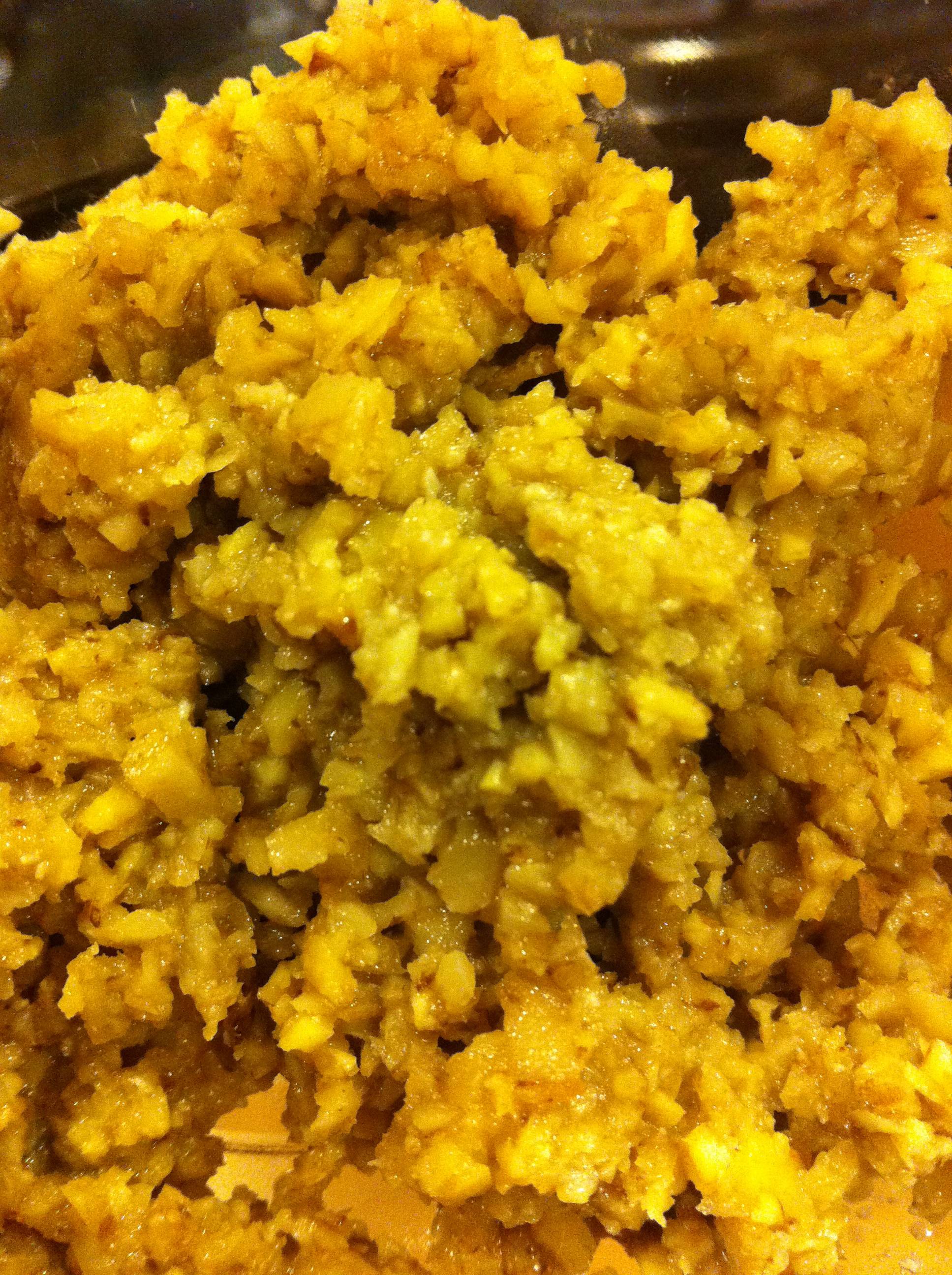
Does This Look Smooth To You? Yeah, Me Either.
Turns out that you really need more than a few baby artichokes to create the volume necessary for the blender to blend well. I’m just a guy cooking at home and this recipe is aimed at culinary professionals who need to crank out 400 covers a night. The recipe just doesn’t account for single servings. Fair enough. I’ll have to wait until they’re back in season and try it again. It was a decent enough spread and I ate it within a few bites.
Undaunted, I moved ahead to the next one on the list (and conveniently needing the same temperature water bath). Once again, the first part of the directions was simple enough: peel and thinly slice some beets.
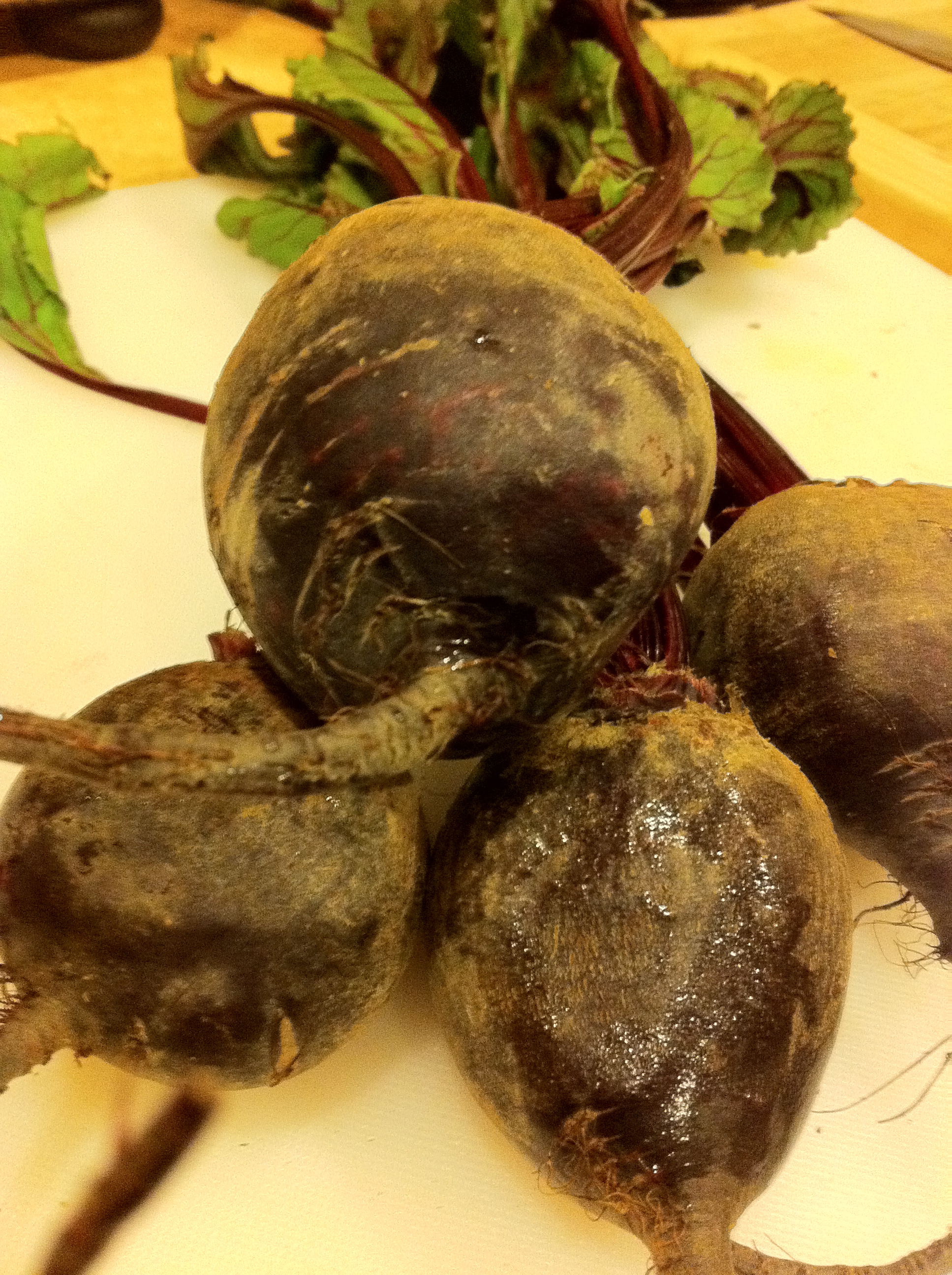

The next ingredient was interesting: cooked beet juice. Why cooked beet juice? As the book isn’t published yet, I don’t know. Well, OK then. I juiced a beet and cooked the juice. All this fuschia foam developed and floated on the juice. Should I discard it? Probably. So I skimmed the top, added the juice to the beets with butter (all carefully measured with a digital scale of course) and sealed it up.


After an hour in the sous vide bath, I pulled it out and put it in the blender, where unlike the artichokes, it did its magic well.
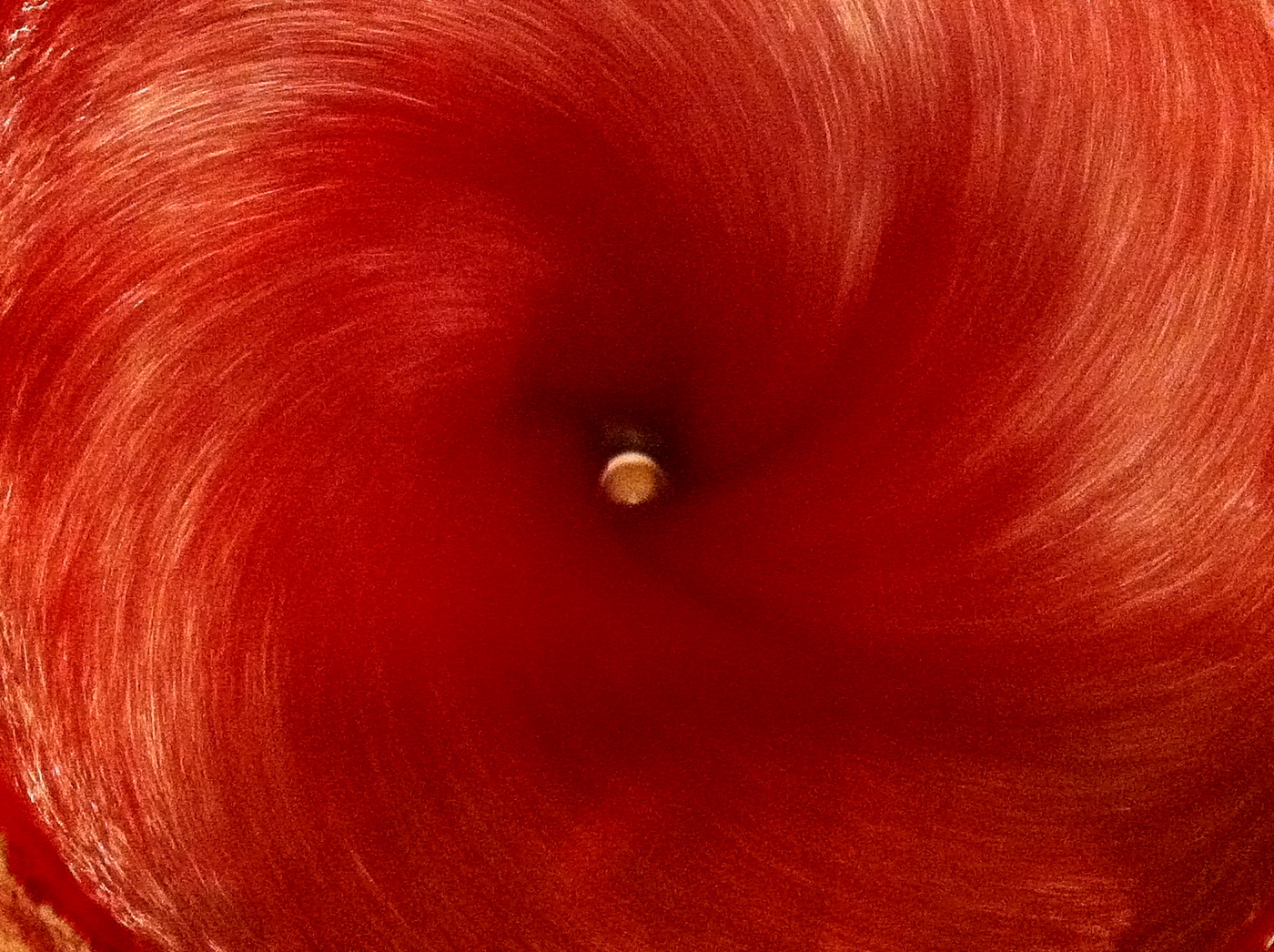
I had my first puree of sous vide beets. It definitely had that earthy beet flavor, and an intense bright color , but the texture was a bit…oh, grainy? Maybe sandy is a better word. Somehow I was expecting a texture like pudding – perfectly smooth. Is this the correct texture? Perhaps when the recipe calls for a commercial blender, they mean a Vitamix or Blendtec mixer. Most likely it’s meant as a base for something else, and not meant to be eaten alone. I don’t know for certain, but certainly, it isn’t bad at all – just not what I was expecting. As a matter of fact, I see a borscht in my near future.

A Beautiful Beet Puree
So the final recipe that called for sous vide was the apples. These required no other ingredients. Just slow cooked apples. I like the simplicity. I chose a mix of Red Delicious and Granny Smith apples. Peeled and quartered, I sealed them up and put them in.
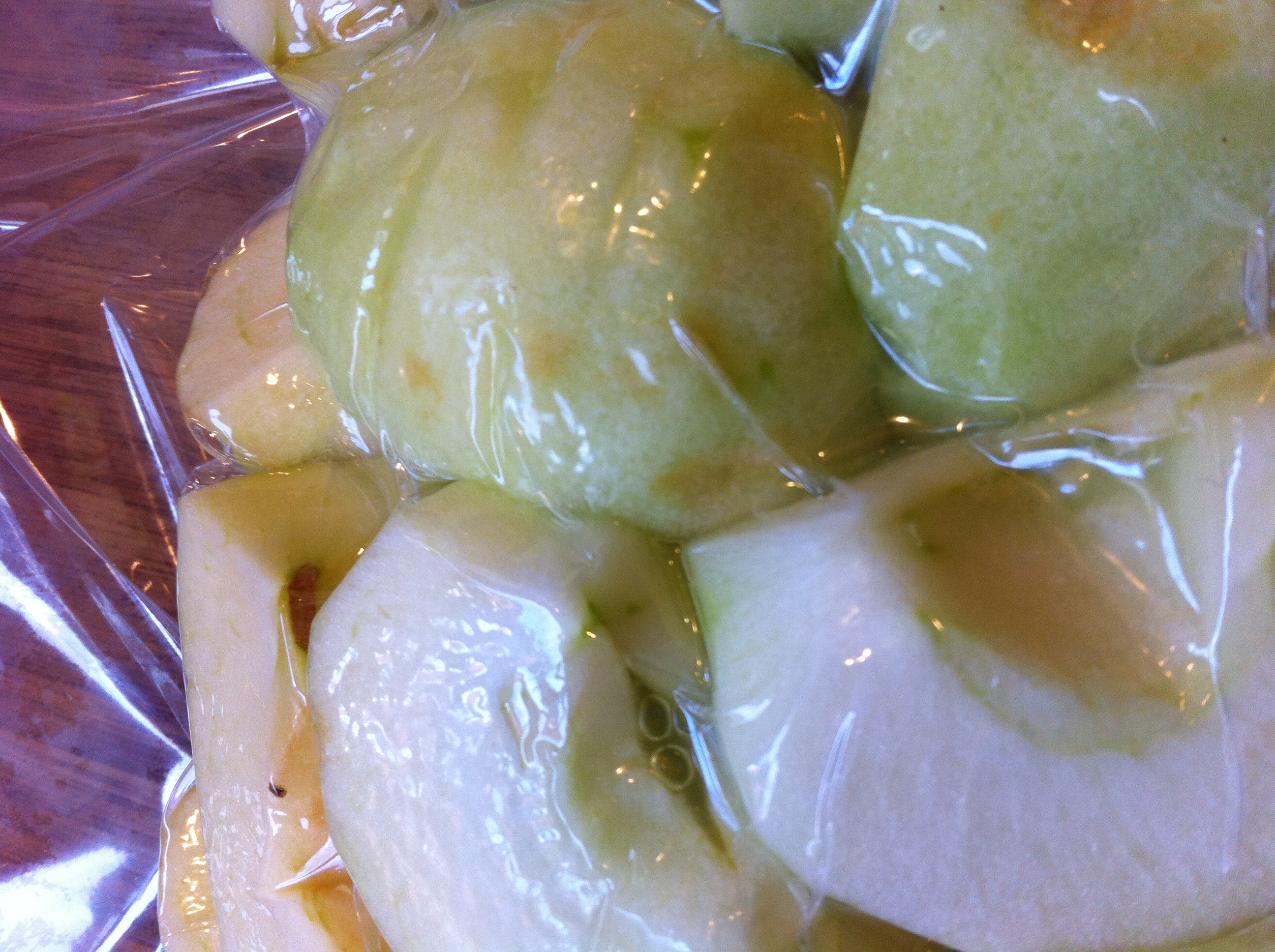
After they were done I blended them together and…wow. Sous vide apple sauce. So smooth, so creamy. Just ridiculously good.

This Tastes So Good. Whoa.
It’s funny how the texture improved with each progressive recipe. I felt like Goldilocks – “Ahhh, this porridge is just right!” And now, because of the parametric recipe, I know how to apply it to other fruit and vegetables like pears and carrots as well. I am loving this cookbook that isn’t published yet. Awesome.

Jethro
07 Sunday Nov 2010
Posted in recipes

A lot of modern cooking techniques call for exact temperatures and measurements. This is more akin to baking rather than cooking, where a pinch here, a dash there, and phrases like “until a golden brown” is sufficient to get you where you need to go. I tend to paint with broad strokes over the detail of a single-hair brush, but I always try to do the hard stuff, if only to challenge myself. This endeavor was no exception.

The Cast Of Characters
I really wanted to tackle a dish from elBulli, voted Best Restaurant in the World five times. Paging through my copy of A Day At elBulli, everything required six detailed components or access to exotic equipment like freeze dryers and superbags. I wanted to start simple, and found the pumpkin oil sweet: two ingredients. Exotic ingredients to be sure – Isomalt and pumpkin oil – but I could work with that. Yes, this should be interesting.
Isomalt is a sugar substitute derived from beets. It is half as sweet as sugar and has remarkable properties for molding, and most sugar sculptures are made using it. Pumpkin oil is just that, and found mostly in Eastern Europe. Neither can be found easily. I ordered the Isomalt online but found the pumpkin oil here in a specialty store in Seattle. Seattle is good like that most of the time.
The process is simple:
So I began.
Melt the Isomalt in a pan over a medium heat until the temperature reaches 120 C/250 F.
I dumped the Isomalt into the pan and turned on my new induction cooktop (Did I say new? I meant to say used. On Craigslist. For $60 – less than half the price for a new one. There’s rarely a reason to pay full price for anything – even weird kitchen equipment. Just keep your eyes peeled and who knows what you’ll find.). Now it doesn’t hit 250F exactly. It has ten settings, and each setting increases the temperature by 30F. So I could get to 240F or 270F, but not 250F. Close enough, though. Right?
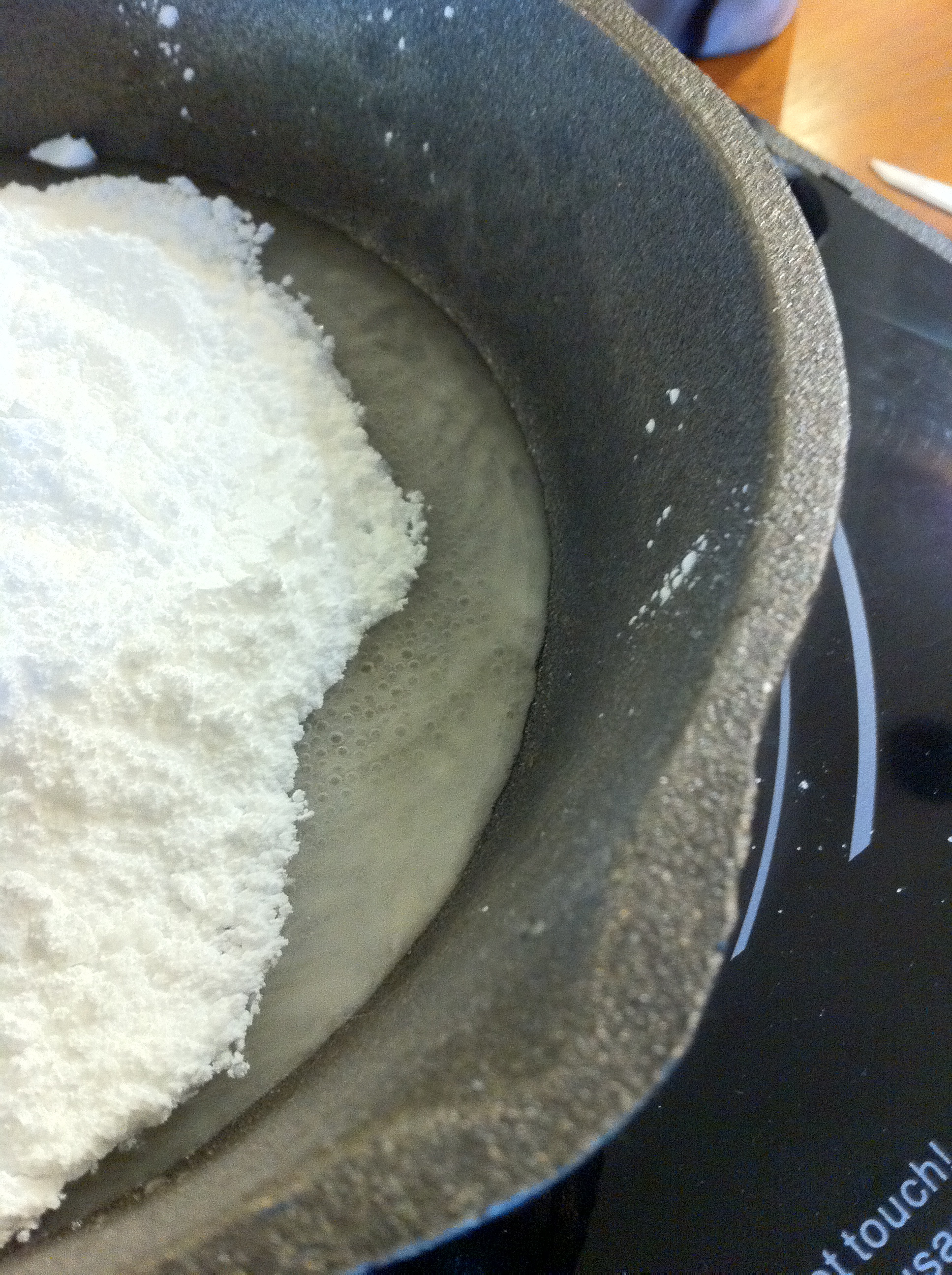
Wrong. In order to create a thin film on the pastry cutter that is still pliable enough to drip down after the oil is added, the Isomalt needs to be at exactly 250F. If it was warmer, it was too liquid, and no film would form. If it was colder, it would thicken up and no film would form.

My Kingdom For A Thin Film
Of course, since I couldn’t maintain this exact temperature, I had to play this game of Heat Up and Cool Down to get it just right. Sometimes, the temperature would be where I could make a thin film, but within a second it would harden, and the oil would just sit in it.

Sometimes, it was too weak, and wouldn’t hold the oil and just collapse immediately into a pool of oil and sugar shards. So, most of the time, I just made a frickin’ mess.
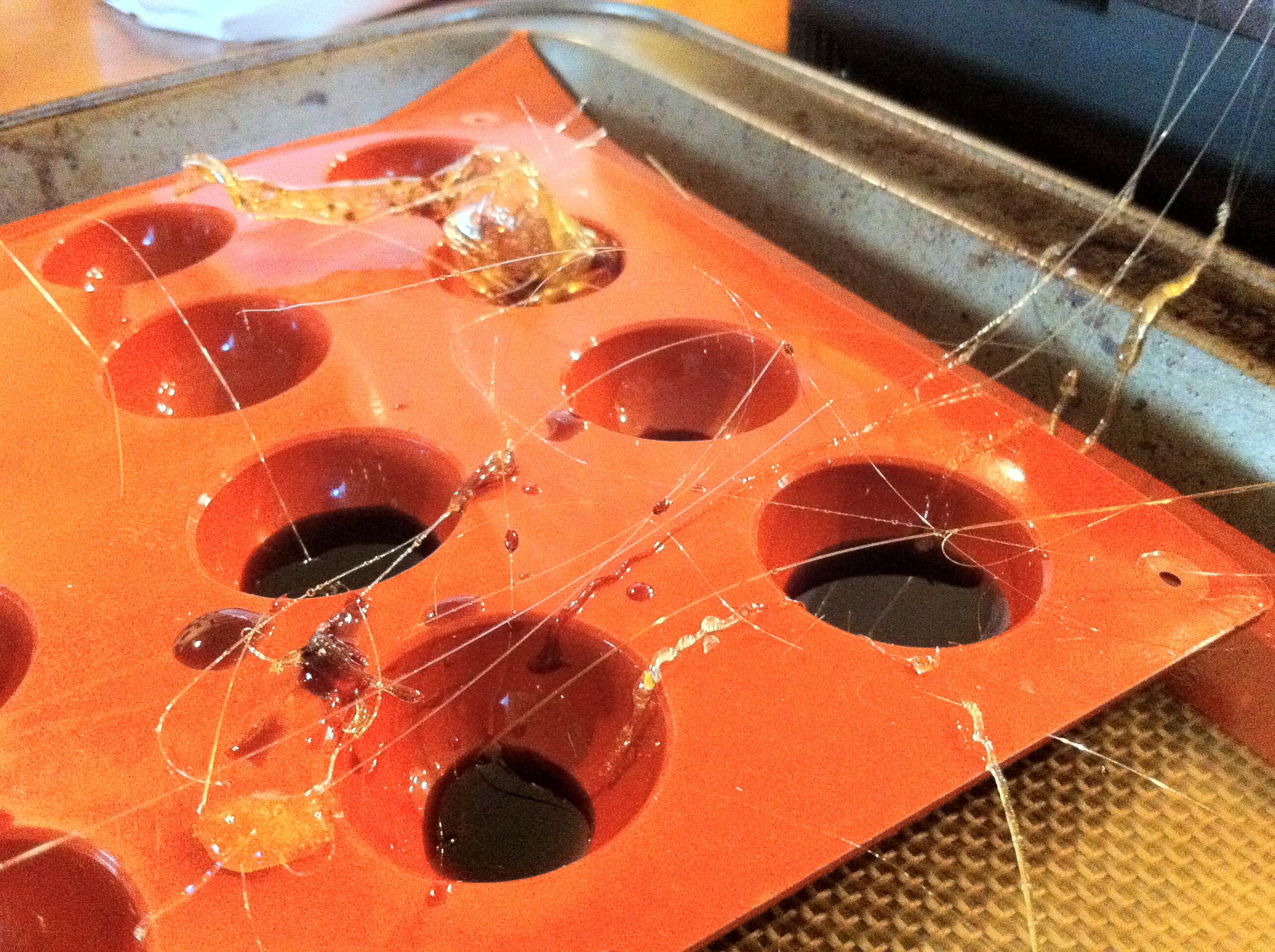
And another challenge: if I tried to let the pastry cutter sit for a moment in the Isomalt so I could get a decent film, it would heat up and burn my fingers. But I persisted and managed to figure it out. That they are able to pump out dozens of these a night perfectly shaped at elBulli is quite humbling. Trying it myself just heightens my admiration for their creativity and execution.

I ended up with a rouge’s gallery of misshapen candies as well. They reminded me of the artwork of H.R. Giger, who designed the alien in Alien. They would have made very creepy candies to give out on Halloween. “Eat these right now, my pretties!” I don’t think their parents would go for it.

How to eat:
Pick up a sweet carefully with your fingers and place in your mouth. Without chewing it, let the sugar melt and the pumpkin seed oil flow out.
It is definitely tasty. The Isomalt cracks open and the oil glides onto your tongue, with what would be an unexpected and surprising flavor, unless you’ve been trying to make them for the last hour, in which case the flavor is well known to you. This happens. But the pumpkin matches well with the leaves falling from the trees here in Seattle, and becomes a perfect autumnal sweet, a half a world away from its birthplace in Roses, Spain, at elBulli.

Jethro
20 Wednesday Oct 2010
Posted in hyrocolloids, sous vide, thickeners, vacuum sealing
Tags

Aw yes, lobster mushrooms. They look like cooked lobsters on the outside and they have a nice meaty texture when cooked…..

Put some salt and pepper on the oxtail and braise it with some veal stock and smoked ham hock…..yes, excellent. It’s going to be a ragout for the pasta.


Make some fresh rosemary pasta then cut it and work on something else. (Duck eggs, rosemary, “00″, Semolina, Contadina, Water)

Mushrooms, golden beets, and butternut squash go into bags so they can have a meeting with the immersion circulator for a while. I made a terrine with that carrot ginger soup using agar, took about 3 hours to set.
Well, I’m ready to go so let’s start cooking stuff!
First up is a brown butter brioche with sauce rouille and pickled vegetables.

Next is a carrot/ginger terrine with sous vide butter poached lobster mushrooms, golden beets, butternut squash, and shaved fennel served with a caramelized fig sauce with reduced sherry and contadina extra virgin olive oil.

Finally, an oxtail and smoked ham hock ragout over rosemary/duck egg pasta.

Another successful dinner at my place. See you next week!
Eric
18 Monday Oct 2010
Posted in foams, MC at home, recipes, sous vide, vacuum sealing
Earlier this month the Hunger Intervention Program in Seattle held Feeding The Soul 2010. For just a $25 donation, an eight course meal was served by chefs Brian McCracken and Dana Tough from Spur Gastropub and the culinary team from Intellectual Ventures – Maxime Bilet, Grant Crilly, Sam Fahey-Burke, Anjana Shanker and Johnny Zhu. The chefs from Intellectual Ventures are, along with Nathan Myhrvold and Chris Young, behind the upcoming “cookbook” Modernist Cuisine: The Art and Science of Cooking, due for release next March. A chance to eat their food and meet them as well? Done deal.
The food was delicious and I had a chance to briefly speak with all of them. I introduced myself and told them about this blog and how we at Jet City Gastrophysics are planning to cook our way through the entire cookbook. There were some eyebrows raised and a “good luck” thrown my way. True, I don’t have a freeze dryer or a rotary evaporator, but that doesn’t mean I can’t at least acquire access to one somehow. Where there is a will, there is a way.
And, true to my word, I have begun to cook my way through it.
It’s not published yet – how is that possible? On August 13th, they put out a 20 page excerpt of the massive tome available for download from their website. I’m sure like me, gastronomes across the world downloaded and quickly got to reading the first pages of the 2400 that will be available in March 2011.
The excerpt is from the fourth section of the first chapter of the first volume, entitled The Story Of This Book. It goes into detail of the origins of Nathan Myhrvold’s research into sous vide techniques online to the development of a full time cooking staff and publishing house to put out the work. Next they explain the photography, a step by step review of each volume, and then on to the recipes they developed and the special format that they are in. And to illustrate, they printed some example recipes. Recipes waiting to be used.
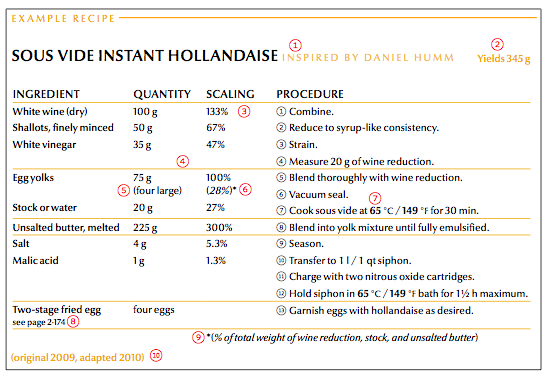
An Example Recipe. Just Waiting To Be Made.
There are three recipe examples: Sous Vide Instant Hollandaise, Making a Smooth Puree, and Monkfish with Mediterranean Flavors. Each recipe is an example of the three types of recipes found in the book: Example, Parametric and Plated Dish. Example recipes are considered the shortest and simplest, intended as components for other dishes. Parametric recipes focus on a particular ingredient or characteristic – or, as they call it, a parameter. The idea is to take a concept in its simplest form and show, at-a-glance, the variations of that concept (I was in web development for years, and their application of design for visual information is excellent. I wonder if they had Edward Tufte consult on the project). Finally, the plated-dish recipe brings it all together so you can create an entire dish from a single recipe.
From the three examples, the monkfish recipe calls for components that they did not show: Pâte à Choux, Zucchini Blossom Beignet, Fish Spice Mix and so on. So that left the other two. I decided to start with the shortest and simplest: Sous Vide Instant Hollandaise.
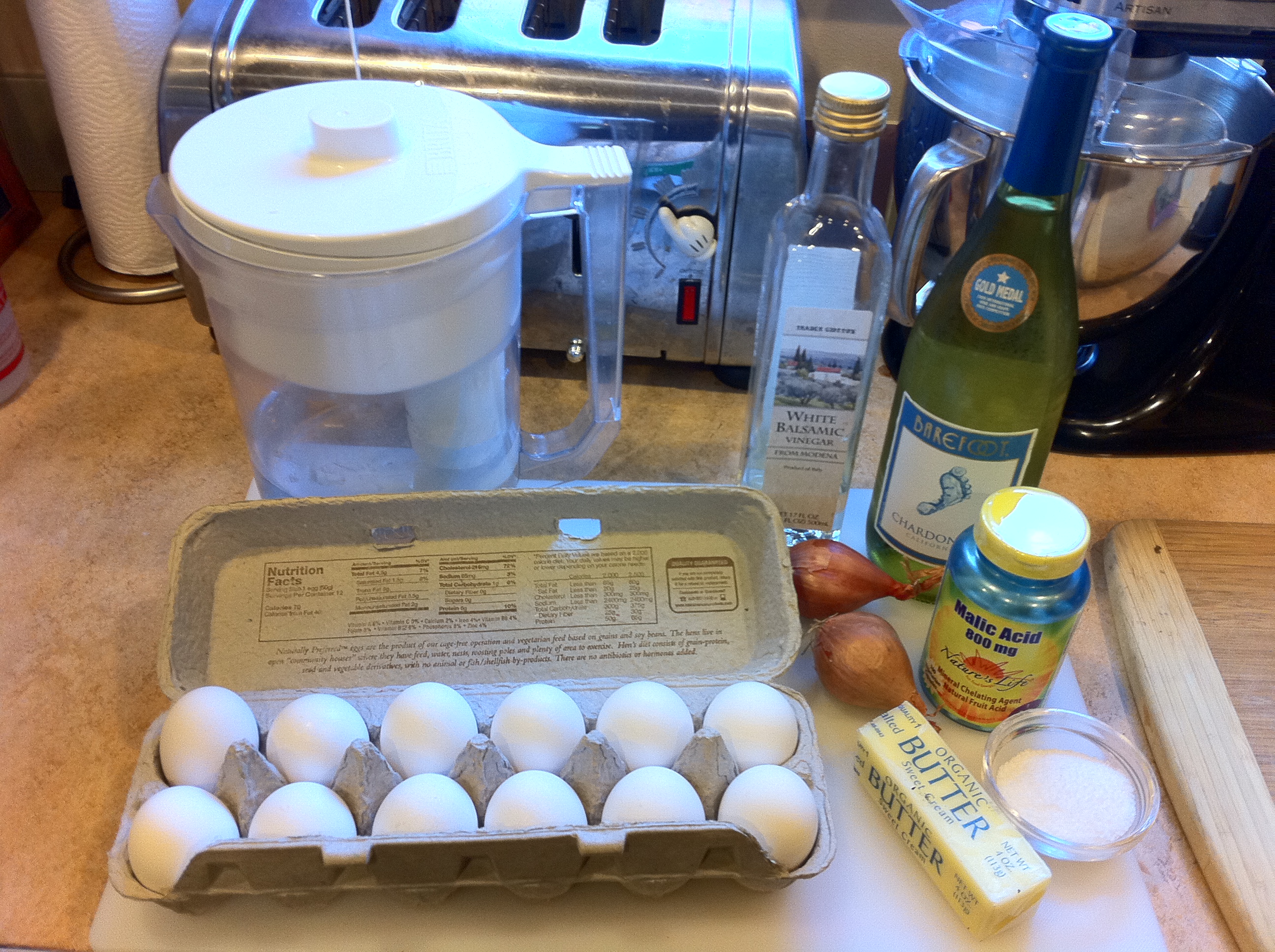
The Cast Of Characters
I collected the ingredients necessary and started in. The format is really straightforward and easy to understand. Of course, that meant I had to screw it up immediately.
As per the recipe, I put together the white wine, white vinegar and minced shallots in a pan and began to reduce them down to a syrup-like consistency. But, it wasn’t getting syrupy. The liquid kept dissipating, but the onions weren’t breaking down. And soon I had a thick gop of caramelized onions and nothing else. How did this happen?
3. Strain.
Oh. Um, yeah. So I did it again, and pulled out 20g of onion flavored wine reduction.

Next up I took four egg yolks and blended them with the reduction and water. I did not measure out the egg yolks by weight. The recipe gave me an easy out by offering four large egg yolks as a measurement, and I took it. I put the mixture in a bag and vacuum sealed it. It fit in one of the small bags I have, and it sealed just in the knick of time before the ingredients boiled over into my vacuum sealer, creating both a big mess and having to start again from scratch.

A Close Call
I plopped the sealed bag into the sous vide bath for 30 minutes. For the butter, I used what Chef Richard Blais calls one of the more underutilized kitchen instruments: the microwave. In 40 seconds my melted butter was ready. I took the packet out of the water, mixed its contents in with the butter, then added salt and malic acid.
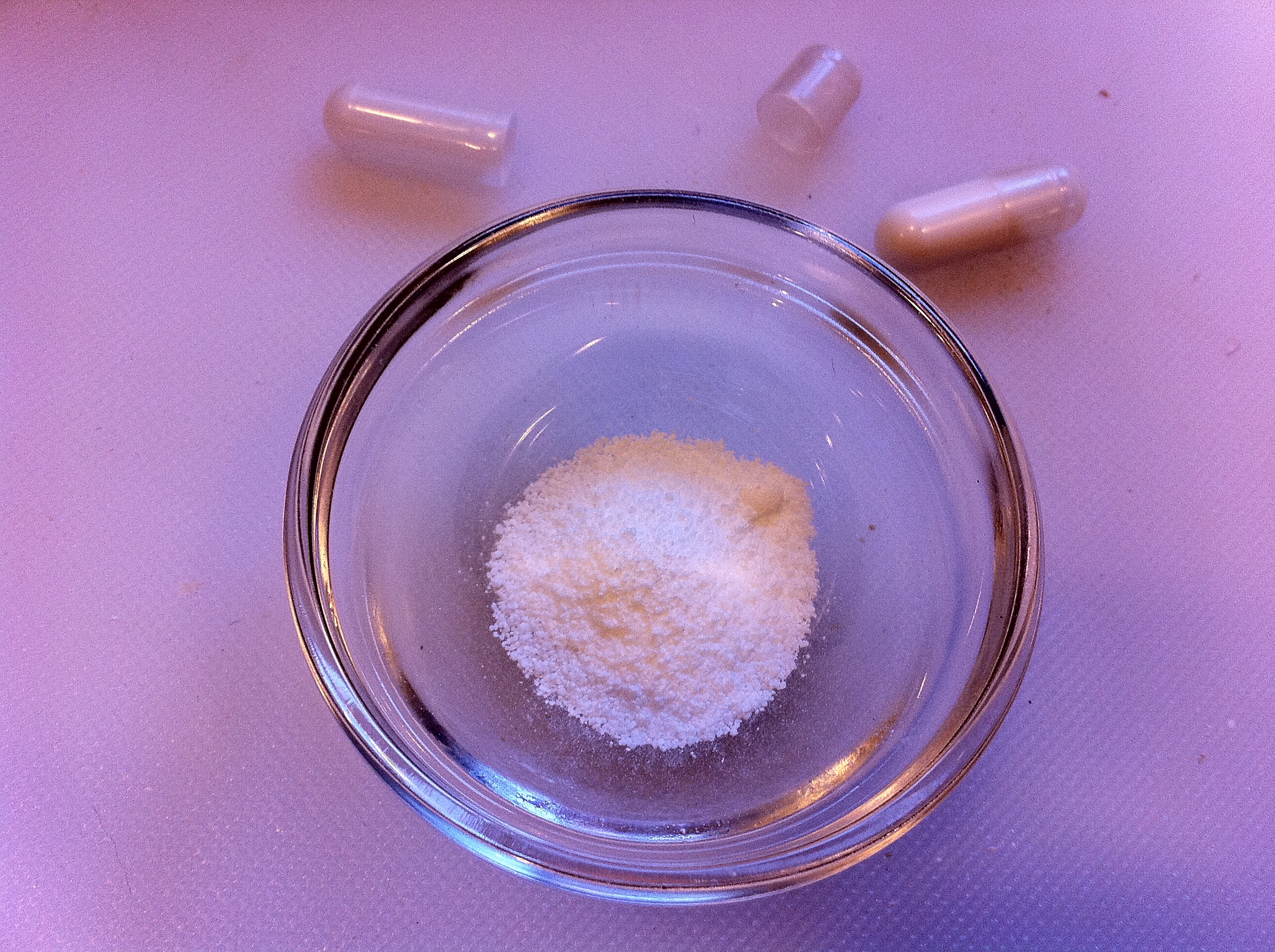
Mmmmm. Malic Acid.
What is Malic acid and what is it doing in my hollandaise sauce? Malic acid is the main acid found in unripe apples, cherries and many other fruits and vegetables. As an ingredient, it is supposed to add a distinct sourness, has a lower melting point than other acids and is more soluble than citric acid, which is also a sour flavor enhancer. Why it is specifically included in this recipe? I have no idea. We’ll all have to wait until the book comes out. But in the meantime, you can find it a your local vitamin supplement store. This means you’ll have a lot of Malic acid lying around – 100 tablets worth. It is also supposed to stimulate metabolism and increase energy production, so if you work out a lot, maybe it will help you burn calories. I don’t know, just a thought. I mean, after all this hollandaise sauce. Anyway.
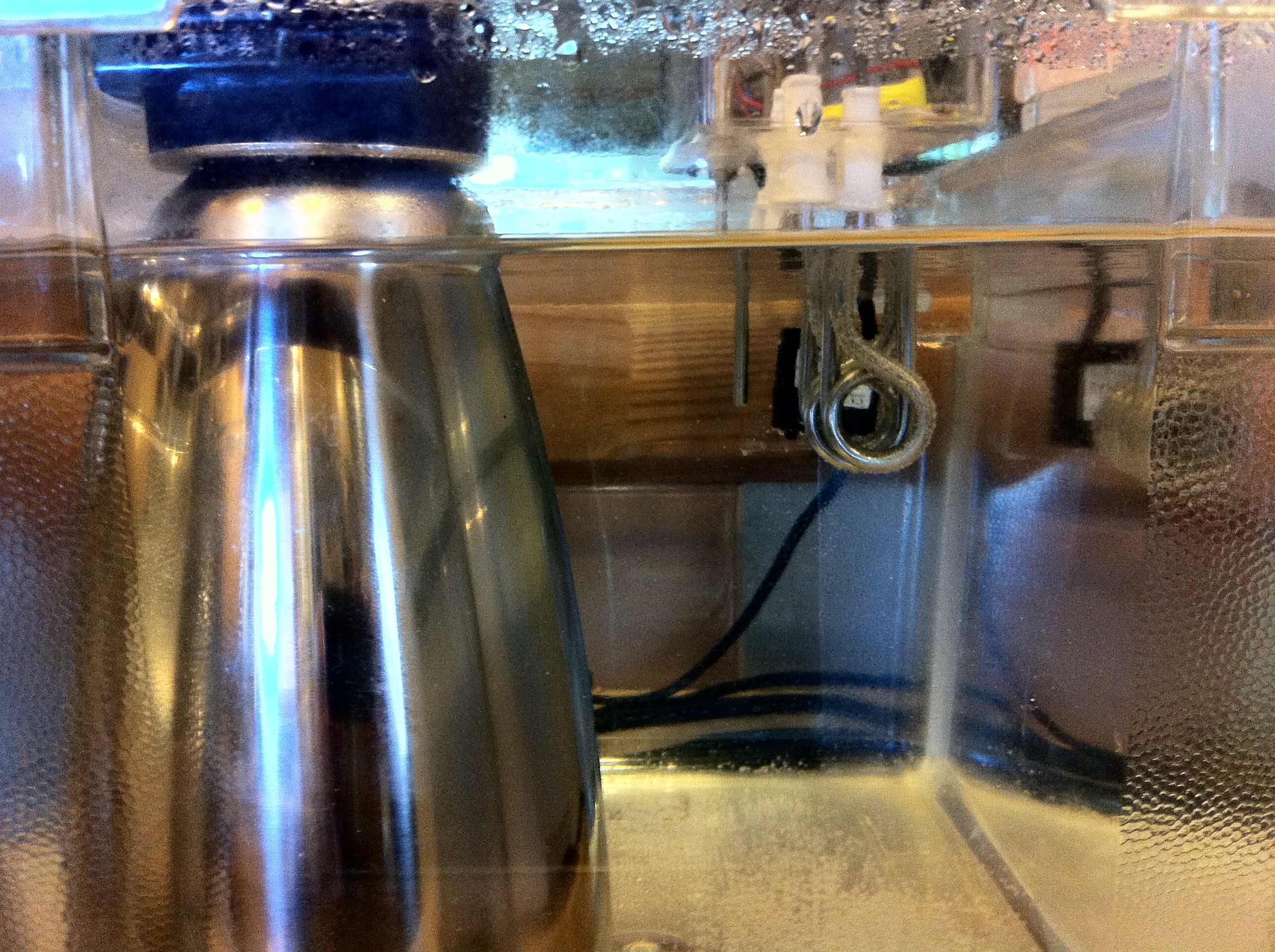
I poured the mixture into my ISI Thermo Whip and placed it back in the bath to keep it warm. Next on the example recipe is something called a two-stage fried egg, which references another part of the book. So having no idea (yet) what a two-stage fried egg is about, I decided to poach an egg, fry some ham, toast a muffin, and spray some hollandaise.

Eggs Benedict, Modernist-ish
Is is not creamy like your usual hollandaise, but a thick foam. The texture is definitely different and calls for unique plating or pairing. When you have a traditional dish like the one above and one of the textures is not what you expect, it jumps out at you. I’m curious how it will taste with a two-stage fried egg.
Also, the name is a bit misleading. You can make traditional hollandaise in 10 minutes with a blender. This took 30 minutes for the sous vide alone, plus another 15-20 minutes for the rest. It is instant in the fact that you can just walk up with your cream whipper and blast out sauce on demand. At least for 90 minutes – that’s the maximum time you’re supposed to keep the cream whipper hot. Once again, the example recipe is all we have at this point – I’m sure the supporting text will provide the context.
Regardless, it is delicious. I loved it. The recipe does yield a large amount – something like 1 1/2 cups. And that’s prior to foaming up – I could have served 10 people with all that I made. I sprayed the rest into a container and put it in the fridge. Then it gave me a little surprise: it settled, cooled and made an awesome hollandaise flavored whipped butter. I had it today on some toast as a little snack. Scrumptious.
So the first step in the thousand mile journey of cooking through Modernist Cuisine: The Art and Science of Cooking has been taken. I’m looking forward to the adventure.
Jethro
12 Tuesday Oct 2010
Posted in transglutaminase, vacuum sealing
Tags
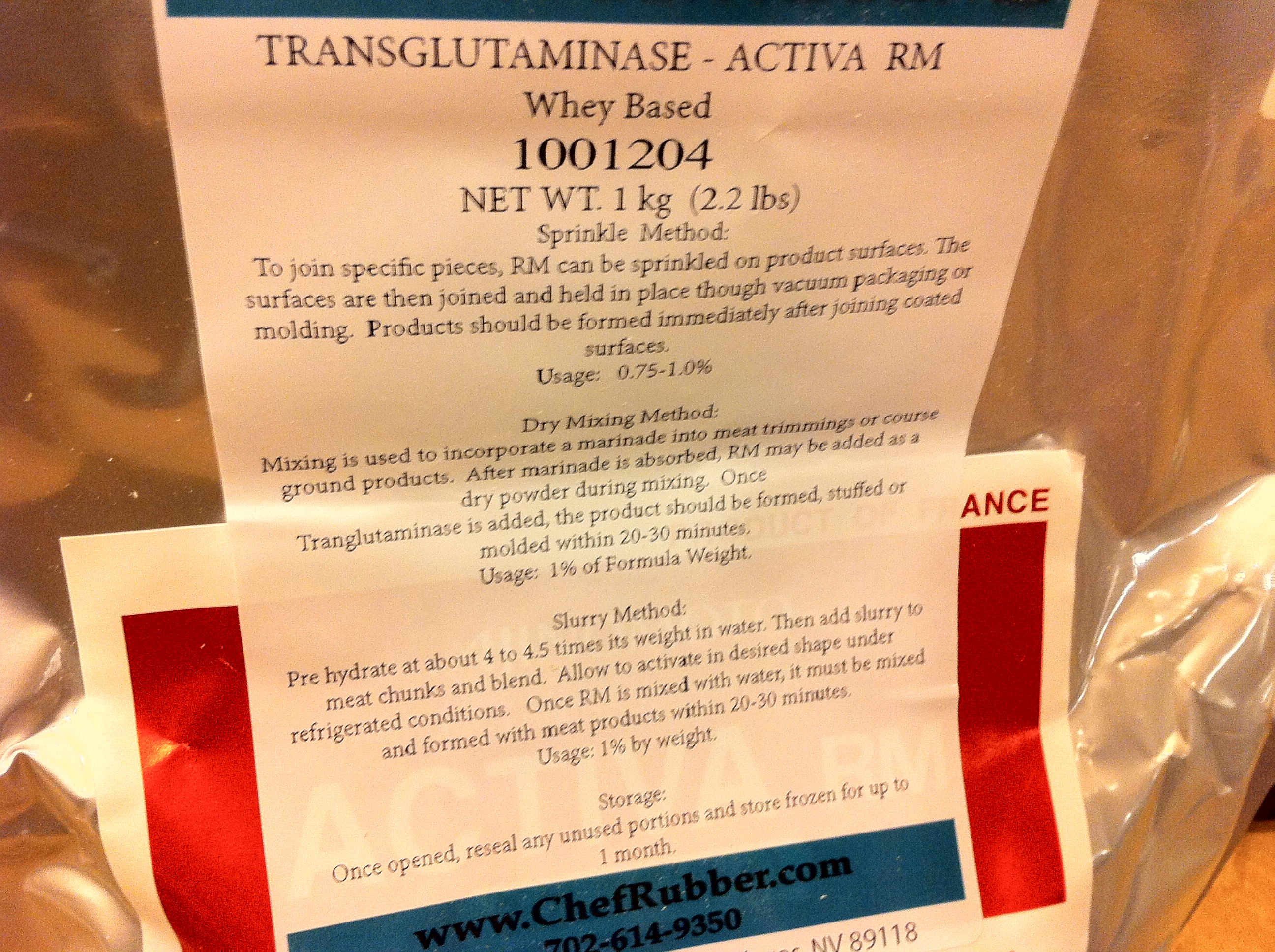
“This shit is dangerous. You inhale it, your lungs stick together, you die.”
So Chef Ian Kleinman told me about Transglutaminase during my private cooking class with him last spring. Transglutaminase (also known as TG or ‘meat glue’) is an enzyme that bonds proteins together. If you have ever had imitation crab meat or chicken nuggets, you’ve eaten TG. Although safe to eat, in powder form, it can be inhaled, and then work its magic inside your lungs. So when we met last week to work with the stuff, we decided it was best to take precautions.

I'm Just Cooking. Really.
With safety glasses and masks on, we set about to working on some ideas. Eric was called into work and couldn’t make it (he’s a busy guy, what with being invited to stage at Noma by Chef Redzepi among other things), so Scott and I collaborated. With worked with three types of proteins: meat, fish and nuts. As with any experimentation, we had some success and some failures.
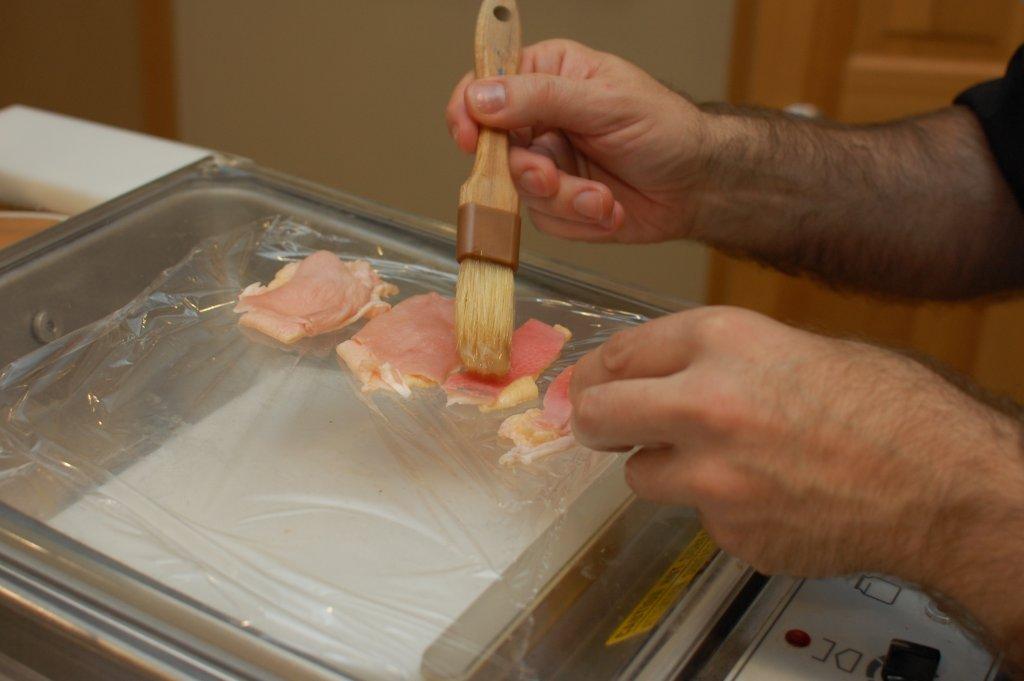
The first idea was simple enough – bind together strips of two different kinds of fish. We made a slurry of TG with water and brushed it on the sides of the fish, and then vacuumed sealed the whole thing.
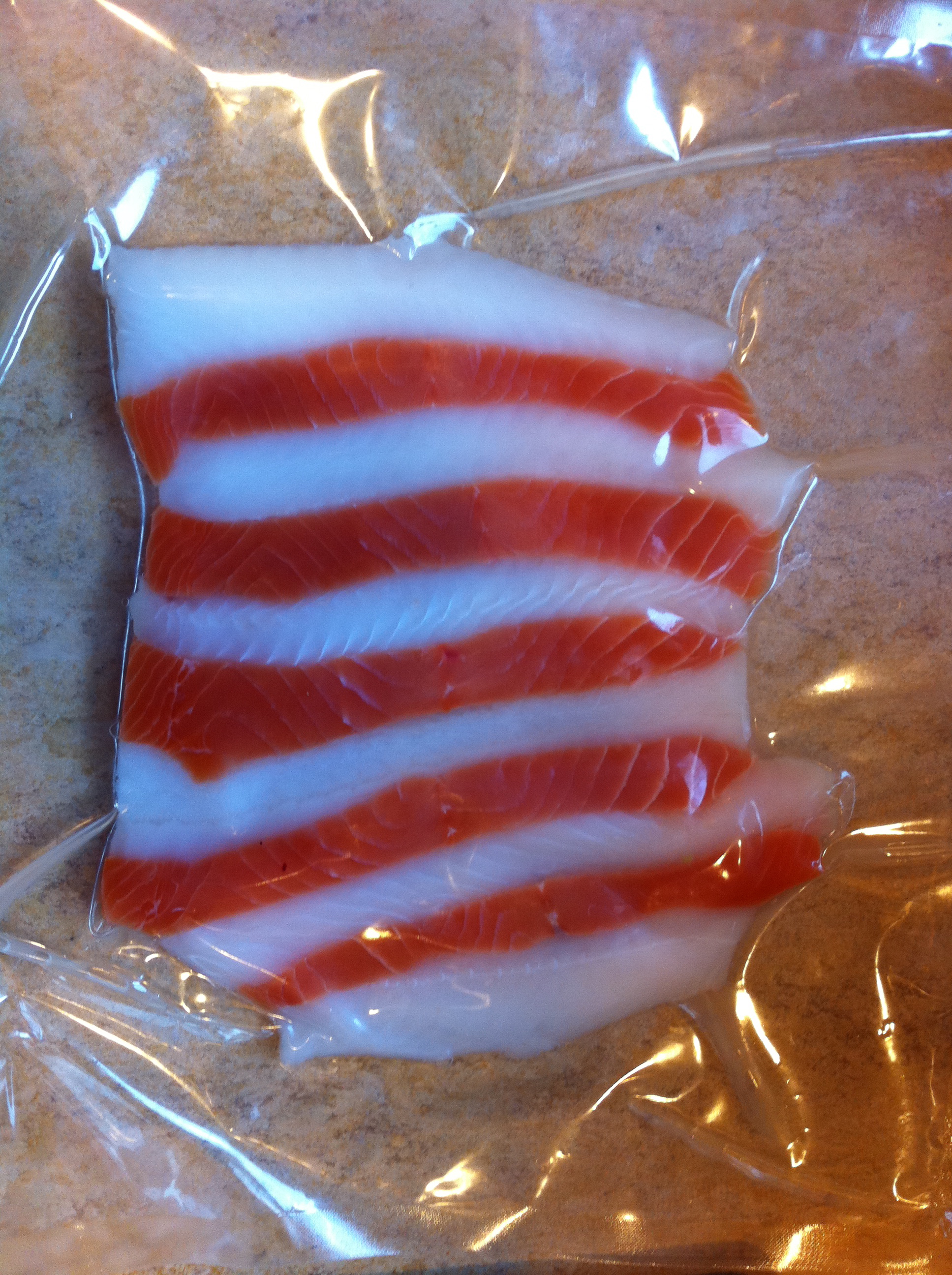
Unfortunately, we didn’t apply enough TG to the fish, and the strips didn’t bond together. It was our first attempt using the stuff, so we learned that it’s OK to be a bit more liberal in our application.
Next up was nuts. I figured nuts have plenty of protein, so they should bond together as well, right? I crushed up some peanuts and almonds in my coffee grinder, then added in the TG. I formed in into a disc using a pastry cutter and vacuum sealed it. And, as with the fish, there was not enough TG to bind it together.


The crumbled pieces did have a bit of tension to them, so the TG seemed to have done its job somewhat. I’ll need to add more next time and see if TG is ‘nut glue’ as well as ‘meat glue’.
I had an idea for an awesome piece of comfort food – chicken skin pork rinds. I pulled the skin off some chicken wings and glued them together with pork skin, then rolled it up in cellophane.
It glued up nicely, though quite scary looking, like some frankenphallic nightmare. I deep fried it and added salt and had pretty much what I was going for. You had the delicious combination of fried chicken skin and pork rinds. There needed to be a bit more chicken skin and a bit less pork fat, but it turned out very well. I can see these being eaten at state fairs across America.

Fried Chicken Skin Pork Rind
Finally, Scott had the idea of making shrimp paper. He minced the meat in a food processor and added TG, eyeballing the amount. He added it to a vacuum bag, rolled it out flat and sealed it.

He then placed the bag in a cookie sheet on the stove filled with water and quickly cooked the shrimp. From there it went into the fridge to set. It worked great. The result wasn’t thin as paper,but a more like a tortilla. A tortilla made of nothing but shrimp meat and TG.
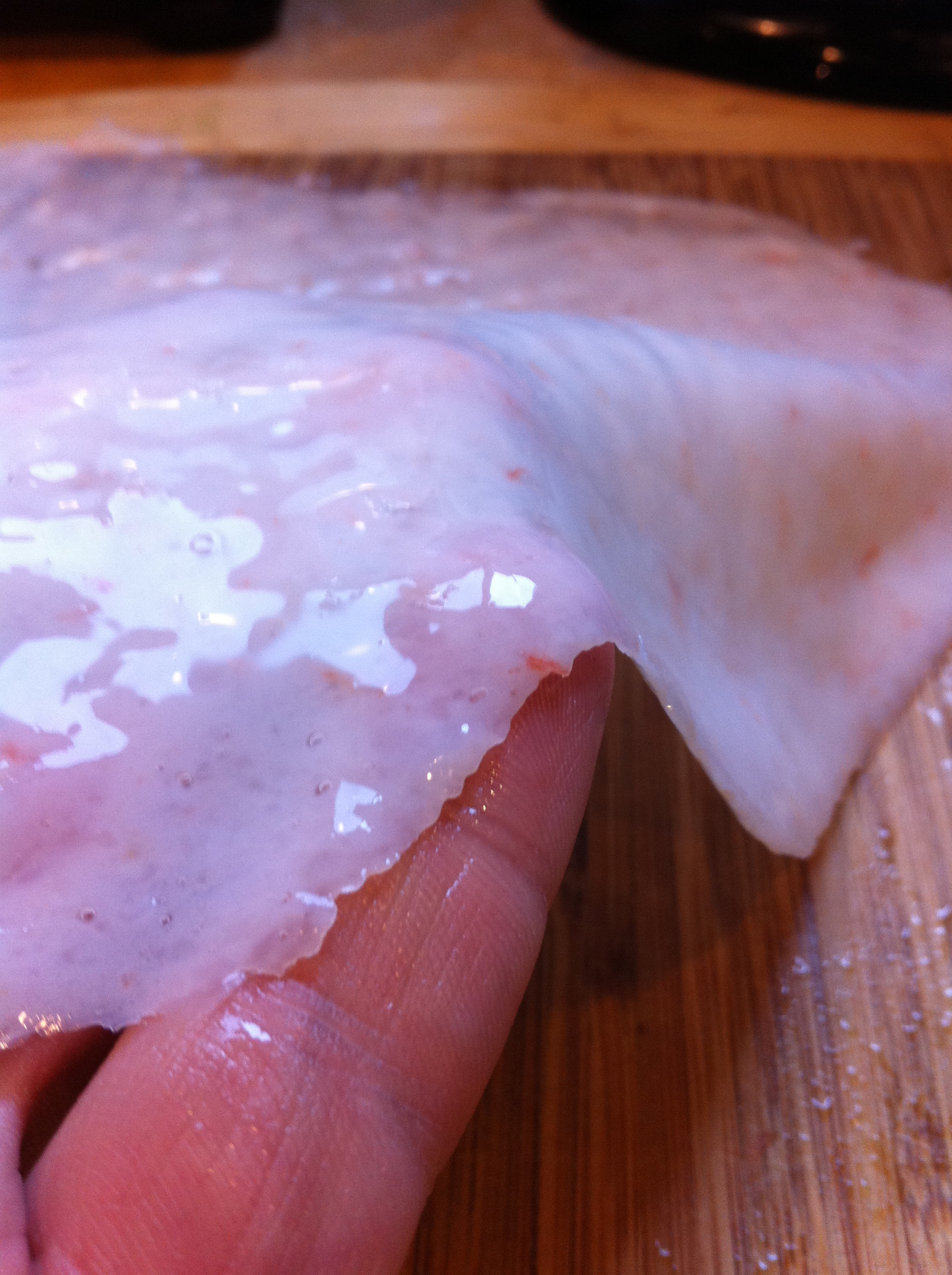
Shrimp Meat Tortilla
I cut some rounds out of it and prepared a sweet dish and a savory dish with them.
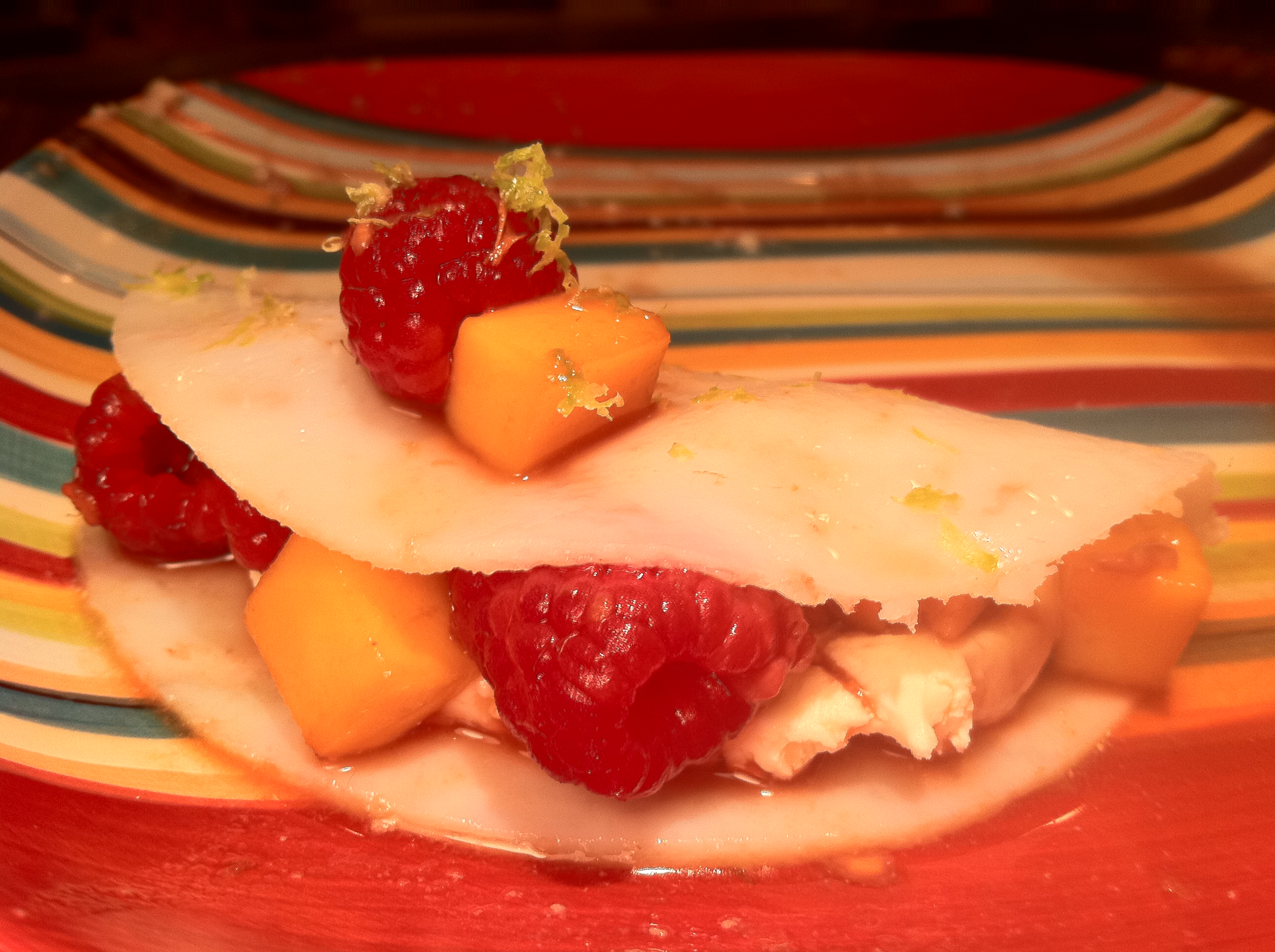
Shrimp meat crepe with raspberries and mango in a sesame/soy glaze with mascarpone cheese

Shrimp meat crepe with spanish rice, avocado and baby arugula with a chipotle tartar sauce
Both of us are very excited with the results and have a lot of ideas of what to do next. For example, the tortilla could have easily been cut into strips for shrimp noodles instead of crepes. As long as we avoid inhaling the stuff, TG looks to be a fun new component to cook with in the kitchen.
Jethro
07 Thursday Oct 2010
Posted in recipes

Care for a drink and a smoke? How about a smoked drink? After a friend inquired about a “smoked beer” she saw on a bar menu, I decided to grab my Smoking Gun* and take a shot at smoking a handful of beverages.
I smoked each of the beverages below by submerging the Smoking Gun’s rubber tube in the liquid. In the case of the wines, it served to both smoke and aerate the drinks (BTW, I never understood why it should be impolite to blow bubbles into your wine – if someone complains, tell them you’re “helping the wine open up.”) I ran the smoker for about 30 seconds for each beverage, then blew away any lingering surface smoke before tasting.
The results were surprising…
01 Friday Oct 2010
Posted in old school

The Great, Really Great, Northwest
This blog focuses on advanced techniques in the kitchen as practiced in the Northwest. But to understand the present, you need to be educated in the past, to know the foundations from which current practices have built upon. Recently I had the opportunity to work with technology so old that it was new again.
A friend of mine invited me up to spend the weekend in an A-frame cabin out in the Cascade mountain range. There’s no electricity or running water there, and we had to bring in our own water and food. She’s a chef and knows I love to cook, so she told me the cabin had an antique wood stove and a big rolling firepit grill to work with as well. Along with canoeing, hiking, hanging out with friends – how could I say no?

I arrived to this small slice of Heaven deep in the Cascades and found a stove that is easily as cool as my sous vide setup, immersion blender and collection of additives. The Quick Meal.
A little background: in 1850, John Rigen, a German immigrant, started a tin shop in St. Louis, MO. In 1870, George August Kahle became his business partner and together they started a business selling cooking stoves and washing machines. The cook stoves were called “quick meals” to reflect their convenience over conventional methods, which was cooking directly over the fireplace. Eventually it became two companies: the Rigen Stove Company and the Quick Meal Stove Company. Quick Meal produced the stoves and Rigen distributed them. From their success they grew until in 1901 they merged with several other companies to form the American Stove Company. American Stove continued to produce and sell the Quick Meal stove. In 1929, the Magic Chef oven (which was gas-burning) was introduced as the Quick Meal Magic Chef stove, and the fire-burning stove was phased out.

The Quick Meal Stove
The stove, as seen above, consists of the following:


We started her up and then…we waited. It took at least 45 minutes for the stove to heat up to the point where things would sizzle, much less boil. I grew up with a microwave, so it was eye opening to think that this was considered an advanced time saving kitchen appliance in its day. And, of course, we had to continually feed the fire to keep the temperature up and going.
Finally, the stove was ready. I brought some boneless leg of lamb, and we cooked it along with some pork chile verde from the night before.

Cooking Antique Style
And then we cooked for a long, long while by the light of propane lanterns. Meanwhile, someone pulled out a ukulele and sang cover songs while others played cards. We threw together a simple sauce of garlic and onion, with red wine and chicken stock that was reduced and then a bit of beurre manié to thicken it up. When it was finally ready we sliced it up, poured the sauce over it and sat down for a dinner full of laughter and conversation. It was simple, it was honest, it was rustic. And it was delicious.

Simple. Honest. Rustic. Delicious.
Working with a cast iron stove has given me a new appreciation for the advantages we have today in our home kitchens. With pinpoint accuracy of appliances like the Cooktek Apogee Induction Cooktop and laser thermometers, we’ve been able to eliminate a lot of the time and guesswork out of cooking. Some would say modern cooking replaces the art of cooking with simple calculation, the same way some talk about how electronic music is lifeless compared to acoustic music. I see it as simply another way to arrive at delicious food. And any artist will take what tools are available to create something truly extraordinary.
One thing I do know: Nathan Myhrvold claims to have the most well-equipped kitchen in the world. If it doesn’t include a fire-burning cast iron stove, then he’s one appliance short.
Jethro
27 Monday Sep 2010
Posted in sous vide
The nice folks at Polyscience were kind enough to loan me their new SousVide Professional heating immersion circulator. This is the first circulator that they have designed specifically for sous vide cooking, and it performs exquisitely.
After a few weeks of intense use, I found the temperature accuracy to be precise (eggs are a great test!) and the stability to be very reliable. The powerful circulating motor is a little noisy, as you can hear in the background of the video above, and I often wished it had a low-speed setting – instead, there is a valve you can adjust to regulate flow.
The video below displays the results of a heating and temperature stability test I ran. The machine is heating three gallons of water to 65.5C with no lid on the water bath. The video is sped up by 20x so you aren’t bored to tears (and because a watched pot never boils becomes delightfully tepid).
Polyscience SousVide Professional – $799
Scott
22 Wednesday Sep 2010
Posted in foams, gels, hyrocolloids, liquid nitrogen, spherification, thickeners, transglutaminase
Tags
chicken skin, corn, Denver, Ian Kleinman, ice cream, salmon, seaweed
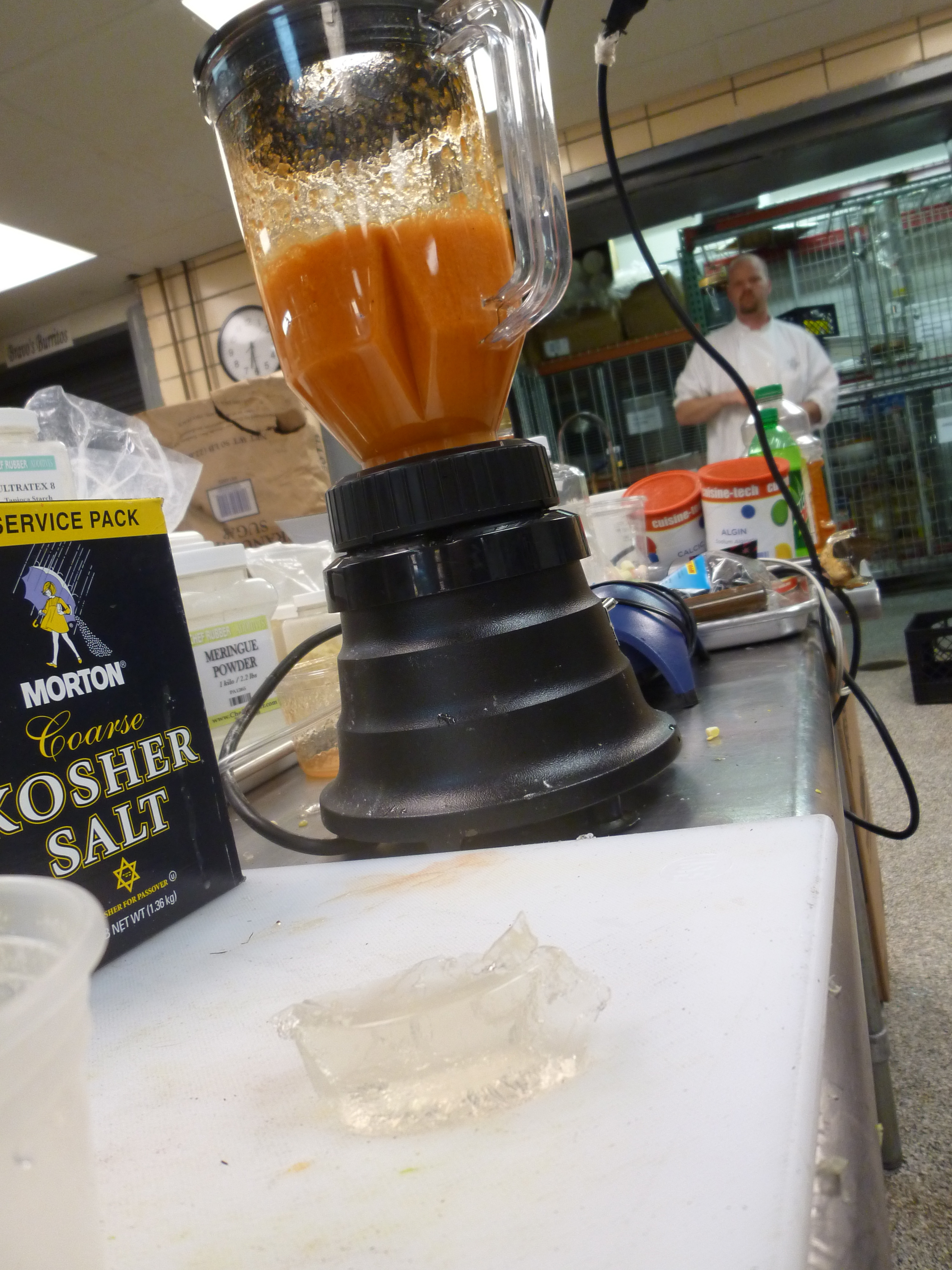
Chef Ian Kleinman (with gelatin and a blender)
I had to spend the month of May in Denver, CO this year because of work. I grew up there, so I had family and friends to entertain myself, and was able to put my brother’s, sister’s and mother’s kitchens all to good use. But I also wanted to eat the local cuisine, and the more experimental side at that. Biker Jim’s Gourmet Hot Dog Stand was certainly a great find, but I wanted to see some more “extended techniques” as well. I searched for a restaurant that could satisfy my cravings and found, to my surprise, a hotel restaurant in Westminster, CO.
Westminster is a suburb of Denver, and could be Anywhere, USA: strip malls, parking lots and franchise stores. Nothing suggests it could be a hotbed of Modern Cuisine. But apparently at O’s Steak and Seafood at the Westin Hotel, they had let a chef run wild: Ian Kleinman. He was doing a tasting menu once a week. As a matter of fact, over the last two years, he was able to push out over 100 of these menus. In a suburban hotel! Excited, I was ready to make my reservation. But there turned out to be a problem. He no longer worked there.
Apparently he had left just months earlier. Well, this was a drag. I researched some more to see if he was still in town, working at another restaurant. It turns out he had started his own catering company, The Inventing Room. “We will work with any budget” his website read. I wonder if he’d cater a dinner for one? I gave him a call.
I got him on the phone and explained that I wanted a single dinner catered, but I wanted to watch him cook the entire thing. In the course of our conversation, it went from dinner to a cooking lesson. This is WAY more than I had hoped for! I said I wanted to focus on different molecular techniques, the more outlandish the better. He obliged.
I met him at the commissary kitchen where he prepares his meals for The Inventing Room. He had already been there preparing and had laid out his ingredients for us to work with.

Not Your Mother's Spice Cabinet
We riffed out a couple of dishes that would use a variety of basic techniques: spherification, culinary foam and flash freezing with liquid nitrogen. As its centerpiece, we would use transglutaminase (also known as TG or ‘meat glue’) for what could now be considered a classic Modern Cuisine idea: salmon wrapped in chicken skin.
Now most would brush a slurry of TG directly on the salmon and wrap the skin onto the fish. Chef Kleinman took a different approach. After applying TG to a bunch of chicken skin, he rolled the skin up into a ball, wrapped it in plastic wrap and stuck it in the freezer. He had created a small ham of pure chicken skin. He took it to the meat slicer to make thin even slices.

We took the slices and made little chicken skin ravioli with salmon centers.

And then we fried the little suckers.
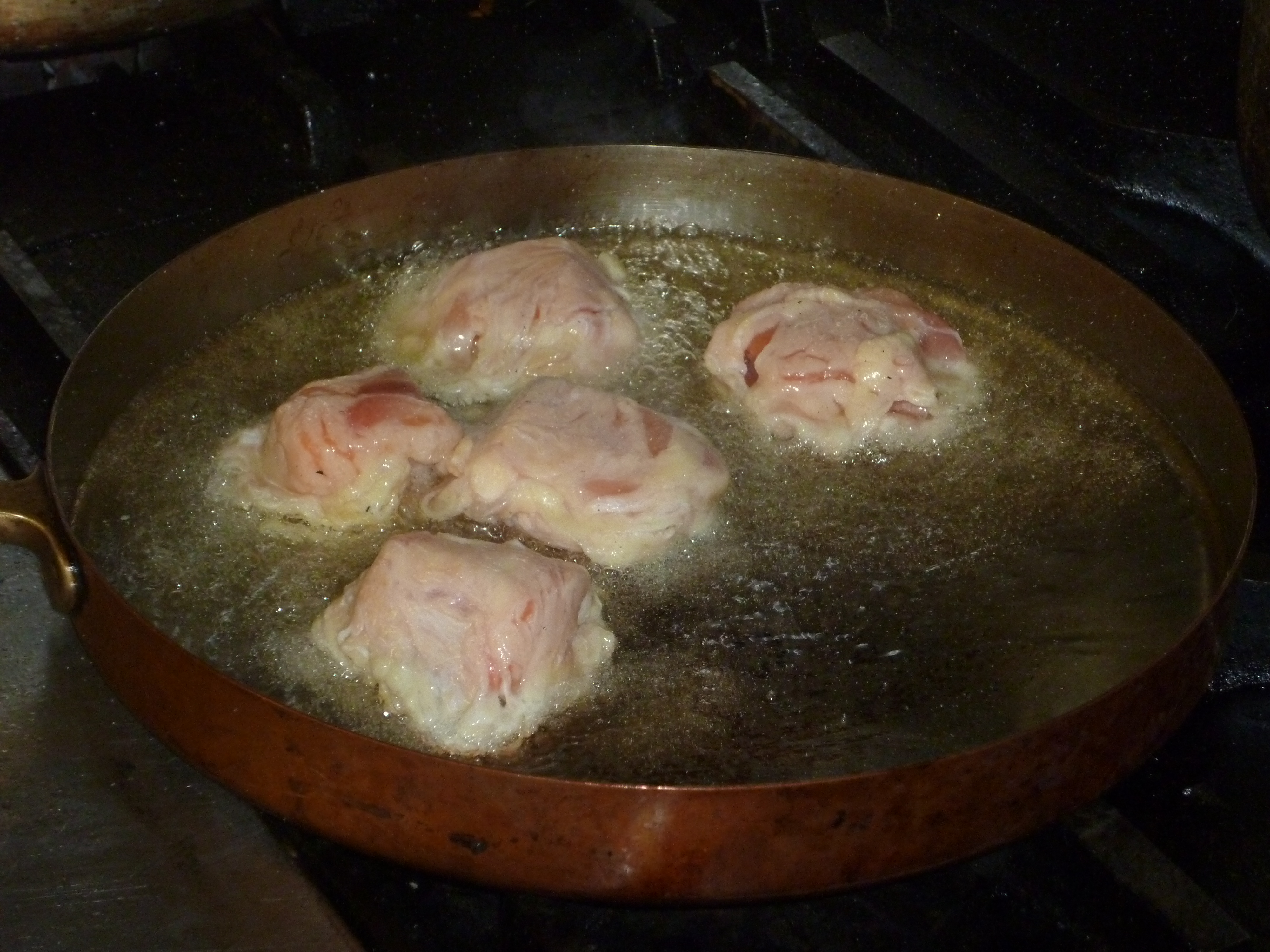
We plated it with a gelatin based sauce, which we transformed into a foam as well by adding a little lethicin. Now usually you would use an immersion blender to foam it up. But Chef Kleinman tends to think out of the box. He loves going to hardware stores to find equipment and figure out culinary uses for them. For instance, he’s taken chalk line markers to dispense candy powders. For our foam, he let an aquarium air pump doing his foaming for him while he attended to other things.

An Aquarium Air Pump Performing Automated Foaming
Next up we went with another modern classic: liquid nitrogen ice cream. He had a huge amount of ice cream base to work from, and we decided to try something unique: a corn ice cream with caramelized cactus.
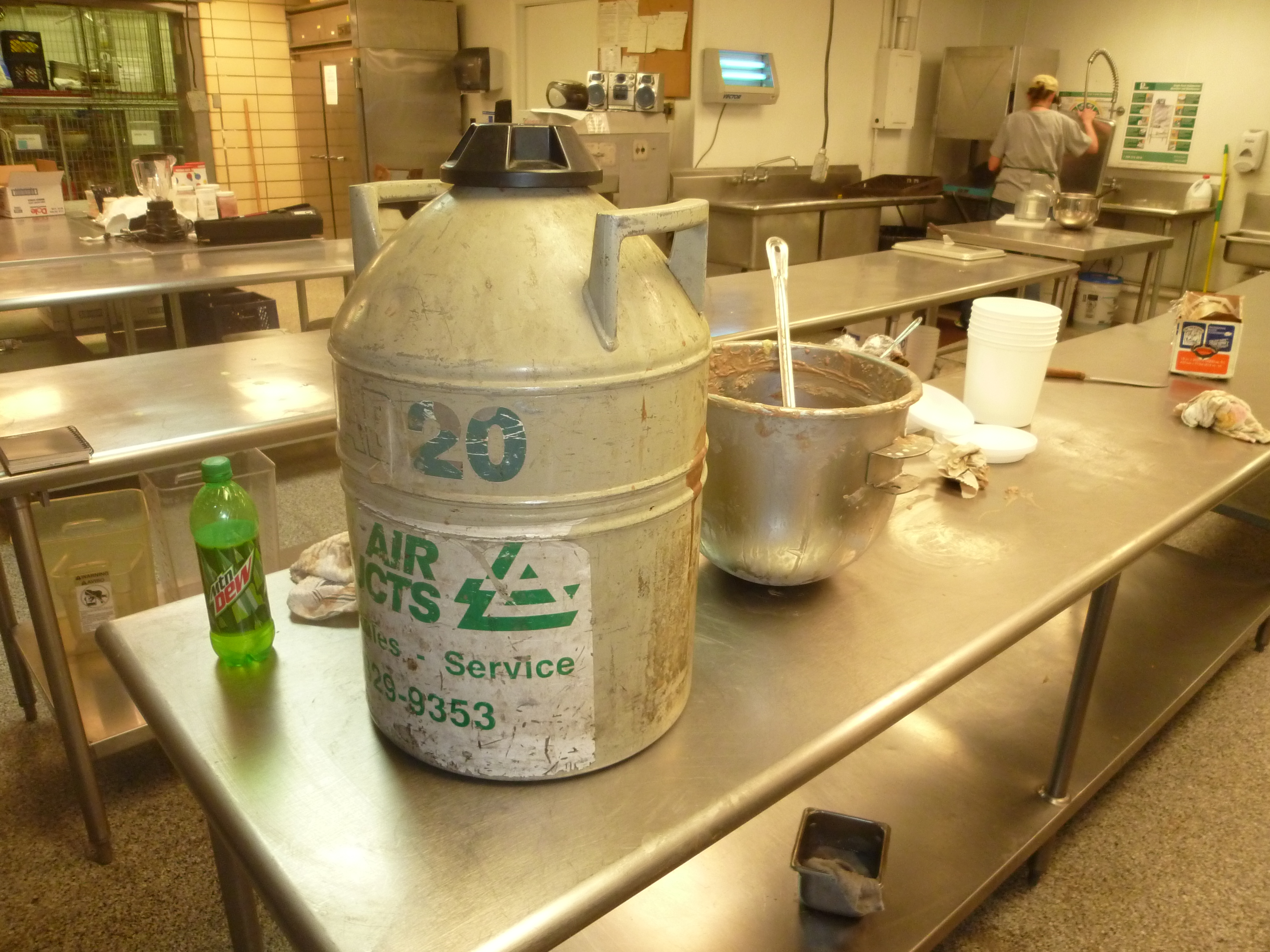
After throwing together some caviar (the key: the mixture should be ‘snotty’ before dropping into the calcium chloride water bath) we flash froze some seaweed as well. And our dishes were complete.
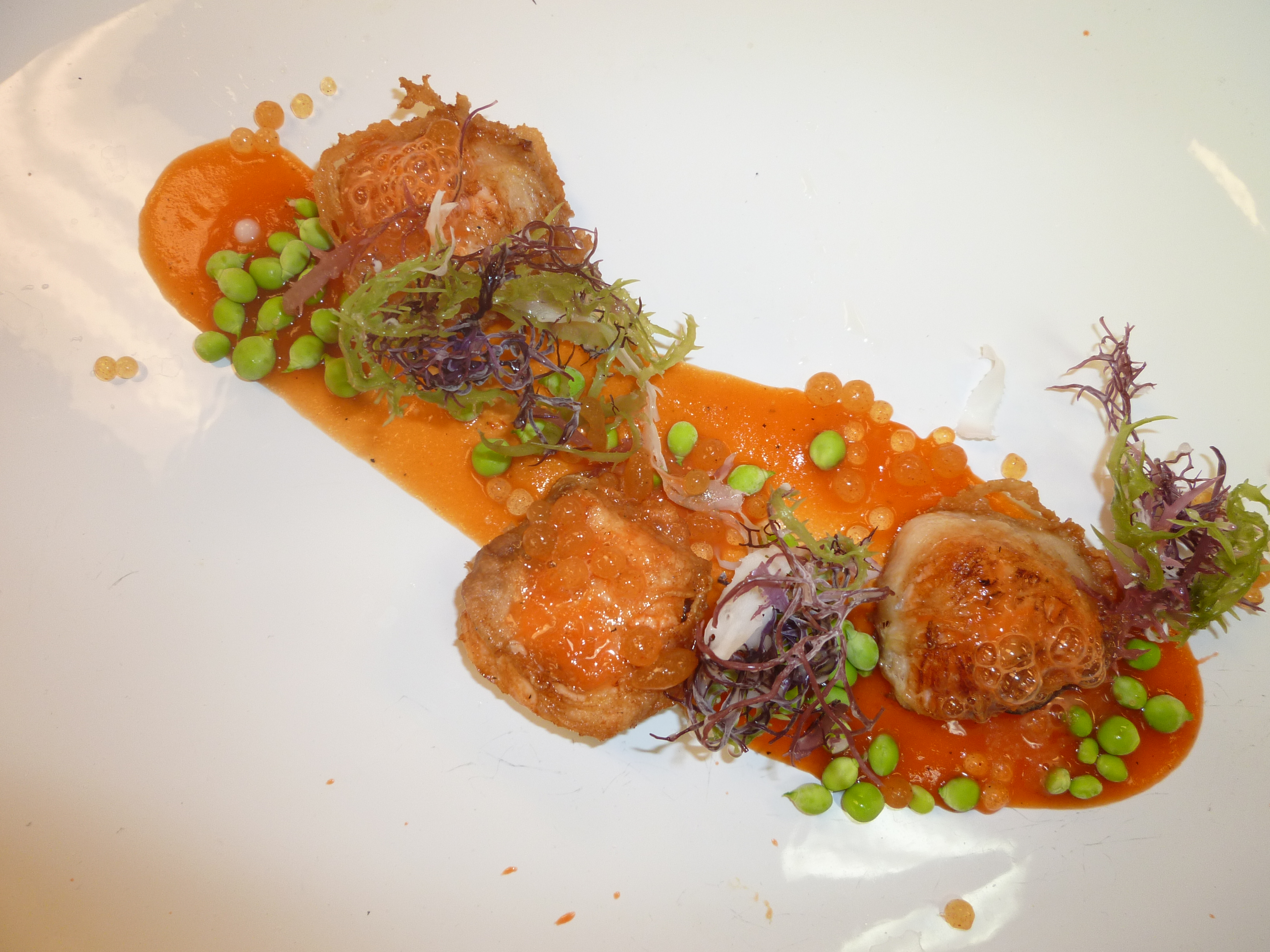
Chicken Skinned Salmon with Carrot Foam, Caviar, Peas, Seaweed
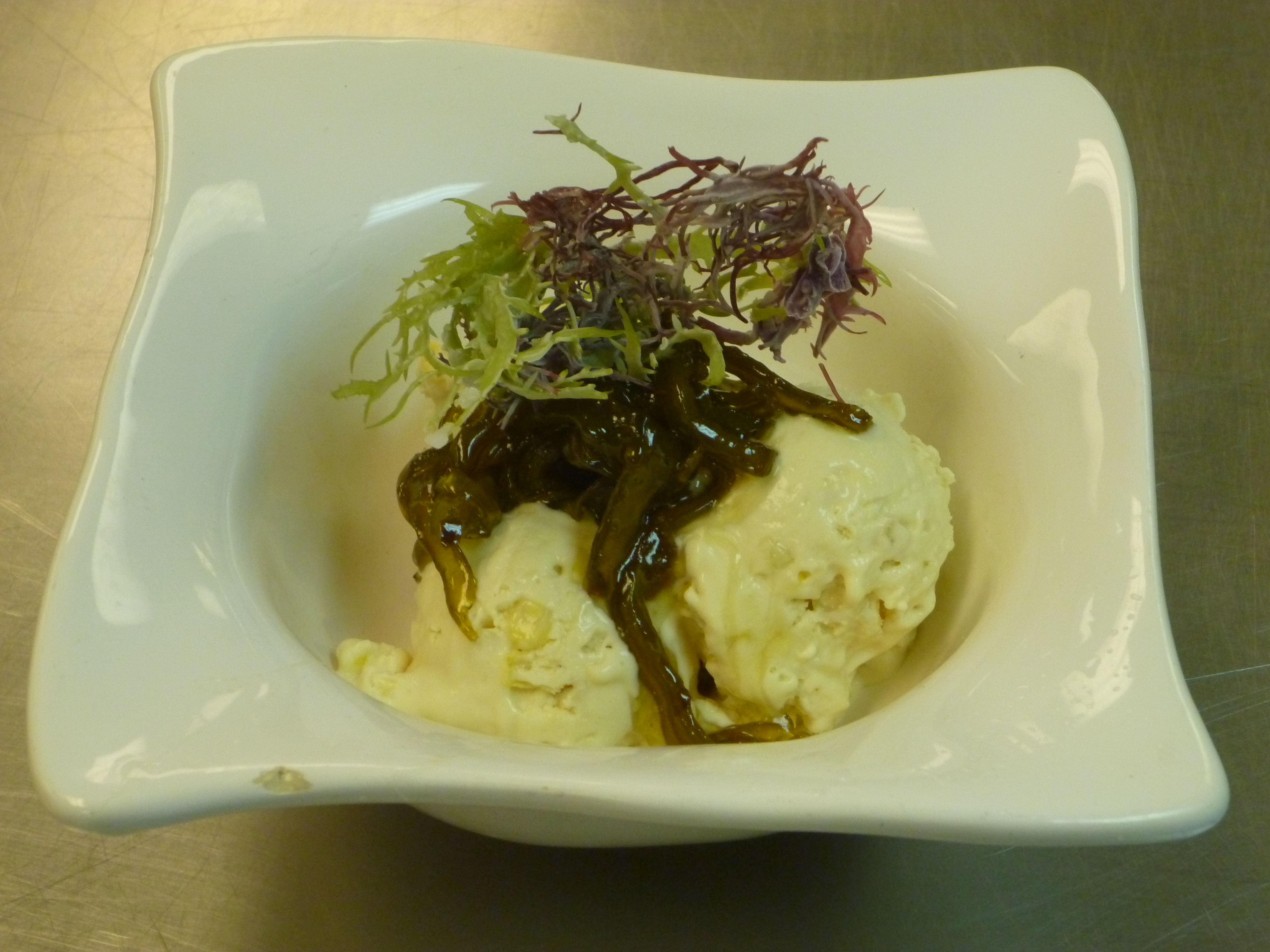
Liquid Nitrogen Corn Ice Cream with Carmelized Cactus and Seaweed
The salmon in chicken skin was incredibly tasty and the ice cream with cactus was a pleasant surprise to both of us, since we were food pairing on the fly. It was a fantastic experience and I am very grateful that he allowed me into the kitchen to see his approach to this kind of cooking.
You can follow Chef Kleinman’s culinary exploits at his blog, Food 102. Thanks again, Chef!
Jethro

 Jet City Gastrophysics