• About The Crew
  • Cooking Through ‘Modernist Cuisine’ At Home

Jet City Gastrophysics

~ Exploring Modernist Cuisine in the Northwest

Jet City Gastrophysics

Author Archives: jethro

elBulli At Home: Pumpkin Oil Sweet

07 Sunday Nov 2010

Posted by jethro in recipes

≈ 11 Comments

Tags

candy, elBulli, Ferran Adria, induction cooktop, isomalt, pumpkin oil

Pumpkin Oil Sweet

A lot of modern cooking techniques call for exact temperatures and measurements.  This is more akin to baking rather than cooking, where a pinch here, a dash there, and phrases like “until a golden brown” is sufficient to get you where you need to go.  I tend to paint with broad strokes over the detail of a single-hair brush, but I always try to do the hard stuff, if only to challenge myself.  This endeavor was no exception.

Caramelo de Aceite de Calabaza: Pumpkin Oil Sweet

The Cast Of Characters

The Cast Of Characters

I really wanted to tackle a dish from elBulli, voted Best Restaurant in the World five times.  Paging through my copy of A Day At elBulli, everything required six detailed components or access to exotic equipment like freeze dryers and superbags.  I wanted to start simple, and found the pumpkin oil sweet: two ingredients.  Exotic ingredients to be sure – Isomalt and pumpkin oil – but I could work with that.  Yes, this should be interesting.

Isomalt is a sugar substitute derived from beets.  It is half as sweet as sugar and has remarkable properties for molding, and most sugar sculptures are made using it.  Pumpkin oil is just that, and found mostly in Eastern Europe.  Neither can be found easily.  I ordered the Isomalt online but found the pumpkin oil here in a specialty store in Seattle.  Seattle is good like that most of the time.

The process is simple:

  1. Melt the Isomalt.
  2. Dip a pastry cutter into the Isomalt so a thin film covers the bottom.
  3. Pour a teaspoon of pumpkin oil onto the film.  The weight will force the film to wrap around the oil and drip down below.
  4. Cut off the thin strand of Isomalt attached to the pastry cutter.

So I began.

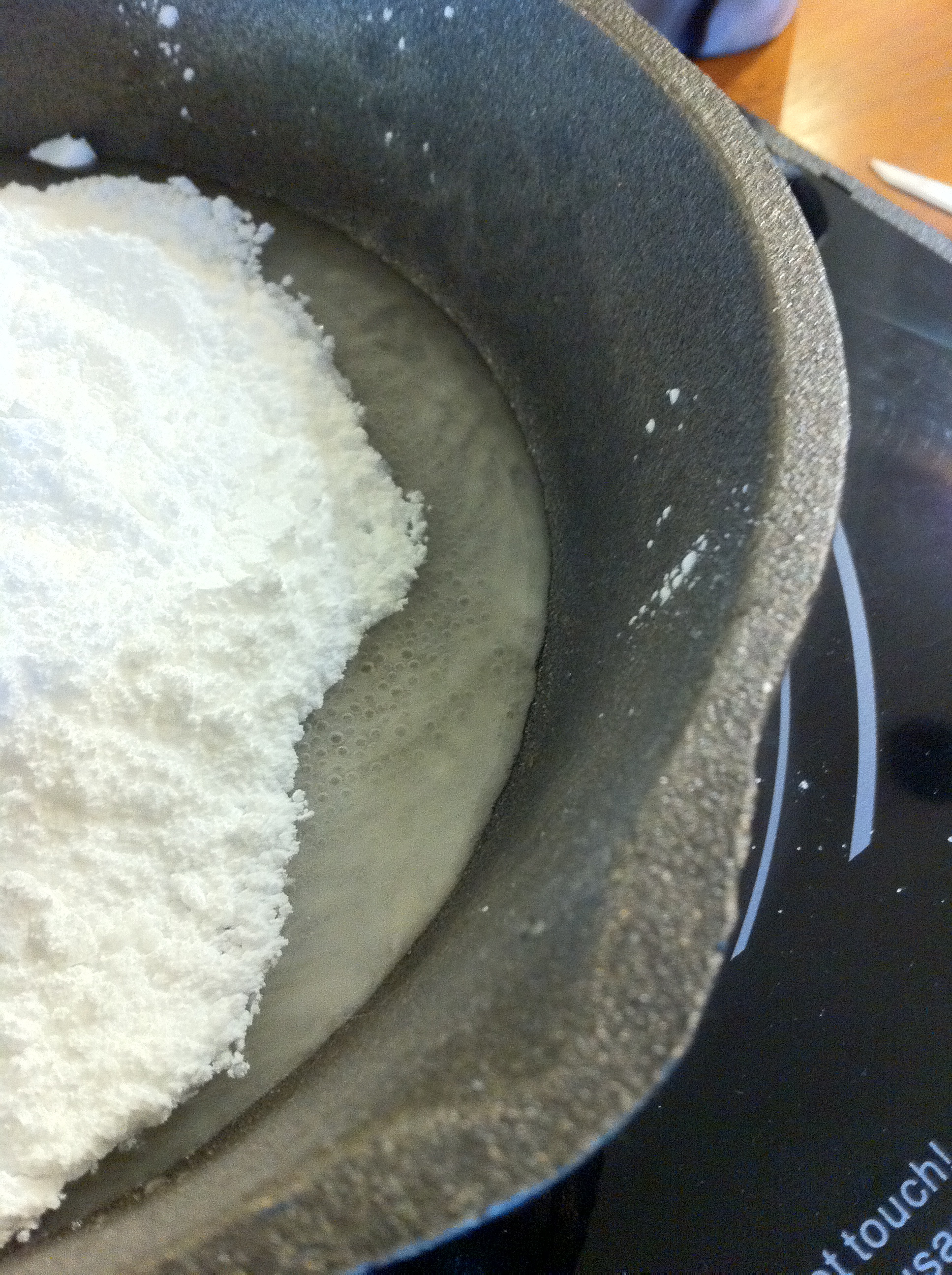
Melt the Isomalt in a pan over a medium heat until the temperature reaches 120 C/250 F.

I dumped the Isomalt into the pan and turned on my new induction cooktop  (Did I say new?  I meant to say used.  On Craigslist.  For $60 – less than half the price for a new one.  There’s rarely a reason to pay full price for anything – even weird kitchen equipment.  Just keep your eyes peeled and who knows what you’ll find.). Now it doesn’t hit 250F exactly.  It has ten settings, and each setting increases the temperature by 30F.  So I could get to 240F or 270F, but not 250F.  Close enough, though. Right?

Melting Isomalt

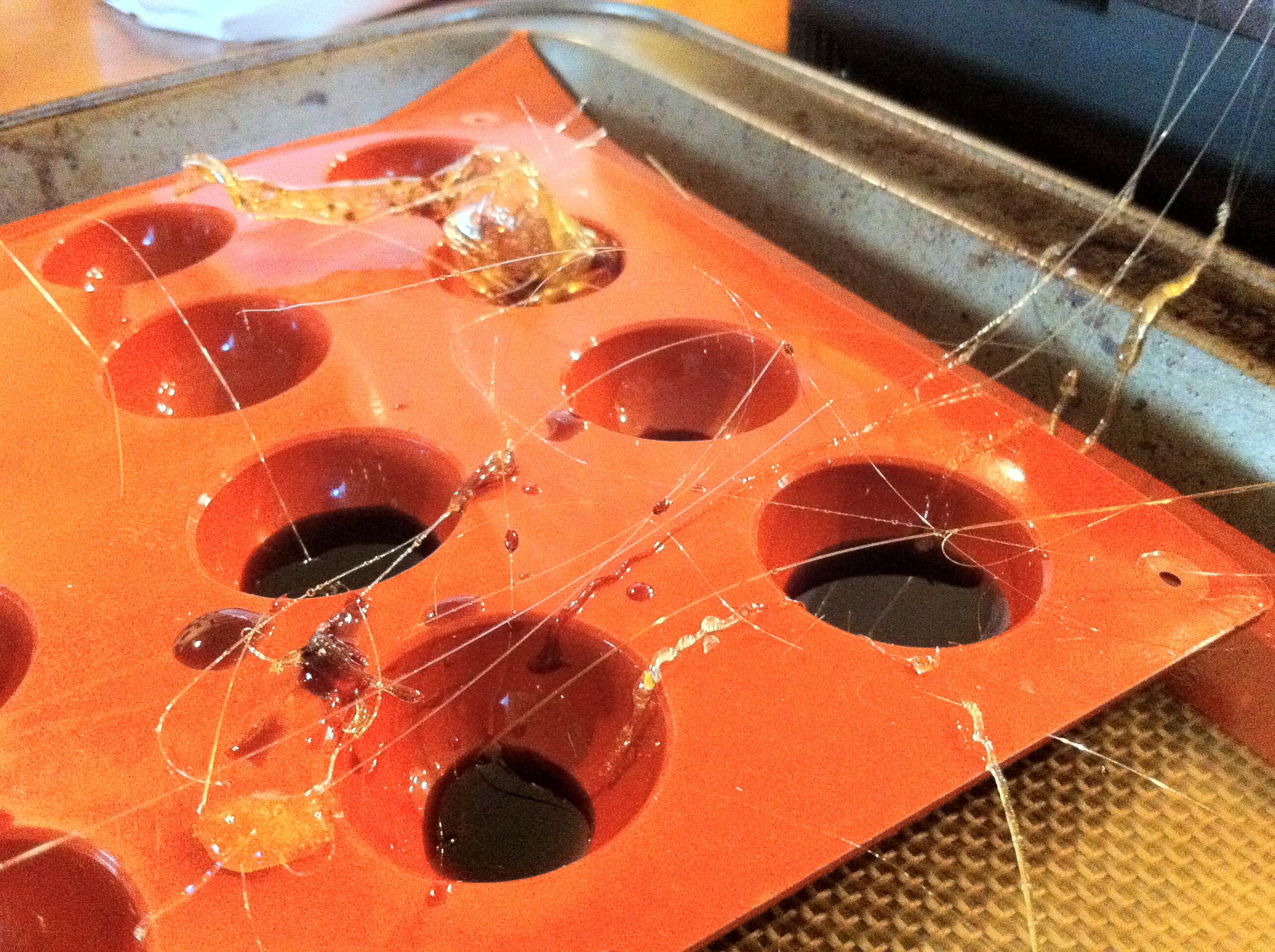
Wrong.  In order to create a thin film on the pastry cutter that is still pliable enough to drip down after the oil is added, the Isomalt needs to be at exactly 250F.  If it was warmer, it was too liquid, and no film would form.  If it was colder, it would thicken up and no film would form.

Film of Isomalt

My Kingdom For A Thin Film

Of course, since I couldn’t maintain this exact temperature, I had to play this game of Heat Up and Cool Down to get it just right.  Sometimes, the temperature would be where I could make a thin film, but within a second it would harden, and the oil would just sit in it.

Sometimes, it was too weak, and wouldn’t hold the oil and just collapse immediately into a pool of oil and sugar shards.   So, most of the time, I just made a frickin’ mess.

And another challenge: if I tried to let the pastry cutter sit for a moment in the Isomalt so I could get a decent film, it would heat up and burn my fingers.  But I persisted and managed to figure it out.  That they are able to pump out dozens of these a night perfectly shaped at elBulli is quite humbling.  Trying it myself just heightens my admiration for their creativity and execution.

Pumpkin Oil Sweet Closeup

I ended up with a rouge’s gallery of misshapen candies as well.  They reminded me of the artwork of H.R. Giger, who designed the alien in Alien.  They would have made very creepy candies to give out on Halloween.  “Eat these right now, my pretties!”  I don’t think their parents would go for it.

The Rogue's Gallery

How to eat:
Pick up a sweet carefully with your fingers and place in your mouth. Without chewing it, let the sugar melt and the pumpkin seed oil flow out.

It is definitely tasty.  The Isomalt cracks open and the oil glides onto your tongue, with what would be an unexpected and surprising flavor, unless you’ve been trying to make them for the last hour, in which case the flavor is well known to you.  This happens.  But the pumpkin matches well with the leaves falling from the trees here in Seattle, and becomes a perfect autumnal sweet, a half a world away from its birthplace in Roses, Spain, at elBulli.

Autumnal Sweet

Jethro

Modernist Cuisine At Home: Sous Vide Instant Hollandaise

18 Monday Oct 2010

Posted by jethro in foams, MC at home, recipes, sous vide, vacuum sealing

≈ 8 Comments

Tags

Eggs Benedict, hollandaise, ISI Thermo Whip, Modernist Cuisine

Earlier this month the Hunger Intervention Program in Seattle held Feeding The Soul 2010. For just a $25 donation, an eight course meal was served by chefs Brian McCracken and Dana Tough from Spur Gastropub and the culinary team from Intellectual Ventures – Maxime Bilet, Grant Crilly, Sam Fahey-Burke, Anjana Shanker and Johnny Zhu. The chefs from Intellectual Ventures are, along with Nathan Myhrvold and Chris Young, behind the upcoming “cookbook” Modernist Cuisine: The Art and Science of Cooking, due for release next March. A chance to eat their food and meet them as well? Done deal.

The food was delicious and I had a chance to briefly speak with all of them. I introduced myself and told them about this blog and how we at Jet City Gastrophysics are planning to cook our way through the entire cookbook. There were some eyebrows raised and a “good luck” thrown my way. True, I don’t have a freeze dryer or a rotary evaporator, but that doesn’t mean I can’t at least acquire access to one somehow. Where there is a will, there is a way.

And, true to my word, I have begun to cook my way through it.

It’s not published yet – how is that possible? On August 13th, they put out a 20 page excerpt of the massive tome available for download from their website. I’m sure like me, gastronomes across the world downloaded and quickly got to reading the first pages of the 2400 that will be available in March 2011.

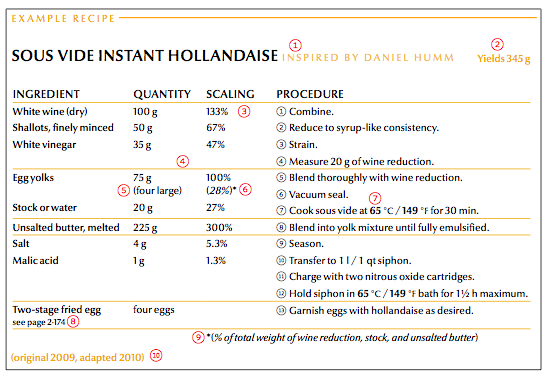
The excerpt is from the fourth section of the first chapter of the first volume, entitled The Story Of This Book. It goes into detail of the origins of Nathan Myhrvold’s research into sous vide techniques online to the development of a full time cooking staff and publishing house to put out the work. Next they explain the photography, a step by step review of each volume, and then on to the recipes they developed and the special format that they are in. And to illustrate, they printed some example recipes. Recipes waiting to be used.

The Recipe

An Example Recipe. Just Waiting To Be Made.

There are three recipe examples: Sous Vide Instant Hollandaise, Making a Smooth Puree, and Monkfish with Mediterranean Flavors. Each recipe is an example of the three types of recipes found in the book: Example, Parametric and Plated Dish. Example recipes are considered the shortest and simplest, intended as components for other dishes. Parametric recipes focus on a particular ingredient or characteristic – or, as they call it, a parameter. The idea is to take a concept in its simplest form and show, at-a-glance, the variations of that concept (I was in web development for years, and their application of design for visual information is excellent. I wonder if they had Edward Tufte consult on the project). Finally, the plated-dish recipe brings it all together so you can create an entire dish from a single recipe.

From the three examples, the monkfish recipe calls for components that they did not show: Pâte à Choux, Zucchini Blossom Beignet, Fish Spice Mix and so on. So that left the other two. I decided to start with the shortest and simplest: Sous Vide Instant Hollandaise.

Making Of A Modernist Sauce

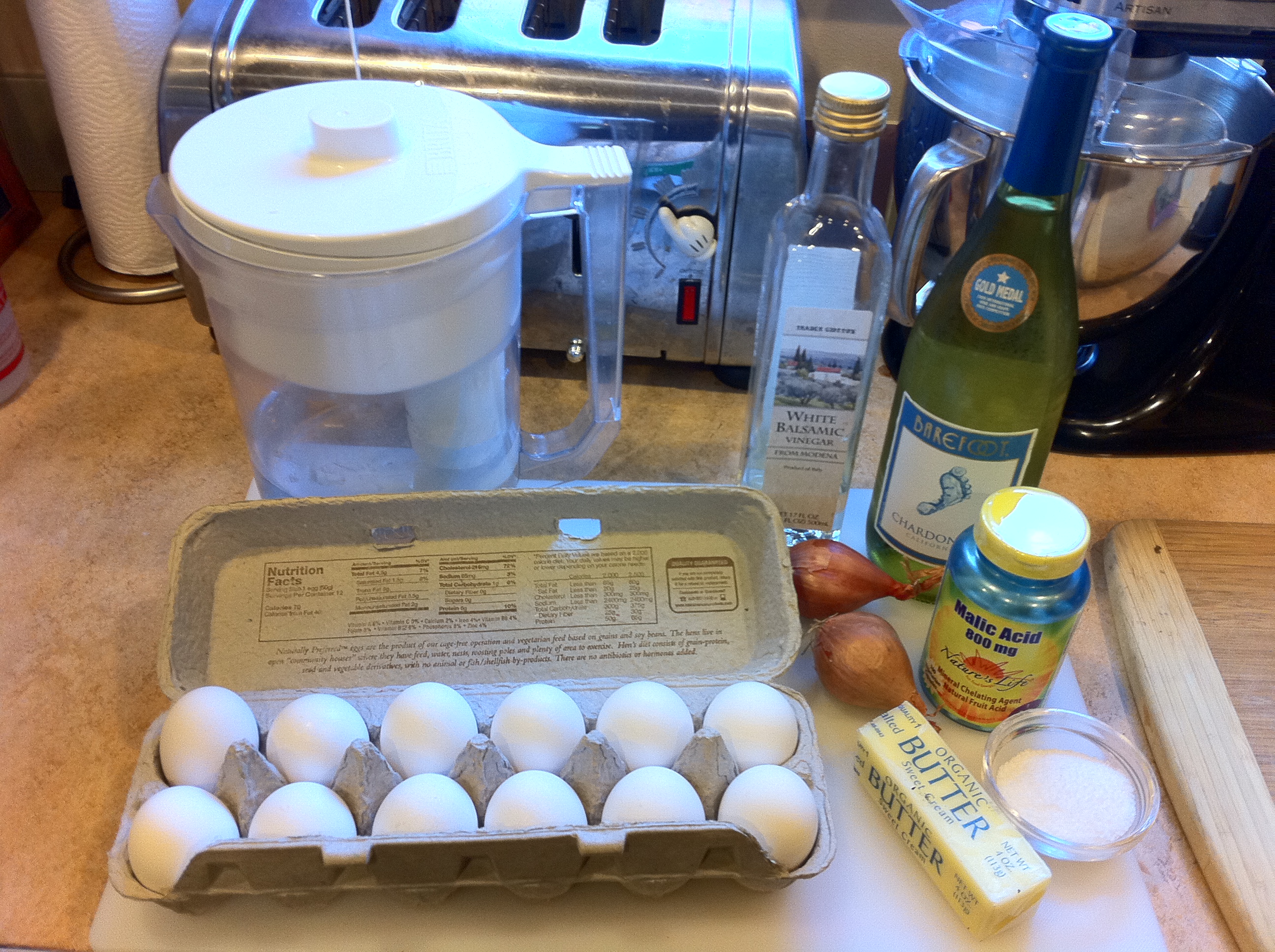
The Ingredients

The Cast Of Characters

I collected the ingredients necessary and started in. The format is really straightforward and easy to understand. Of course, that meant I had to screw it up immediately.

As per the recipe, I put together the white wine, white vinegar and minced shallots in a pan and began to reduce them down to a syrup-like consistency. But, it wasn’t getting syrupy. The liquid kept dissipating, but the onions weren’t breaking down. And soon I had a thick gop of caramelized onions and nothing else. How did this happen?

3. Strain.

Oh. Um, yeah. So I did it again, and pulled out 20g of onion flavored wine reduction.

Egg Yolks

Next up I took four egg yolks and blended them with the reduction and water. I did not measure out the egg yolks by weight. The recipe gave me an easy out by offering four large egg yolks as a measurement, and I took it. I put the mixture in a bag and vacuum sealed it. It fit in one of the small bags I have, and it sealed just in the knick of time before the ingredients boiled over into my vacuum sealer, creating both a big mess and having to start again from scratch.

Vacuum Sealing Disaster Averted

A Close Call

I plopped the sealed bag into the sous vide bath for 30 minutes. For the butter, I used what Chef Richard Blais calls one of the more underutilized kitchen instruments: the microwave. In 40 seconds my melted butter was ready. I took the packet out of the water, mixed its contents in with the butter, then added salt and malic acid.

Malic Acid

Mmmmm. Malic Acid.

What is Malic acid and what is it doing in my hollandaise sauce? Malic acid is the main acid found in unripe apples, cherries and many other fruits and vegetables. As an ingredient, it is supposed to add a distinct sourness, has a lower melting point than other acids and is more soluble than citric acid, which is also a sour flavor enhancer. Why it is specifically included in this recipe? I have no idea. We’ll all have to wait until the book comes out. But in the meantime, you can find it a your local vitamin supplement store. This means you’ll have a lot of Malic acid lying around – 100 tablets worth. It is also supposed to stimulate metabolism and increase energy production, so if you work out a lot, maybe it will help you burn calories. I don’t know, just a thought. I mean, after all this hollandaise sauce. Anyway.

Warmed ISI Siphon

I poured the mixture into my ISI Thermo Whip and placed it back in the bath to keep it warm. Next on the example recipe is something called a two-stage fried egg, which references another part of the book. So having no idea (yet) what a two-stage fried egg is about, I decided to poach an egg, fry some ham, toast a muffin, and spray some hollandaise.

Eggs Benedict

Eggs Benedict, Modernist-ish

Is is not creamy like your usual hollandaise, but a thick foam. The texture is definitely different and calls for unique plating or pairing. When you have a traditional dish like the one above and one of the textures is not what you expect, it jumps out at you. I’m curious how it will taste with a two-stage fried egg.

Also, the name is a bit misleading. You can make traditional hollandaise in 10 minutes with a blender. This took 30 minutes for the sous vide alone, plus another 15-20 minutes for the rest. It is instant in the fact that you can just walk up with your cream whipper and blast out sauce on demand. At least for 90 minutes – that’s the maximum time you’re supposed to keep the cream whipper hot. Once again, the example recipe is all we have at this point – I’m sure the supporting text will provide the context.

Regardless, it is delicious. I loved it. The recipe does yield a large amount – something like 1 1/2 cups. And that’s prior to foaming up – I could have served 10 people with all that I made. I sprayed the rest into a container and put it in the fridge. Then it gave me a little surprise: it settled, cooled and made an awesome hollandaise flavored whipped butter. I had it today on some toast as a little snack. Scrumptious.

So the first step in the thousand mile journey of cooking through Modernist Cuisine: The Art and Science of Cooking has been taken. I’m looking forward to the adventure.

Jethro

Meeting Seven: Transglutaminase

12 Tuesday Oct 2010

Posted by jethro in transglutaminase, vacuum sealing

≈ 11 Comments

Tags

crepes, pork rinds, shrimp paper

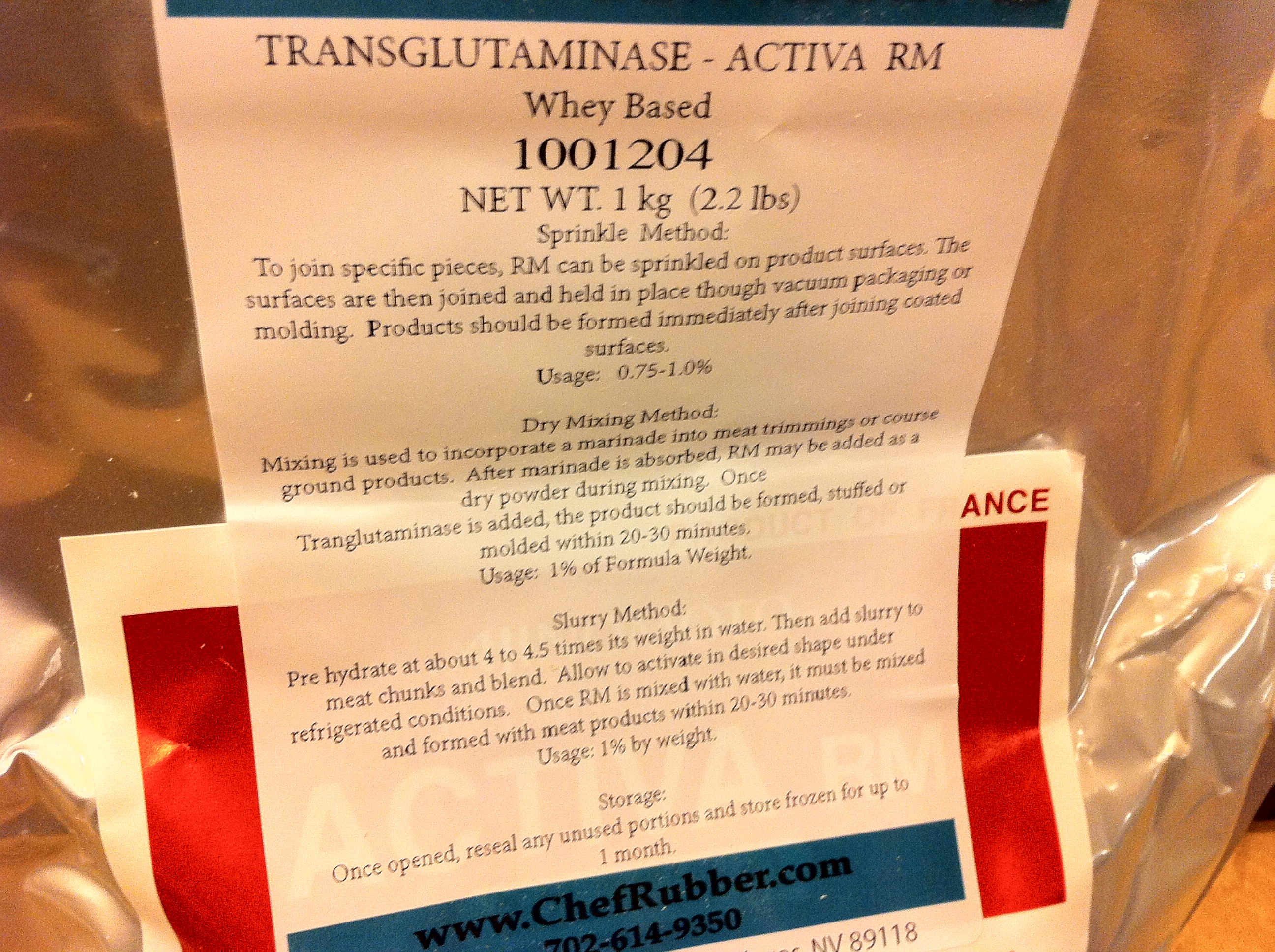
Bag of Transglutaminase

“This shit is dangerous.  You inhale it, your lungs stick together, you die.”

So Chef Ian Kleinman told me about Transglutaminase during my private cooking class with him last spring. Transglutaminase (also known as TG or ‘meat glue’) is an enzyme that bonds proteins together.  If you have ever had imitation crab meat or chicken nuggets, you’ve eaten TG.  Although safe to eat, in powder form, it can be inhaled, and then work its magic inside your lungs.  So when we met last week to work with the stuff, we decided it was best to take precautions.


The Doctor Is in the House

I'm Just Cooking. Really.


With safety glasses and masks on, we set about to working on some ideas.  Eric was called into work and couldn’t make it (he’s a busy guy, what with being invited to stage at Noma by Chef Redzepi among other things), so Scott and I collaborated.  With worked with three types of proteins: meat, fish and nuts. As with any experimentation, we had some success and some failures.

THe Failures

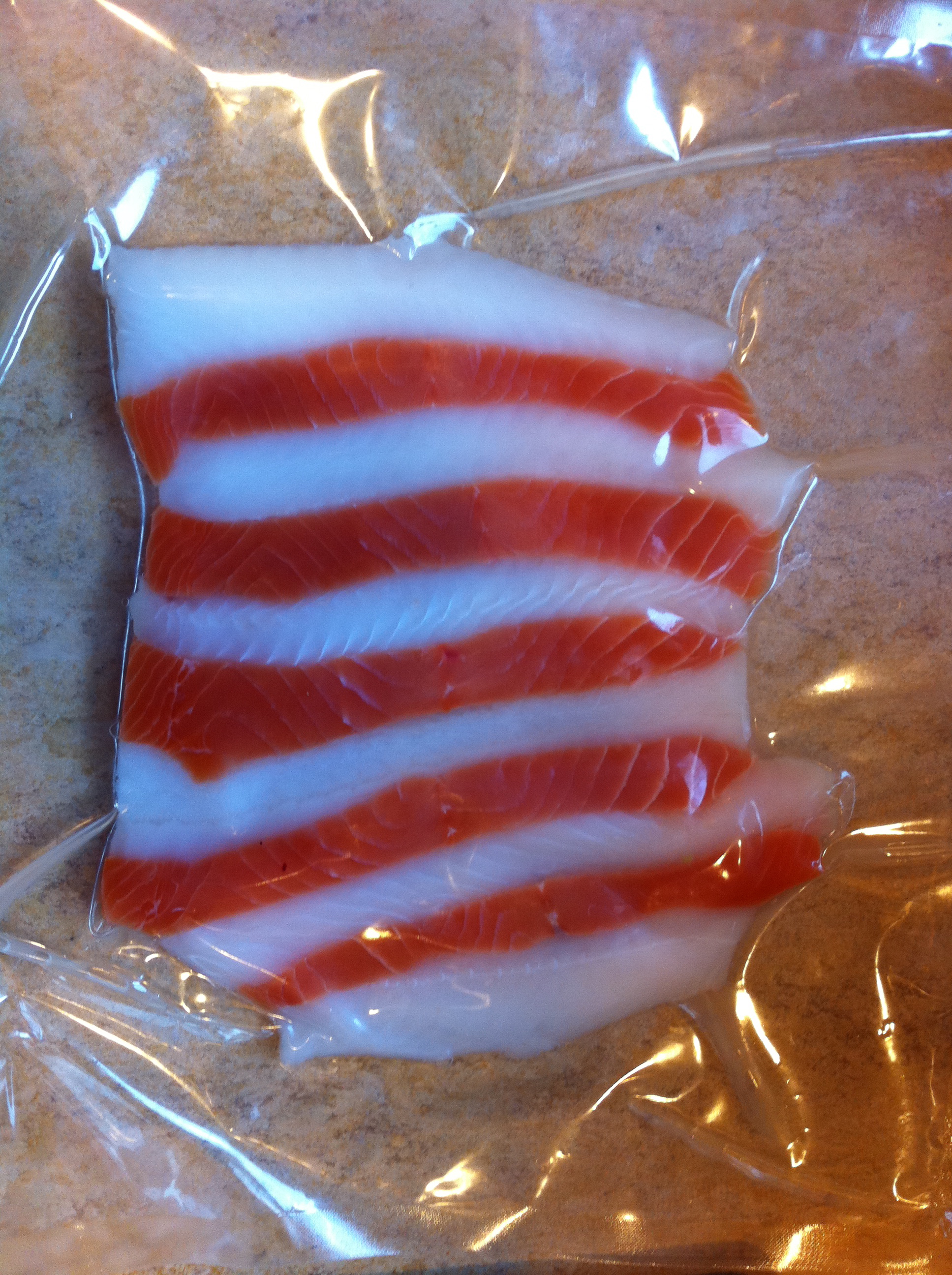
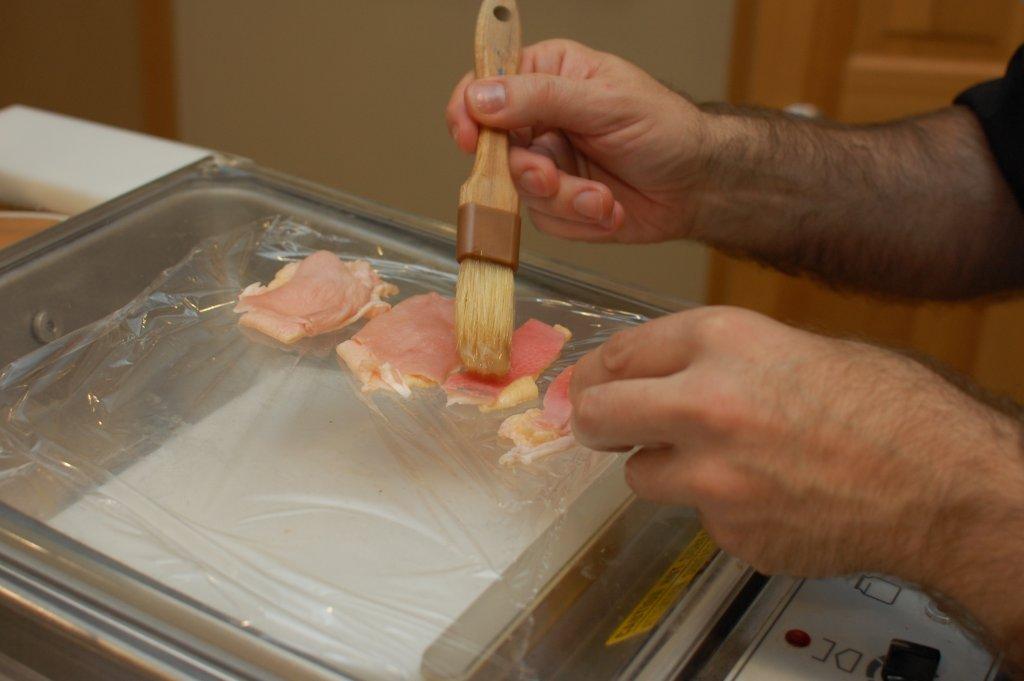
The first idea was simple enough – bind together strips of two different kinds of fish.  We made a slurry of TG with water and brushed it on the sides of the fish, and then vacuumed sealed the whole thing.

Striped Fish

Unfortunately, we didn’t apply enough TG to the fish, and the strips didn’t bond together.  It was our first attempt using the stuff, so we learned that it’s OK to be a bit more liberal in our application.

Next up was nuts.  I figured nuts have plenty of protein, so they should bond together as well, right?  I crushed up some peanuts and almonds in my coffee grinder, then added in the TG.  I formed in into a disc using a pastry cutter and vacuum sealed it.  And, as with the fish, there was not enough TG to bind it together.

Nut Disc

Crumbled Nuts

The crumbled pieces did have a bit of tension to them, so the TG seemed to have done its job somewhat.  I’ll need to add more next time and see if TG is ‘nut glue’ as well as ‘meat glue’.

The successes

I had an idea for an awesome piece of comfort food – chicken skin pork rinds.  I pulled the skin off some chicken wings and glued them together with pork skin, then rolled it up in cellophane.

Gluing Chicken and Pork Skins

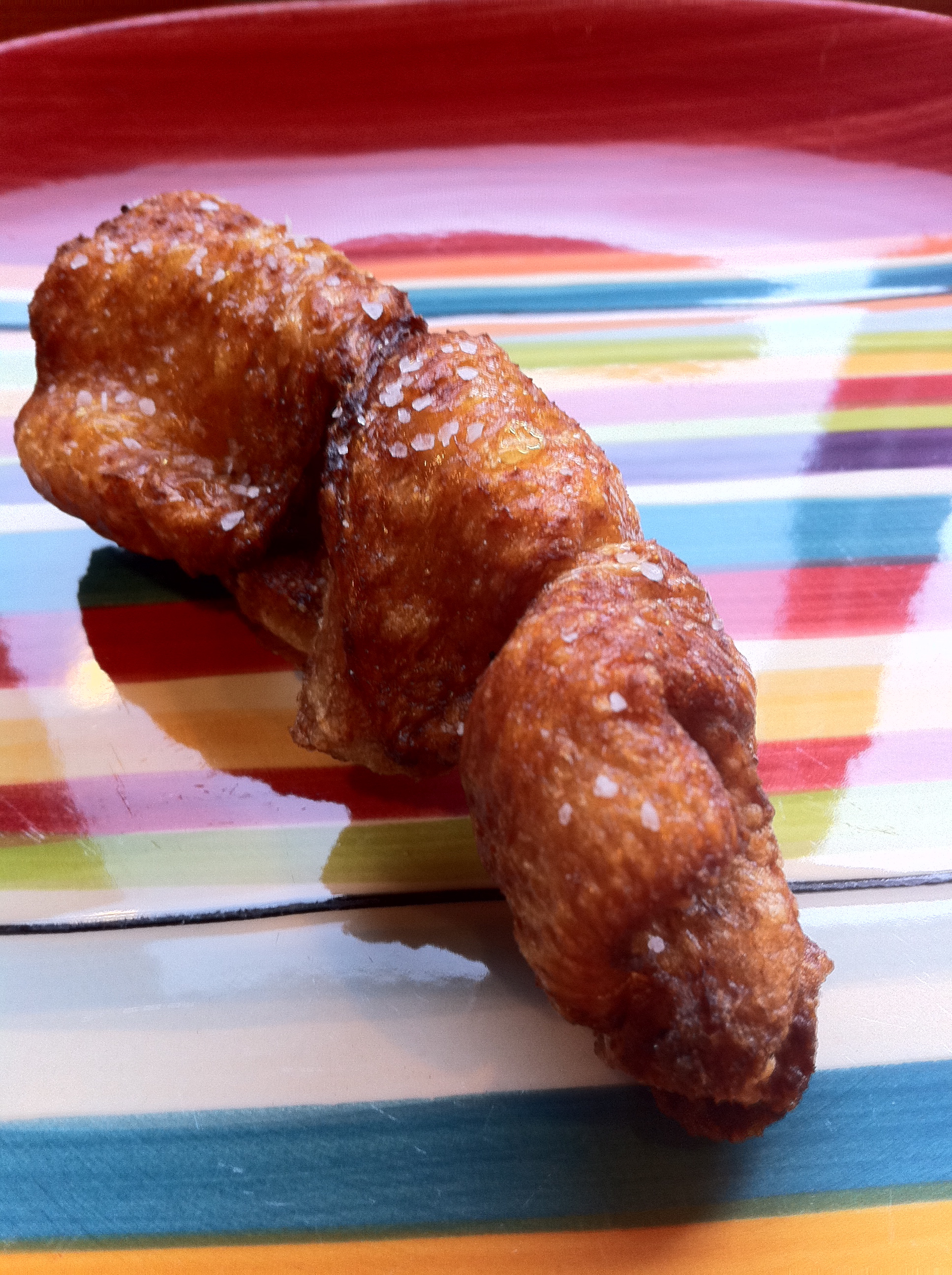
It glued up nicely, though quite scary looking, like some frankenphallic nightmare.  I deep fried it and added salt and had pretty much what I was going for.  You had the delicious combination of fried chicken skin and pork rinds.  There needed to be a bit more chicken skin and a bit less pork fat, but it turned out very well.  I can see these being eaten at state fairs across America.


Fried Chicken Skin Pork Rind

Fried Chicken Skin Pork Rind


Finally, Scott had the idea of making shrimp paper. He minced the meat in a food processor and added TG, eyeballing the amount.  He added it to a vacuum bag, rolled it out flat and sealed it.

Scott with Shrimp Paper

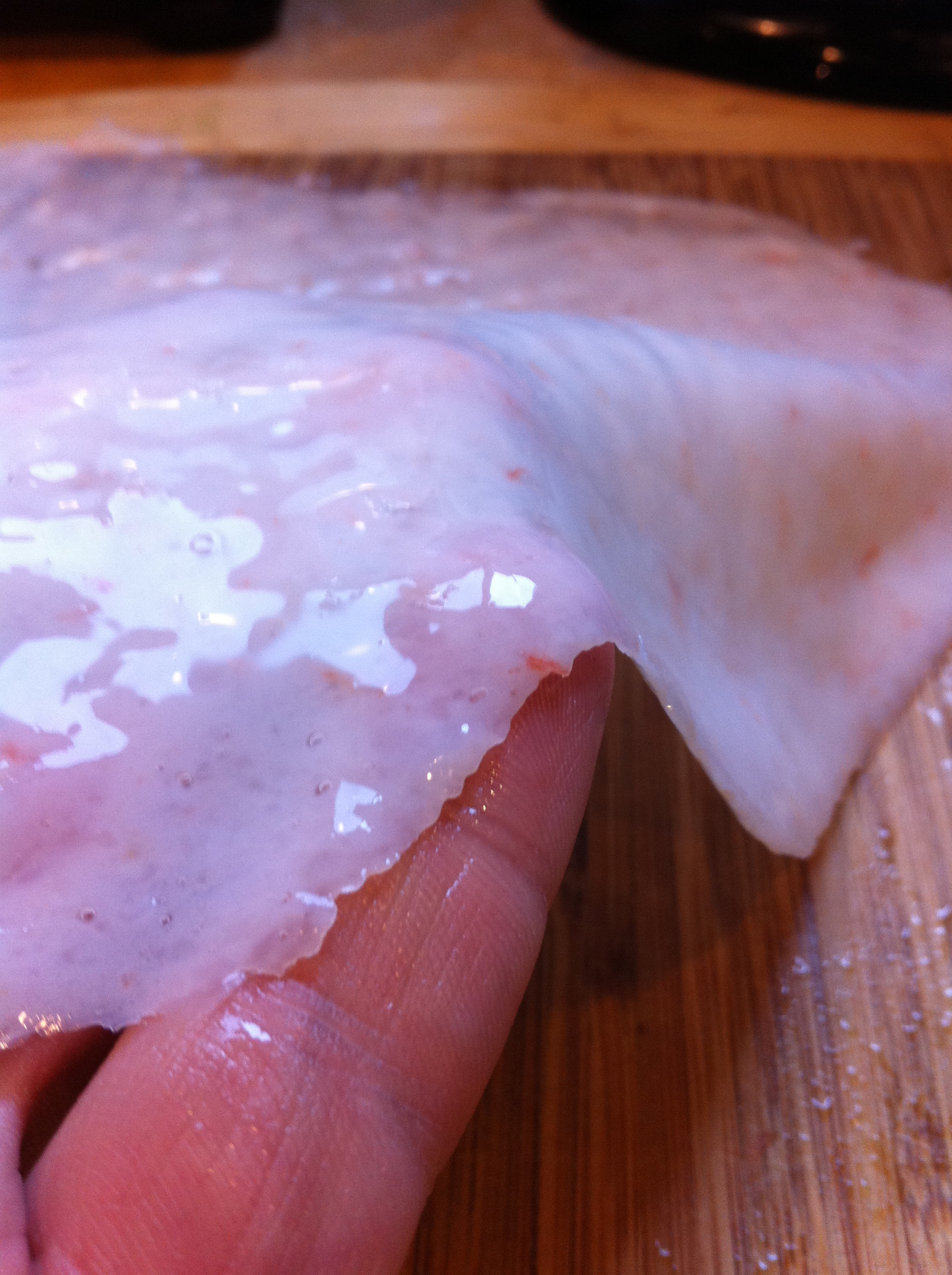
He then placed the bag in a cookie sheet on the stove filled with water and quickly cooked the shrimp.  From there it went into the fridge to set.  It worked great.  The result wasn’t thin as paper,but a more like a tortilla. A tortilla made of nothing but shrimp meat and TG.


Shrimp Tortilla

Shrimp Meat Tortilla


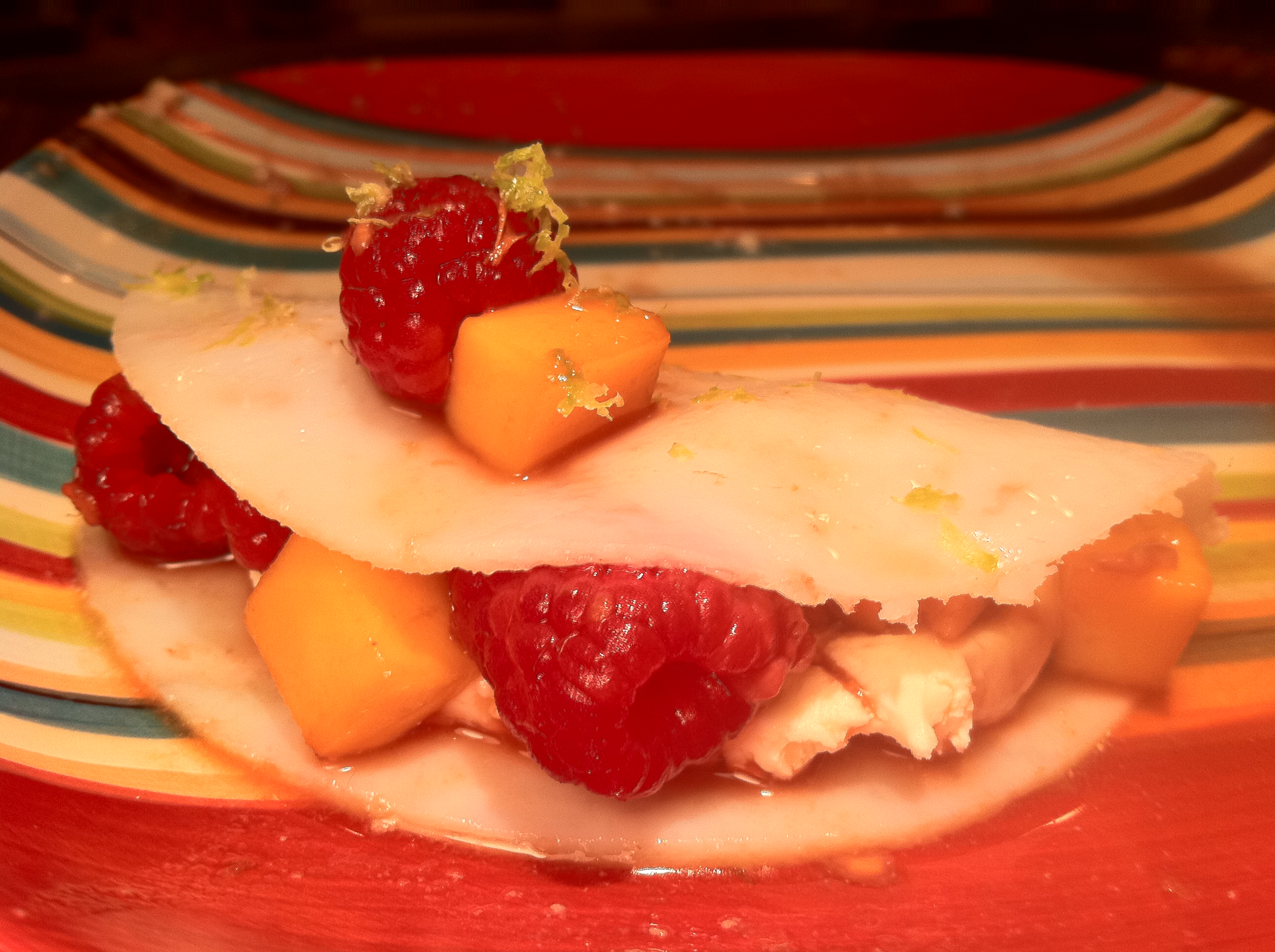
I cut some rounds out of it and prepared a sweet dish and a savory dish with them.


Sweet Shrimp Crepe

Shrimp meat crepe with raspberries and mango in a sesame/soy glaze with mascarpone cheese


Savory Shrimp Crepe

Shrimp meat crepe with spanish rice, avocado and baby arugula with a chipotle tartar sauce


Both of us are very excited with the results and have a lot of ideas of what to do next.  For example, the tortilla could have easily been cut into strips for shrimp noodles instead of crepes.  As long as we avoid inhaling the stuff, TG looks to be a fun new component to cook with in the kitchen.

Jethro

Industrialist Cuisine: Slow Cooking On A Quick Meal

01 Friday Oct 2010

Posted by jethro in old school

≈ 3 Comments

Tags

antique stove, cast iron, Industrialist Cuisine, leg of lamb, pork chile verde, quick meal

The Great Northwest

The Great, Really Great, Northwest

This blog focuses on advanced techniques in the kitchen as practiced in the Northwest.  But to understand the present, you need to be educated in the past, to know the foundations from which current practices have built upon.  Recently I had the opportunity to work with technology so old that it was new again.

A friend of mine invited me up to spend the weekend in an A-frame cabin out in the Cascade mountain range.  There’s no electricity or running water there, and we had to bring in our own water and food.  She’s a chef and knows I love to cook, so she told me the cabin had an antique wood stove and a big rolling firepit grill to work with as well.  Along with canoeing, hiking, hanging out with friends – how could I say no?

The Quick Meal Cast iron Stove

Quick Meal

I arrived to this small slice of Heaven deep in the Cascades and found a stove that is easily as cool as my sous vide setup, immersion blender and collection of additives.  The Quick Meal.

A little background: in 1850, John Rigen, a German immigrant, started a tin shop in St. Louis, MO. In 1870, George August Kahle became his business partner and together they started a business selling cooking stoves and washing machines. The cook stoves were called “quick meals” to reflect their convenience over conventional methods, which was cooking directly over the fireplace. Eventually it became two companies: the Rigen Stove Company and the Quick Meal Stove Company. Quick Meal produced the stoves and Rigen distributed them.  From their success they grew until in 1901 they merged with several other companies to form the American Stove Company. American Stove continued to produce and sell the Quick Meal stove. In 1929, the Magic Chef oven (which was gas-burning) was introduced as the Quick Meal Magic Chef stove, and the fire-burning stove was phased out.

Quick Meal Antique Stove

The Quick Meal Stove

The stove, as seen above, consists of the following:

  • Two compartments above the stove for warming
  • A cast iron top with six plates for cooking. They are removable in order to clean out the ash from underneath
  • An oven with a therometer built into the door
  • A small door to put and burn the kindling with a grated floor for oxygen to flow through and ash to fall through
  • Another small door where a small container caught the ash from above to be emptied out

Fire Above, Ash Below

We started her up and then…we waited.  It took at least 45 minutes for the stove to heat up to the point where things would sizzle, much less boil.  I grew up with a microwave, so it was eye opening to think that this was considered an advanced time saving kitchen appliance in its day.  And, of course, we had to continually feed the fire to keep the temperature up and going.

Finally, the stove was ready.  I brought some boneless leg of lamb, and we cooked it along with some pork chile verde from the night before.

Cooking Antique Style

Cooking Antique Style

And then we cooked for a long, long while by the light of propane lanterns.  Meanwhile, someone pulled out a ukulele and sang cover songs while others played cards. We threw together a simple sauce of garlic and onion, with red wine and chicken stock that was reduced and then a bit of beurre manié to thicken it up.  When it was finally ready we sliced it up, poured the sauce over it and sat down for a dinner full of laughter and conversation.  It was simple, it was honest, it was rustic.  And it was delicious.

Simple. Honest. Rustic. Delicious.

Simple. Honest. Rustic. Delicious.

Working with a cast iron stove has given me a new appreciation for the advantages we have today in our home kitchens.  With pinpoint accuracy of appliances like the Cooktek Apogee Induction Cooktop and laser thermometers, we’ve been able to eliminate a lot of the time and guesswork out of cooking.  Some would say modern cooking replaces the art of cooking with simple calculation, the same way some talk about how electronic music is lifeless compared to acoustic music.  I see it as simply another way to arrive at delicious food.  And any artist will take what tools are available to create something truly extraordinary.

One thing I do know: Nathan Myhrvold claims to have the most well-equipped kitchen in the world.  If it doesn’t include a fire-burning cast iron stove, then he’s one appliance short.

Jethro

New Cookery with Chef Ian Kleinman

22 Wednesday Sep 2010

Posted by jethro in foams, gels, hyrocolloids, liquid nitrogen, spherification, thickeners, transglutaminase

≈ 3 Comments

Tags

chicken skin, corn, Denver, Ian Kleinman, ice cream, salmon, seaweed

Chef Ian Kleinman

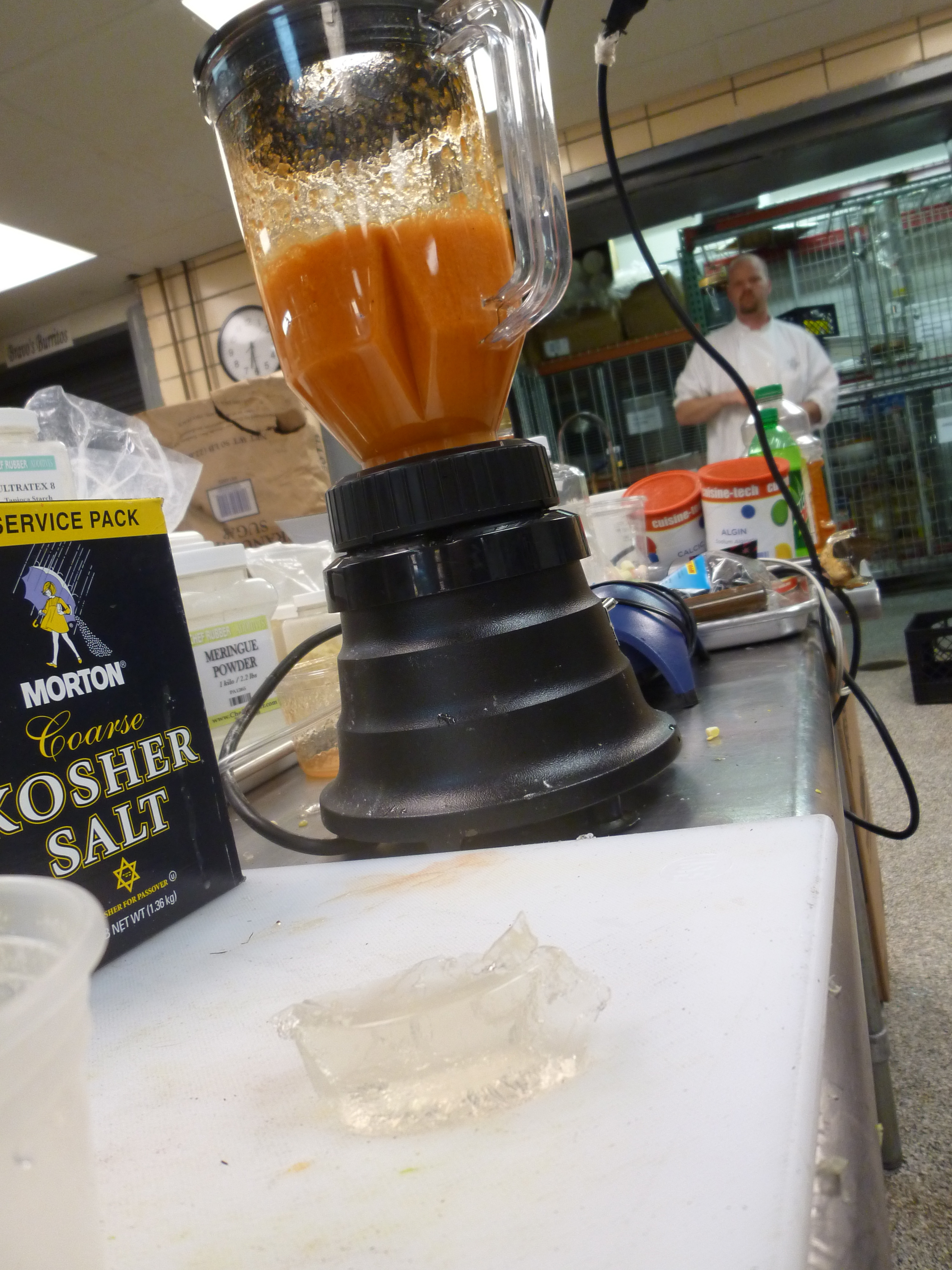
Chef Ian Kleinman (with gelatin and a blender)

I had to spend the month of May in Denver, CO this year because of work.  I grew up there, so I had family and friends to entertain myself, and was able to put my brother’s, sister’s and mother’s kitchens all to good use.  But I also wanted to eat the local cuisine, and the more experimental side at that.    Biker Jim’s Gourmet Hot Dog Stand was certainly a great find, but I wanted to see some more “extended techniques” as well.  I searched for a restaurant that could satisfy my cravings and found, to my surprise, a hotel restaurant in Westminster, CO.

Westminster is a suburb of Denver, and could be Anywhere, USA: strip malls, parking lots and franchise stores.  Nothing suggests it could be a hotbed of Modern Cuisine.  But apparently at O’s Steak and Seafood at the Westin Hotel, they had let a chef run wild: Ian Kleinman.  He was doing a tasting menu once a week.  As a matter of fact, over the last two years, he was able to push out over 100 of these menus.  In a suburban hotel!  Excited, I was ready to make my reservation.  But there turned out to be a problem. He no longer worked there.

Apparently he had left just months earlier.  Well, this was a drag.  I researched some more to see if he was still in town, working at another restaurant.  It turns out he had started his own catering company, The Inventing Room. “We will work with any budget” his website read.  I wonder if he’d cater a dinner for one?  I gave him a call.

I got him on the phone and explained that I wanted a single dinner catered, but I wanted to watch him cook the entire thing.  In the course of our conversation, it went from dinner to a cooking lesson.  This is WAY more than I had hoped for! I said I wanted to focus on different molecular techniques, the more outlandish the better.  He obliged.

The Cooking Lesson

I met him at the commissary kitchen where he prepares his meals for The Inventing Room. He had already been there preparing and had laid out his ingredients for us to work with.

New Cookery Additives

Not Your Mother's Spice Cabinet

We riffed out a couple of dishes that would use a variety of basic techniques: spherification, culinary foam and flash freezing with liquid nitrogen. As its centerpiece, we would use transglutaminase (also known as TG or ‘meat glue’) for what could now be considered a classic Modern Cuisine idea: salmon wrapped in chicken skin.

Now most would brush a slurry of TG directly on the salmon and wrap the skin onto the fish.  Chef Kleinman took a different approach.  After applying TG to a bunch of chicken skin, he rolled the skin up into a ball, wrapped it in plastic wrap and stuck it in the freezer.  He had created a small ham of pure chicken skin.  He took it to the meat slicer to make thin even slices.

Chicken Skin Slices

We took the slices and made little chicken skin ravioli with salmon centers.

Wrapping the Salmon

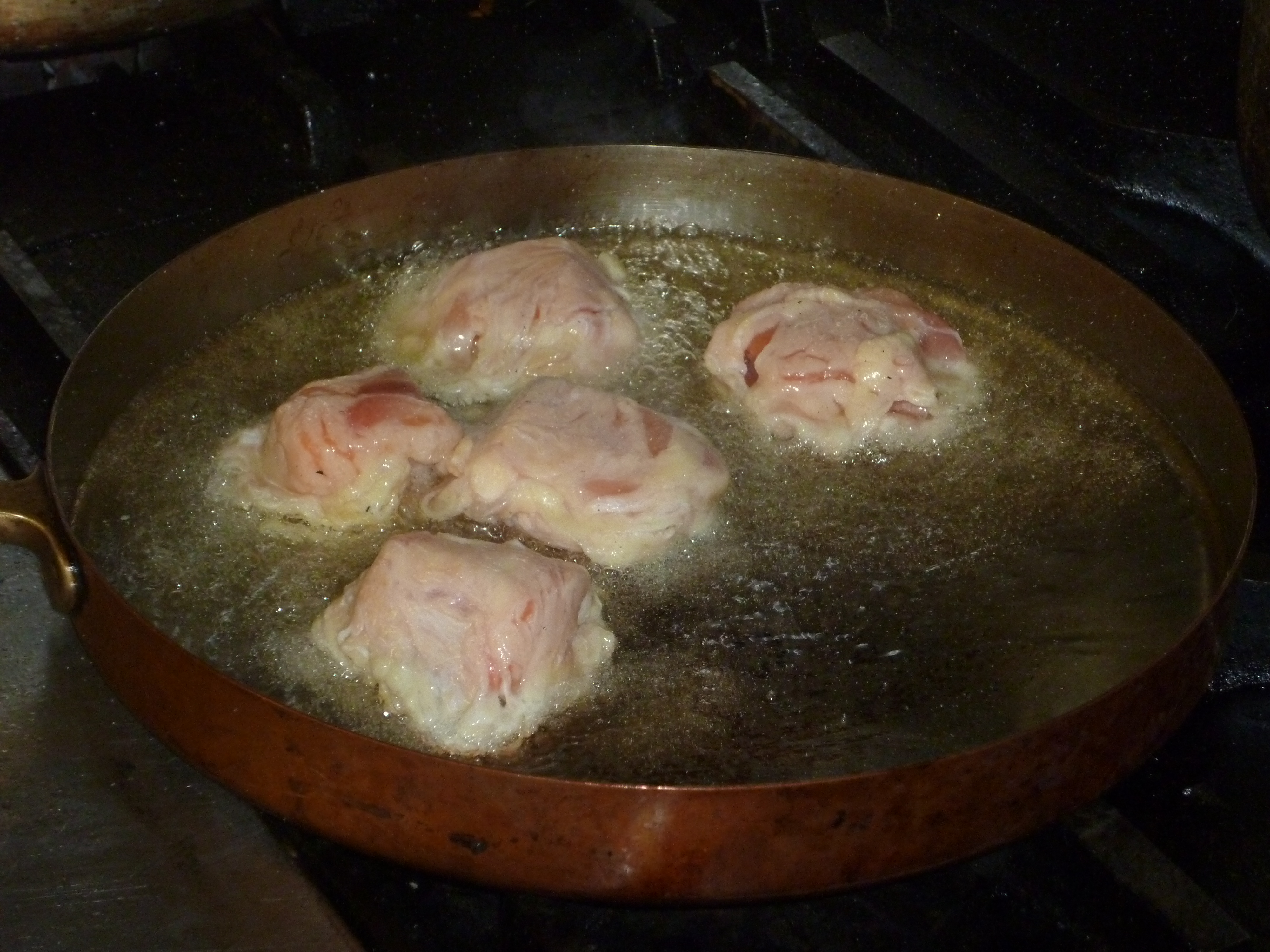
And then we fried the little suckers.

Frying the Salmon

We plated it with a gelatin based sauce, which we transformed into a foam as well by adding a little lethicin.  Now usually you would use an immersion blender to foam it up.  But Chef Kleinman tends to think out of the box.  He loves going to hardware stores to find equipment and figure out culinary uses for them.  For instance, he’s taken chalk line markers to dispense candy powders.  For our foam, he let an aquarium air pump doing his foaming for him while he attended to other things.

Making Foam

An Aquarium Air Pump Performing Automated Foaming

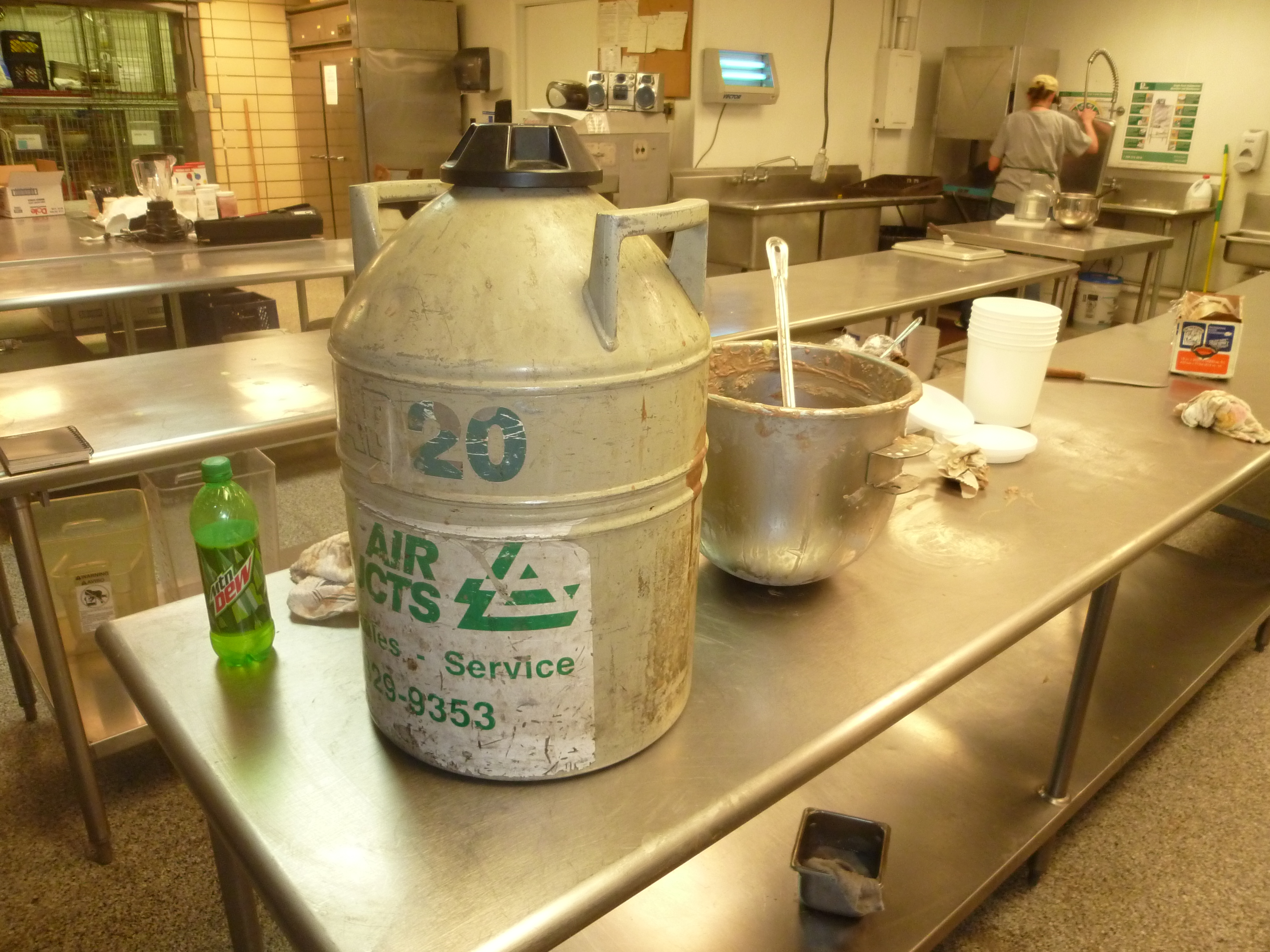
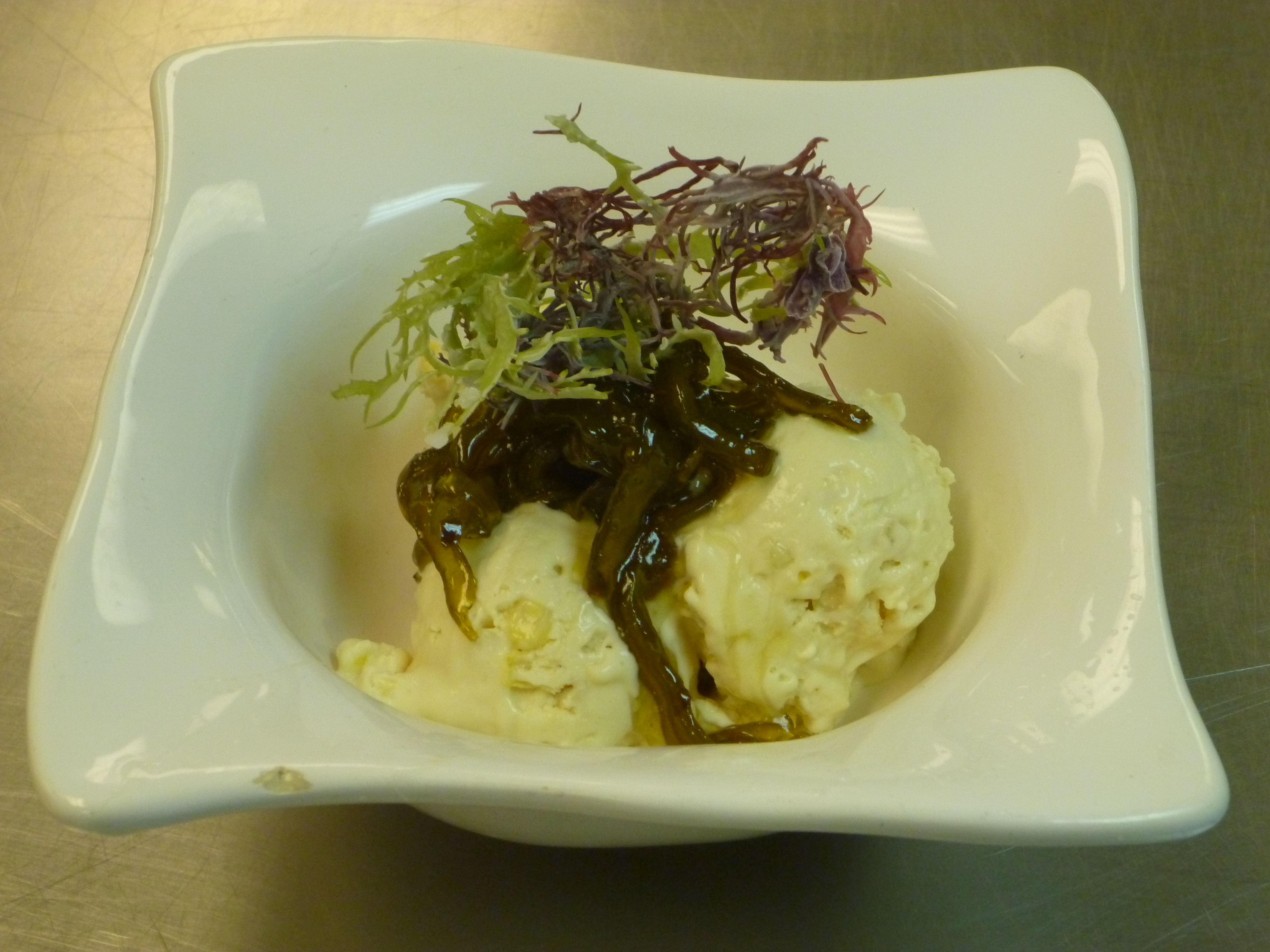
Next up we went with another modern classic: liquid nitrogen ice cream.  He had a huge amount of ice cream base to work from, and we decided to try something unique: a corn ice cream with caramelized cactus.

Making Liquid Nitrogen Ice Cream

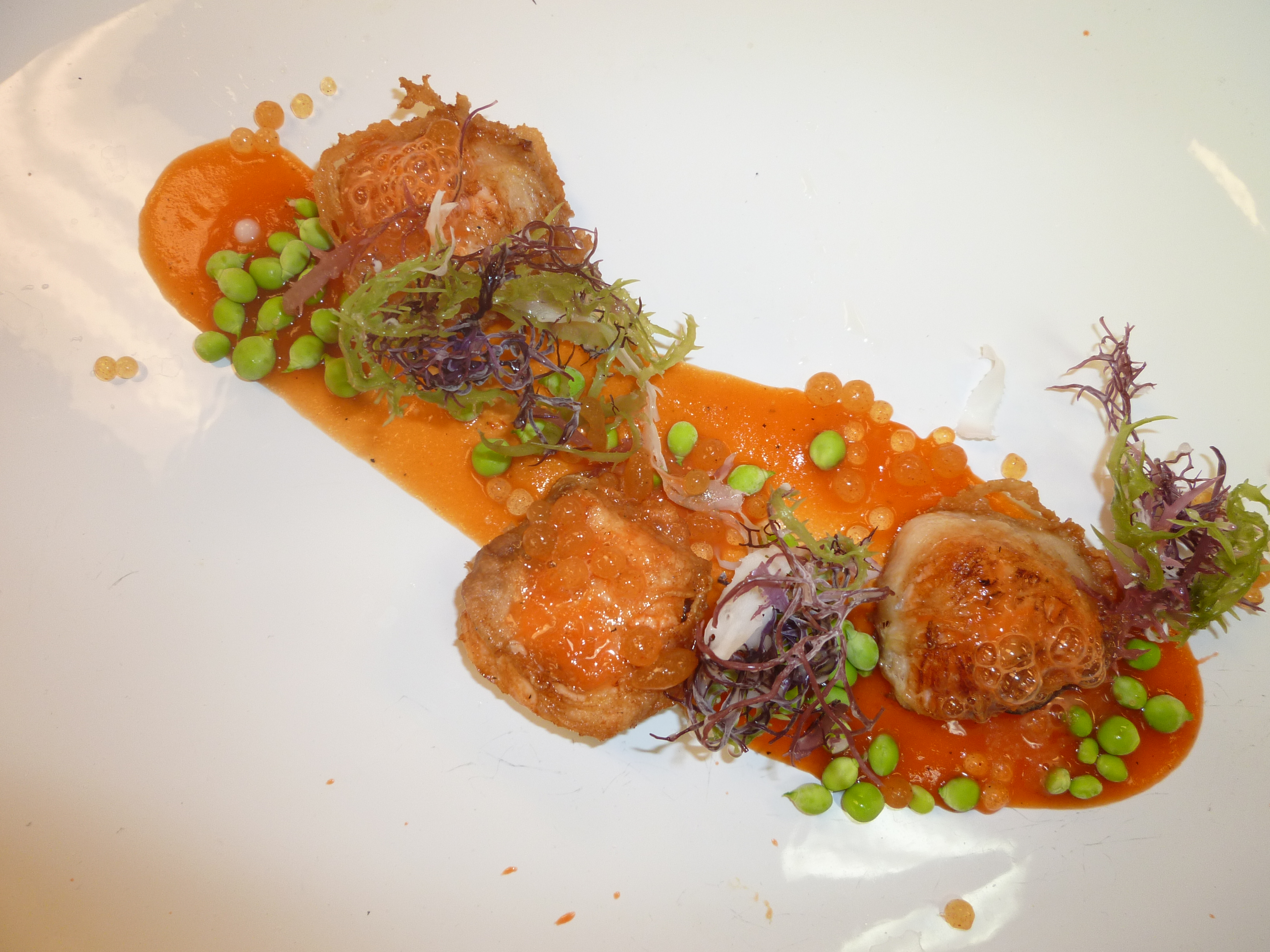
After throwing together some caviar (the key: the mixture should be ‘snotty’ before dropping into the calcium chloride water bath) we flash froze some seaweed as well.  And our dishes were complete.

Chicken Skinned Salmon with Carrot Foam, Caviar, Peas, Seaweed

Chicken Skinned Salmon with Carrot Foam, Caviar, Peas, Seaweed

Liquid Nitrogen Corn Ice Cream with Carmelized Cactus and Seaweed

Liquid Nitrogen Corn Ice Cream with Carmelized Cactus and Seaweed

The salmon in chicken skin was incredibly tasty and the ice cream with cactus was a pleasant surprise to both of us, since we were food pairing on the fly.  It was a fantastic experience and I am very grateful that he allowed me into the kitchen to see his approach to this kind of cooking.

You can follow Chef Kleinman’s culinary exploits at his blog, Food 102.  Thanks again, Chef!

Jethro

The Fat Duck At Home: Red Cabbage Gazpacho, Pommery Mustard Ice Cream

13 Monday Sep 2010

Posted by jethro in recipes, vacuum sealing

≈ 6 Comments

Tags

gazpacho, Heston Blumenthal, ice cream, Pommery mustard, red cabbage, The Fat Duck

Taking On The Fat Duck

The Fat Duck Cookbook by Heston Blumenthal is the first cookbook I have ever read like a book instead of as a reference, skimming for recipes. It is a highly engaging, thoughtful, funny and educational work that sets the bar high for future cookbooks. It’s an incredible resource, and I’m sure the large volume is something else entirely.

After reading Part I: History, I was excited to enter into the meat of the volume, Part II: Recipes.  I looked to see what could be accomplished in a relatively short period of time, a recipe that didn’t have 58 separate preparations to be made over the course of a week before putting it all together.  I settled on Red Cabbage Gazpacho, Pommery Grain Mustard Ice Cream.  It had only four components, and the only ‘advanced’ portion was the use of a chamber vacuum sealer.  Since I have one, I need to consistently justify its expense, so this was perfect.

I got my shopping list in order, and collected all of the ingredients necessary. As this was my first Fat Duck dish, I decided not to cut corners, and got the best I could find.  For example, the eggs and milk were local from the Pike Place Creamery, and the cucumbers from the Columbia City Farmer’s Market.  Gathered all together, it seemed like a manageable task.  “I can do this,” I thought to myself.  And so I began my journey into the heart of The Fat Duck.
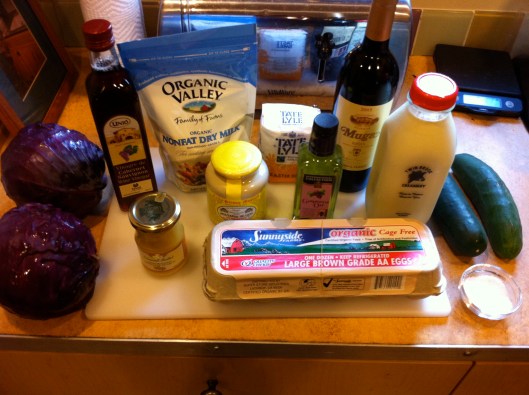
The Ingredients

The Cast Of Characters

Step One: Pommery Mustard Ice Cream
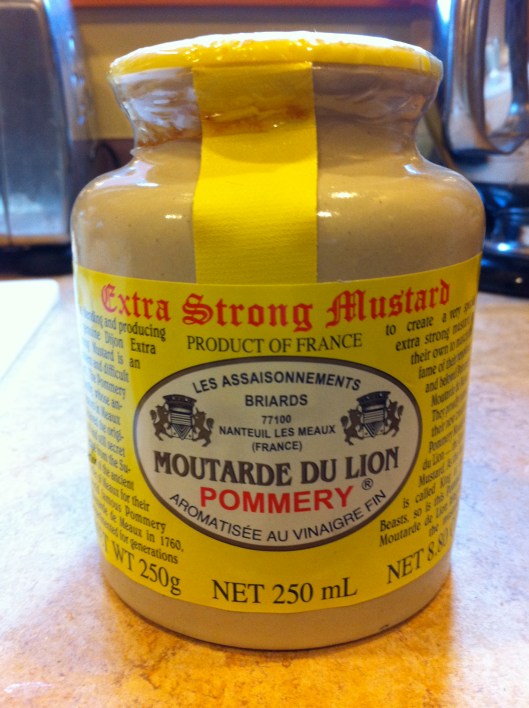
Pommery Mustard

I began, as can happen so often, with a variation on the dish.  I searched high and low for Pommery grain mustard, but to no avail.  I did find two other types of Pommery mustard, so I had to decide.  Should I go with a Dijon grain mustard or a grainless Pommery?  I had never had Pommery mustard before, and the recipe calls for Dijon for the mayonnaise.  I figured I should go for the more authentic flavor profile the recipe asks for than the texture profile.  I went grainless.

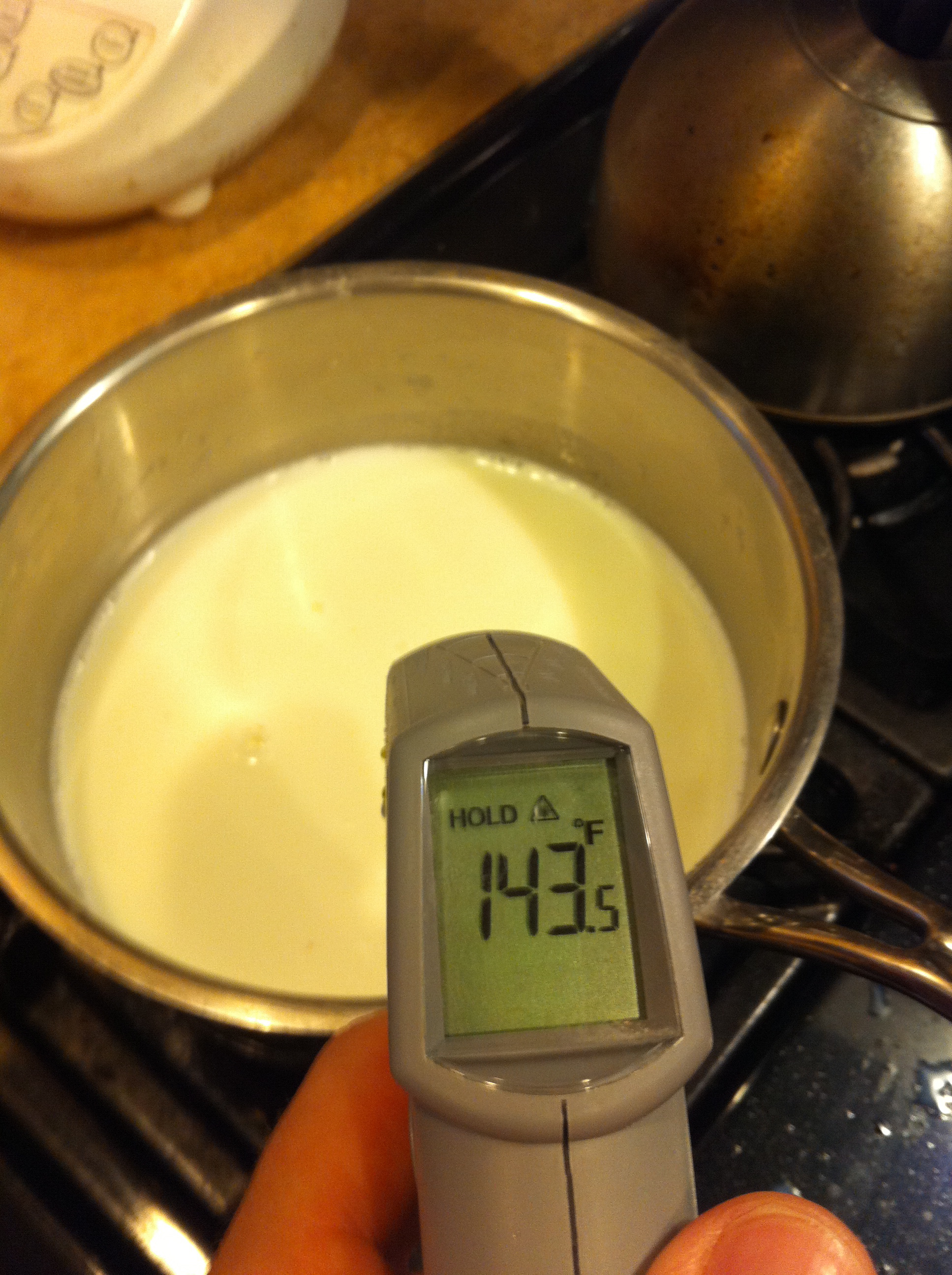
The recipe was straight forward except perhaps for the exacting temperature readings.  Instead of simmering but not boiling, it is supposed to start at 140F and go up to 160F.  Wanting to follow the recipe to the letter, I obliged:
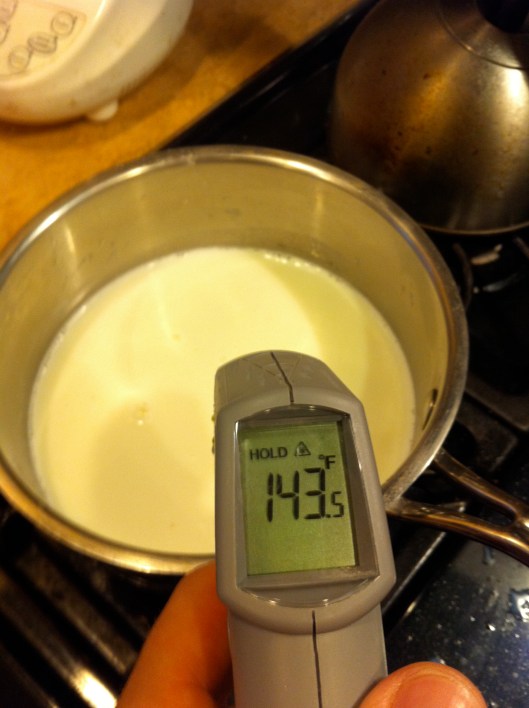
Cooking the base

Otherwise it was what one would expect, except you’re putting in mustard instead of chocolate or the like.  After a go in the ice cream maker, I had the first component made.

Pommery Mustard Ice Cream

My Very First Ice Cream

A funny thing: this was the first ice cream I’ve ever made.  If you know me, it completely makes sense that it would be savory instead of sweet.  Of course it is.

Step Two: red wine Mayonnaise

This component calls for 30g of red wine.  Since it was a riff on a Spanish dish, I figured a Spanish wine was appropriate, so I chose a bottle of Muga Rioja.  Not only is this a fantastic wine but it also gave me something to drink while cooking, which seems just so perfectly breezy and debonair.
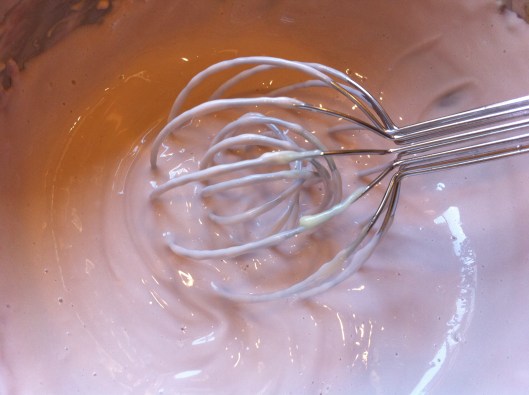
Cabernet Savignon Mayonnaise

It too came together quite nicely, and ended up having a wonderful extra benefit: leftovers.  Adding it the following week to tuna made a quick sandwich an elevated experience.

Step three: Red Cabbage Gazpacho
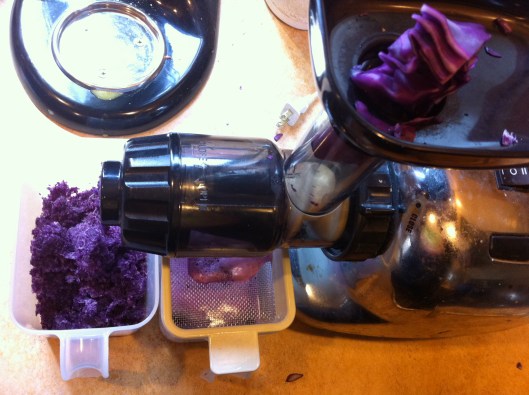
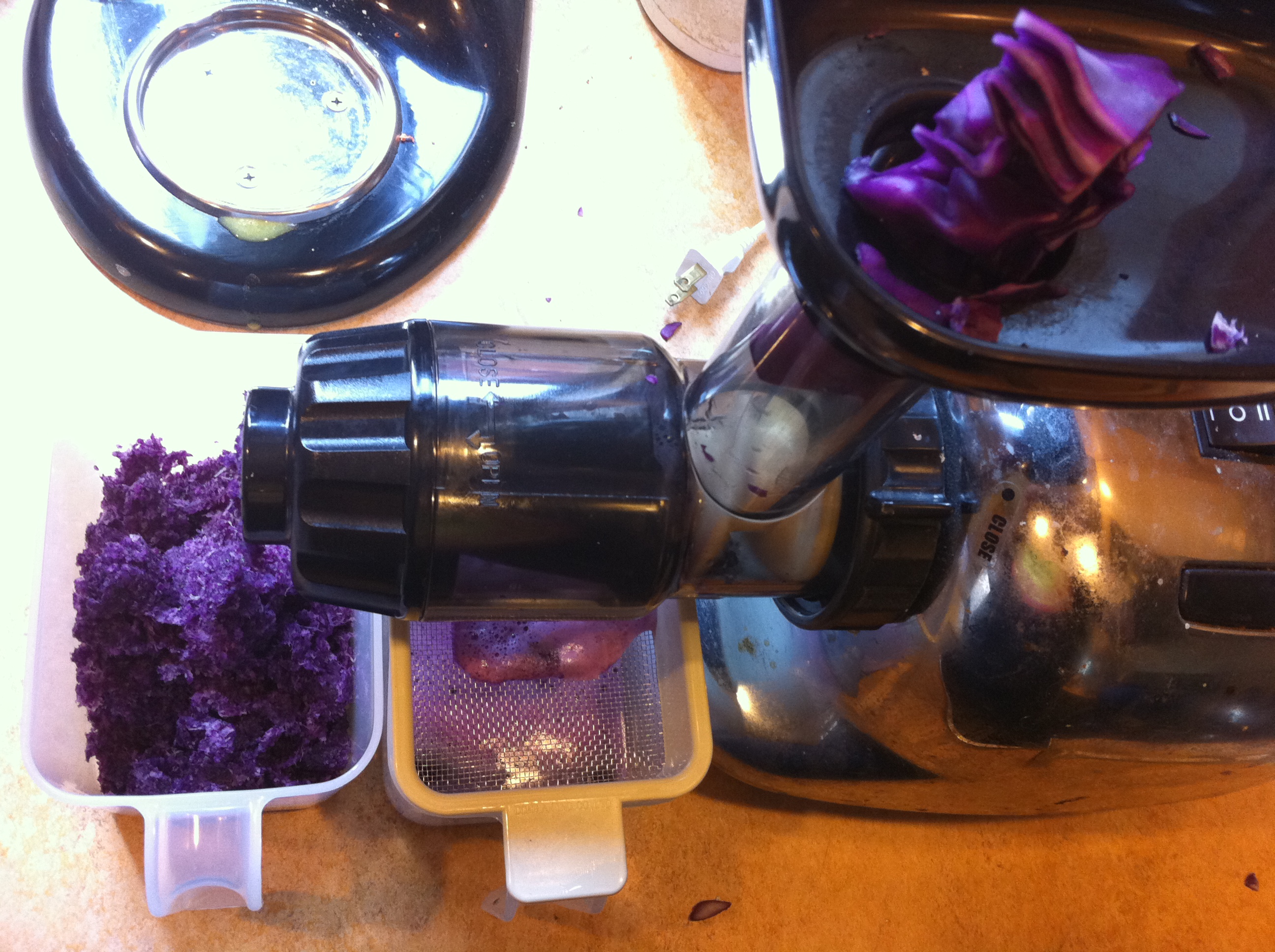
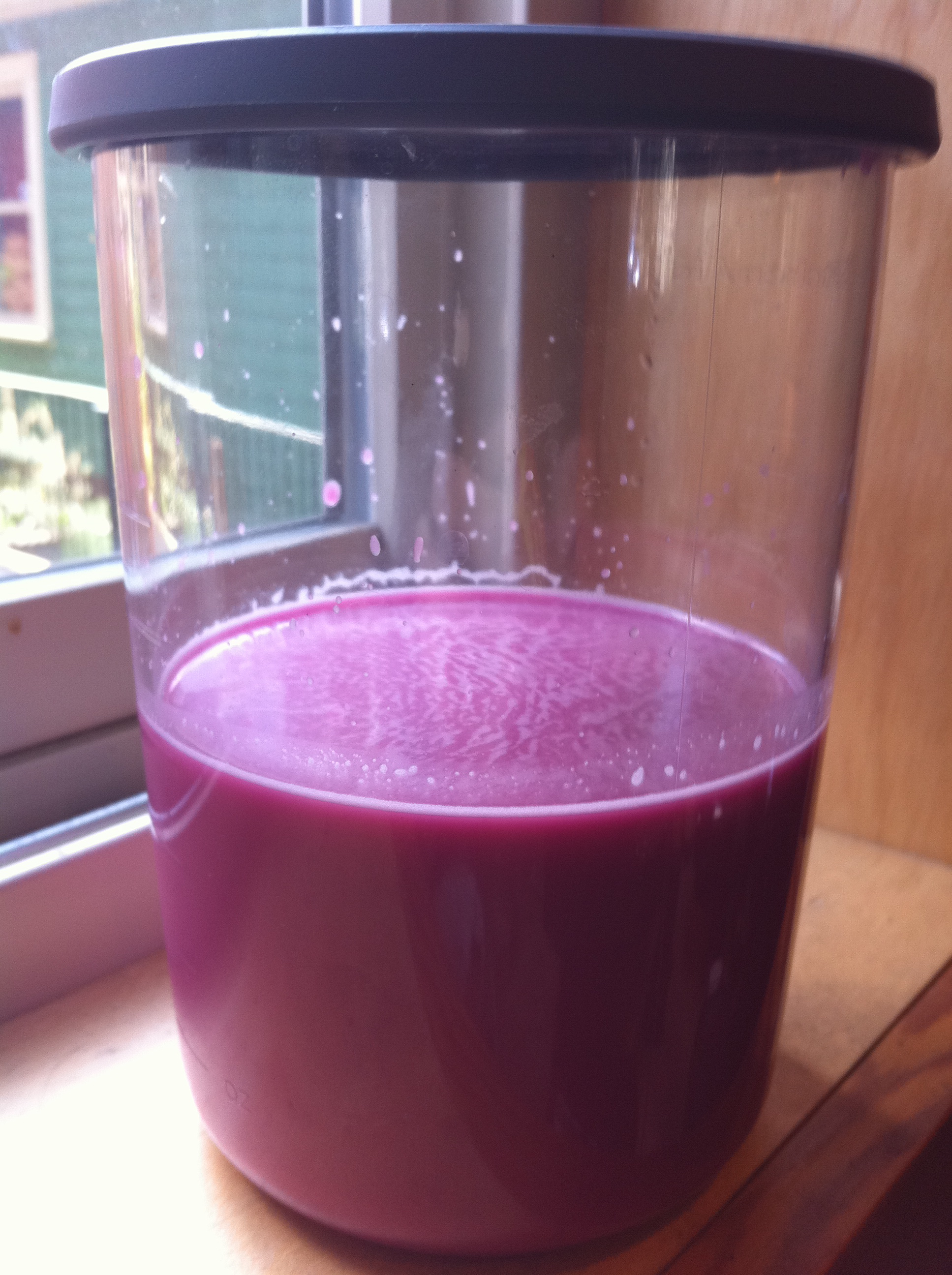
Juicing The Cabbage

Purple In, Purple Out

The next component up was the gazpacho itself.  Red cabbage is such an inspired choice.  The color and intense flavor of the cabbage is a real attention getter.  The next step was inspired as well.  In a traditional gazpacho recipe, week old bread is added to the vegetables and mushed together in a mortar.  Here, he apparently wanted to have a bread flavor, but not the texture.  So the recipe calls for having two pieces of bread soak in the cabbage juice for two hours, then have it strained.

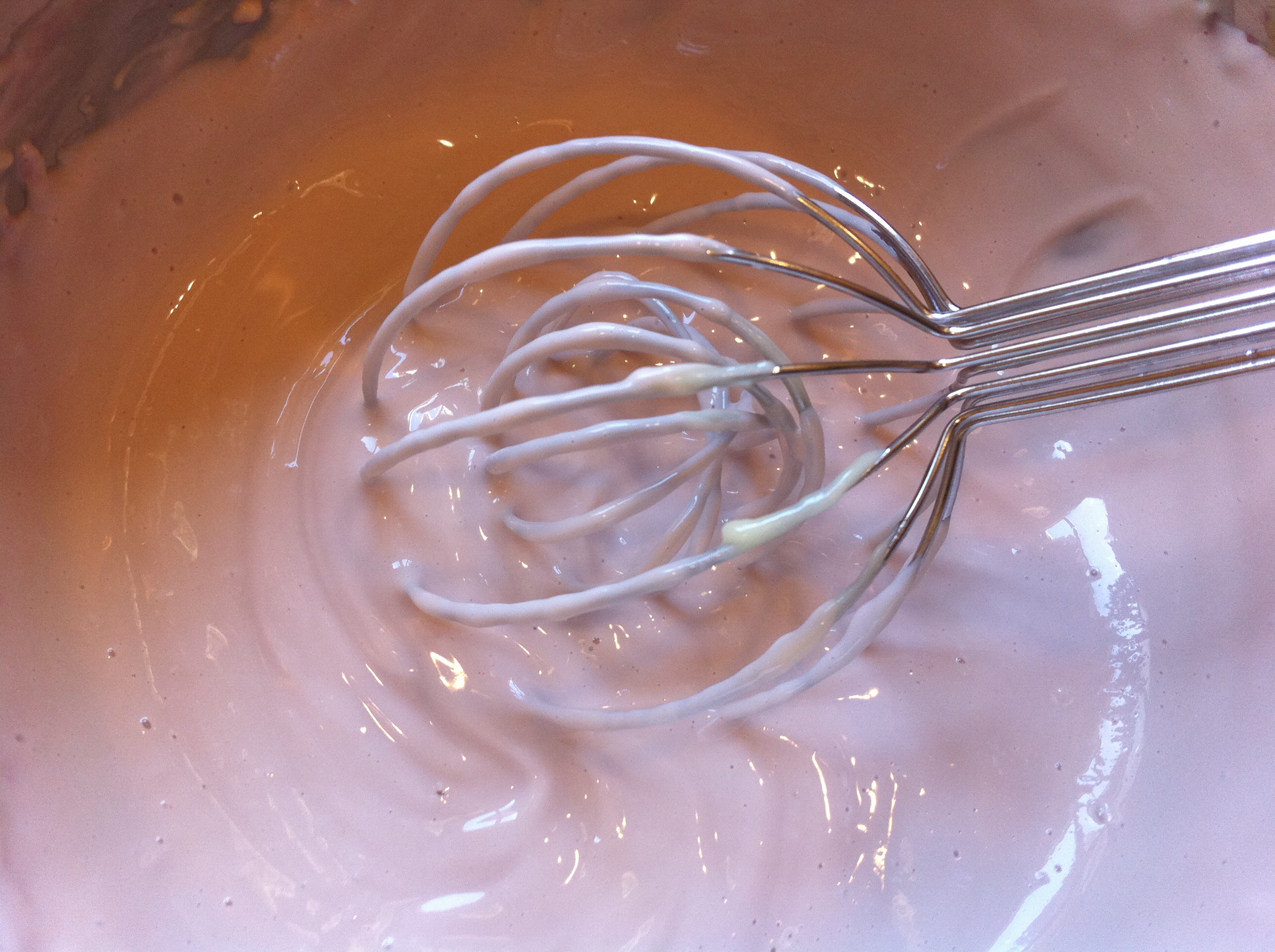
Straining the gazpacho

Finally, I added in the mayonnaise with some red wine vinegar and salt.  My first gazpacho was made, and it was a brilliant fuchsia.
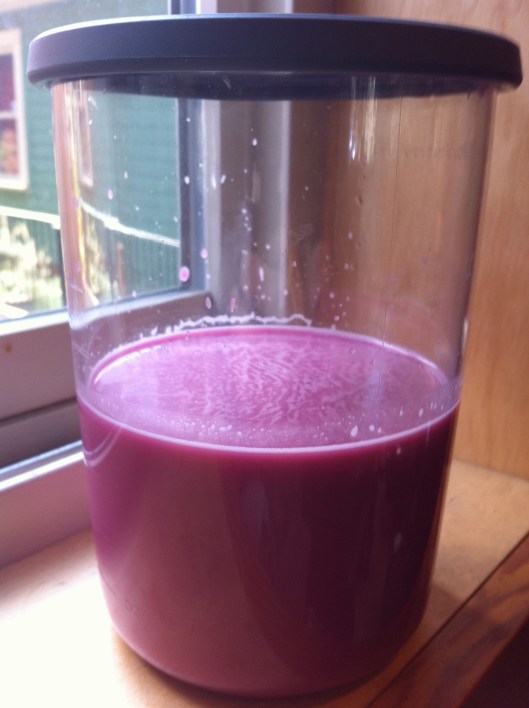
Red Cabbage Gazpacho

Gazpacho, Blumenthal style

Step Four: Cucumber brunoise

I saved this for last because this was going to be simple.  I mean, there’s only one ingredient: cucumbers.  I was terribly mistaken.

First, the cucumber needed to be sliced with a mandolin.  I had gone earlier into a Ross “Dress for Less” store to grab one.  Yes, this too was my first time using a mandolin.  I have made coffee caviar and perfect sous vide eggs, but never had needed to slice anything thinly and uniformly.  I know, backwards.  That’s how I do it.
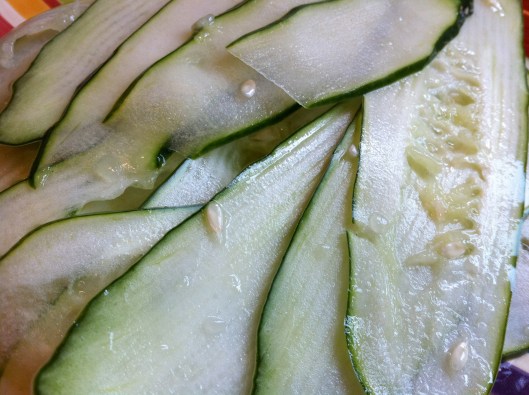
Cucumber Through the Mandolin

The next part was appliance justification, or, more appropriately, vacuum sealing.  He writes that:

As air is removed and the sous-vide bag constricts, the cucumber compresses, breaking the cell walls in an even, controlled fashion and allowing the juice they contain to combine.  Repeating the processes condenses and concentrates further. When the cucumber is removed from the bag it retains its structure but has a denser texture, a fuller flavour and – because of the removal of the air – a more intense jade-green colour.

I thought it was interesting that he requires the vacuum process twice.  Once I did it though, it became clear. Literally.

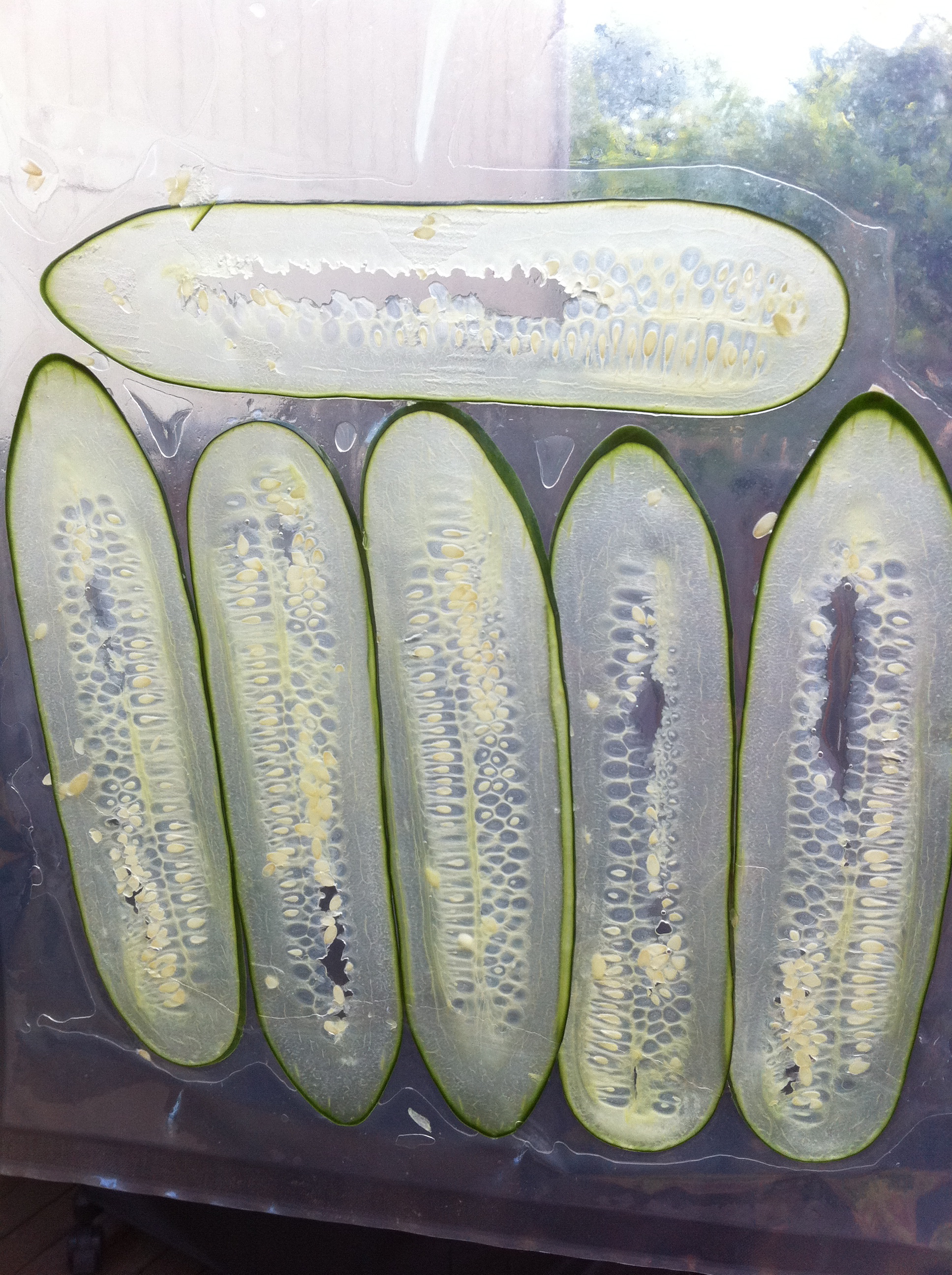
Vacuumed Sealed Cucumber

Transparent Cukes

Ah, now I’m seeing where this is going!  All I have to do now is cut it up:

Remove the cucumber from the bag, then trim off and discard the skin and seeds.

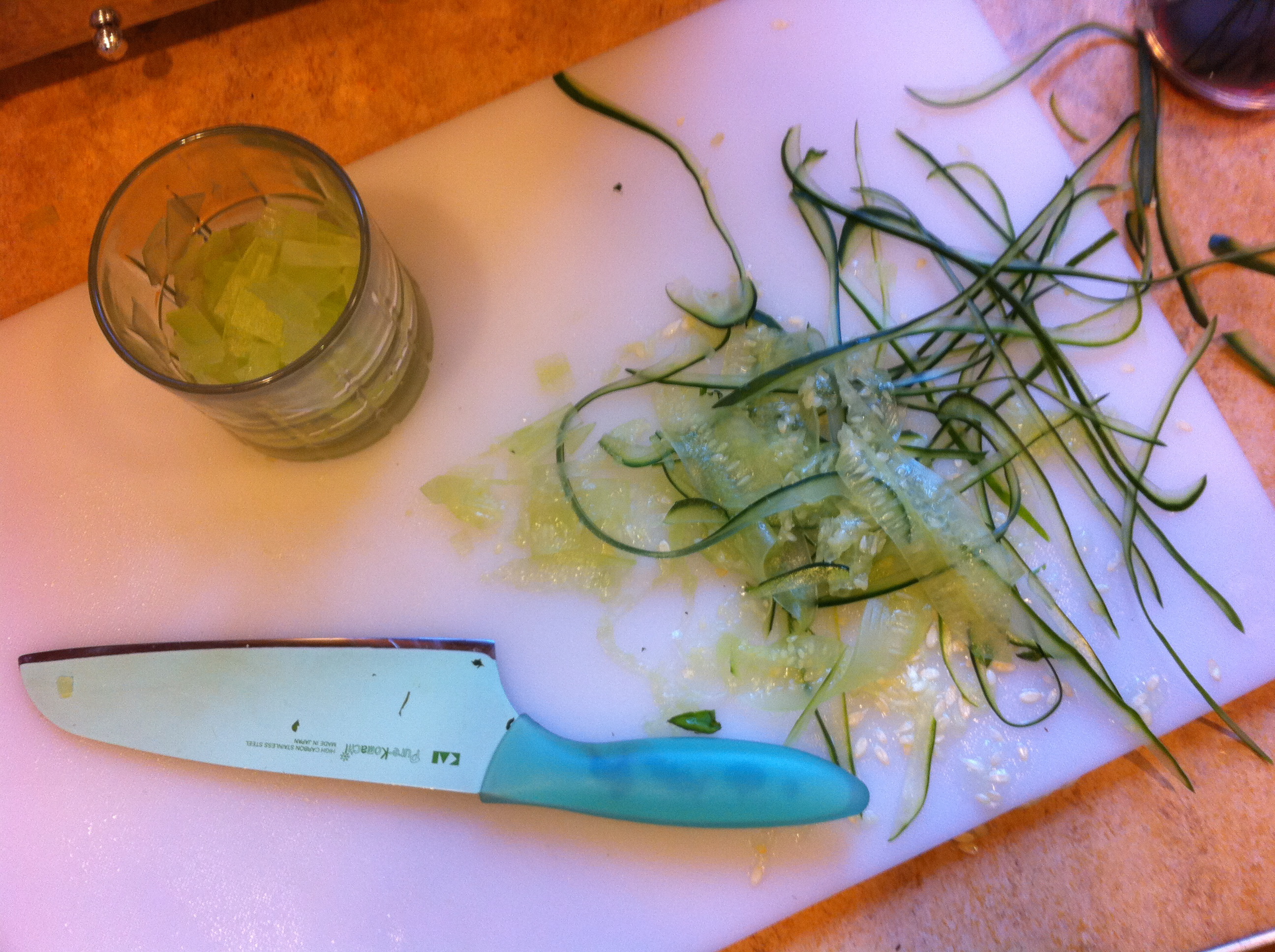
This proved to almost be my undoing.  From such a simple instruction was launched a time intensive display of tedious, repetitive, meticulous surgery. Slice after slice of paper thin cucumber went under my knife.  My dinner guests were arriving shortly, and I had other things I needed to attend to.  I hadn’t prepared for such drudgery. It was an important lesson in not only reading a recipe but visualizing the steps in order to make sure you know what you’re getting into.

Seed and Peel Removal

I've Had More Fun Than This

But the result was worth it.  Little jade chips of cucumber.  They were so cool. Genius, really.
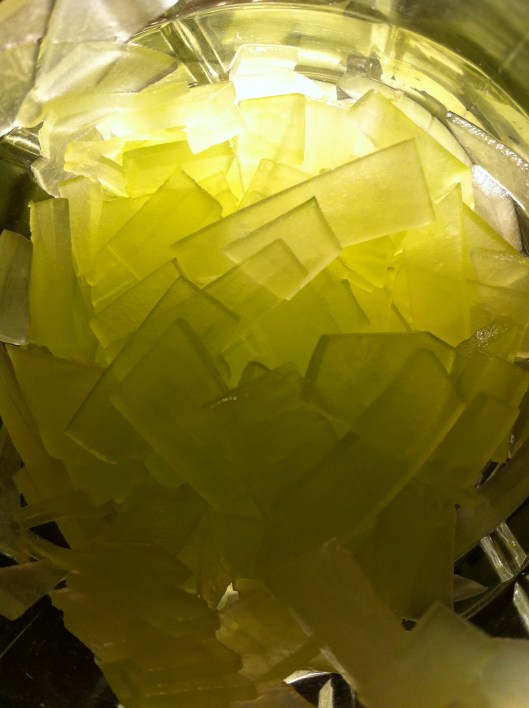
Cucumber Brunoise

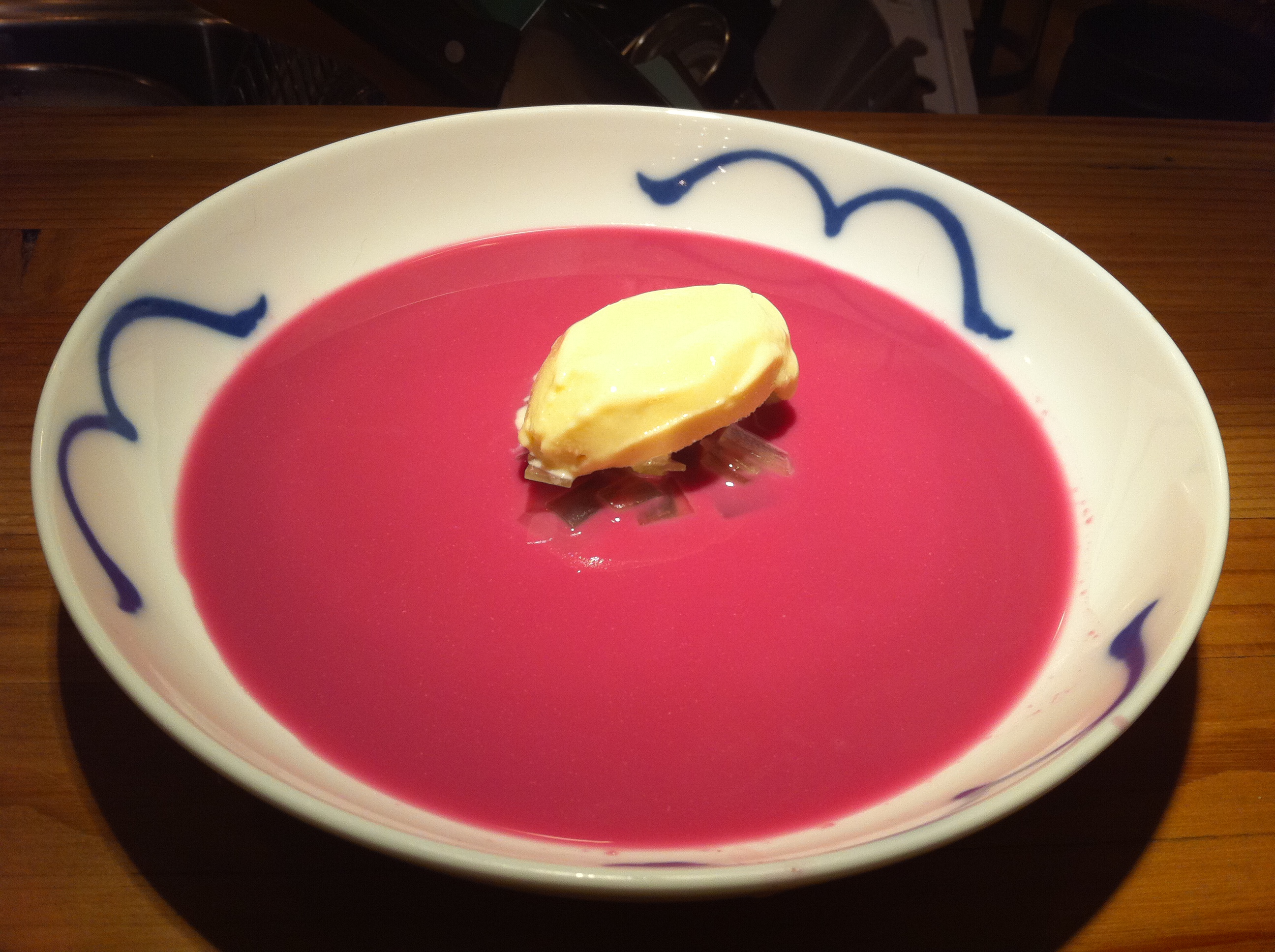
The completed dish

Red Cabbage Gazpacho with Pommery Mustard Ice Cream

My First Blumenthal

With all the components created, all that was needed was to put it together.  Here I strayed from the recipe.  It calls for 2g of cucumbers to be plated.  At this point, this was course three of five for the dinner and I was just trying to get it out on the table, so I put what looked right to me.  I plunked down some cucumber, a rocher of ice cream (yes, you guessed it – my first attempt at making quenelles), and poured the gazpacho in.

It was a delicious, if complex, interplay of flavors. The sharpness of the red cabbage came at you first, and up to a point where it could be too much, but then the mayonnaise came in to soften the blow, with bright notes underneath from the cucumber.  The creaminess of the mustard ice cream had a fantastic texture counterpoint with the crunchiness of the cucumber brunoise. I think if there was grain in the mustard, that would have been another texture that really would enhance the dish.  Regardless, it was a complete success.

Which it all that matters, of course.  Except I was surfing the Internet  a couple of weeks later and came across an actual photo of the dish:

The Real Thing at The Fat Duck

The Real Thing at The Fat Duck (photo credit: dbriones)

I certainly got my portions wrong, but the color is what intrigues me the most.  I had that color before I added the mayonnaise.  But once I did (with exact measurements per the recipe, of course),  the color changed.  Somehow his has not.  Perhaps the mayonnaise sits underneath the ice cream?  Contact me if you happen to know.  Otherwise, I suppose I’ll have to fly out to Bray myself and find out.

But I can’t beat myself up too much.  Less than nine months prior, I was ordering take out teriyaki to feed myself.  Now I was serving a dish from one of the best restaurants in the world to my friends that I made in my little kitchen.  I thought I could do it, and I did.  Now I have my eye on the Salmon Poached in a Liquorice Gel.  Why not?

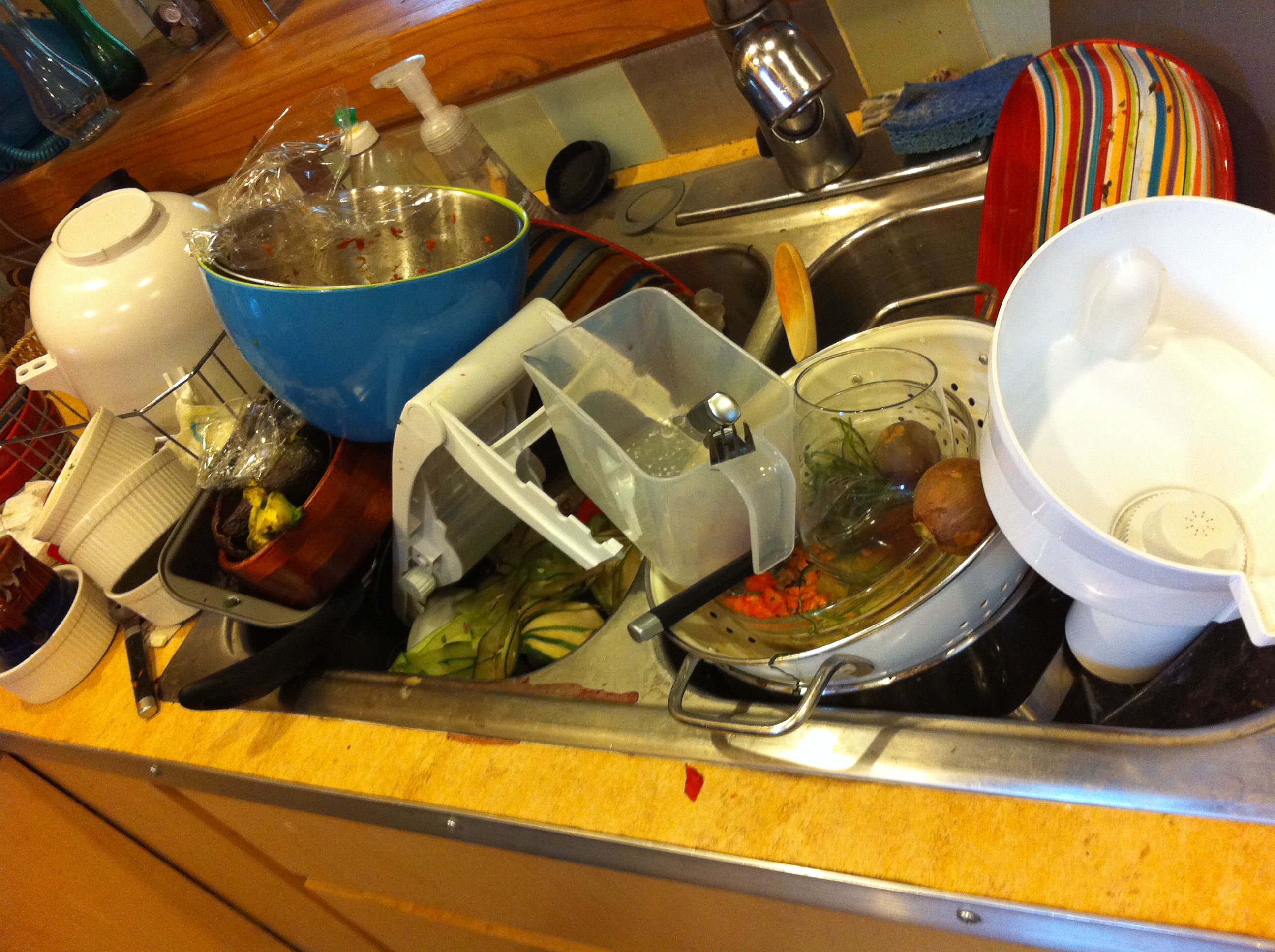
But first, I have some cleaning up to do.
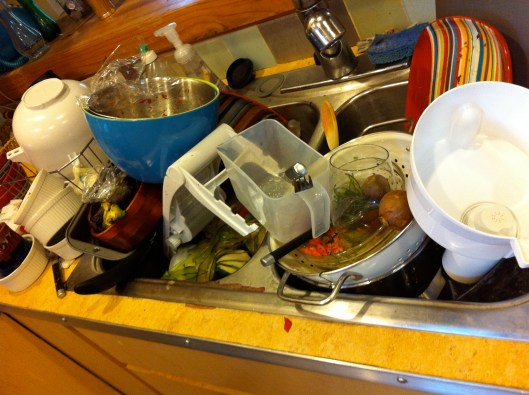
Clean Up Time

Jethro

Update 9/22/10: Since posting this, I did a little Google image search on “red cabbage gazpacho fat duck” and found several pictures from The Fat Duck where the color of the gazpacho matches my own.  Seems the color is more an issue of lighting and camera ability than the dish itself.  Nice to see they didn’t water down the cookbook and keep the secret all to themselves!

Update 9/27/10: I wrote The Fat Duck to see if they had any insights, and sure enough, they did reply:

Thank you for your internet enquiry and for sending us the picture of your red cabbage gazpacho. I have discussed it with the chefs here at the Fat Duck and they offer the following possible explanations:

1. There was less mayonnaise used in the dish in the Fat Duck picture – it is correct to mix the mayonnaise with the red cabbage but it would appear that the photograph is a particularly dark colour. It is usually somewhere in between this dark version and your fuchsia version. Less mayonnaise would make it a little darker but no less pink which makes me think that suggestion no 2 could be the problem?
2. Too much of the white of the cabbage has been juiced with the leaves – at the Fat Duck, they are extremely vigilant and obsessive when it comes to cutting out all the white parts of the cabbage (it is easy to expect this level of attention to detail when you have 36 chefs!). It is wasteful but it guarantees a glorious purple colour rather than a pinker colour. Might this have been the problem?
3. Or it could just be your particular cabbage! According to the chefs, the colour of the soup does vary from time to time. It could be due to the season or the size of the cabbage or simply how fresh it is – no one is quite sure.

I do hope you try again and get better, more purple results. Personally, I think it tastes good whatever the colour!

I commend them for taking the time to write a home cook across the ocean to help out with minor details such as the color.  Although I did core the cabbage, I didn’t carefully strip out all the white, so that along with the amount of mayonnaise most likely was the culprit.  I am now prepared for the next time I give it a go!
Meeting Five: Nitrogen Cavitation, AKA Instant Flavored Booze

09 Thursday Sep 2010

Posted by jethro in uncategorized

≈ 2 Comments

Tags

Cooking Issues, infusions, ISI Thermo Whip, liquor, nitrogen cavitation, vodka, whiskey

Meeting Five happened in August.  Scott was slammed this time around and couldn’t make it, so I went over to Eric and Mindy’s, ISI ThermoWhip in hand, ready for our latest experiments.

A week earlier, Dave Arnold over at Cooking Issues had posted an article on a great little concept: instant liquor infusion by adding liquor to a cream whipper with whatever you wish to infuse it with, charging the whipper with N2O, releasing the gas, then simply filtering the liquor out.  Done. Bam. That easy.  We decided we should try it as well.

Instant Basil Vodka

Instant Basil Vodka. Bam. That Easy.

We did vodka with basil, whiskey with Lapsang Souchong tea, and gin with dragonfruit. Eric wrote up a summary of our results on his blog.

Dave Arnold didn’t know what he had uncovered, but a commenter pointed it out:

Well done! You’ve rediscovered nitrogen cavitation and put it to novel use. Cavitation is used in cell biology labs to gently disrupt cells in a vessel ominously called a “nitrogen bomb” (as the gas here is nitrogen). The usual explanation is close to what you surmised: under pressure, gas penetrates the cells, then forms bubbles to disrupt the cells when the pressure is suddenly released. Your use of the technique looks a lot more interesting than my experiences with it in a lab.

They were right – it is fast and game changing.  I love the idea of making to-order infused drinks for a dinner party.  She’ll have a basil vodka, and he, a tea infused whiskey.  The possibilities are endless.

Thoroughly satisfied, we combed over the stunning photographs of the dishes from El Bulli in Comer Arte by food photographer Francesc Guillamet.  We came across a picture of a dish that looked like clouds on sticks.  There was no accompanying recipe, but we used it as an inspirational starting point and gave it go.

A Tasty Puff

A Golden Cloud

The result was tasty, though there is work to do before it can be a prime time stunner.  Meanwhile, while you’re waiting for us to perfect it, can I interest you in a lemongrass and Vietnamese mint infused vodka?  I bet I can.

Jethro

Meeting Four: Vacuum Sealing and the DIY Anti-Griddle

08 Wednesday Sep 2010

Posted by jethro in dry ice, vacuum sealing

≈ 6 Comments

Tags

anti-griddle, flash freezing, flash pickling

Jet City Gastrophysics had our fourth meeting in June of this year. Eric was busy working at Canlis and Blueacre, so it was up to Scott and myself to boldly forge ahead.

Vacuum Sealing

Back in May, I was scanning eBay and came across an honest-to-goodness chamber vacuum sealer with 1500 bags included.  The price was steep, but it was still 40% cheaper than getting the thing new with the bags as well.  There are many other things that I can put that money to work on, I thought to myself.  Whatever. I grabbed it.

The VacMaster

My Sweet Little Baby

And so we set about playing with it. Just sealing the watermelon alone, its clear how the color becomes much more intense.

Vacuum Sealed Watermelon

Taking a cue from Cat Cora on Iron Chef, we took slices of watermelon and sealed them with V8 juice.  Incredible.  The watermelon loses its flavor as the V8 takes over, yet retains its texture.  Your mouth doesn’t quite know what’s going on.  It would make a perfect garnish for a Bloody Mary.

The takeaway is that the watermelon’s structure survives but the flavor can be replaced with something else.  We were thinking of other foods with similar structures.  I know of some fruit I’ve had in Taiwan but I can’t recall the name.

Next up we tried flash pickling cucumber slices by vacuuming.  It definitely worked, but as neither of us had pickled anything before, we improvised the ingredients – white vinegar, sugar, salt, rosemary – with mixed results.  With a little practice we’ll nail it.

Instant Pickles

Instant Pickles, Please

DIY Anti-Griddle

The anti-griddle is the brainchild of Chef Grant Achatz at Alinea in Chicago.  The whole concept is instead of heating/frying something on a griddle, you freeze it instead. Buying one of these new can set you back $1200, which seems a little pricey for a home appliance that won’t be used everyday.  And besides, I had just started making payments on my vacuum sealer. What?  I’ll use THAT everyday. C’mon.

So we made our own. The ingredients:

  1. One block of dry ice (purchased at my local supermarket)
  2. A cookie sheet
  3. A towel

We set the towel down, put the dry ice block on top of it, and the cookie sheet on top of that.  Within minutes we had an extremely cold surface to ‘cook’ on. We tried flash freezing chocolate sauce, honey, olive oil, balsamic vinegar, raspberry jelly, watermelon and strawberries.  The honey with a short freezing time was great – the consistency was taffy-like.  The other one that worked best was a small coin of Dilettante chocolate sauce with a strawberry on top with lime zest.  A lovely little treat.

DIY Anti-Griddle

Fun with Flash Freezing

What needs further study is to nail down what products work best and what time is required to let them freeze to the right consistency.  Otherwise they get over-frozen, the anti-griddle’s analog to burning. Freezing liquids seem to taste better than solids (the watermelon and strawberries were ‘meh’).  Another issue is that because the DIY anti-griddle is a block of dry ice, you can’t control the temperature.  It’s kind of like having a griddle that’s only set to ‘High’.  So, given that restriction, what works best on its ‘setting’ is key.

And if that requires eating more chocolate, strawberries and honey, well then, call me a research scientist.

Jethro

Meeting Three: Fruit Sous Vide

03 Friday Sep 2010

Posted by jethro in sous vide

≈ Leave a comment

Tags

fruit

Late April found Jet City Gastrophysics gathering together around Scott’s sous vide setup to try out its effects on fruit. We collected and sliced a variety of fruits, which we then separately vacuum sealed and dropped in the water bath. What we found out:

  • Pineapple sous vide tastes like…pineapple.
  • Kiwi tastes horrible – like over boiled broccoli.  Definitely the biggest flavor change.
  • The membrane of the lemon becomes almost fish like in texture, but the flavor is still pretty sour.

The most promising of our candidates – plums.  The flavor was good, the color change was nice, and we could see the beginnings of interesting changes in the peel.

Pretty Plums Sous Vide

Pretty Plums Sous Vide

Further testing will need to be done with time and temperature to find out what looks and tastes best, but a great start.  I love this club.

Jethro

Sous Vide Apocalypse And The Mangalitsa Resurrection

01 Wednesday Sep 2010

Posted by jethro in blow shit up, sous vide

≈ 8 Comments

Tags

immersion circulator, Mangalitsa

It turns out that I am an excellent product tester.

Now, in my past, I have done some software testing, so I know a few things about pushing just that right combination of buttons that will make everything crash, mystifying the developers.  Turns out it’s not just software I’m good at breaking.

The $75 Immersion Circulator In Action

My sous vide, in better days

I am proud to say I was the first customer for Scott’s incredible DIY Immersion Circulator.  To be able to afford one of these, and have it sitting in your kitchen, ready to go – there’s just this incredible feeling of excitement and possibilities.  I  went down to Dick’s Restaurant Supply, grabbed a container, and proceeded to screw the circulator onto it so I could start cooking.

Oops

Oops.

I immediately broke it.  Not really aware of the pressure I was applying while screwing it on, the lucite tub grip snapped in half.  I really should have been paying more attention.  But, undaunted, I went to Lowe’s and picked up some hearty brand of plastic glue so I could put the pieces back together and continue on my merry way of sous-viding (can I use sous vide like that?  Eh.).

Unfortunately, the glue didn’t hold so I had to break the news (pun intended) to Scott to see if he could help me out.  Needless to say, he was, oh, impressed at my ability to render it useless so quickly.  But being the stand up guy that he is, he took it back and lovingly crafted another for me.

I was in sous vide heaven.  Perfectly cooked steaks, creamy egg yolks, incredibly tender leg of lamb – everything they say is true.  Sous vide cooking IS different and IS amazing.  I wondered how I ever got by without my little water oven sitting on my counter top.

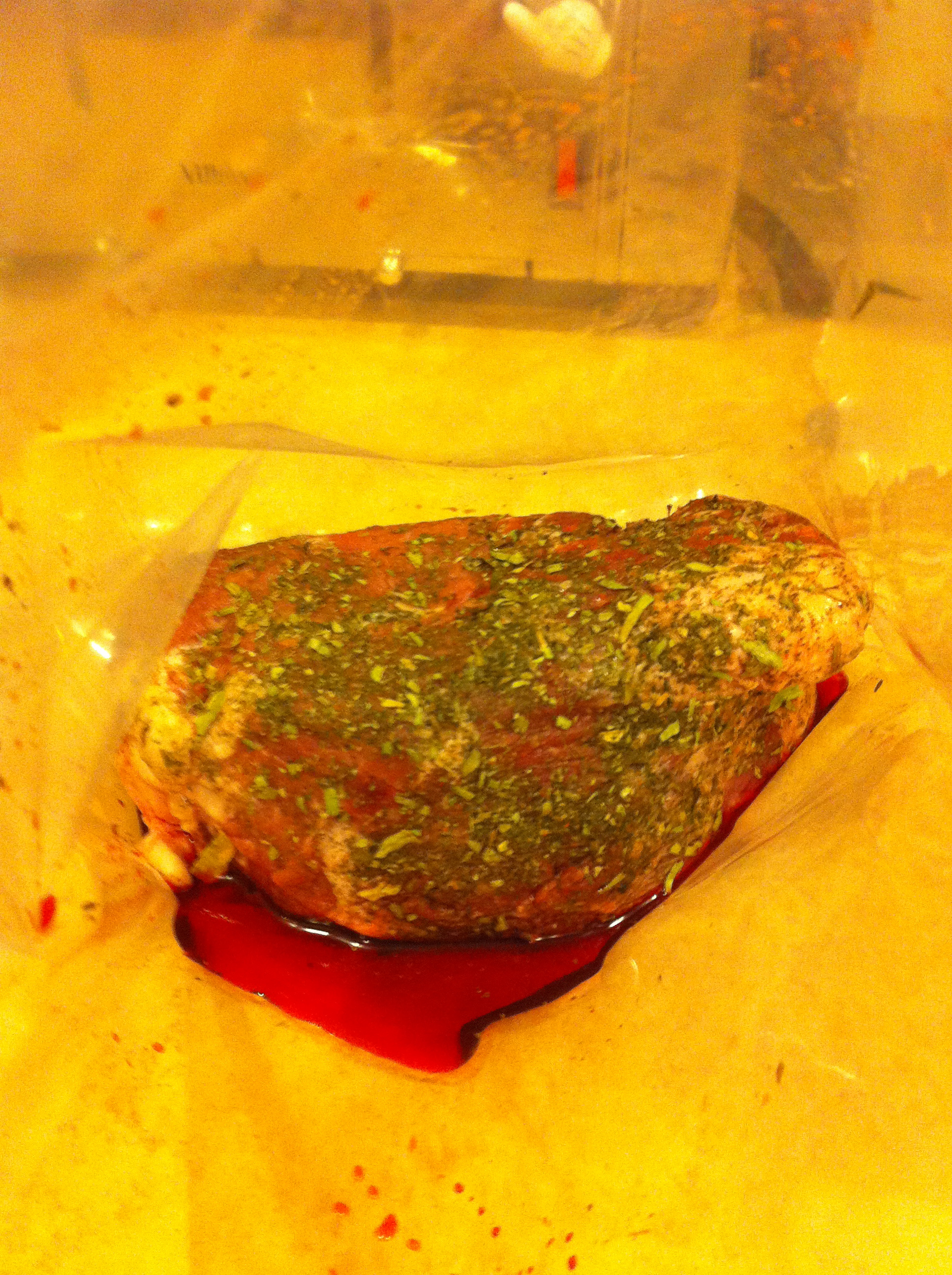
After a particularly fun meeting of Jet City Gastrophysics, Eric generously offered me some Mangalitsa neck he had in his freezer.  I had recently seen a recipe from The Herbfarm for doing it sous vide on the Wooly Pig’s blog: sous vide at 165F for 14 hours.  Scott has done ribs for 72 hours, so I know the circulator can handle 14.  The key is to never let the heating coils sit completely out of water, or they will burn out quickly.  That was easily accomplished by filling the tub up to the rim. So I took the neck, seasoned her up, vacuum sealed the bag, and dropped it in the warm bath that would render her delicious.

Mangalitsa sous vide preparation

Preparing the Mangalitsa neck for sous vide

And I went to bed.

7 1/2 hours later, I woke up to an acrid plastic smell.  They’re currently doing construction nearby so I thought to myself in my pre-caffeinated state “What are they welding over there? That smells awful”.  Then I remembered I was cooking.

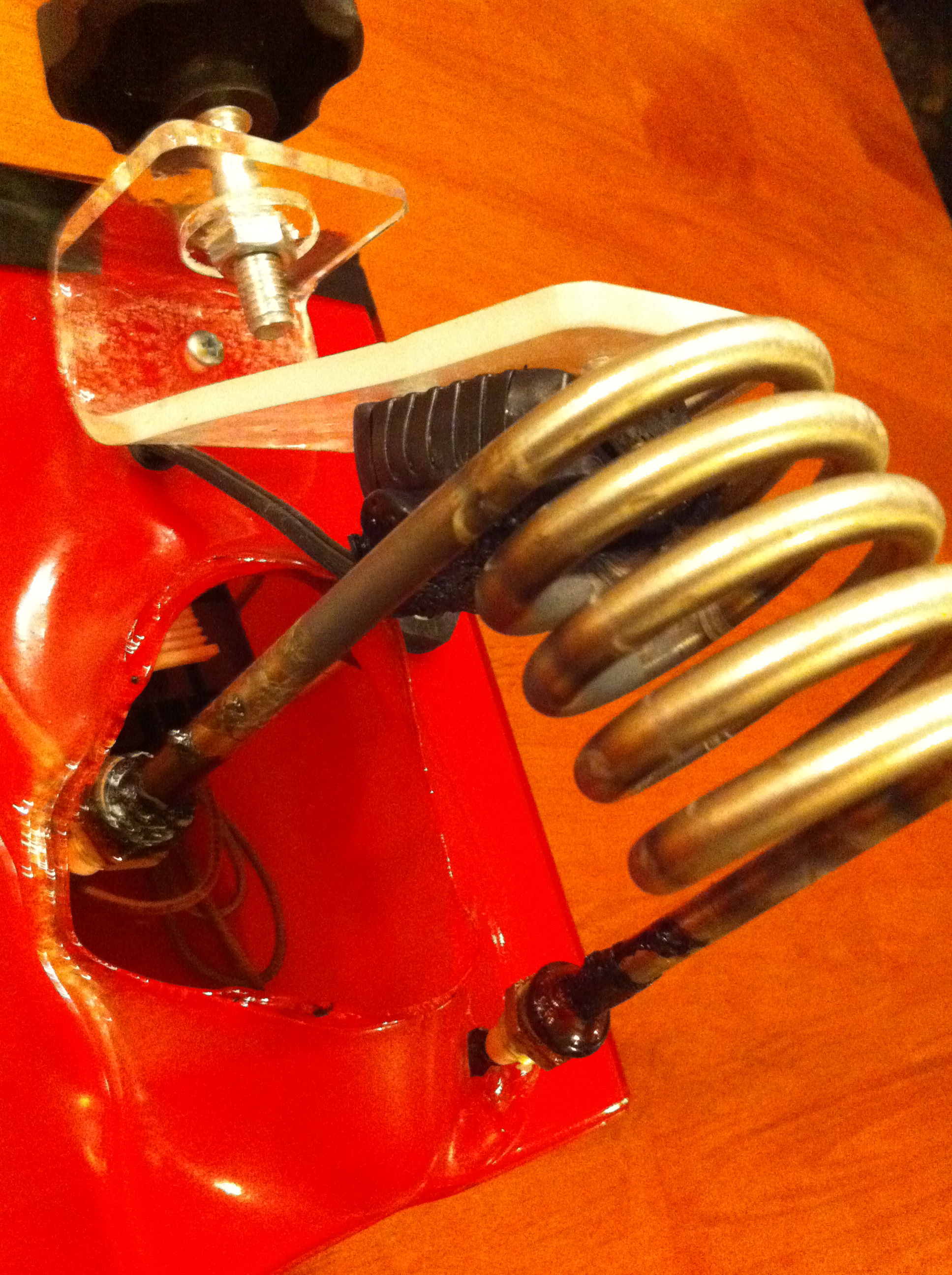
I leapt out of bed and bounded down the stairs, visions of fiery destruction blinding me.  The kitchen was intact, and there was no smoke, but there was my second immersion circulator, melting into the tub now 3/4 filled with water.

Immersion Circulator Meltdown Blues

Immersion Circulator Meltdown Blues

It seems as though enough water had evaporated so the upper half of the coils were exposed.  Since they were partially submerged, they didn’t burn out.  They just radiated heat on the plastic above them, perhaps for hours.  As the plastic melted, the box bent forward and the aquarium pump touched the coils, melting it against them.  Full on destruction.  Luckily, the house was fine, so as far as I was concerned, I dodged a bullet.  The smell of burnt plastic did permeate the house, so I opened all the windows and doors to get things back to normal.

I had to contact Scott again.  This time he was even more impressed with my abilities.  Now, let it be said, these are perfectly fine machines, actually fantastic machines, and he’s run his for hours at a go without a hitch.  Others have used his ingenious design without any problems as well.  And then there’s me.  I’d like to think I’m spurring further innovation in the field of culinary science.  And indeed, Scott is perfecting a Jethro-proof design so even I can cook sous vide.

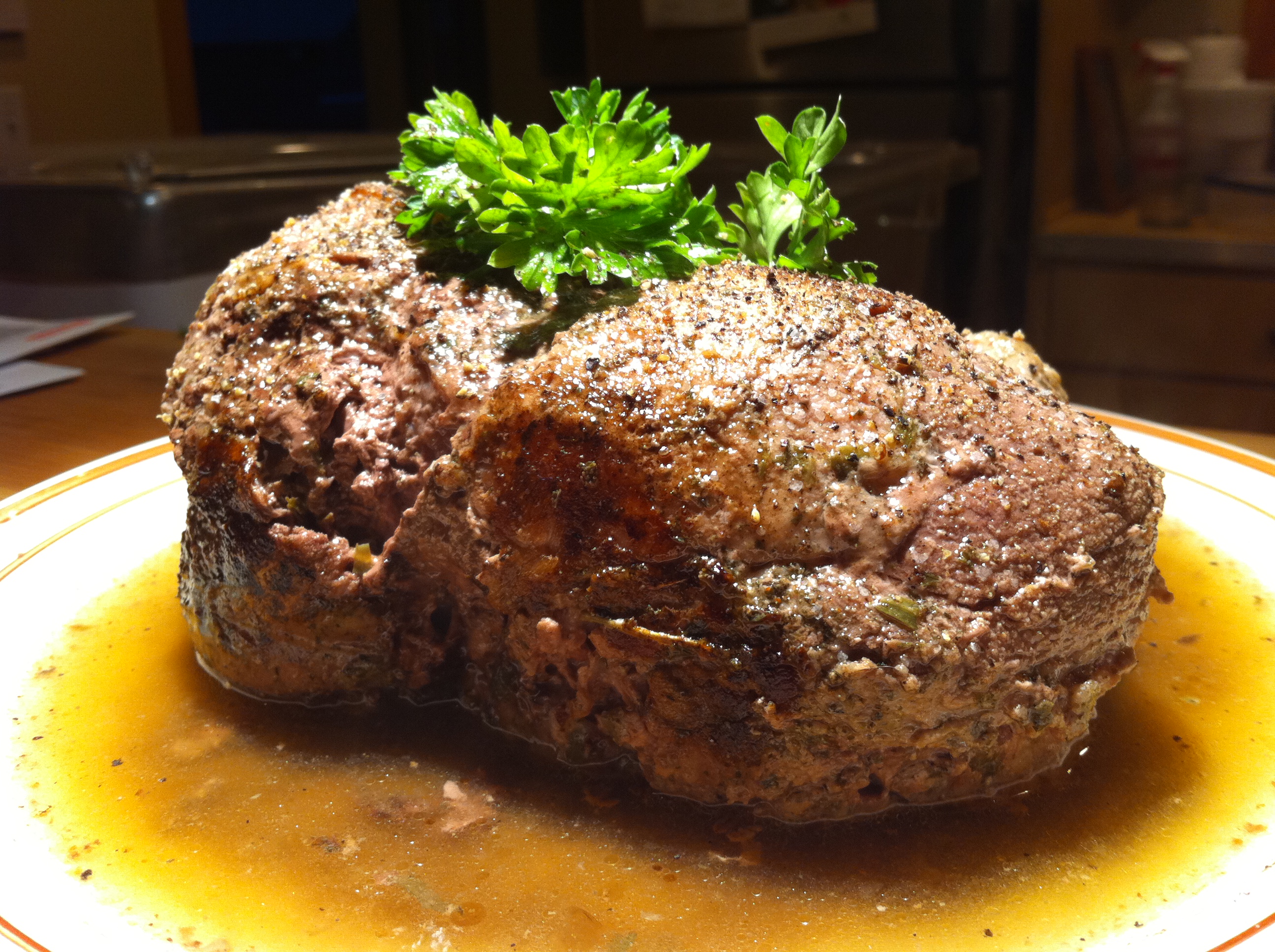
Which brings me back to the Mangalitsa neck.  Luckily, the bag it was in never touched the coils, so it was intact.  I’m not sure what temperature the water was at by the time I pulled it out, but it had been cooking for around 7 1/2 hours.  Maybe not the Herbfarm, but long enough to salvage the thing:

Sous Vide Mangalitsa Neck

Victory From The Jaws Of Defeat

And yes, it turned out just fine.  Actually great.  Mangalitsa is delicious.  I wonder what it tastes like after 14 hours.  Maybe I’ll get a chance to find out – if Scott lets me.

Jethro

← Older posts
Newer posts →

Search

Categories

From the Twitterverse

Tweets by jcgastrophysics

Feed Yourself

  • RSS - Posts

Recent Posts

  • Ferran In America
  • That One Time We Applied For A Food Patent
  • Ideas In Food At Home: Coffee Onion Rings
  • BOOM: Sansaire Circulator Raises $823k On Kickstarter
  • Dining Northwest Style at The Willows Inn
  • Sansaire, The $199 Circulator: A Brief History
  • Modernist Cuisine At Home: Barbeque Rubs And Another Sauce
  • Modernist Cuisine At Home: More Barbeque Sauces
  • The Price Of Cooking Modernist Cuisine, Part IV: More Gadgets, Ingredients and Resources
  • Modernist Cuisine At Home: Compressed Melon Terrine
  • That One Time We Were Nominated For Best Culinary Science Blog
  • Gastrophysics Labs Closes Doors; Reopens As A “Kitchen”

From the Archives

  • March 2014
  • November 2013
  • September 2013
  • August 2013
  • July 2013
  • May 2013
  • April 2013
  • March 2013
  • February 2013
  • January 2013
  • December 2012
  • November 2012
  • October 2012
  • September 2012
  • August 2012
  • July 2012
  • June 2012
  • May 2012
  • April 2012
  • March 2012
  • February 2012
  • January 2012
  • December 2011
  • November 2011
  • October 2011
  • September 2011
  • August 2011
  • July 2011
  • June 2011
  • May 2011
  • April 2011
  • March 2011
  • February 2011
  • January 2011
  • December 2010
  • November 2010
  • October 2010
  • September 2010
  • August 2010

Blogroll

  • A Practical Guide to Sous Vide Cooking
  • Alinea At Home
  • Chef Rubber
  • Cooking Issues
  • eGullet
  • Eric Rivera's Cooking Blog
  • Ideas In Food
  • Khymos
  • L'epicerie
  • LeSanctuaire
  • Modernist Cuisine
  • Modernist Pantry
  • Seattle Food Geek
  • Studio Kitchen
  • The Alinea Project
  • Willequipped
  • Willpowder

  • ericriveracooks's avatar ericriveracooks
  • jethro's avatar jethro
  • sheimend's avatar sheimend

Blog at WordPress.com.

Privacy & Cookies: This site uses cookies. By continuing to use this website, you agree to their use.
To find out more, including how to control cookies, see here: Cookie Policy
  • Subscribe Subscribed
    • Jet City Gastrophysics
    • Join 161 other subscribers
    • Already have a WordPress.com account? Log in now.
    • Jet City Gastrophysics
    • Subscribe Subscribed
    • Sign up
    • Log in
    • Report this content
    • View site in Reader
    • Manage subscriptions
    • Collapse this bar
 

Loading Comments...