The Modernist Cuisine Book Launch

Tags

, , , , ,

Modernist Cuisine Book Launch

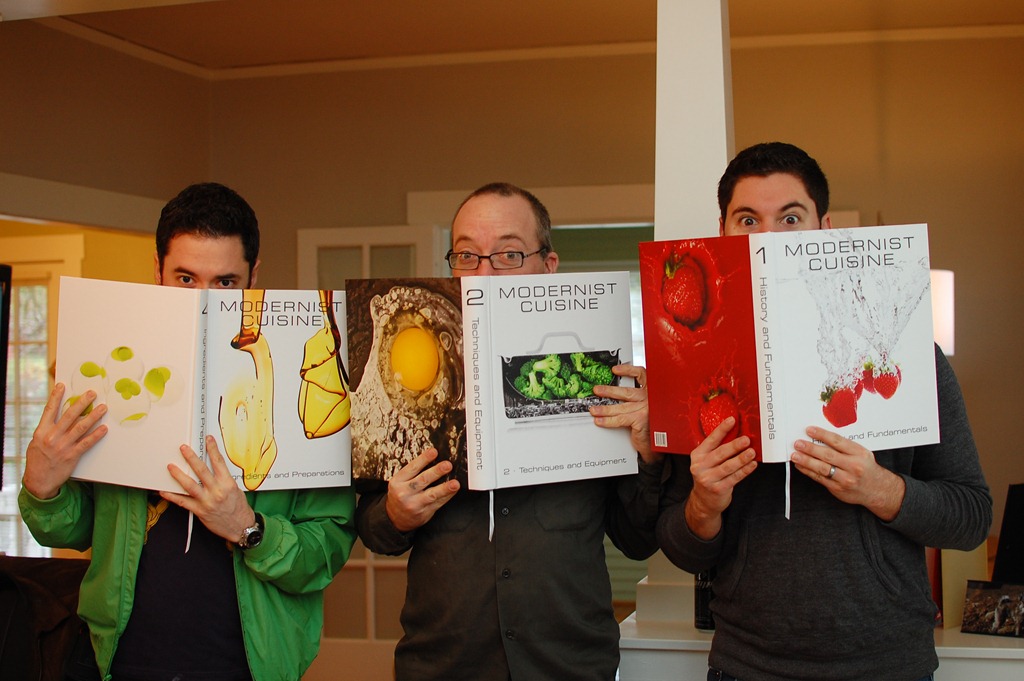
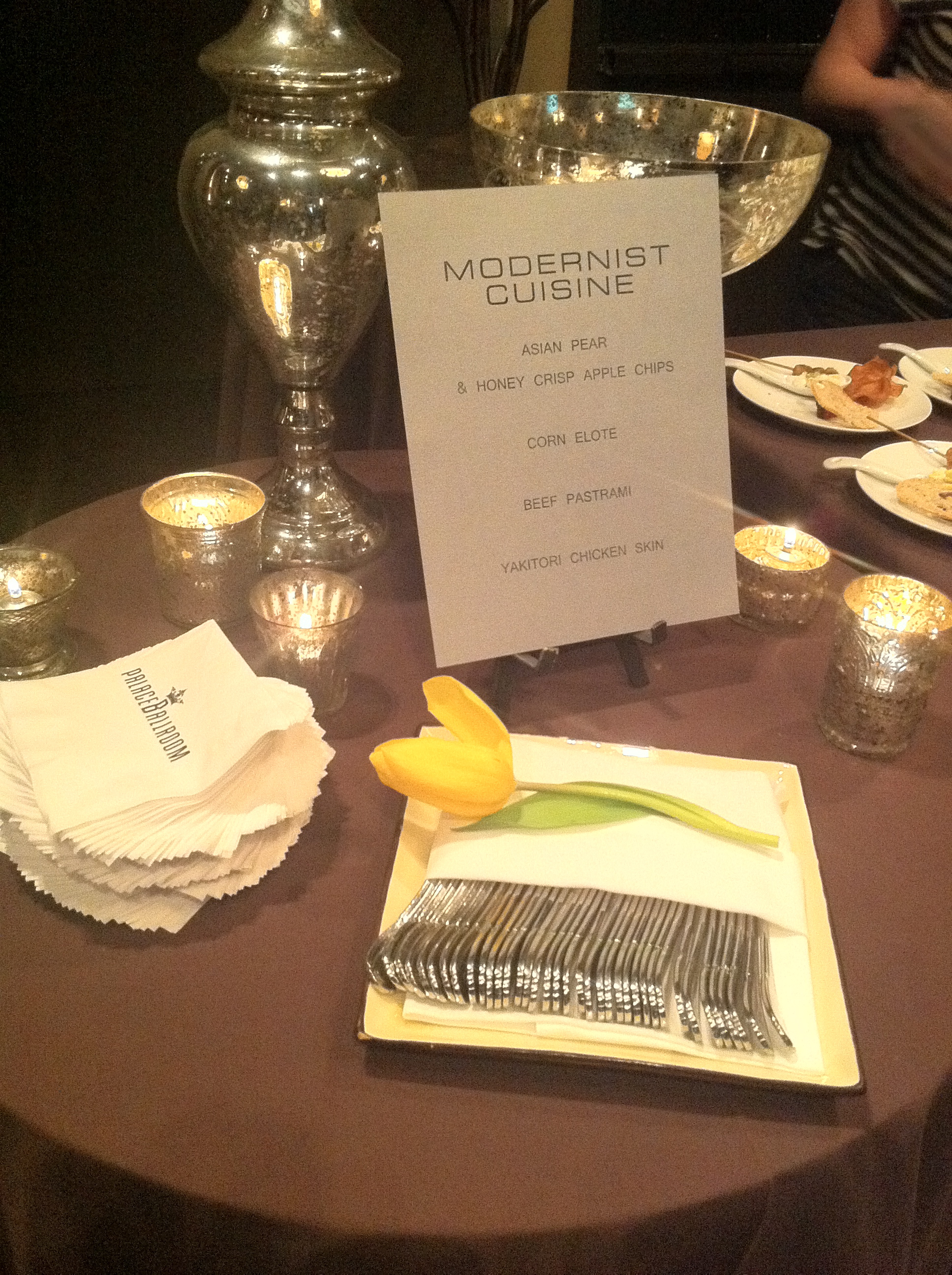
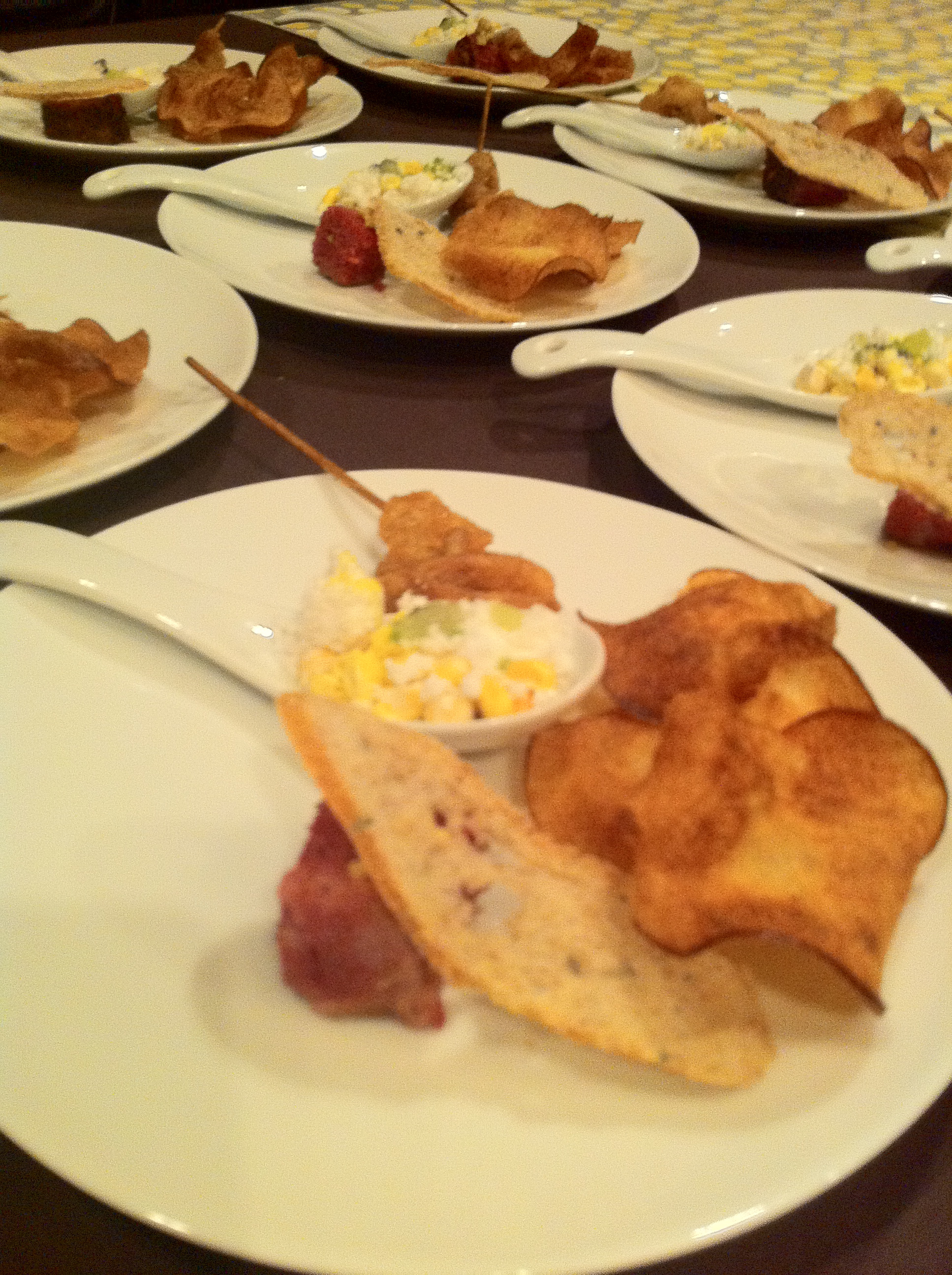
I was one of the lucky 100 or so people to attend the launch of the upcoming cookbook Modernist Cuisine in Seattle earlier this week.  It was held at the Palace Ballroom in downtown Seattle.  A small tasting plate was served as well as a couple of drink tickets for wine.  The pastrami was fatty and tender and delicious.  The Asian pear and apple chips were bright and sweet, without the nutty overtones from my batch of dragon fruit chips I made.
The Menu
The Dish

We were invited to take our seats.

The Seating Arrangments

Seattle chef (and Palace Ballroom owner) Tom Douglas was the MC for the evening.  He introduced Nathan Myhrvold, who took us through a chapter by chapter review of the five volumes of the book.

Dr. Myhrvold Going Over The Book

Dr. Myhrvold Going Over The Book, While A Woman In Front Of Me Senses My Phone Close To Her Face

He showed us a lot of interesting portions of the book: a full page photograph of E. coli; maps of regional BBQ styles from the US Southeast and curries of India that resembled battle maps with arrows going to and fro; a simple recipe for carrot soup using a pressure cooker and a blender as well.  And there were slow motion films using their state of the art camera capturing liquid nitrogen floating along a surface and a water balloon exploding.  The depth and breadth of the book is really staggering (you can see some of their films on YouTube).

He also tossed out little nuggets of info throughout his talk.  Two stuck out in particular.  One is the use of salt.  They studied it, and found a very simple ratio for proper salting: 1%, or .75% if you’re sensitive.  That’s it.  It’s so deceptively simple that I’m sure some people will take issue with it.  Cooking is generally so intuitive, that such direct explanations might make a cook feel like the magic, the artistry of cooking is being shelved for direct measurements.  I think it just makes it that much easier to make delicious food and allows the cook to focus on other components of their dishes to elevate their flavor and presentation.  As a matter of fact, Dr. Myhrvold pointed out that the book doesn’t go into detail about flavor pairing and that there isn’t a lot of research available on the subject.  I guess they have another book to do.

Another little trick he told us about is hyperdecanting.  To quickly decant a bottle of wine, pour it into a blender and blend on high for 30 seconds.  He said he did this to a bottle of Spanish wine given to him by Spanish royalty in front of them.  They were mortified, but after a blind taste test, they always chose the hyperdecanted wine.  They quickly called their winery in Spain and in rapidfire Spanish said “blahblahblahBLENDERblahblahblahBLENDER”.  That got a good laugh from the audience.

Afterwards Tom Douglas had the co-authors, Maxime Bilet and Chris Young, join Dr. Myhrvold on stage and had a Q and A session.  Questions were asked about health department codes (the FDA apparently doesn’t like unsolicited advice), self publication (publishers would have only run 2000, over 3000 have already been pre-ordered), and various other things that I can’t recall.  Tom Douglas wrapped it up and said he was getting a copy of Modernist Cuisine for each of his chefs.  That’s a boss worth working for!

People mingled a bit more, asking questions from all the chefs who worked on the book. A couple copies of the book along with some excerpts were also out for people to page through and look at.  Everyone finished their drinks, and then it was off into the rainy Seattle night.

A Cookbook Excerpt

Jethro

Ideas In Food At Home: Watermelon And Coffee

Tags

, , , ,

H. Alexander Talbot and Aki Kamozawa run a culinary consulting business called Ideas In Food.  They started a blog in 2004 to showcase their research into food preparation, cooking techniques, and flavor combinations.  Recently, they put it all into their first book, Ideas in Food: Great Recipes and Why They Work, which should quickly be in your hands and on your kitchen bookshelf.  I was looking for a small course to add for a dinner I made a few weeks ago and came across their post for Watermelon and Coffee:

These cubes of watermelon are seasoned with cane sugar, instant coffee and salt. As is they are amazing. When you vacuum seal them and let them marinate for a day their taste potential increases exponentially.

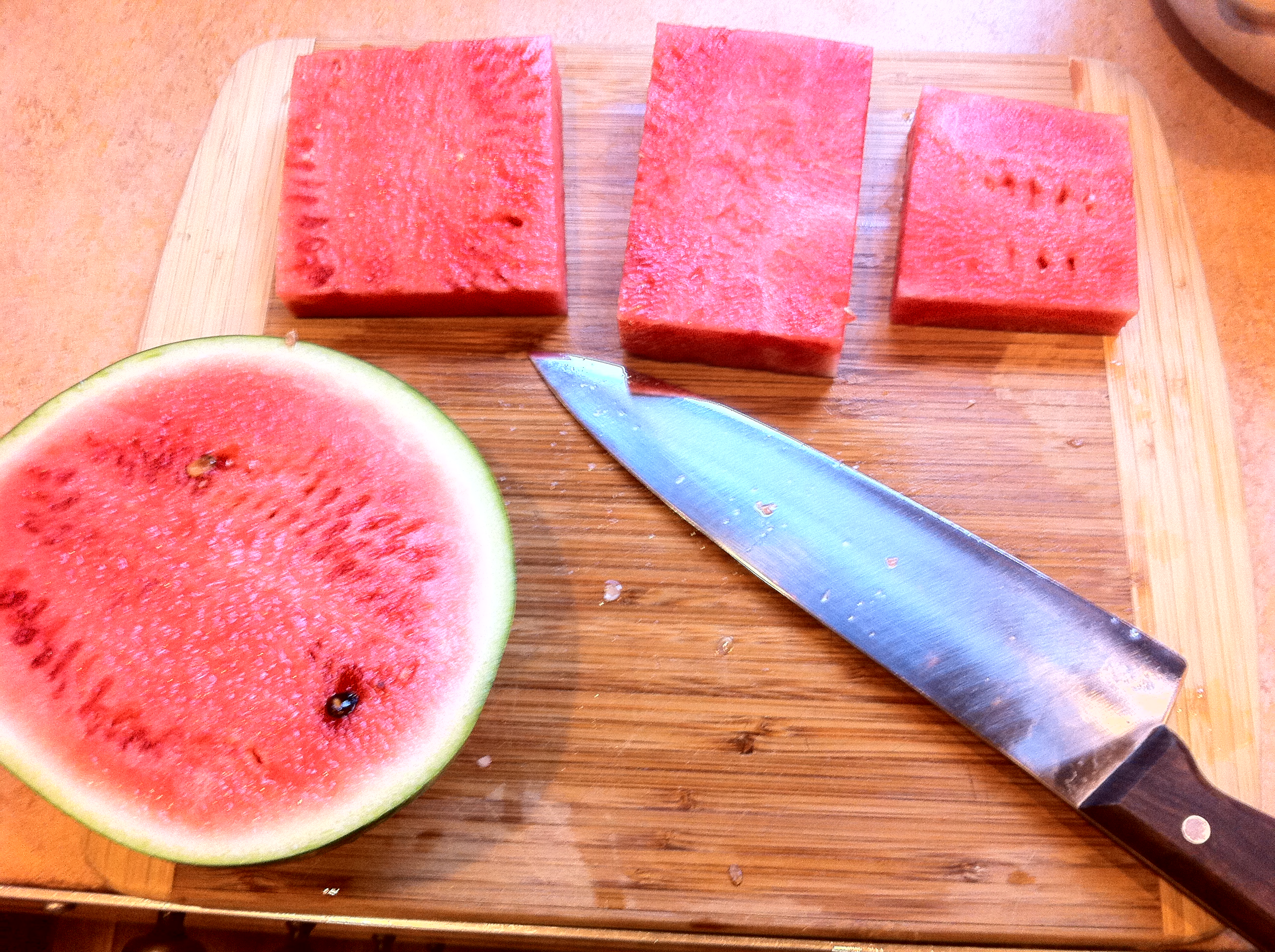
Something quick to bring a little zing to my dinner – perfect.  I found a nice watermelon down at the Pike Place Market, picked up some Via instant coffee from Starbucks and went to work.  Chop. Season. Seal. Sit.  Who said modern cookery is difficult?

Fresh Cut Watermelon
Vacuum Sealed Watermelon

Salty, sweet, bitter – it’s a tantalizing combination for sure.  I think I’ll juice a jalapeño and add it in next time for a spicy kick.  And why not – it’s just another idea in food, right?

Jethro

The Most Pretentious Mac & Cheese Ever

Tags

, , ,

mac-and-cheese

It is undeniably fashionable, these days, for an upscale restaurant to serve “their take” on macaroni and cheese.  I’ve seen it prepared at least a dozen ways: with wild mushrooms, with truffles, with bleu cheese, with cave-aged gruyere, in mini-cocottes, on oversized platters, broiled, baked, and deep fried.  For the record, there’s nothing wrong with any of these preparations.  In fact, we served a wild mushroom and truffle oil mac & cheese at my wedding!  However, I wanted to take the concept to the extreme and produce the most hyperbolic, modernist version of the dish I could… just to see what happened.  The result: maltodextrin-powdered Beecher’s cheese with a tableside hot cream to make an “instant” sauce.

I originally thought I’d post my results as a joke – an over-the-top preparation that was to comfort food what the Dyson Air Multiplier is to climate control.  However, I was delightfully surprised to find out that this mac & cheese actually tasted fantastic!  The flavors are extremely pure and the consistency of the instant sauce was perfect.  Watch out, Kraft… you’ve got competition.

Makes: 2 snobby servings
Total kitchen time: 4 hours (45 minutes working time)

For the Powdered Cheese:

  1. Preheat your oven to its lowest setting (180-220°F).
  2. Combine the cheese, water and sodium citrate in a small saucepan.  Heat on low until completely melted.  Stir to ensure evenness.
  3. Transfer the cheese mixture to a small food processor and add 200g of tapioca maltodextrin and process until it forms a paste.  If you can’t fit all of the tapioca maltodextrin at once, add half and process, then add the remainder.
  4. Spread the paste in a thin, even layer onto a silicone baking sheet.  Bake until dry and brittle, 2-3 hours.
  5. Crumble the cheese mixture into a food processor, or preferably a clean, electric coffee grinder.  Process until the mixture becomes a fine powder.  If necessary, add an additional 15g of tapioca maltodextrin.  The mixture should have the same texture as the powdered cheese in instant macaroni and cheese.

For the dish:

  • 1 cup pipe rigate (or any other type of macaroni you’d like)
  • 1/4 cup heavy cream
  • Hawaiian black lava salt
  • 2 sprigs thyme
  1. Cook the pasta according to the instructions on the box.
  2. Meanwhile, heat the heavy cream to a simmer.  Just before serving, divide the cream into two mini sauce pots (I used glass port sippers, shown in the photo).
  3. To plate, sprinkle a two tablespoons of the cheese powder into a small bowl.  Top with pasta, sprinkle with a pinch of black lava salt, and garnish with thyme.  To finish the dish tableside, pour over the hot cream and stir well to make the cheese sauce.

I owe a big thanks to Maxime Bilet (author of Modernist Cuisine) for giving me a hand with the powdered cheese recipe.  If you aren’t up for ordering a pound of maltodextrin online, you can also use my simplified powdered cheese recipe from the Beecher’s Cheddar Cheetos article I wrote for Seattle Weekly.  However, tapioca maltodextrin (N-Zorbit) is pretty handy stuff for turning liquids into powders, and is a staple in modernist kitchens.

Scott

Alinea At Home: Salad, Red Wine Vinaigrette

Tags

, , , ,

Alinea's Ice Salad

Perfectly pristine ingredients, combined sensibly and cooked properly, are what make Italian food taste so good.

– Mario Batali

Simplicity. Fresh ingredients. Straightforward cooking techniques.  This is what defines Italian cooking.  This is also what one does not think of at all when considering Modernist Cuisine.  What might come to mind instead: thirty components manipulated ten ways beyond recognition and put together in an abstract form to be contemplated philosophically before tasting (emphasis on tasting, not actually eating).  But as the genius of Grant Achatz demonstrates,  the principles of Italian cooking can be applied in novel and unforeseen ways.

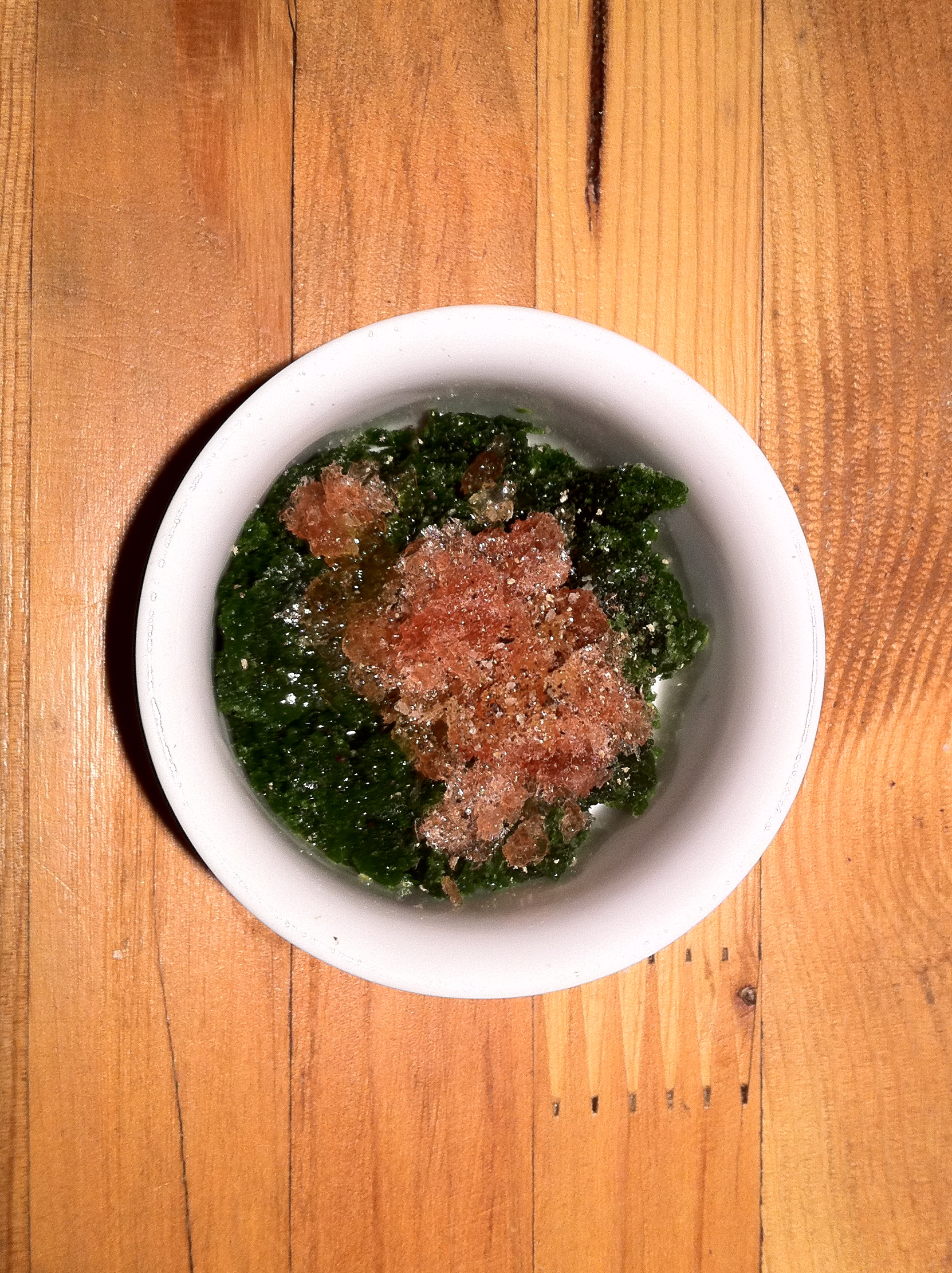
Take the humble granita, for example.  It’s a simple Italian dessert, where you take fruit juice, or perhaps wine or coffee, mix it with sugar and freeze it.  You break up the ice into a slush and serve it.  Easy and delicious.  Chef Achatz’ spin: why not turn a salad into a granita?  Yes.  Why not?

Creating A Savory Granita

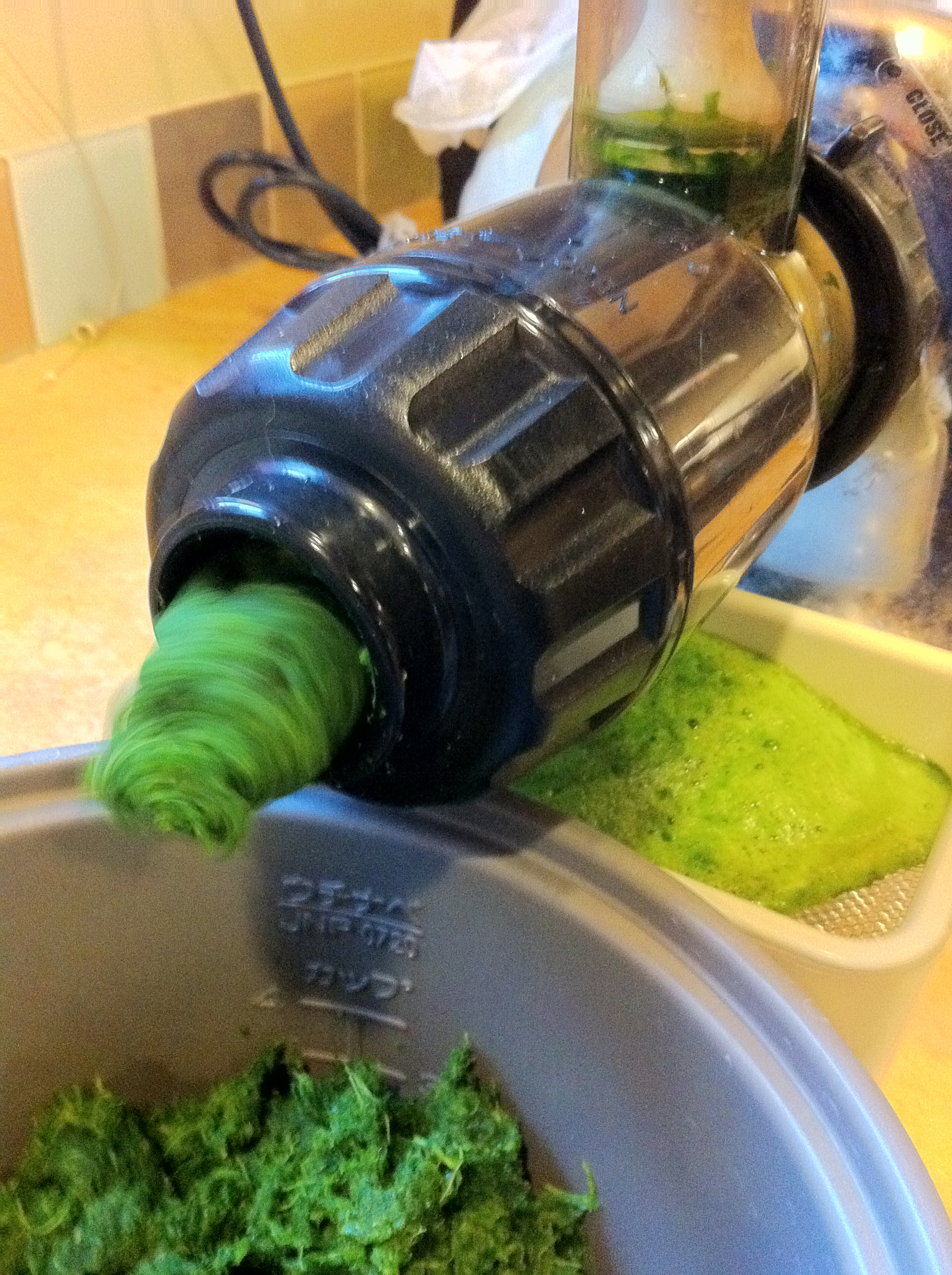
It couldn’t be easier really.  Take some spinach, arugula and romaine, and juice them all together.

Juicing Greens
Verdant Juices

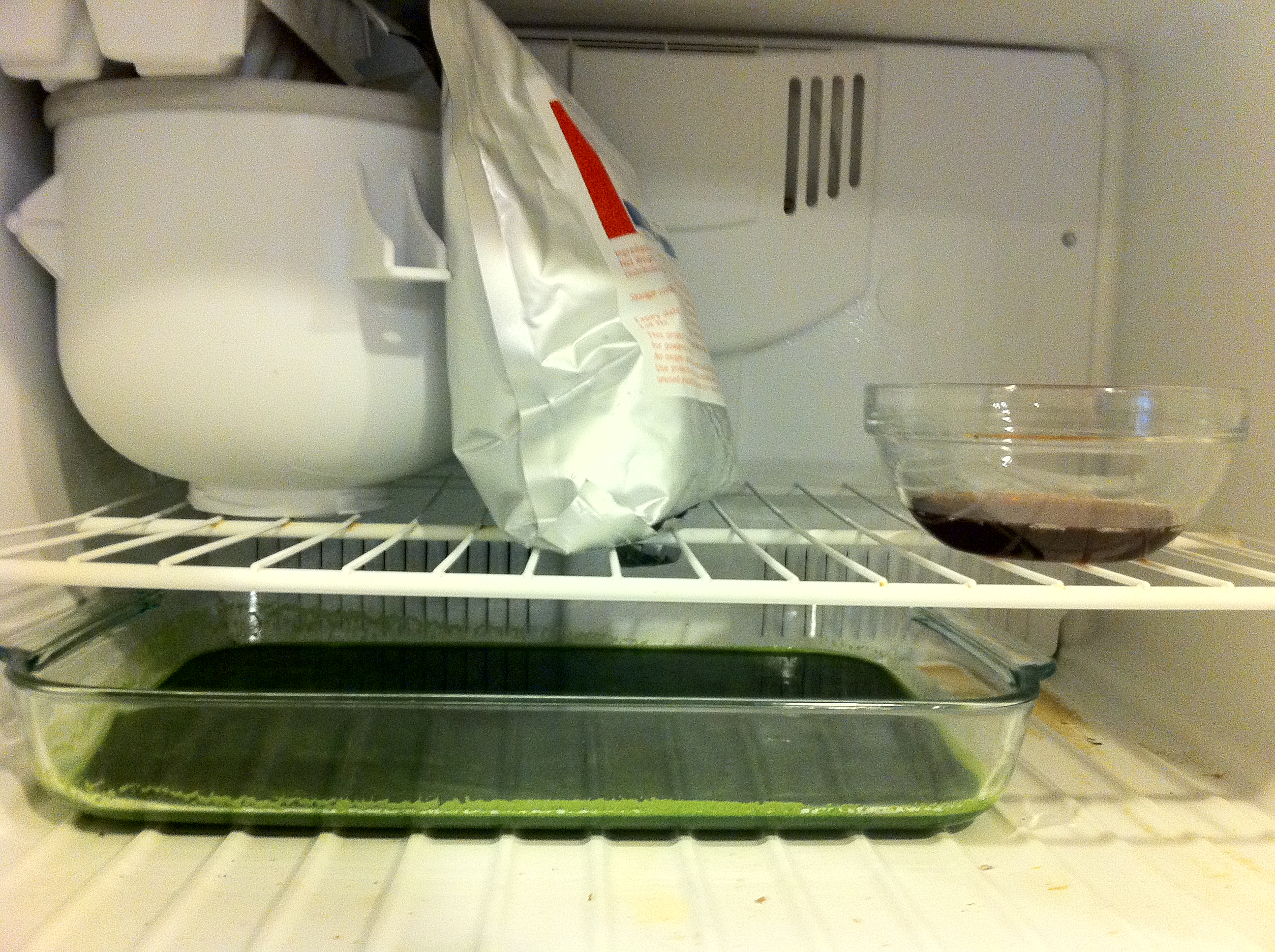
Add some salt, pour into a tray, and freeze.  Then you take some red wine vinegar, add some salt, and freeze that too.

Freezing a Salad

Freezing a Salad. Also, an ice cream maker attachment and a bag of transglutaminase. An everyday freezer.

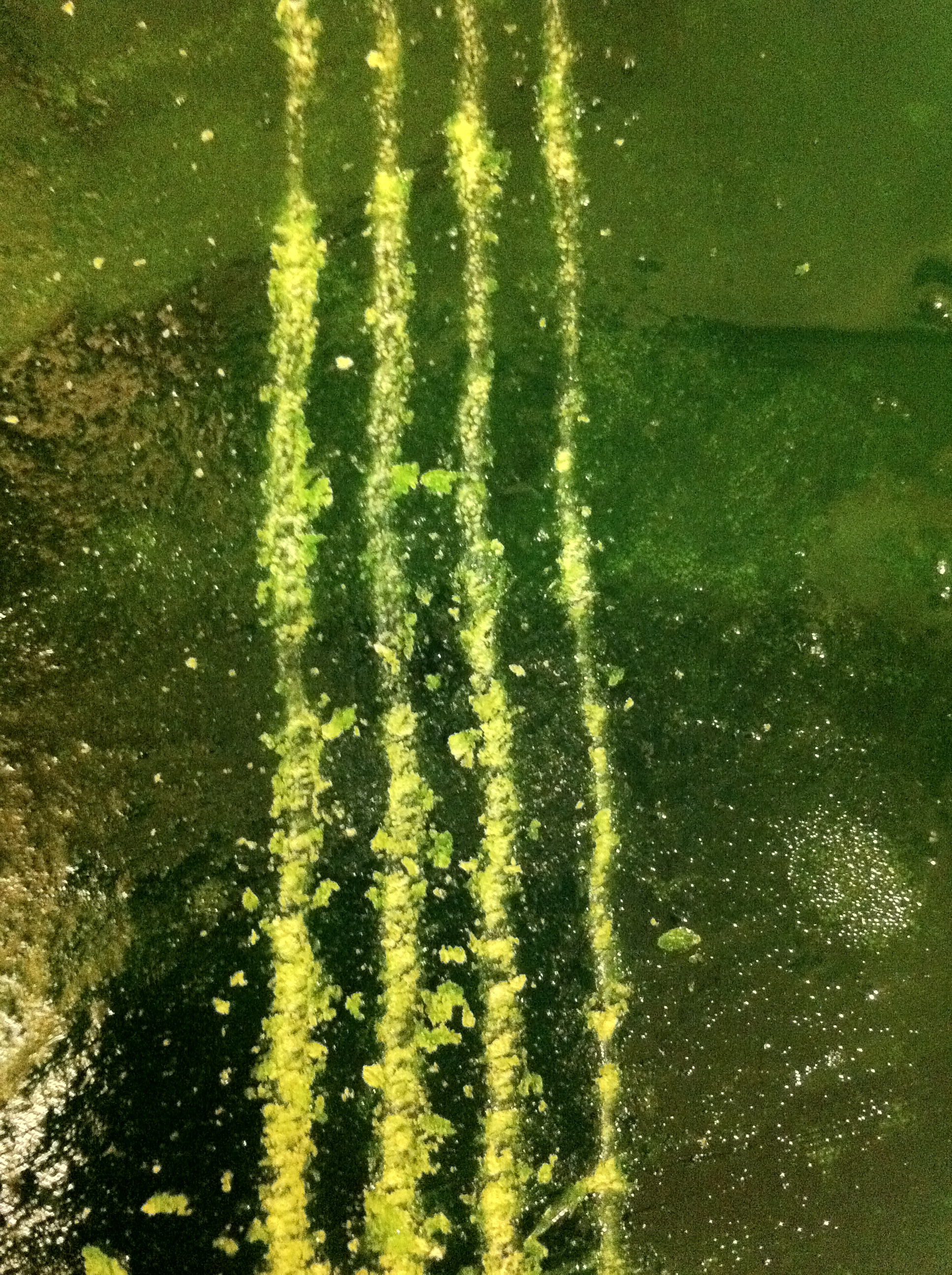
Once frozen, you take a fork to it and create a salad slush.  Actually, mine was pretty frickin’ frozen, so I spent a few minutes stabbing at it repeatedly with a fork, breaking the ice up into an acceptable slushy texture.  The funny part was ice flecks were flying all around as I was doing this.  Once I was done, I looked around and saw little droplets of bright green chlorophyll all over the counter and floor.  A quick cleanup followed so I wouldn’t be left with polka dot stains throughout my kitchen.

Creating Salad Slush
Lettuce Ice

Break up the red wine vinegar ice as well and you’re pretty much done.  Put down some lettuce ice, then some red wine vinegar ice, add a dash of olive oil, salt and pepper.  And your salad is complete.  An unique experience, your mouth is totally confused by the combination of the flavor, texture and temperature.  But yet it’s familiar too.  It manages to surprise, delight and yet be comforting at the same time.  Simple and straightforward.  And thoroughly, undeniably modern.

An Ice Cold Salad
Jethro

Under Pressure

Tags

, , , , ,

I finally had a chance to use my pressure cooker that I bought about a year ago.  I purchased it for two reasons:  #1 In Heston Blumenthal’s “In Search of Perfection” he suggests using a pressure cooker more often……SOLD! #2 I wanted to do a bunch of canning (never got around to it).

I purchased two 3.5# pieces of pork belly that I brined (one in Chinese 5 spice and the other in a smoked paprika/chili oil blend) then braised, then pressed.  The process when it comes to preparing pork belly is time consuming but with a few different pieces of equipment I was able to do this in record time….for me anyway.

The brining process took me the same amount of time….about 4 hours.  Luckily, Jethro has a vacuum chamber sealer so next time I’ll go that route and save even more time!  The cooking time of the pork belly is what really changed things.   Normally, a 3.5# piece of pork belly would take about an hour to an hour and a half to braise properly in the oven.  I knocked one out in 20 minutes then the other piece in 18 minutes.  The pressing and cooling process took another 45 minutes.

The next time around is what I’m excited about.  Essentially, I could have a piece of pork belly brined, cooked off, and ready for pressing in under an hour.   Time is everything in a kitchen and space is a concern at home.

The great thing is that I was able to dehydrate tapenade ingredients in my oven overnight then cook the pork belly in the pressure cooker. Once all of the tapenade ingredients were ready I placed them in my spice grinder then emulsified them with extra virgin olive oil then slowly worked in tapioca maltodextrin to create that pavement effect you see in the picture above.

After I made the two pork bellies I made a beef stock in the pressure cooker.  Traditional French style beef stock with all the bells and whistles in 45 minutes instead of 8-12 hours.  The only problem I had was that the stock was cloudy but I cleaned it up by cooking some egg whites in the stock which cleaned it right up.  I talked to Jeth and Scott about this and Jeth suggested after I make the stock to use the centrifuge so I will have a super concentrated stock…..genius.

The picture above is the 5 spice pork belly, tapenade “pavement”, and flower.  With a few more adjustments and tinkering I think this will turn out to be a world class dish.

Eric

15 p.s.i. ’til I die!

Cookbook: Herve This-From Molecular Gastronomy to Culinary Constructivism

Tags

, , , , , , ,

A book from the father of molecular gastronomy.

I’ve been kicking around this whole “molecular gastronomy” thing for quite some time.  When I first heard about it I was reading about at all the cool presentations, shapes, and textures that were being displayed by chefs at numerous restaurants around the world.  I thought, “I want to cook like that one day…..I want to create art through food”.  I didn’t realize what these chefs were actually doing. I just thought it was for presentation purposes only.  I saw a video on youtube that showed Jose Andres hanging out with Ferran Adria and Chef Adria was explaining his spherification of olive puree,  I was amazed.

A few months later I saw Mario Batali and Anthony Bourdain talk in Seattle.  Mario Batali called molecular gastronomy fake, I was confused.  I respect all these chefs and what they do. I’m so far down the totem pole in this chef world that I’m a random bush that is hanging out across the field from the chef totem pole.  What to do?

Looking back at the whole thing I realize one thing. Mario Batali wasn’t talking about molecular gastronomy at all. He was talking about the chefs that turned “molecular gastronomy” into elaborate presentations, shapes, and textures. He had no issue with Ferran Adria but he had a problem with the guys trying to be like Ferran Adria without understanding the science behind what Chef Adria was doing.

Heston Blumenthal set me straight when he had Harold McGee on his show, “Kitchen Chemistry”. Harold McGee wrote a book called:

(I have more information on the book coming shortly….not finished yet)

and Heston Blumenthal said that this book changed cooking for him. It was written in 1984, I have the revised version that was written in 2004. This book answered the why’s, how’s, and debunked all those things you have probably heard growing up, “sear the meat it traps in the juices”……these book say, “no, that’s not true”……the books are correct, you are not (I believed the same thing, I suck…haha). Chef Blumenthal listened, learned, and innovated so did Ferran Adria….look where they’re at now.

I did my research, bought my books, and started to read them (I have a lot more on the way). I began reading Harold McGee’s book and then I started doing more research about how the term “molecular gastronomy” came to be.  It was an easy way for Herve This and his science partner to market this science of cooking easily.  What you have probably heard from the mainstream is that molecular gastronomy is the crazy presentations, shapes, and textures of food. The mainstream doesn’t get it…..it’s like Elvis when he first came out.  The teenager’s loved him and parents immediately thought he was the devil. We often shun the things we do not understand or feel uncomfortable with.

My ignorance lead me to this world of molecular gastronomy………OH PRETTY COLORS!!!! My curiosity has lead me to understand and respect it.  Herve This’s book, “Building a Meal from Molecular Gastronomy to Culinary Constructivism” has broken down all of these things into plain English for me.  Call it stupid, call it ridiculous, call it what you want.  There is a science behind cooking. The days of me looking at something and saying, ‘it’s done”, are over.  The days of believing someone simply because they have been doing it that way forever are over…..if they can’t tell me WHY then I will question them…..woo hooo I’m 4 years old all over again!

Herve This labeled it molecular gastronomy to make it easy to understand and market but he has also debunked over 25,000 culinary beliefs since he has started his research.  This book shows how to boil an egg to perfection, you might say, “well you just boil it for 10 minutes with a soft boil/hard boil/or whatever technique I’ve been using for years”.  Do you want to perfect this process? I do, so I listen.  Chefs have listened to the words of Herve This and they have become extremely successful in the culinary world, I want the same.

Full speed ahead, let’s build a meal “molecularly”!

BUY THIS BOOK…………..now!

Eric

Kitchen Cryogenics: Playing With Liquid Nitrogen

Tags

, , , ,

LN2 Steam

Continuing my free fall into contemporary cooking techniques, I wanted to work with liquid nitrogen for some seriously cold cooking.  Liquid nitrogen is incredibly cold: −321 °F/−196 °C!  As it warms up, it boils away back into a gas, creating the exact opposite of a deep fryer – a deep freezer.  This is the stuff that urban legend says poor Walt Disney is frozen in for possible future reanimation.  My interests, however, are purely culinary.

Grabbing A Cold One

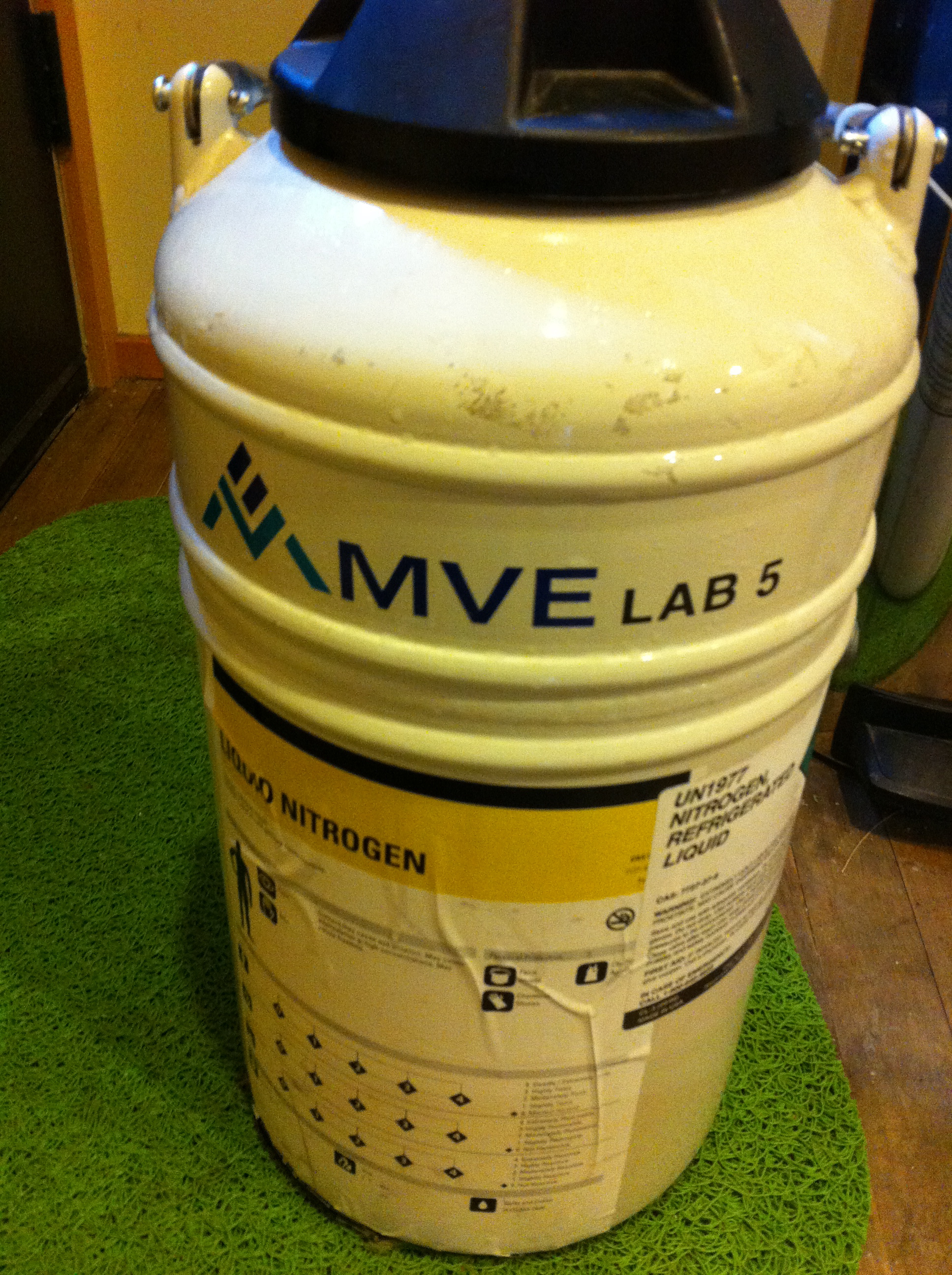
I wouldn’t be able to go to Sur la Table to get what I needed for this round of cooking.  I instead went to my local provider of industrial gases and inquired about purchasing a small amount of liquid nitrogen (also known as LN).  They said I couldn’t do it without the use of a dewar, a container especially designed for carrying and storing LN.  So, I did some research online, waited patiently, and was able to score a small 5 liter dewar for 40% off list price on eBay.

MVE Lab 5 Dewar

I first read Cooking Issues’ excellent Liquid Nitrogen Primer before I got started.  The three main takeaways:

  1. Do not keep LN under pressure in a closed container. It will explode. It can blow your hands off.  Thus, a proper dewar is necessary.
  2. You can suffocate on nitrogen and die and you won’t even know it.  Your body won’t warn you ahead of time.  You must be in a well ventilated area.
  3. It is really, really cold.  Avoid getting burned the same way you’d avoid hot oil.

It was a cold wet day in Seattle when I went to fill my dewar up with LN, but I still drove home with the windows down, the dewar tightly strapped in the back seat surrounded by towels, determined to not get killed before I froze some foodstuffs at home for my amusement.  I made it back safely and got down to some cold cooking.

Deep Freeze Frying

I placed a towel on my kitchen counter and placed a metal bowl inside of a larger metal bowl on top.  This was in case the LN was so cold the first bowl cracked open.  At least I would have a chance to get the thing outside if need be.  The window above the counter was opened for ventilation.  I decided to do a bunch of different things, some successful, others less so.  But it gave me a good insight into what’s possible.

First off was ice cream.  I was trying to make some ice cream bowls as Ferran Adria’s video showed in his talk at Google. At elBulli, they freeze an ice cream base on the underside of a ladle and then slip it off, creating a beautiful ice cream bowl to be filled with other goodies.  I, however, couldn’t get the bowls off correctly from the ladle – they were frozen solid on there, and they would always chip and break.  As my LN quickly evaporated, I decided to forgo that experiment after several tries and keep trying other techniques.

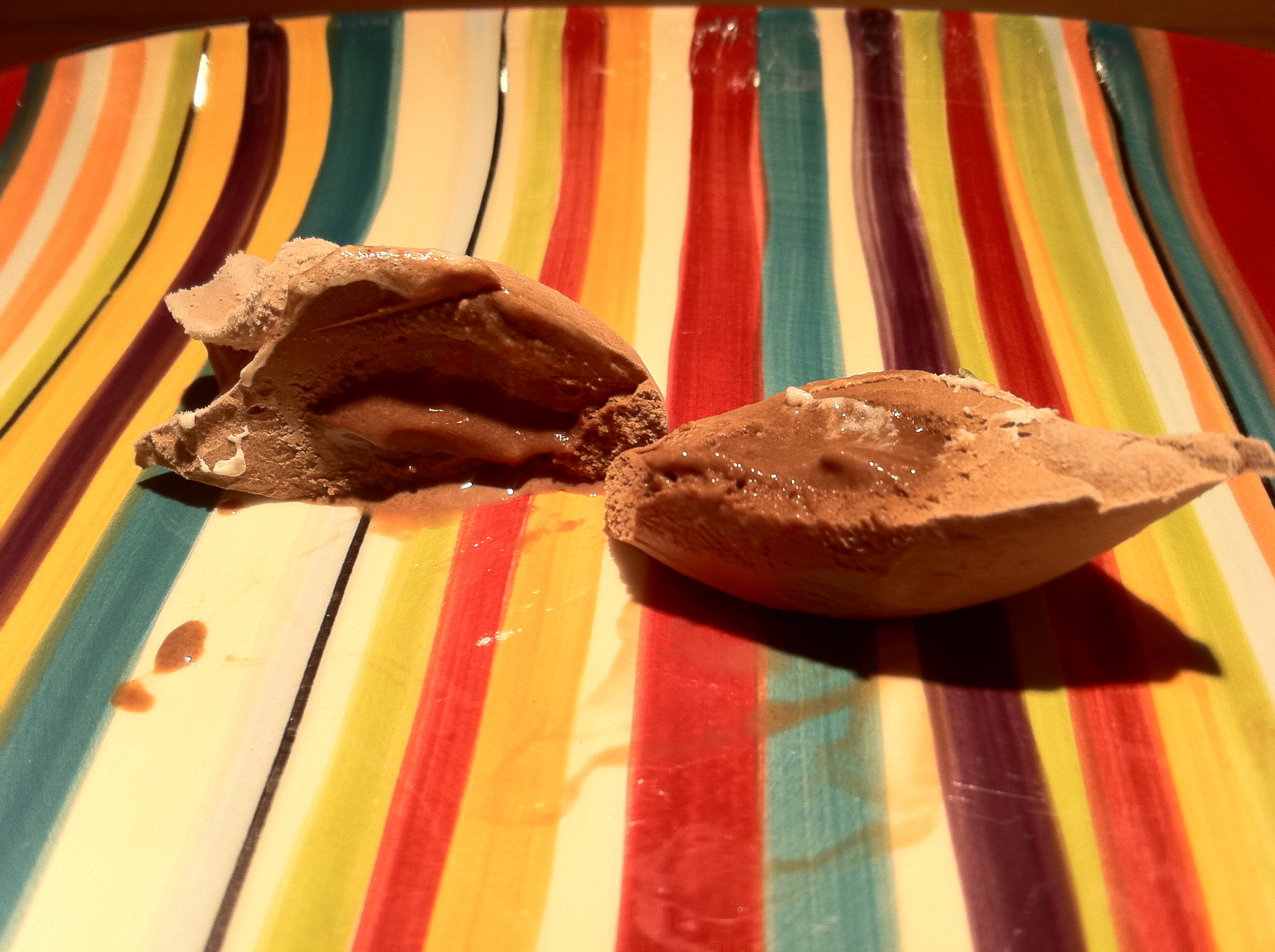
I scooped up some ice cream and threw it in.  It created a delicious little fudgesicle nugget, frozen on the outside but still creamy inside.

Fudgesicle Nugget
Creamy Chocolatey Goodness

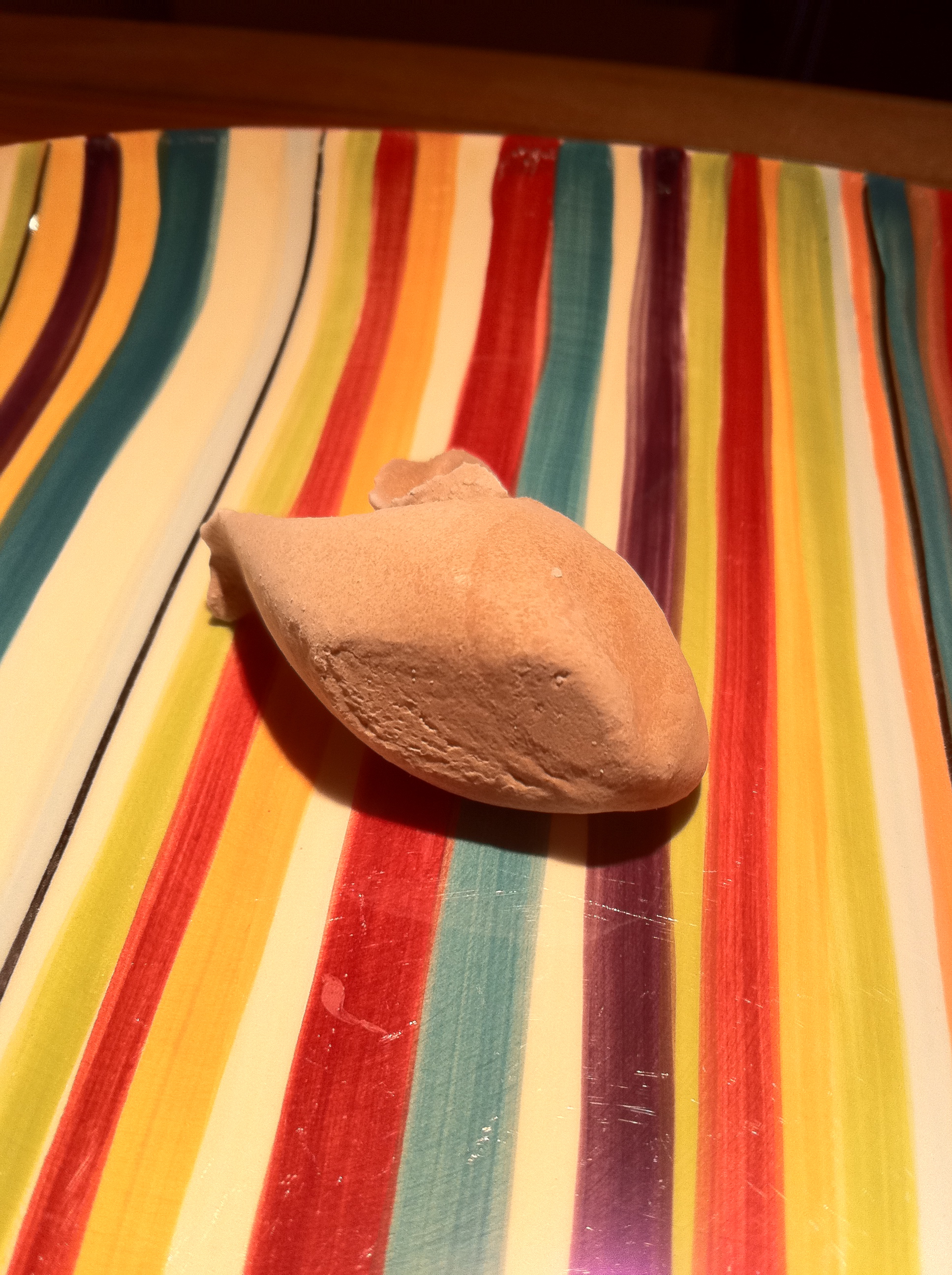
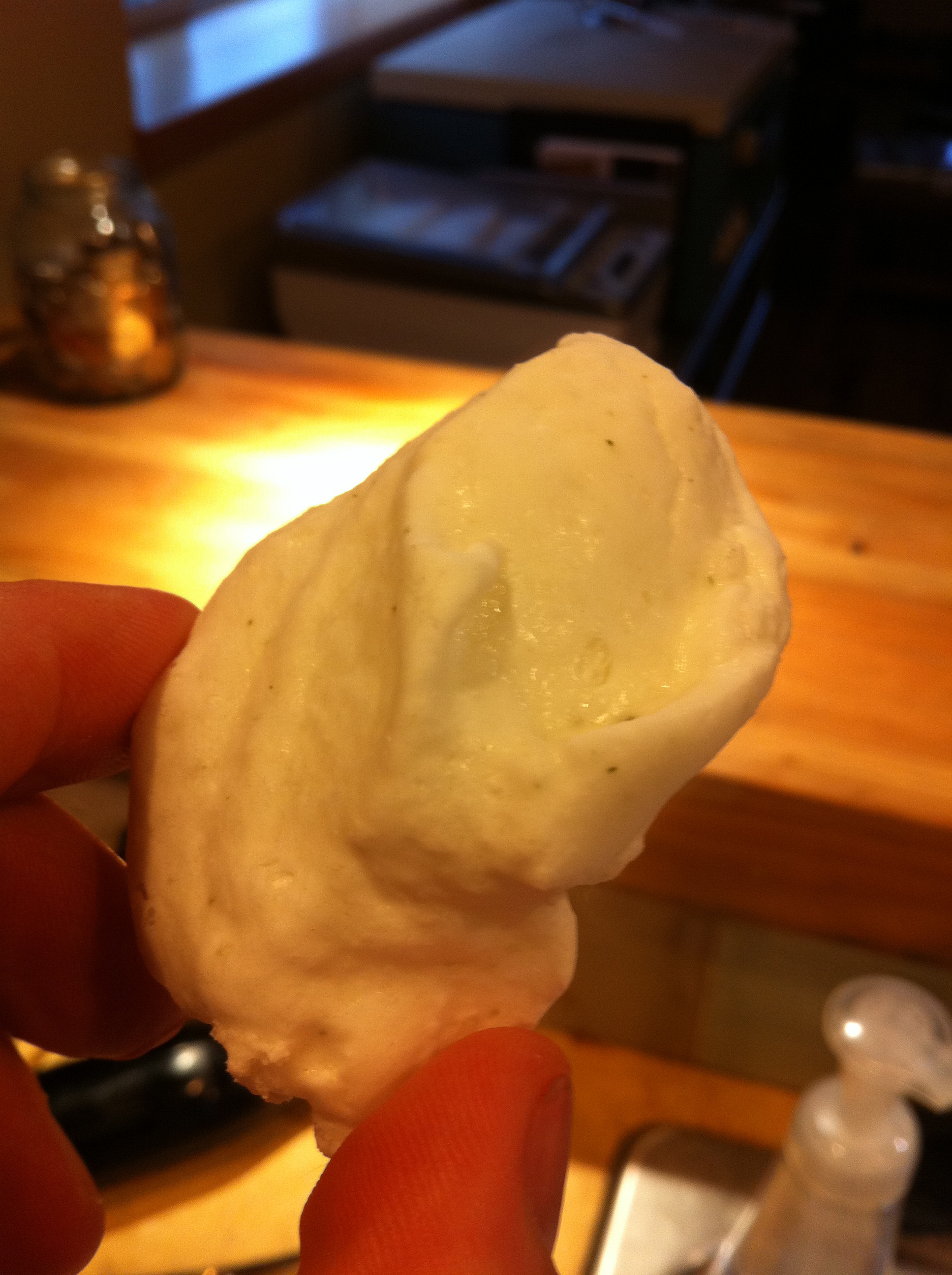
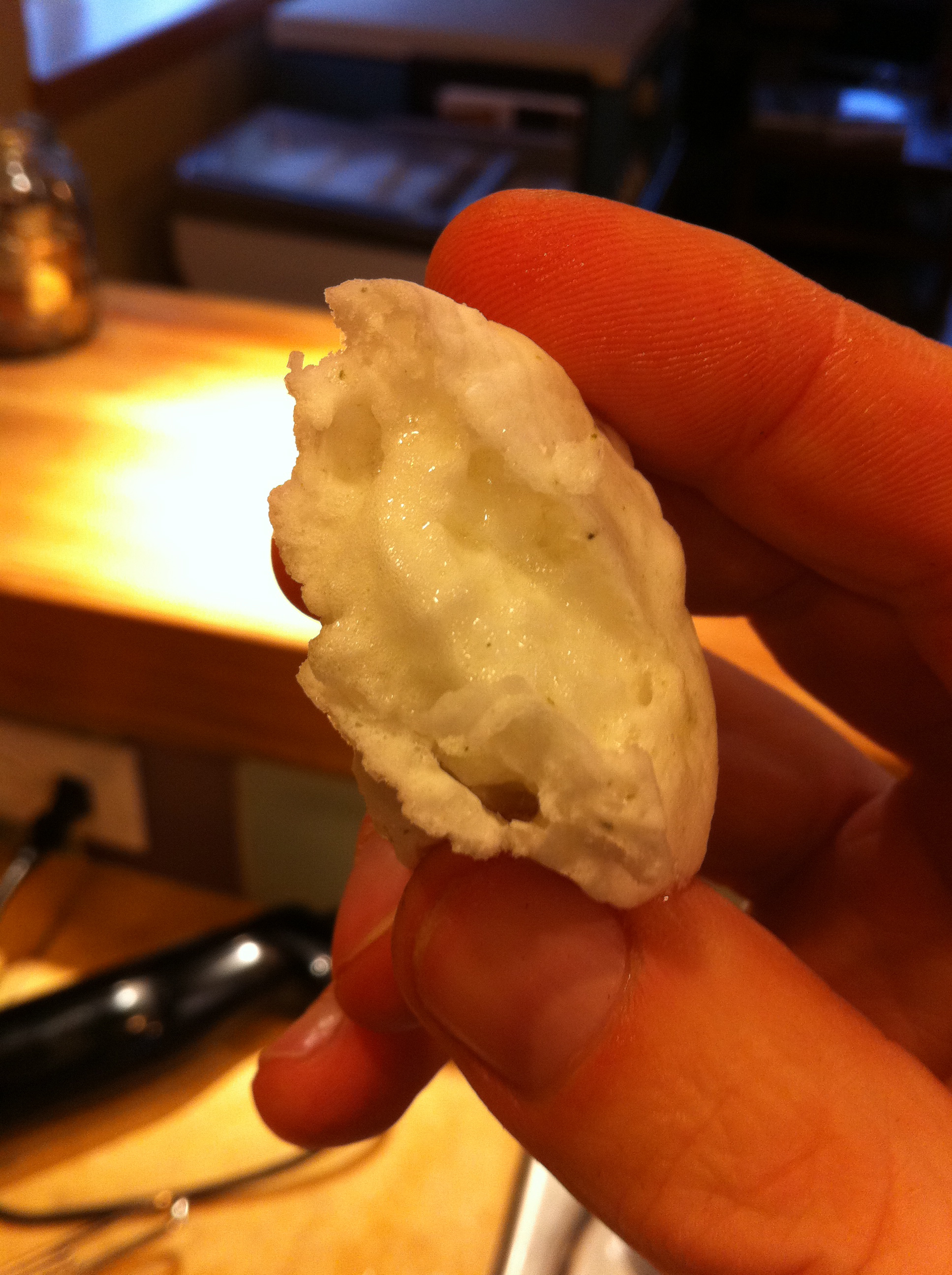
Next up was an idea for a frozen spruce meringue.  I beat some egg whites and sugar together until they were fluffy, and then added some spruce spice I made last week.  It turned out great  – cold, crunchy, and creamy.  And forest-y.

Frozen Spruce Meringue
Creamy Frozen Spruce Meringue

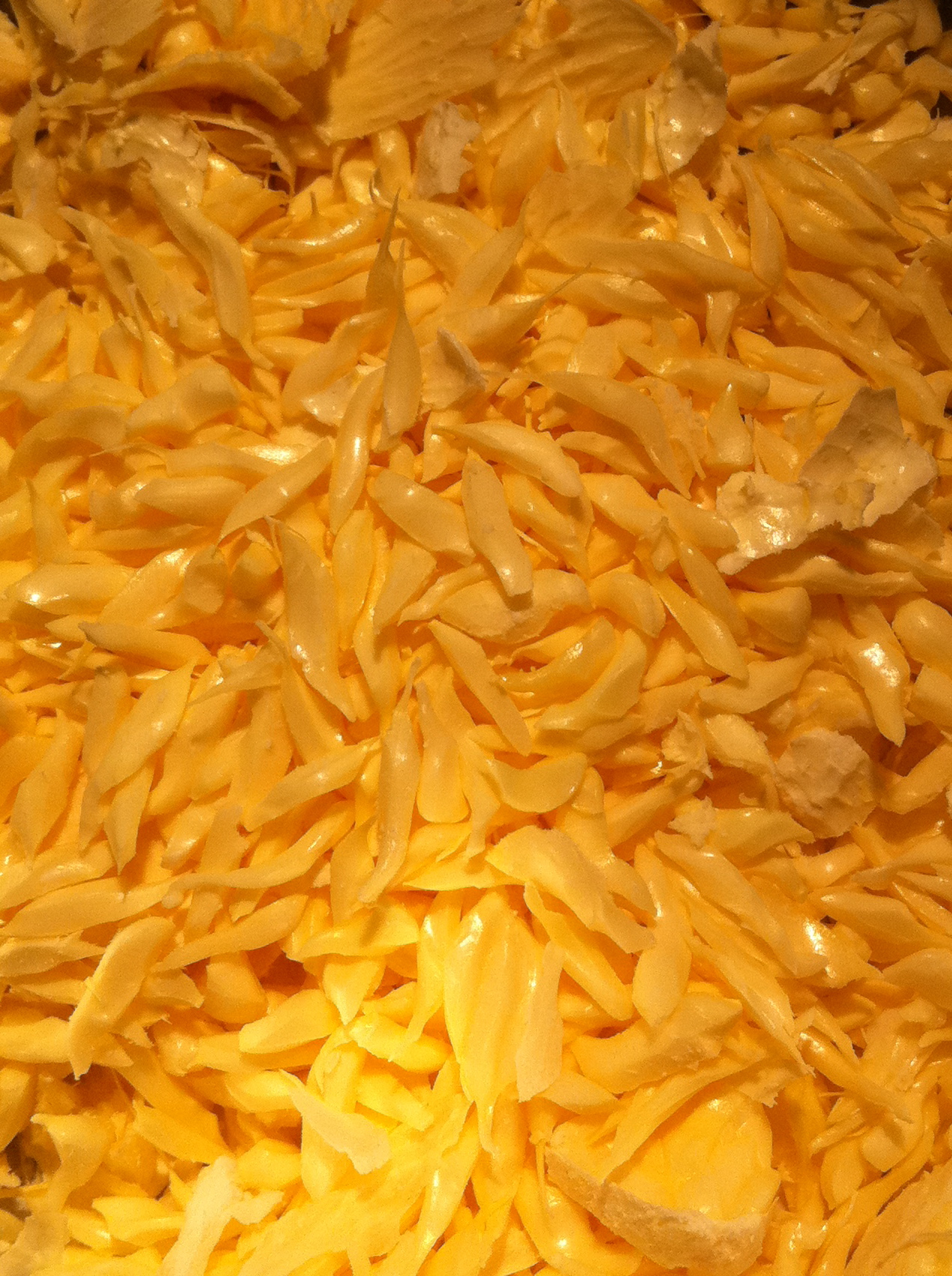
Next up – orange slices.  After a quick freeze, I smashed them in a bowl to create an orange risotto.

Orange Risotto

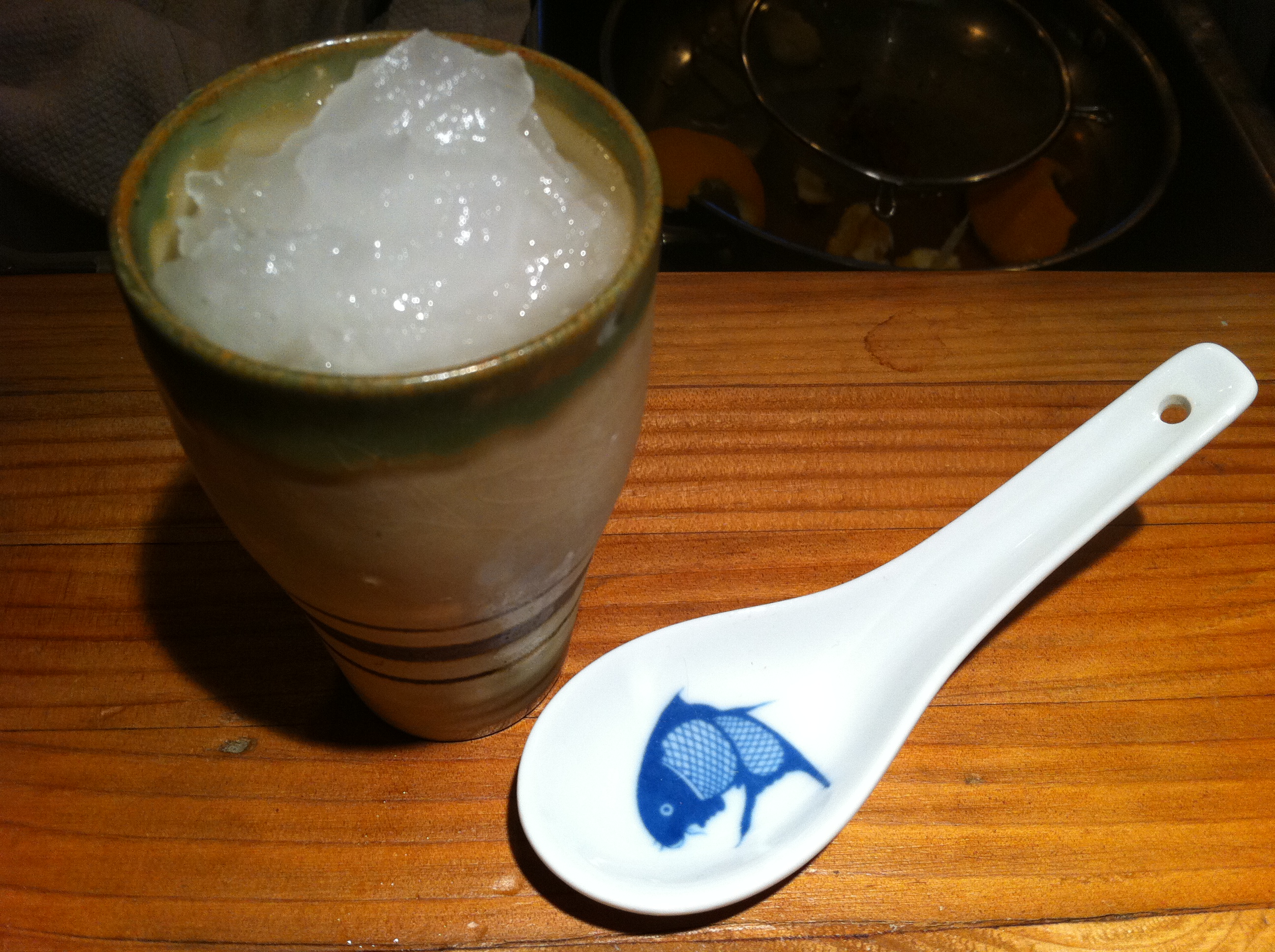
Finally, I messed with some alcohol.  Alcohol doesn’t freeze in the freezer, but LN has no problem with it.  I took plum wine and poured it into a small bowl.  I then stirred in LN to create an Asian alcohol sorbet.

Stir It Up

Plum Wine Sorbet

For the most part, my initial foray into the world of liquid nitrogen cooking was very successful.  And addictive.  With instant fudgesicles, ice creams and sorbets, I can see it being a big hit during summer BBQs.   I know now someday when I get a new home, my kitchen will have a hot station, a cold station, and a very, very cold station.

Sake Sorbet

Sake Sorbet

Jethro