• About The Crew
  • Cooking Through ‘Modernist Cuisine’ At Home

Jet City Gastrophysics

~ Exploring Modernist Cuisine in the Northwest

Jet City Gastrophysics

Category Archives: vacuum sealing

Ideas In Food At Home: Watermelon And Coffee

18 Friday Feb 2011

Posted by jethro in recipes, vacuum sealing

≈ 1 Comment

Tags

Aki Kamozawa, coffee, H. Alexander Talbot, Ideas In Food, watermelon

H. Alexander Talbot and Aki Kamozawa run a culinary consulting business called Ideas In Food.  They started a blog in 2004 to showcase their research into food preparation, cooking techniques, and flavor combinations.  Recently, they put it all into their first book, Ideas in Food: Great Recipes and Why They Work, which should quickly be in your hands and on your kitchen bookshelf.  I was looking for a small course to add for a dinner I made a few weeks ago and came across their post for Watermelon and Coffee:

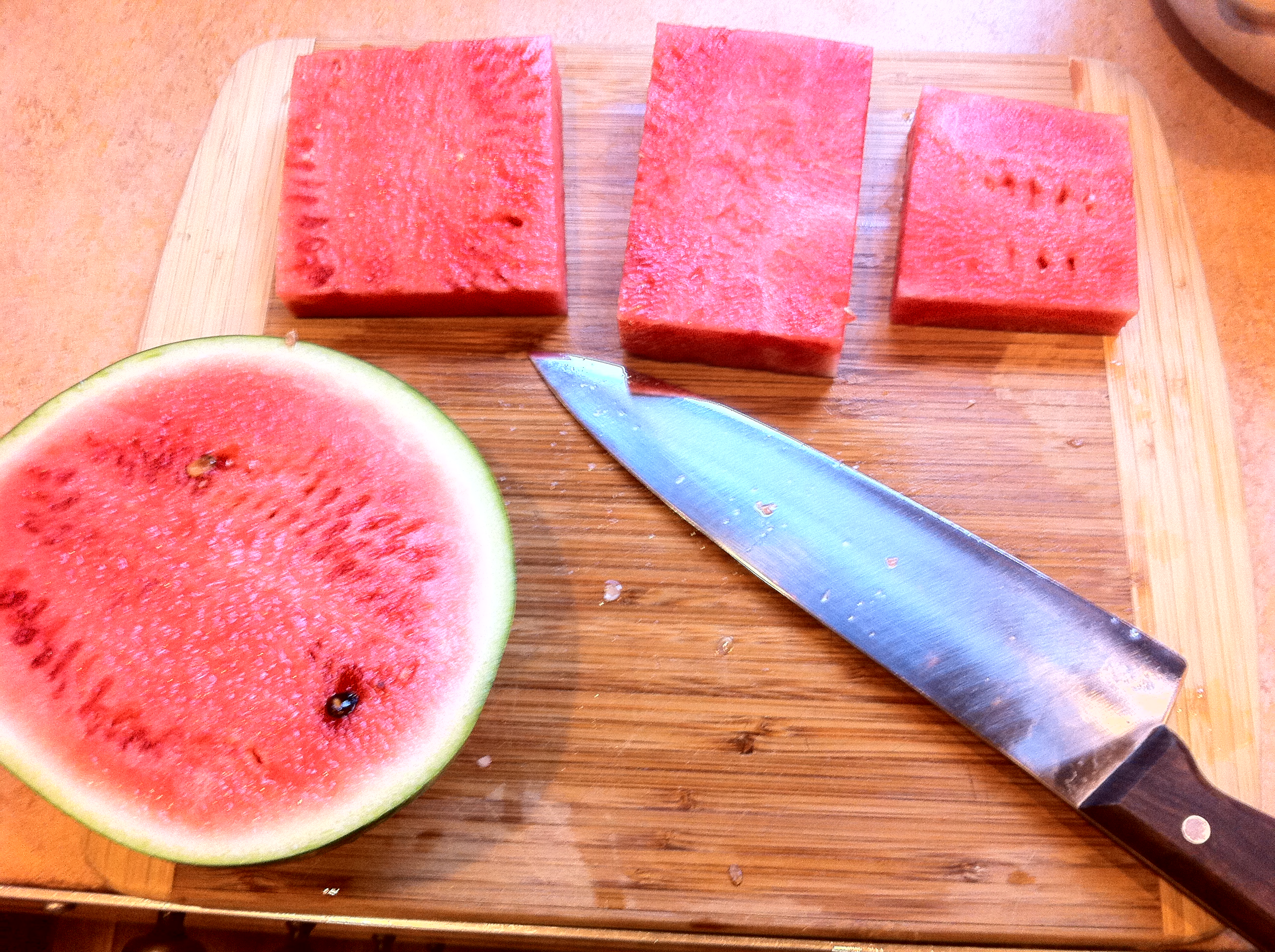
These cubes of watermelon are seasoned with cane sugar, instant coffee and salt. As is they are amazing. When you vacuum seal them and let them marinate for a day their taste potential increases exponentially.

Something quick to bring a little zing to my dinner – perfect.  I found a nice watermelon down at the Pike Place Market, picked up some Via instant coffee from Starbucks and went to work.  Chop. Season. Seal. Sit.  Who said modern cookery is difficult?

Fresh Cut Watermelon
Vacuum Sealed Watermelon

Salty, sweet, bitter – it’s a tantalizing combination for sure.  I think I’ll juice a jalapeño and add it in next time for a spicy kick.  And why not – it’s just another idea in food, right?

Jethro

Soy Glazed Mackerel, Honey Roasted Root Vegetable Puree, Macadamia Extraction, Herb Salad.

20 Thursday Jan 2011

Posted by ericriveracooks in centrifuge, sous vide, vacuum sealing

≈ Leave a comment

Tags

Blog, Cooking Blog, Dinner, Fish, Food, immersion circulator, Mackerel, Recipe, Sous Vide

Equipment:

Centrifuge
Homogenizer
Chamber Vacuum Sealer
Immersion Circulator

Our first main course dish. Good things are coming…..stay tuned.

Eric

Modernist Cuisine At Home: Smooth Purees, Part I

12 Friday Nov 2010

Posted by jethro in MC at home, recipes, sous vide, vacuum sealing

≈ 7 Comments

Tags

apples, artichokes, beets, Modernist Cuisine, puree

Apple and Beet Purees

Last month I began to cook my way through the upcoming Modernist Cuisine cookbook by using their PDF excerpt they made available for download.  Out of the three recipe examples given, only two have enough information to make them in their entirety.  First I created their recipe for instant hollandaise.  Next up: their selection of recipes for smooth purees.  Out of the five fruits and vegetables listed, three are prepared sous vide.  I decided to do those first, because any chance to use my vacuum sealer makes it worthwhile for it to take up a huge chunk of my counter space.  The saute recipes will be covered in Part II.

The recipe

Let's Get Smooth

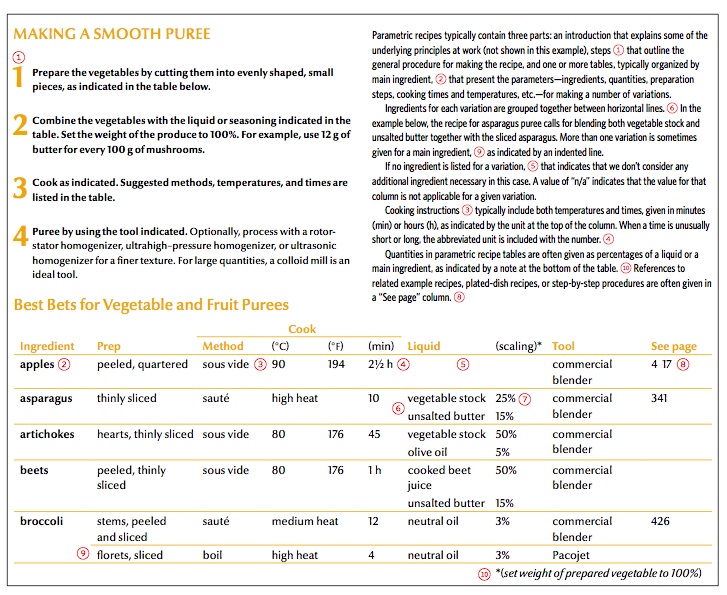
The recipe for pureed fruits and vegetables is an example of what they call a parametric recipe.  This type of recipe gives a basic concept with several variations in an at-a-glance format.  This way you can understand the basic concept and run with it.  As they say in the excerpt:

We feel the parametric recipe is a strong concept for an instructional cookbook. Such a recipe does more than merely suggest methods for making one dish the same way again and again— it reveals the pattern and reasoning behind the chosen ingredients and methods, and thus makes it clearer how to apply those lessons in other circumstances. The parametric recipe thus takes the master recipe to a more detailed level, and serves as a launching point that allows you to change ingredients and quantities in a number of ways to produce dozens of variations.

That’s right up my alley – taking these new techniques and understanding the fundamental idea behind them, so they can be applied to whatever I’m cooking.  I love this book already, and it’s only a PDF file.

One: Artichokes

Artichokes

Well, wouldn’t you know it.  Artichokes are out of season around here at the moment (the peak season is August through October).  But we have a variety of different grocers; there must be someone who has some.  Sure enough, Whole Foods had some packaged baby artichokes available.  Is one package enough?  I eyeballed it and thought it looked OK to me.

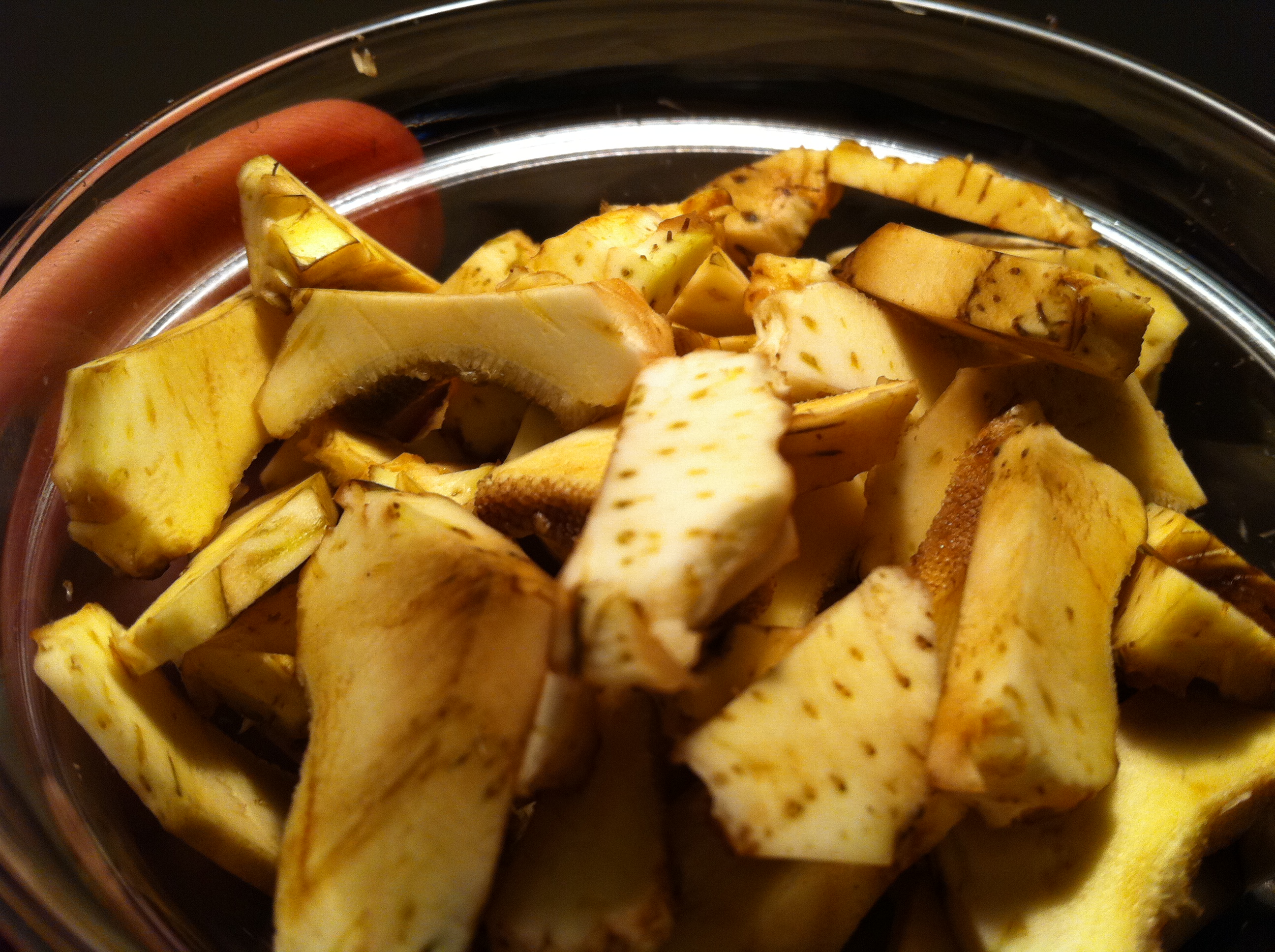
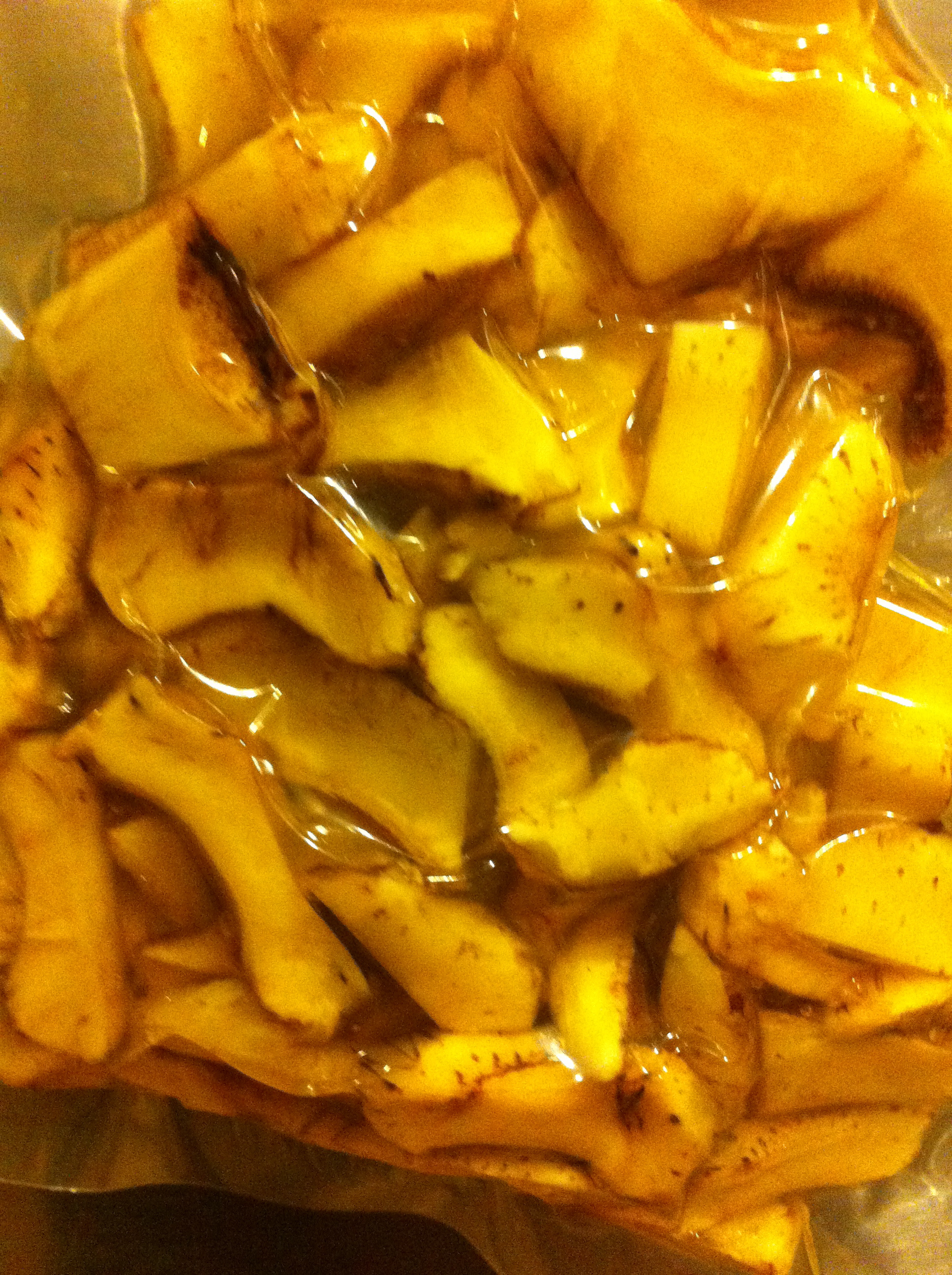
The process was simple enough: get the hearts out and thinly slice them, vacuum seal them with vegetable stock and olive oil, and drop them in a sous vide bath.  The scaling directions are so great.  You set the veggie to 100%, and add the other ingredients in the correct proportion, no matter how big or small the quantity.  In my case, these baby artichokes didn’t give up much in the way of meat, but I dutifully went ahead and prepared them.

Sliced Artichoke HeartsSealed artichoke hearts

After sitting in the water bath for 45 minutes, I put them in the blender, and promptly had my first puree fail.

Puree Fail

Does This Look Smooth To You? Yeah, Me Either.

Turns out that you really need more than a few baby artichokes to create the volume necessary for the blender to blend well.  I’m just a guy cooking at home and this recipe is aimed at culinary professionals who need to crank out 400 covers a night.  The recipe just doesn’t account for single servings.  Fair enough.  I’ll have to wait until they’re back in season and try it again. It was a decent enough spread and I ate it within a few bites.

Two: Beets

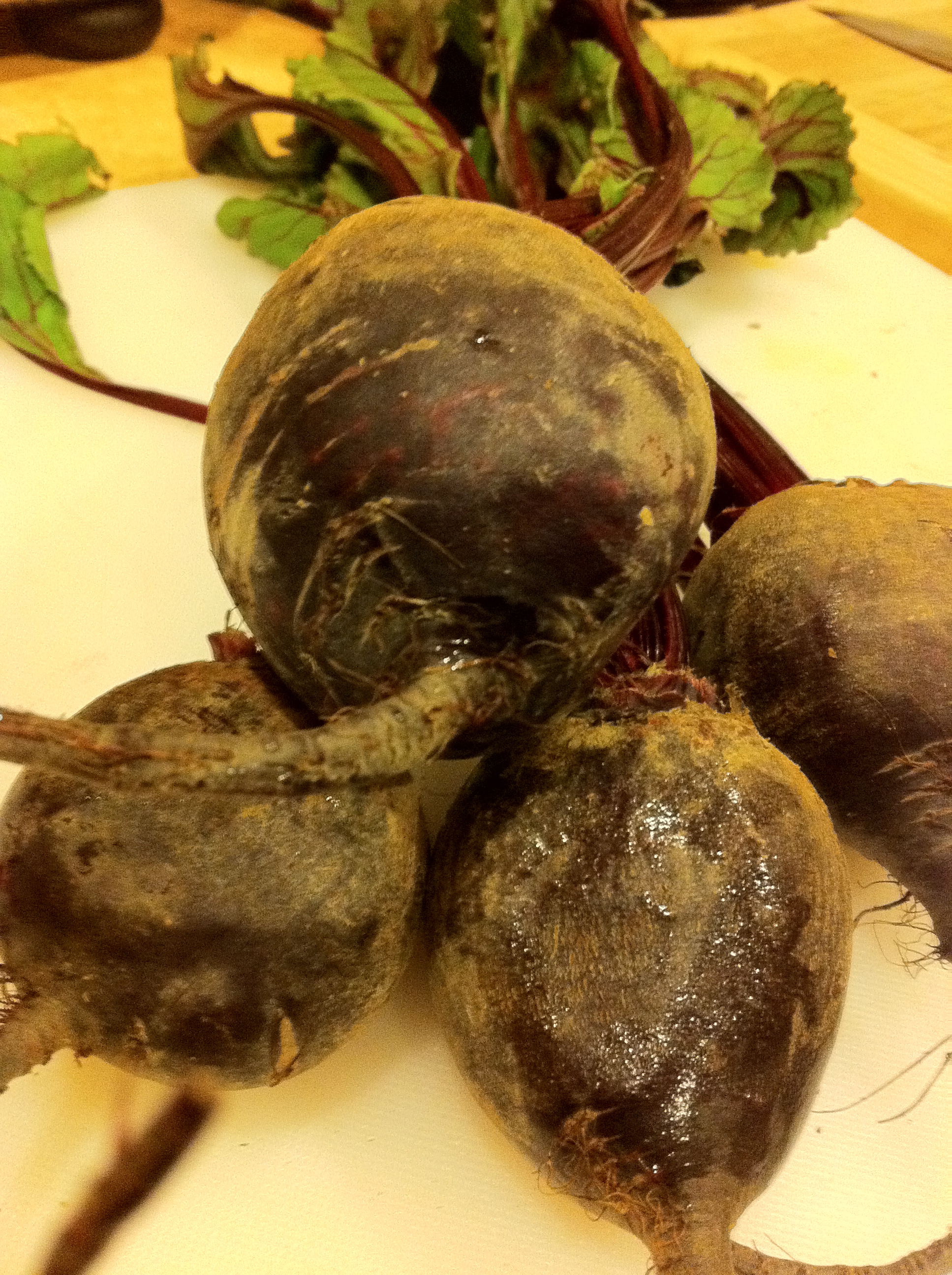
Undaunted, I moved ahead to the next one on the list (and conveniently needing the same temperature water bath). Once again, the first part of the directions was simple enough: peel and thinly slice some beets.

BeetsSliced Beets

The next ingredient was interesting: cooked beet juice.  Why cooked beet juice?  As the book isn’t published yet, I don’t know.  Well, OK then. I juiced a beet and cooked the juice.  All this fuschia foam developed and floated on the juice.  Should I discard it?  Probably.  So I skimmed the top, added the juice to the beets with butter (all carefully measured with a digital scale of course) and sealed it up.

Beet JuiceSealed Beets

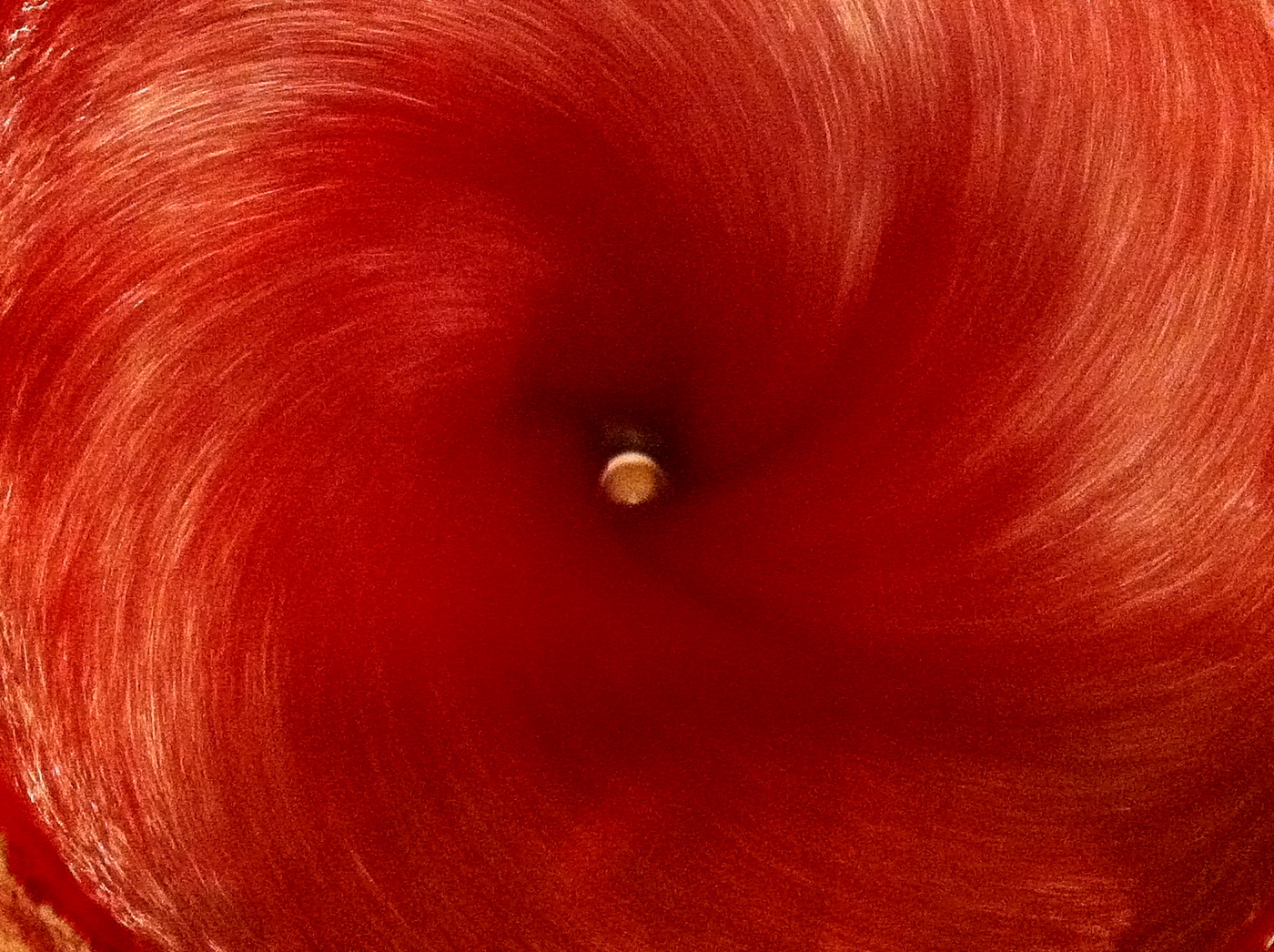
After an hour in the sous vide bath, I pulled it out and put it in the blender, where unlike the artichokes, it did its magic well.

Beet Spin

I had my first puree of sous vide beets.  It definitely had that earthy beet flavor, and an intense bright color , but the texture was a bit…oh, grainy?  Maybe sandy is a better word.  Somehow I was expecting a texture like pudding – perfectly smooth.  Is this the correct texture?  Perhaps when the recipe calls for a commercial blender, they mean a Vitamix or Blendtec mixer.  Most likely it’s meant as a base for something else, and not meant to be eaten alone. I don’t know for certain, but certainly, it isn’t bad at all – just not what I was expecting.  As a matter of fact, I see a borscht in my near future.

Beet Puree

A Beautiful Beet Puree

Three: Apples

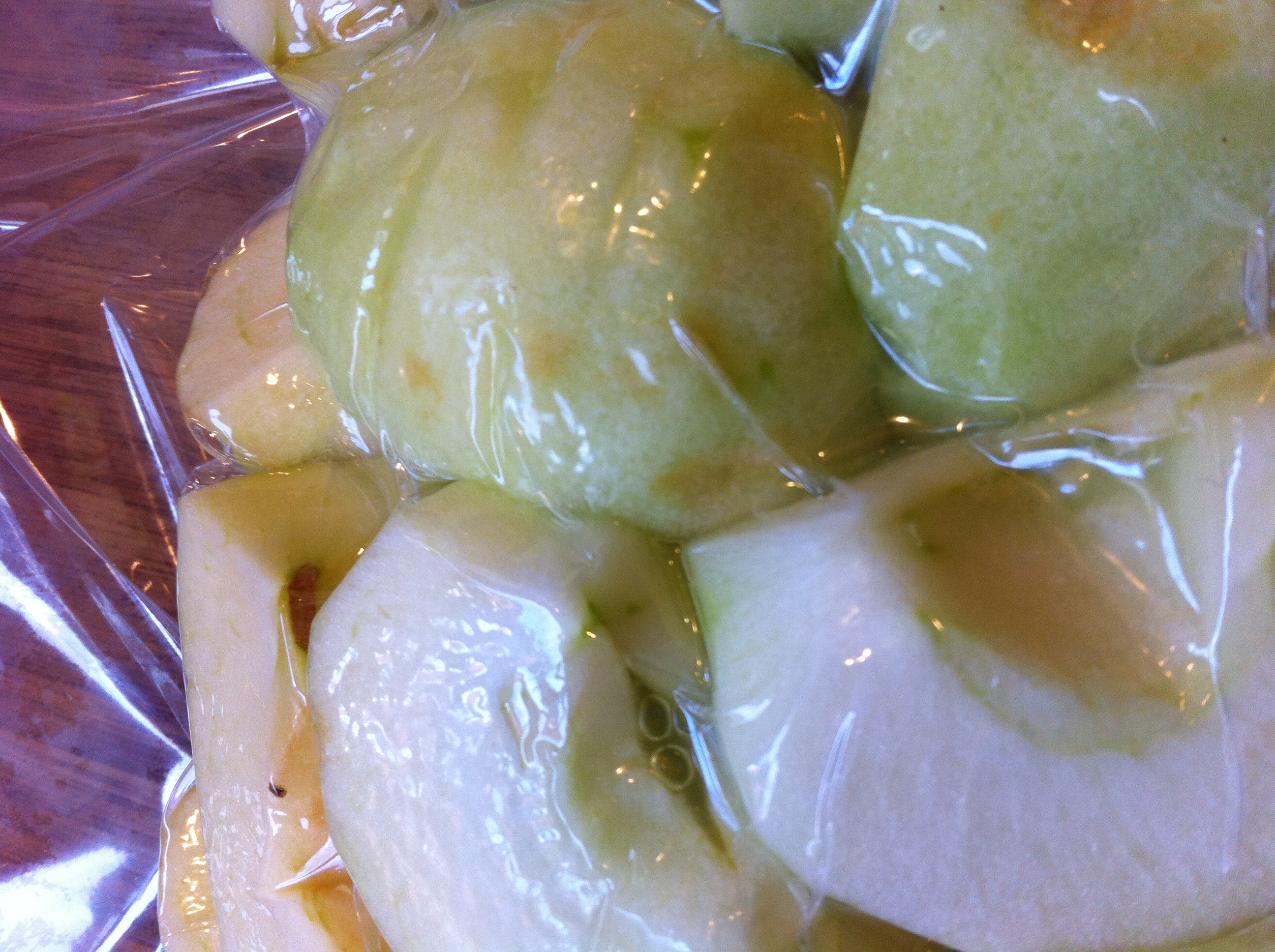
So the final recipe that called for sous vide was the apples.  These required no other ingredients.  Just slow cooked apples.  I like the simplicity.  I chose a mix of Red Delicious and Granny Smith apples.  Peeled and quartered, I sealed them up and put them in.

Sealed Apples

Apples Sous Vide

After they were done I blended them together and…wow.  Sous vide apple sauce.  So smooth, so creamy.  Just ridiculously good.

Smooth Apple Puree

This Tastes So Good. Whoa.

It’s funny how the texture improved with each progressive recipe.  I felt like Goldilocks – “Ahhh, this porridge is just right!” And now, because of the parametric recipe, I know how to apply it to other fruit and vegetables like pears and carrots as well.  I am loving this cookbook that isn’t published yet.  Awesome.

Apple Puree

Jethro

Eric: Baking, Science, and Killer Pasta

20 Wednesday Oct 2010

Posted by ericriveracooks in hyrocolloids, sous vide, thickeners, vacuum sealing

≈ Leave a comment

Tags

agar, lobster mushrooms, oxtail

Aw yes, lobster mushrooms. They look like cooked lobsters on the outside and they have a nice meaty texture when cooked…..

Put some salt and pepper on the oxtail and braise it with some veal stock and smoked ham hock…..yes, excellent.  It’s going to be a ragout for the pasta.

Make some fresh rosemary pasta then cut it and work on something else.  (Duck eggs, rosemary, “00″, Semolina, Contadina, Water)

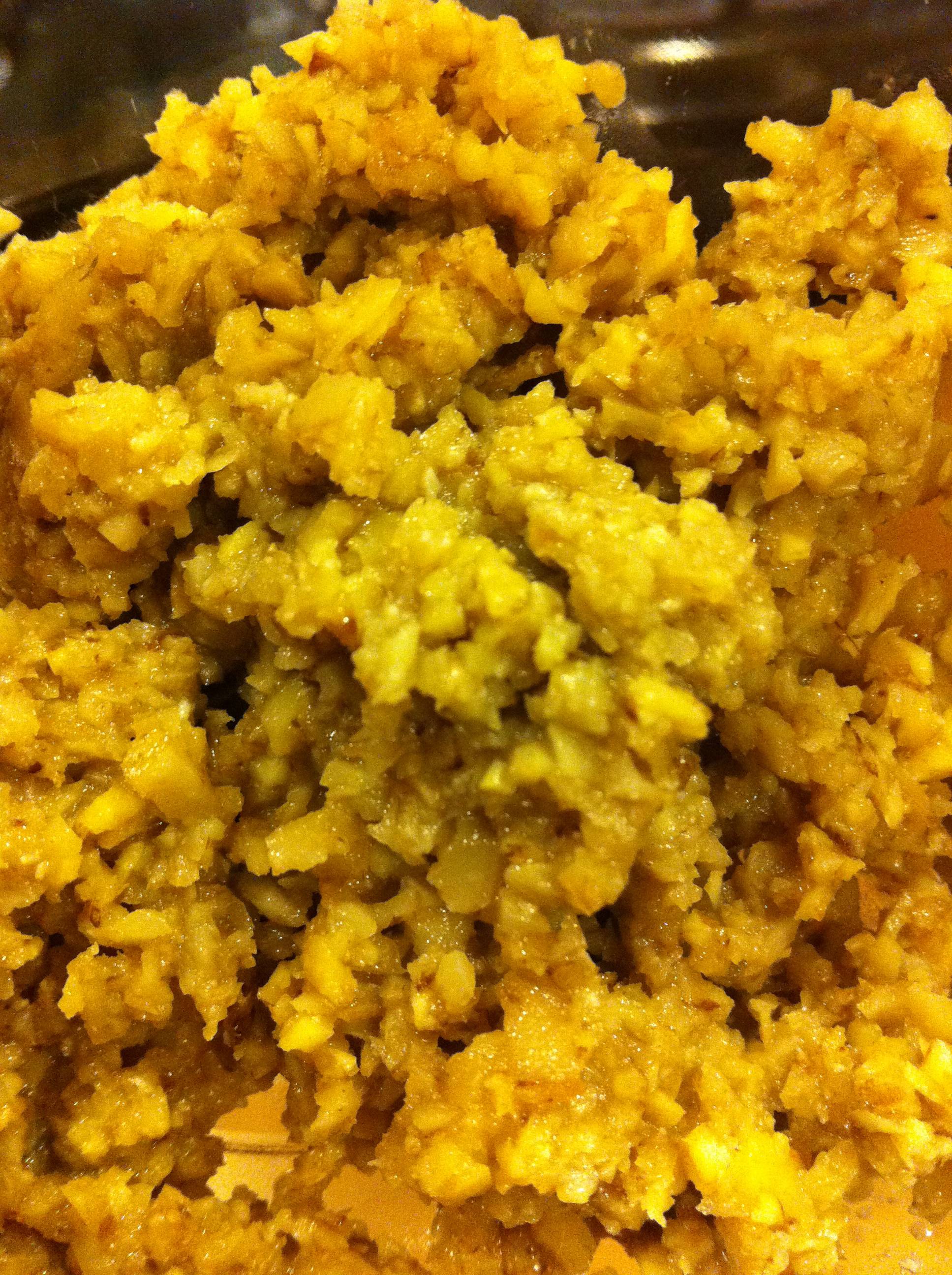
Mushrooms, golden beets, and butternut squash go into bags so they can have a meeting with the immersion circulator for a while. I made a terrine with that carrot ginger soup using agar, took about 3 hours to set.

Well, I’m ready to go so let’s start cooking stuff!

First up is a brown butter brioche with sauce rouille and pickled vegetables.

Next is a carrot/ginger terrine with sous vide butter poached lobster mushrooms, golden beets, butternut squash, and shaved fennel served with a caramelized fig sauce with reduced sherry and contadina extra virgin olive oil.

Finally, an oxtail and smoked ham hock ragout over rosemary/duck egg pasta.

Another successful dinner at my place.  See you next week!

Eric

Modernist Cuisine At Home: Sous Vide Instant Hollandaise

18 Monday Oct 2010

Posted by jethro in foams, MC at home, recipes, sous vide, vacuum sealing

≈ 8 Comments

Tags

Eggs Benedict, hollandaise, ISI Thermo Whip, Modernist Cuisine

Earlier this month the Hunger Intervention Program in Seattle held Feeding The Soul 2010. For just a $25 donation, an eight course meal was served by chefs Brian McCracken and Dana Tough from Spur Gastropub and the culinary team from Intellectual Ventures – Maxime Bilet, Grant Crilly, Sam Fahey-Burke, Anjana Shanker and Johnny Zhu. The chefs from Intellectual Ventures are, along with Nathan Myhrvold and Chris Young, behind the upcoming “cookbook” Modernist Cuisine: The Art and Science of Cooking, due for release next March. A chance to eat their food and meet them as well? Done deal.

The food was delicious and I had a chance to briefly speak with all of them. I introduced myself and told them about this blog and how we at Jet City Gastrophysics are planning to cook our way through the entire cookbook. There were some eyebrows raised and a “good luck” thrown my way. True, I don’t have a freeze dryer or a rotary evaporator, but that doesn’t mean I can’t at least acquire access to one somehow. Where there is a will, there is a way.

And, true to my word, I have begun to cook my way through it.

It’s not published yet – how is that possible? On August 13th, they put out a 20 page excerpt of the massive tome available for download from their website. I’m sure like me, gastronomes across the world downloaded and quickly got to reading the first pages of the 2400 that will be available in March 2011.

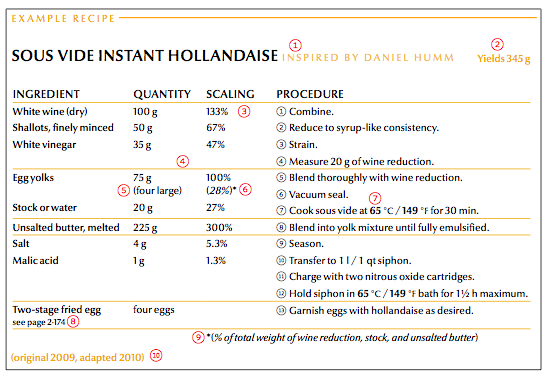
The excerpt is from the fourth section of the first chapter of the first volume, entitled The Story Of This Book. It goes into detail of the origins of Nathan Myhrvold’s research into sous vide techniques online to the development of a full time cooking staff and publishing house to put out the work. Next they explain the photography, a step by step review of each volume, and then on to the recipes they developed and the special format that they are in. And to illustrate, they printed some example recipes. Recipes waiting to be used.

The Recipe

An Example Recipe. Just Waiting To Be Made.

There are three recipe examples: Sous Vide Instant Hollandaise, Making a Smooth Puree, and Monkfish with Mediterranean Flavors. Each recipe is an example of the three types of recipes found in the book: Example, Parametric and Plated Dish. Example recipes are considered the shortest and simplest, intended as components for other dishes. Parametric recipes focus on a particular ingredient or characteristic – or, as they call it, a parameter. The idea is to take a concept in its simplest form and show, at-a-glance, the variations of that concept (I was in web development for years, and their application of design for visual information is excellent. I wonder if they had Edward Tufte consult on the project). Finally, the plated-dish recipe brings it all together so you can create an entire dish from a single recipe.

From the three examples, the monkfish recipe calls for components that they did not show: Pâte à Choux, Zucchini Blossom Beignet, Fish Spice Mix and so on. So that left the other two. I decided to start with the shortest and simplest: Sous Vide Instant Hollandaise.

Making Of A Modernist Sauce

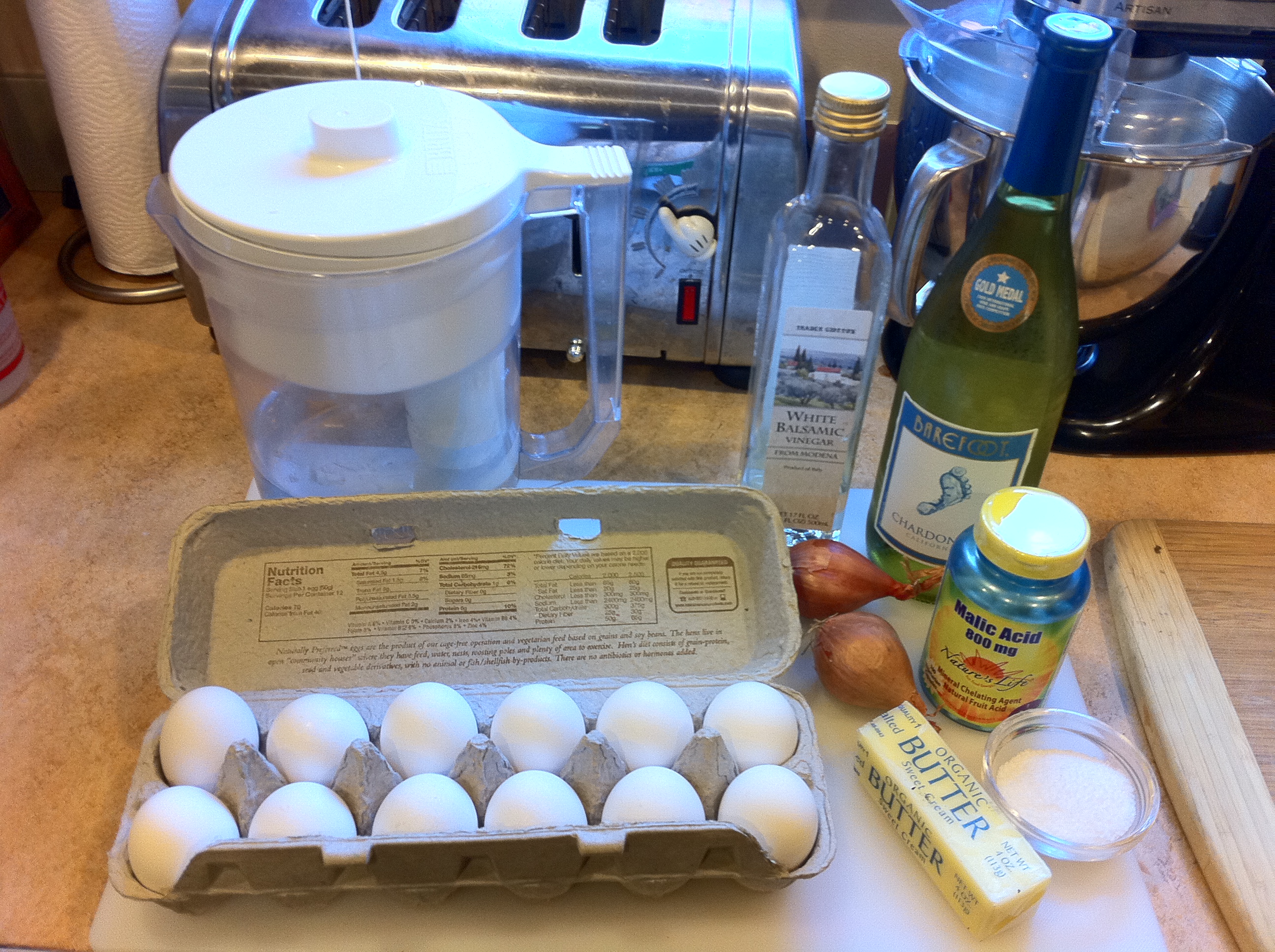
The Ingredients

The Cast Of Characters

I collected the ingredients necessary and started in. The format is really straightforward and easy to understand. Of course, that meant I had to screw it up immediately.

As per the recipe, I put together the white wine, white vinegar and minced shallots in a pan and began to reduce them down to a syrup-like consistency. But, it wasn’t getting syrupy. The liquid kept dissipating, but the onions weren’t breaking down. And soon I had a thick gop of caramelized onions and nothing else. How did this happen?

3. Strain.

Oh. Um, yeah. So I did it again, and pulled out 20g of onion flavored wine reduction.

Egg Yolks

Next up I took four egg yolks and blended them with the reduction and water. I did not measure out the egg yolks by weight. The recipe gave me an easy out by offering four large egg yolks as a measurement, and I took it. I put the mixture in a bag and vacuum sealed it. It fit in one of the small bags I have, and it sealed just in the knick of time before the ingredients boiled over into my vacuum sealer, creating both a big mess and having to start again from scratch.

Vacuum Sealing Disaster Averted

A Close Call

I plopped the sealed bag into the sous vide bath for 30 minutes. For the butter, I used what Chef Richard Blais calls one of the more underutilized kitchen instruments: the microwave. In 40 seconds my melted butter was ready. I took the packet out of the water, mixed its contents in with the butter, then added salt and malic acid.

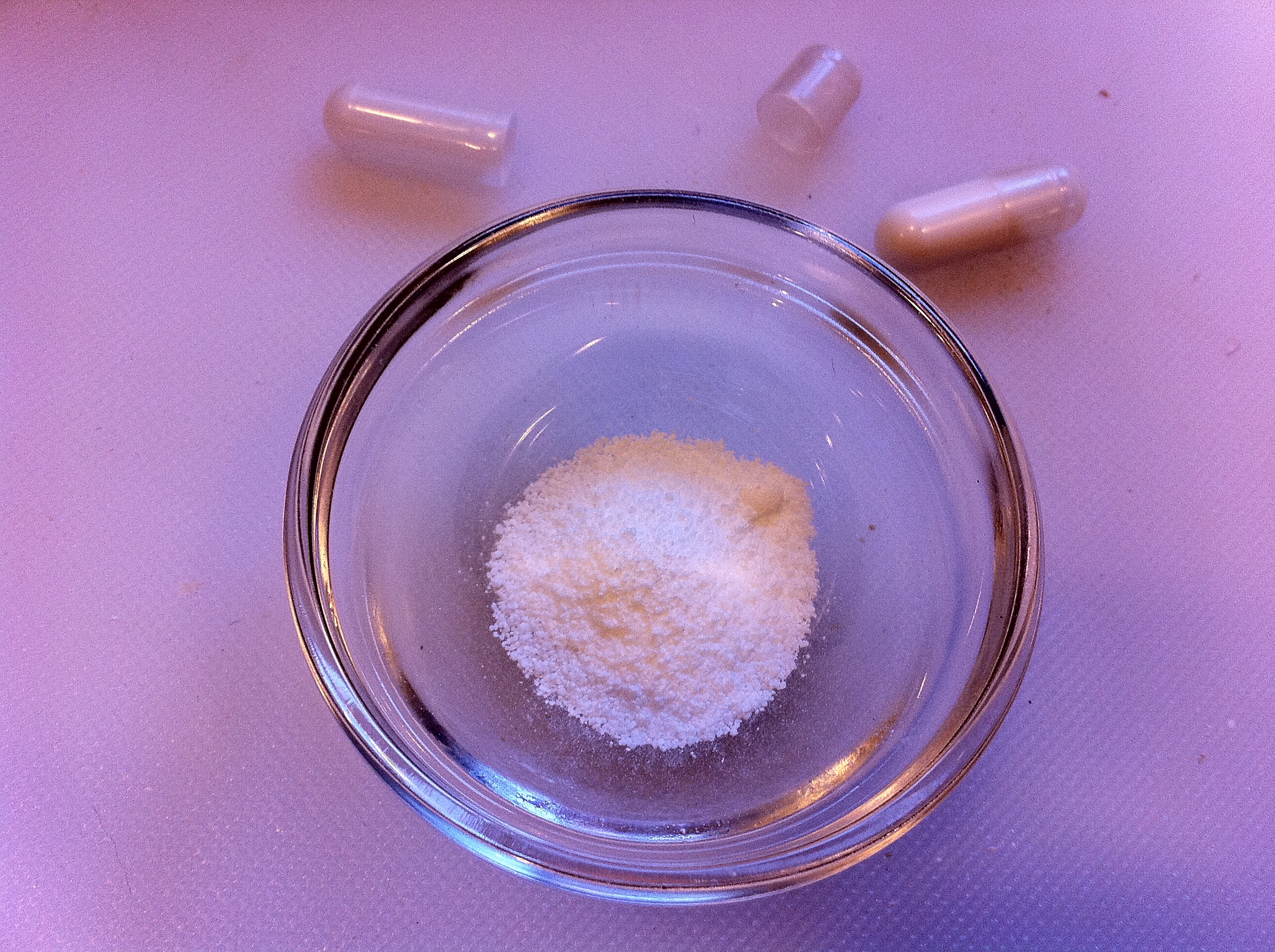
Malic Acid

Mmmmm. Malic Acid.

What is Malic acid and what is it doing in my hollandaise sauce? Malic acid is the main acid found in unripe apples, cherries and many other fruits and vegetables. As an ingredient, it is supposed to add a distinct sourness, has a lower melting point than other acids and is more soluble than citric acid, which is also a sour flavor enhancer. Why it is specifically included in this recipe? I have no idea. We’ll all have to wait until the book comes out. But in the meantime, you can find it a your local vitamin supplement store. This means you’ll have a lot of Malic acid lying around – 100 tablets worth. It is also supposed to stimulate metabolism and increase energy production, so if you work out a lot, maybe it will help you burn calories. I don’t know, just a thought. I mean, after all this hollandaise sauce. Anyway.

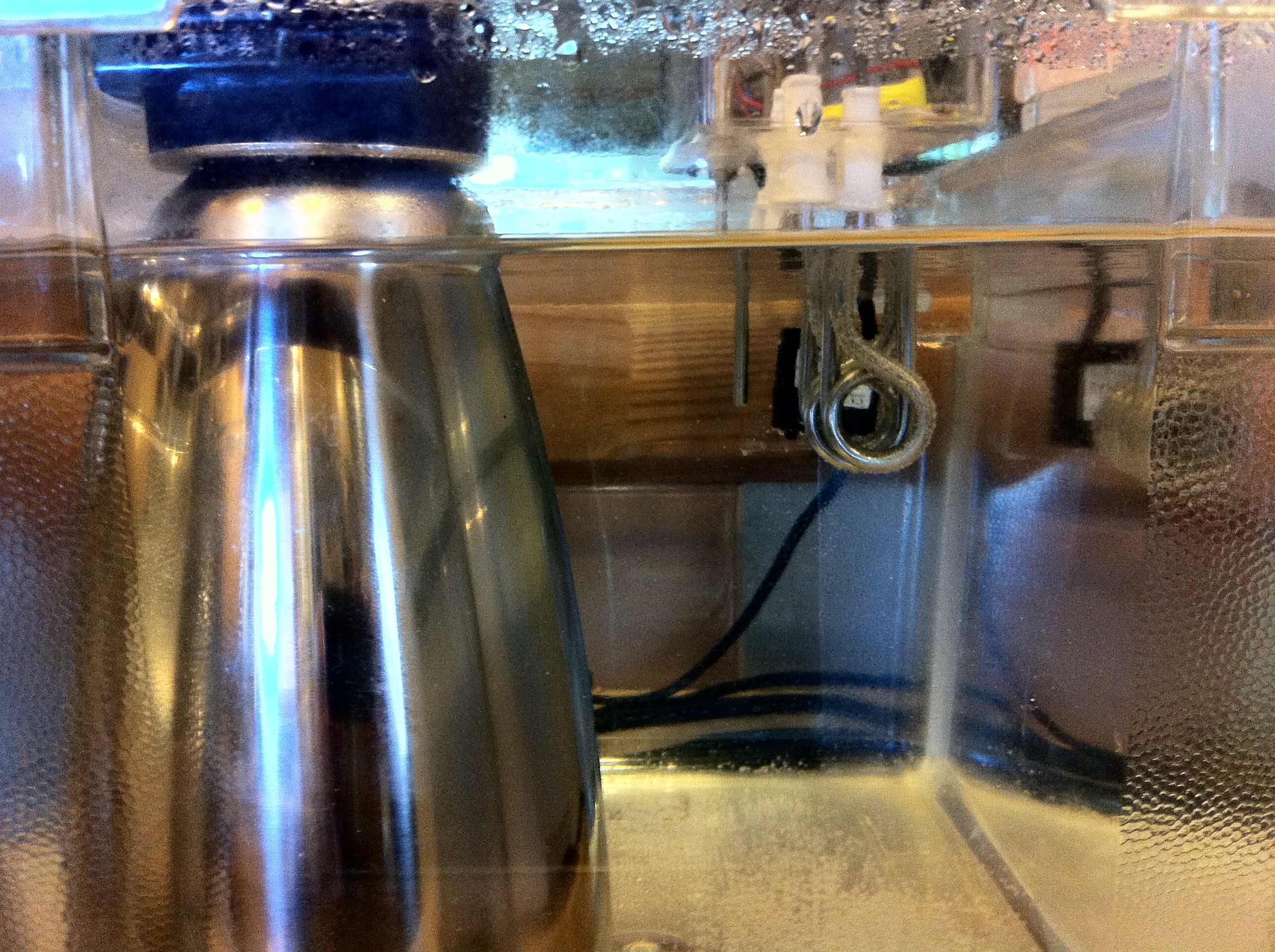
Warmed ISI Siphon

I poured the mixture into my ISI Thermo Whip and placed it back in the bath to keep it warm. Next on the example recipe is something called a two-stage fried egg, which references another part of the book. So having no idea (yet) what a two-stage fried egg is about, I decided to poach an egg, fry some ham, toast a muffin, and spray some hollandaise.

Eggs Benedict

Eggs Benedict, Modernist-ish

Is is not creamy like your usual hollandaise, but a thick foam. The texture is definitely different and calls for unique plating or pairing. When you have a traditional dish like the one above and one of the textures is not what you expect, it jumps out at you. I’m curious how it will taste with a two-stage fried egg.

Also, the name is a bit misleading. You can make traditional hollandaise in 10 minutes with a blender. This took 30 minutes for the sous vide alone, plus another 15-20 minutes for the rest. It is instant in the fact that you can just walk up with your cream whipper and blast out sauce on demand. At least for 90 minutes – that’s the maximum time you’re supposed to keep the cream whipper hot. Once again, the example recipe is all we have at this point – I’m sure the supporting text will provide the context.

Regardless, it is delicious. I loved it. The recipe does yield a large amount – something like 1 1/2 cups. And that’s prior to foaming up – I could have served 10 people with all that I made. I sprayed the rest into a container and put it in the fridge. Then it gave me a little surprise: it settled, cooled and made an awesome hollandaise flavored whipped butter. I had it today on some toast as a little snack. Scrumptious.

So the first step in the thousand mile journey of cooking through Modernist Cuisine: The Art and Science of Cooking has been taken. I’m looking forward to the adventure.

Jethro

Meeting Seven: Transglutaminase

12 Tuesday Oct 2010

Posted by jethro in transglutaminase, vacuum sealing

≈ 11 Comments

Tags

crepes, pork rinds, shrimp paper

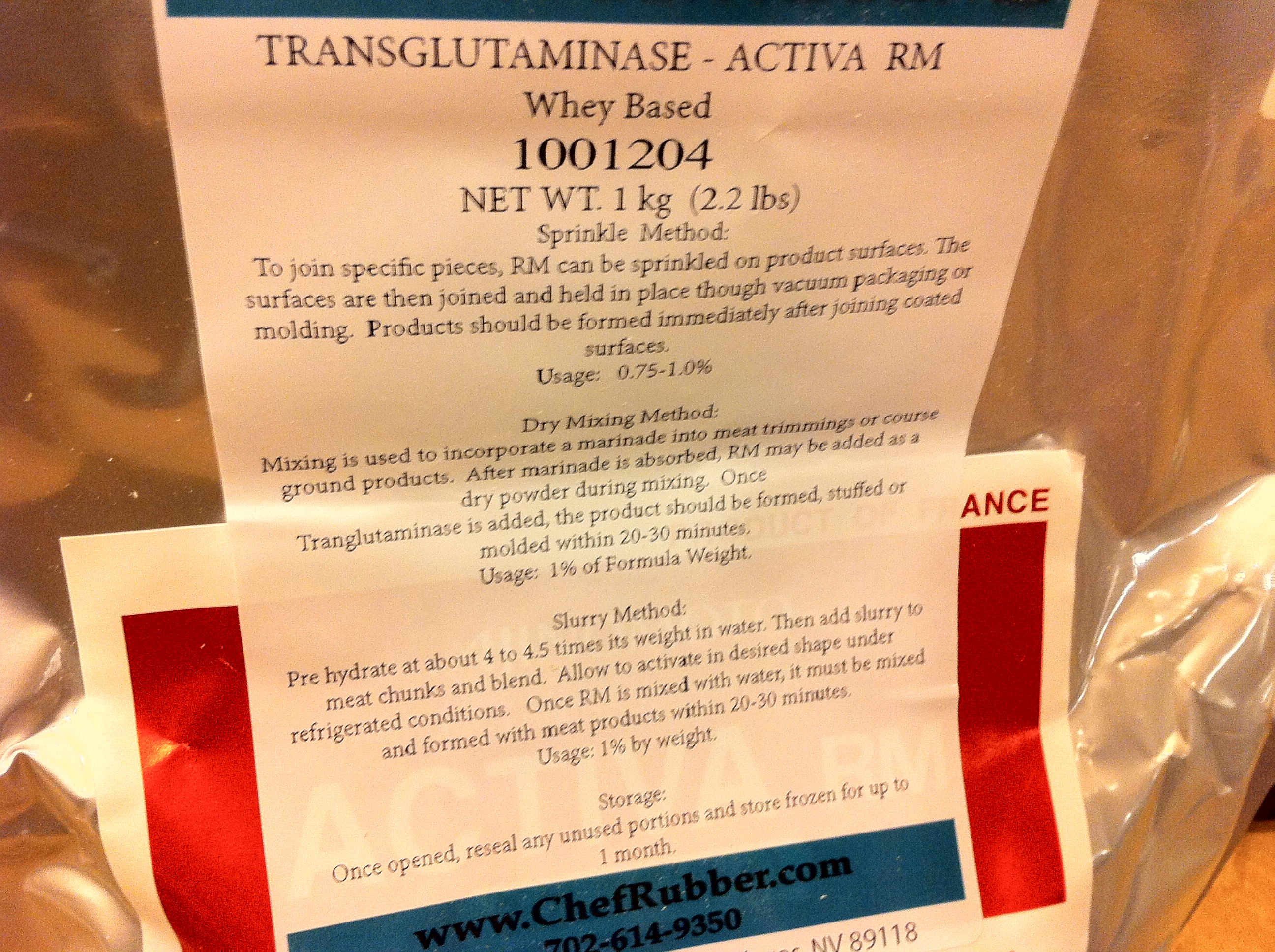
Bag of Transglutaminase

“This shit is dangerous.  You inhale it, your lungs stick together, you die.”

So Chef Ian Kleinman told me about Transglutaminase during my private cooking class with him last spring. Transglutaminase (also known as TG or ‘meat glue’) is an enzyme that bonds proteins together.  If you have ever had imitation crab meat or chicken nuggets, you’ve eaten TG.  Although safe to eat, in powder form, it can be inhaled, and then work its magic inside your lungs.  So when we met last week to work with the stuff, we decided it was best to take precautions.


The Doctor Is in the House

I'm Just Cooking. Really.


With safety glasses and masks on, we set about to working on some ideas.  Eric was called into work and couldn’t make it (he’s a busy guy, what with being invited to stage at Noma by Chef Redzepi among other things), so Scott and I collaborated.  With worked with three types of proteins: meat, fish and nuts. As with any experimentation, we had some success and some failures.

THe Failures

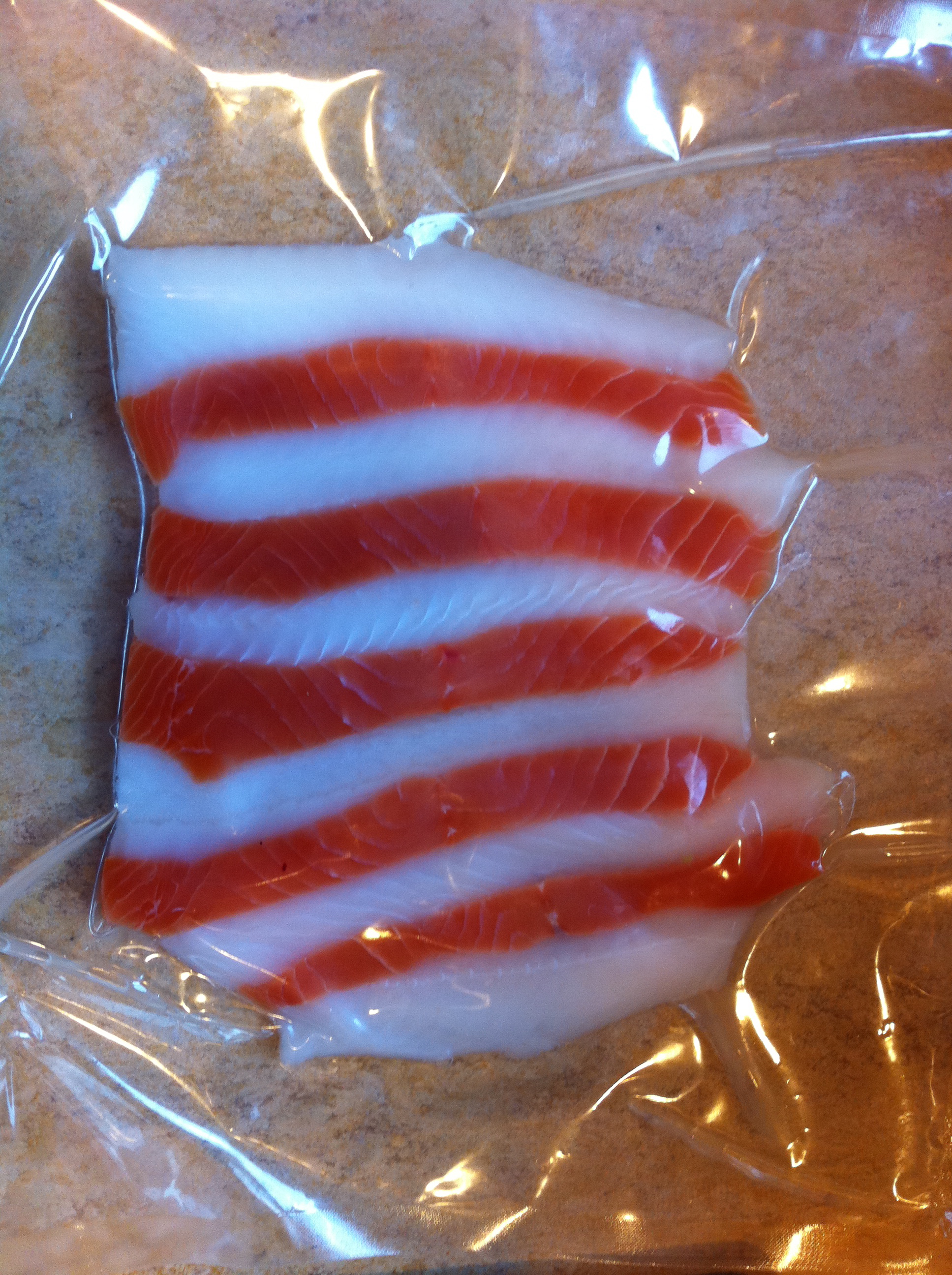
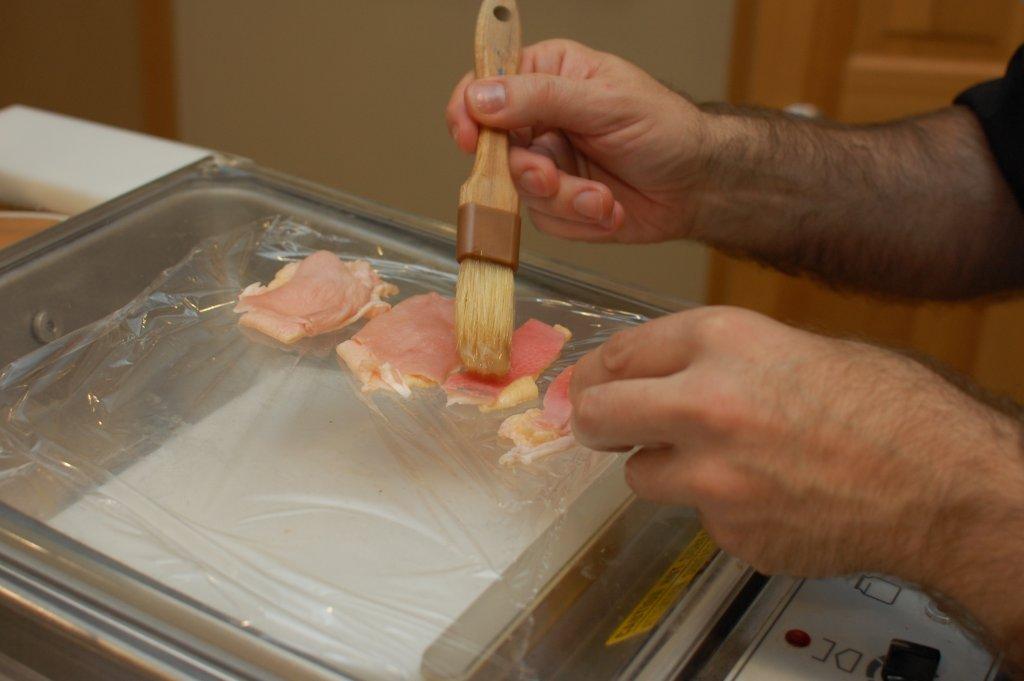
The first idea was simple enough – bind together strips of two different kinds of fish.  We made a slurry of TG with water and brushed it on the sides of the fish, and then vacuumed sealed the whole thing.

Striped Fish

Unfortunately, we didn’t apply enough TG to the fish, and the strips didn’t bond together.  It was our first attempt using the stuff, so we learned that it’s OK to be a bit more liberal in our application.

Next up was nuts.  I figured nuts have plenty of protein, so they should bond together as well, right?  I crushed up some peanuts and almonds in my coffee grinder, then added in the TG.  I formed in into a disc using a pastry cutter and vacuum sealed it.  And, as with the fish, there was not enough TG to bind it together.

Nut Disc

Crumbled Nuts

The crumbled pieces did have a bit of tension to them, so the TG seemed to have done its job somewhat.  I’ll need to add more next time and see if TG is ‘nut glue’ as well as ‘meat glue’.

The successes

I had an idea for an awesome piece of comfort food – chicken skin pork rinds.  I pulled the skin off some chicken wings and glued them together with pork skin, then rolled it up in cellophane.

Gluing Chicken and Pork Skins

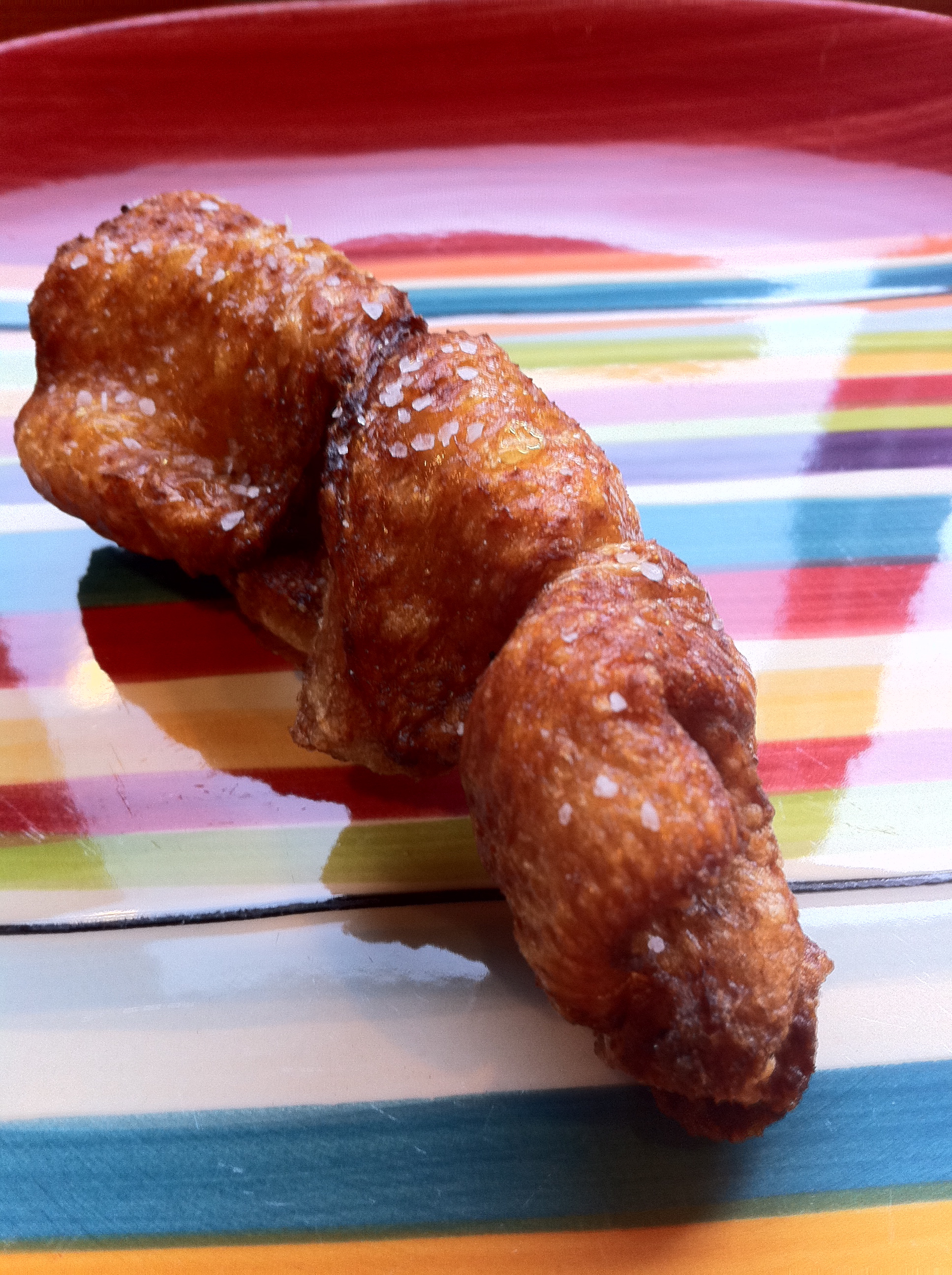
It glued up nicely, though quite scary looking, like some frankenphallic nightmare.  I deep fried it and added salt and had pretty much what I was going for.  You had the delicious combination of fried chicken skin and pork rinds.  There needed to be a bit more chicken skin and a bit less pork fat, but it turned out very well.  I can see these being eaten at state fairs across America.


Fried Chicken Skin Pork Rind

Fried Chicken Skin Pork Rind


Finally, Scott had the idea of making shrimp paper. He minced the meat in a food processor and added TG, eyeballing the amount.  He added it to a vacuum bag, rolled it out flat and sealed it.

Scott with Shrimp Paper

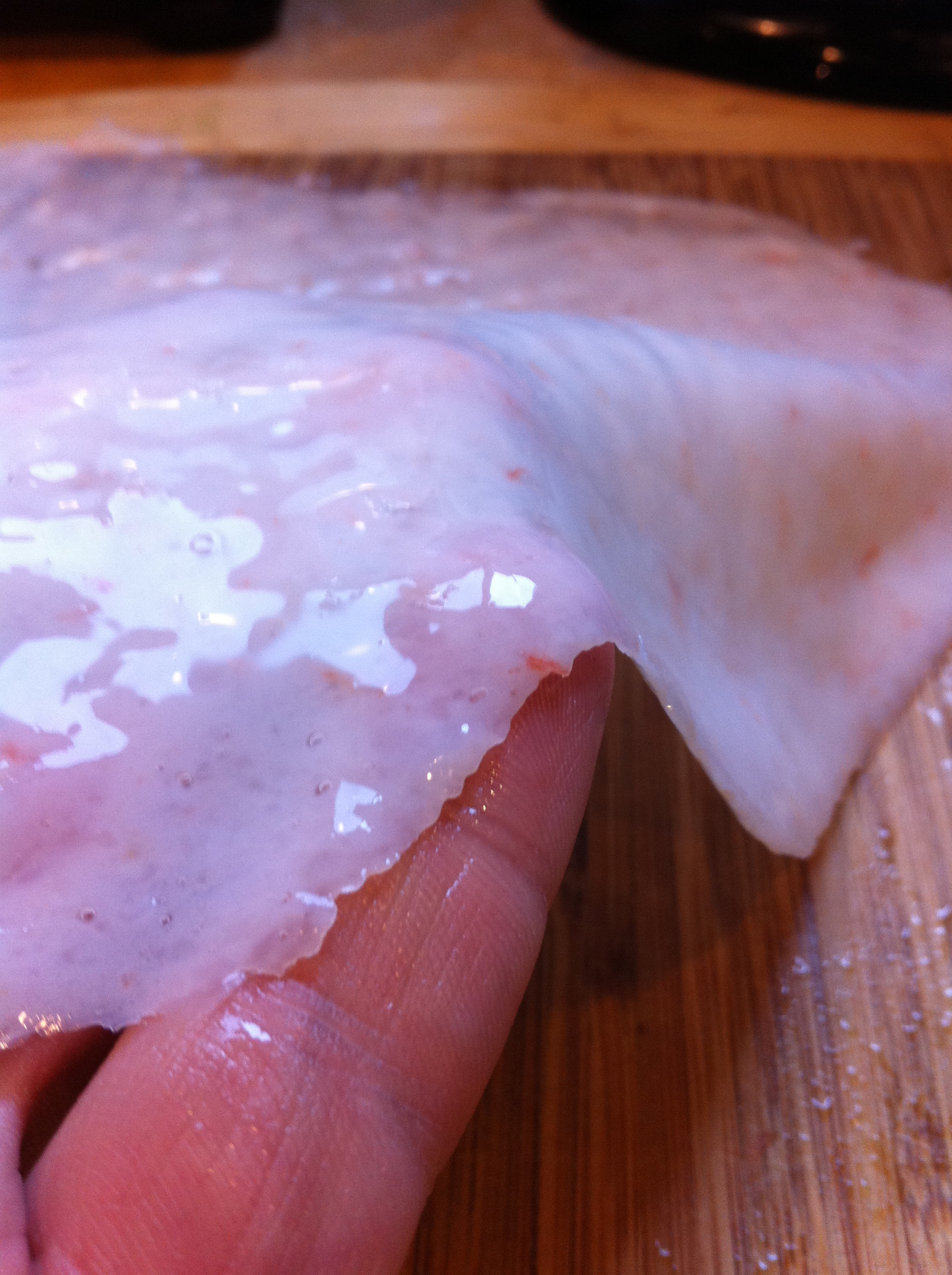
He then placed the bag in a cookie sheet on the stove filled with water and quickly cooked the shrimp.  From there it went into the fridge to set.  It worked great.  The result wasn’t thin as paper,but a more like a tortilla. A tortilla made of nothing but shrimp meat and TG.


Shrimp Tortilla

Shrimp Meat Tortilla


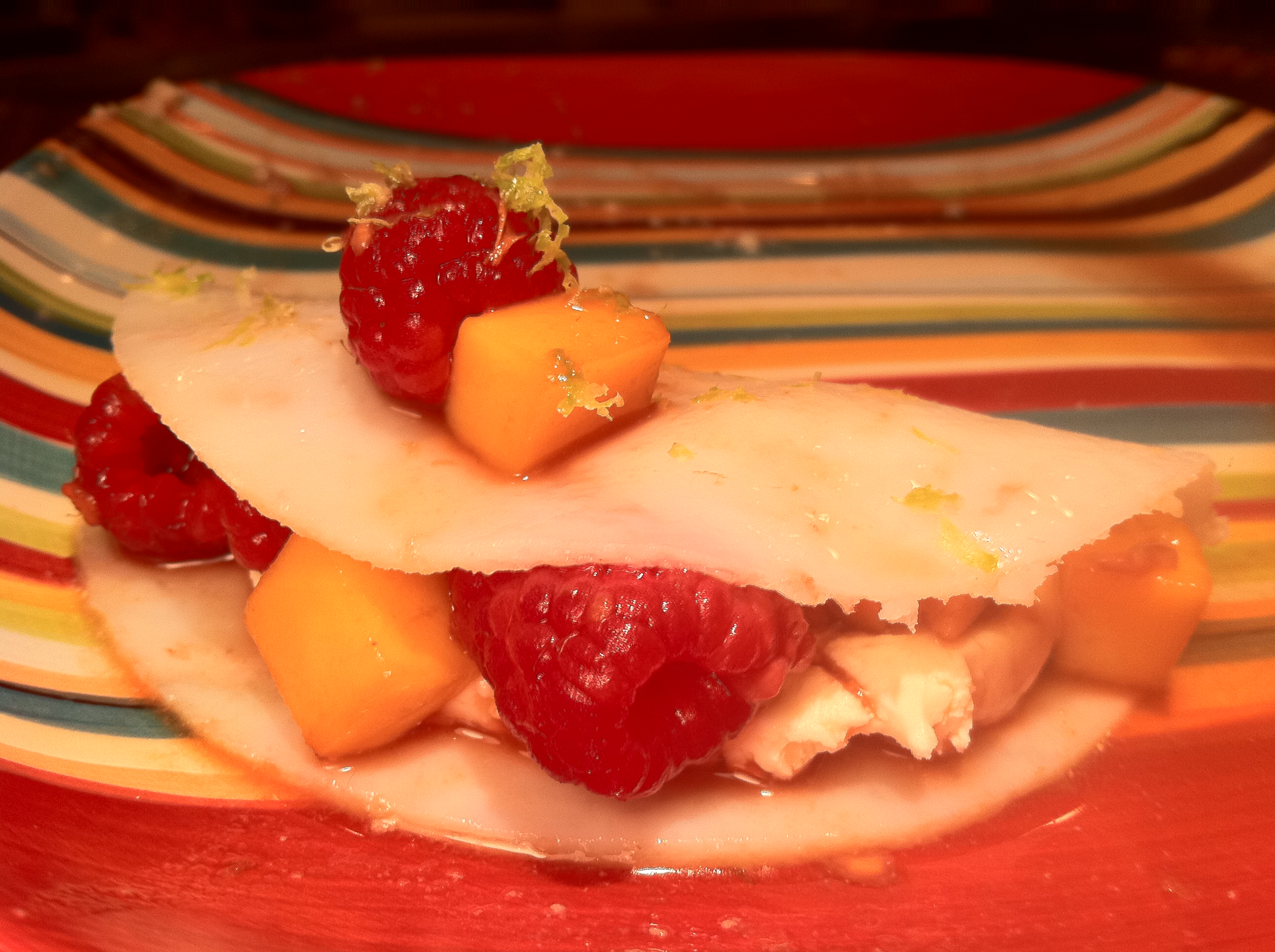
I cut some rounds out of it and prepared a sweet dish and a savory dish with them.


Sweet Shrimp Crepe

Shrimp meat crepe with raspberries and mango in a sesame/soy glaze with mascarpone cheese


Savory Shrimp Crepe

Shrimp meat crepe with spanish rice, avocado and baby arugula with a chipotle tartar sauce


Both of us are very excited with the results and have a lot of ideas of what to do next.  For example, the tortilla could have easily been cut into strips for shrimp noodles instead of crepes.  As long as we avoid inhaling the stuff, TG looks to be a fun new component to cook with in the kitchen.

Jethro

Meeting Six: Eggs, Foamlette 1.0, and Bone Marrow Creme Brulee

16 Thursday Sep 2010

Posted by ericriveracooks in emulsions, foams, sous vide, vacuum sealing

≈ 4 Comments

Tags

Blog, Bone Marrow, Cooking Blog, Creme Brulee, Egg, Food, Recipe

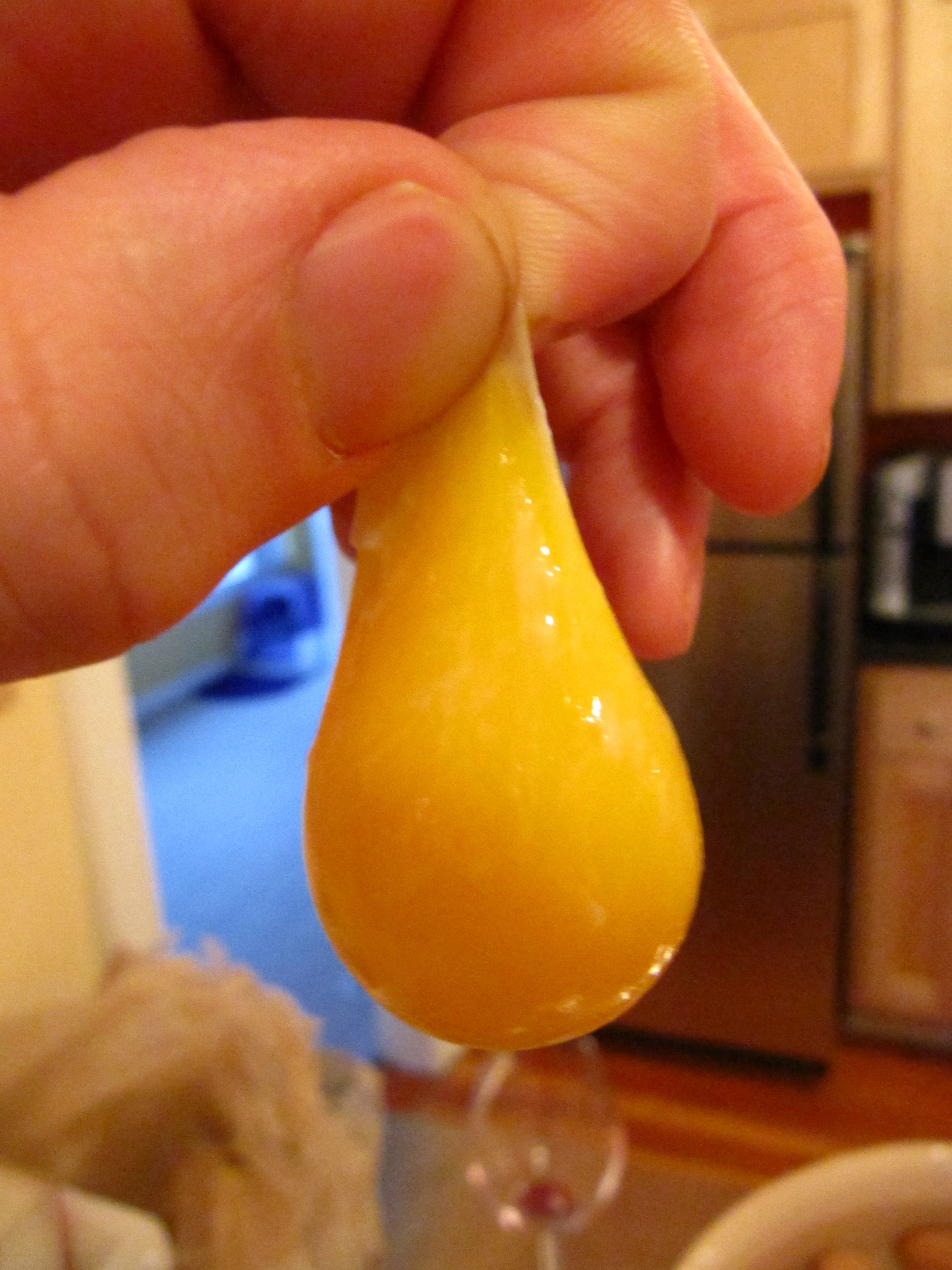
That’s an egg yolk.

I got together with the guys at Jet City Gastrophysics to work on some projects.  This time our theme was eggs.  It reminded me of my favorite week at school which was egg week.  We had a ton of eggs to cook in every which way possible but we never tried Sous Vide.

Scott was borrowing a machine that Polyscience lent him as well as another machine that he built…the guy is a freaking genius. He had the two baths set up at different temperatures in order for our creative juices to start flowing.

We tried to make a foam mayonnaise but it didn’t turn out the way we wanted….just need more practice and time and I’m sure we’ll get it. On the last foam mayonnaise Scott decided to torch it and it gave us a nice “foamlette” which I wrapped around some salami.  It’s a work in progress.

Next up was another idea from Scott.  ”We should deep fry one of these egg yolks”.  I said, “yeah, we could do that it would be easy”.   A little standard breading procedure and some seasoned flour later we came up with this.   Perfect the first two times we tried it….it’s almost like I fry things a lot at work or something…..

These little things are incredible.  You’ll be seeing them a few more times on this site (waiting on the pancetta to be ready).

Finally, Jeth brought over some bone marrow and he put it in the immersion circulator and cooked it for 45 minutes.  When it came out we tasted it on bread with a little sea salt and it was amazing but then we all studied the texture which was very delicate and creamy.  We were thinking about what else we could do with it.  I thought, “well, we have egg yolks, you have sugar, and cream……let’s make a creme brulee”.  Made those a few thousand times………but this time was with BONE MARROW!!!!!!!!!!!!!!!!!!!!!!!!!!!!!!!!!!!!!!!!!!!!!!!

We had to leave before the creme brulee was completed so Scott snapped this picture and sent it to me.  His reaction to it leads me to believe that it was something I should make again.  (PHOTO COURTESY OF SCOTT AKA SEATTLEFOODGEEK.COM)

Eric

[Originally posted at ericriveracooks.com]

The Fat Duck At Home: Red Cabbage Gazpacho, Pommery Mustard Ice Cream

13 Monday Sep 2010

Posted by jethro in recipes, vacuum sealing

≈ 6 Comments

Tags

gazpacho, Heston Blumenthal, ice cream, Pommery mustard, red cabbage, The Fat Duck

Taking On The Fat Duck

The Fat Duck Cookbook by Heston Blumenthal is the first cookbook I have ever read like a book instead of as a reference, skimming for recipes. It is a highly engaging, thoughtful, funny and educational work that sets the bar high for future cookbooks. It’s an incredible resource, and I’m sure the large volume is something else entirely.

After reading Part I: History, I was excited to enter into the meat of the volume, Part II: Recipes.  I looked to see what could be accomplished in a relatively short period of time, a recipe that didn’t have 58 separate preparations to be made over the course of a week before putting it all together.  I settled on Red Cabbage Gazpacho, Pommery Grain Mustard Ice Cream.  It had only four components, and the only ‘advanced’ portion was the use of a chamber vacuum sealer.  Since I have one, I need to consistently justify its expense, so this was perfect.

I got my shopping list in order, and collected all of the ingredients necessary. As this was my first Fat Duck dish, I decided not to cut corners, and got the best I could find.  For example, the eggs and milk were local from the Pike Place Creamery, and the cucumbers from the Columbia City Farmer’s Market.  Gathered all together, it seemed like a manageable task.  “I can do this,” I thought to myself.  And so I began my journey into the heart of The Fat Duck.
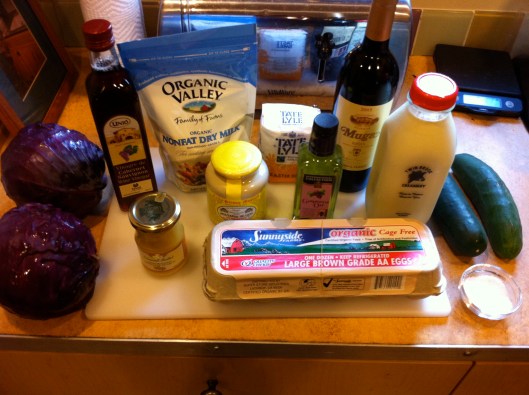
The Ingredients

The Cast Of Characters

Step One: Pommery Mustard Ice Cream
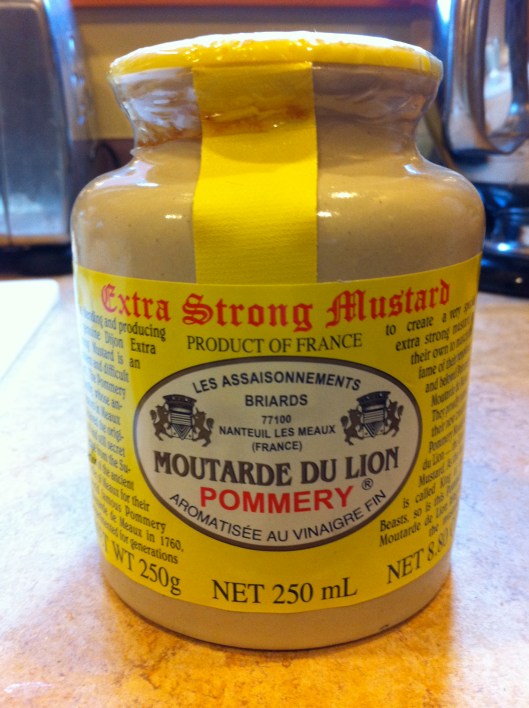
Pommery Mustard

I began, as can happen so often, with a variation on the dish.  I searched high and low for Pommery grain mustard, but to no avail.  I did find two other types of Pommery mustard, so I had to decide.  Should I go with a Dijon grain mustard or a grainless Pommery?  I had never had Pommery mustard before, and the recipe calls for Dijon for the mayonnaise.  I figured I should go for the more authentic flavor profile the recipe asks for than the texture profile.  I went grainless.

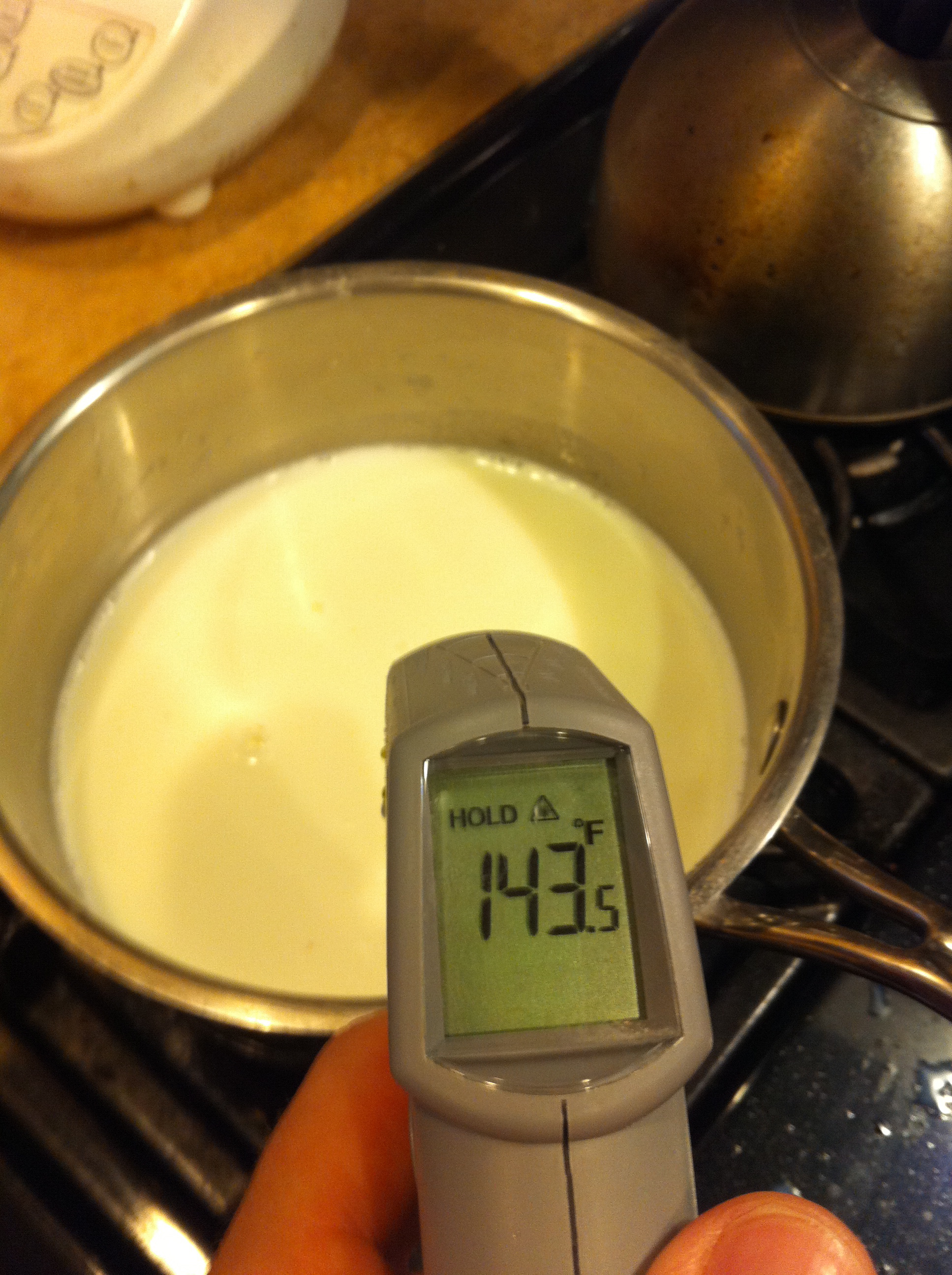
The recipe was straight forward except perhaps for the exacting temperature readings.  Instead of simmering but not boiling, it is supposed to start at 140F and go up to 160F.  Wanting to follow the recipe to the letter, I obliged:
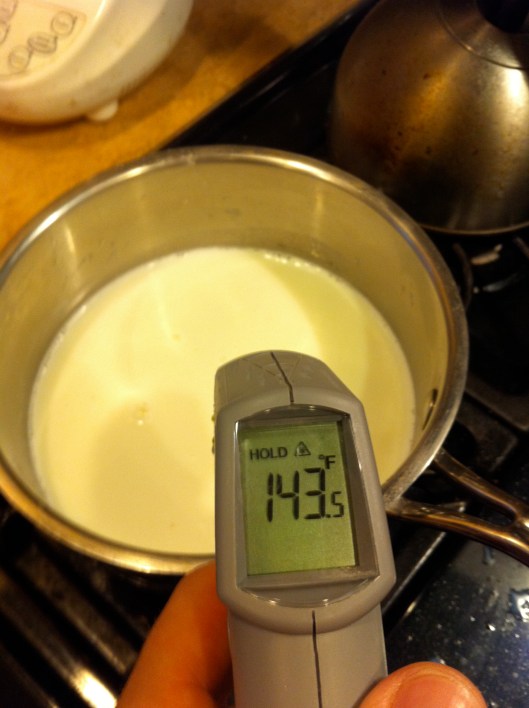
Cooking the base

Otherwise it was what one would expect, except you’re putting in mustard instead of chocolate or the like.  After a go in the ice cream maker, I had the first component made.

Pommery Mustard Ice Cream

My Very First Ice Cream

A funny thing: this was the first ice cream I’ve ever made.  If you know me, it completely makes sense that it would be savory instead of sweet.  Of course it is.

Step Two: red wine Mayonnaise

This component calls for 30g of red wine.  Since it was a riff on a Spanish dish, I figured a Spanish wine was appropriate, so I chose a bottle of Muga Rioja.  Not only is this a fantastic wine but it also gave me something to drink while cooking, which seems just so perfectly breezy and debonair.
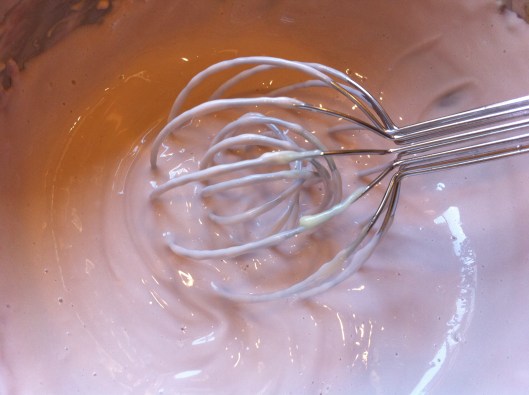
Cabernet Savignon Mayonnaise

It too came together quite nicely, and ended up having a wonderful extra benefit: leftovers.  Adding it the following week to tuna made a quick sandwich an elevated experience.

Step three: Red Cabbage Gazpacho
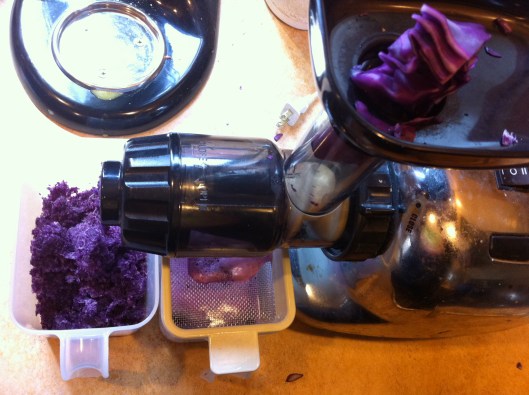
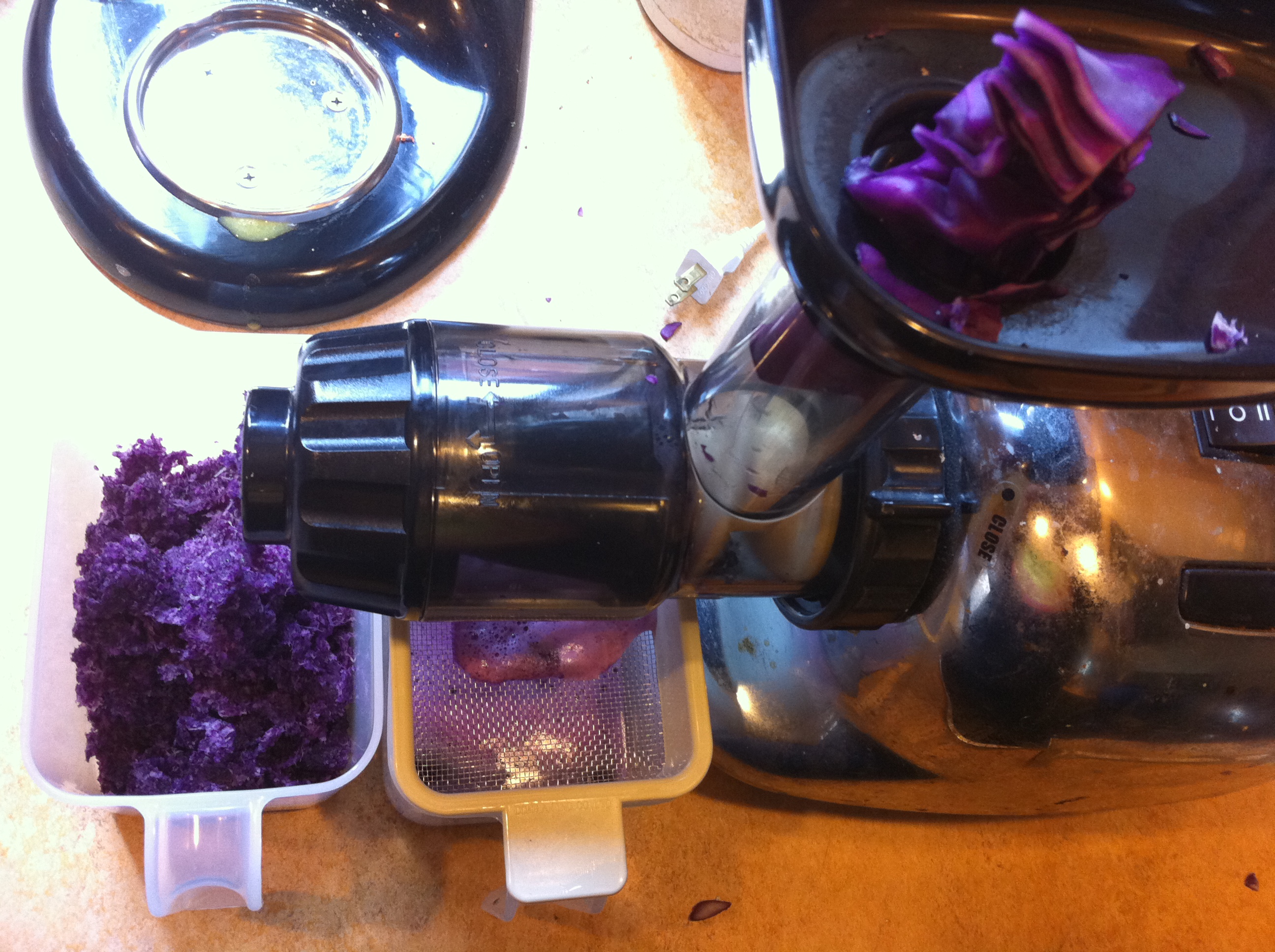
Juicing The Cabbage

Purple In, Purple Out

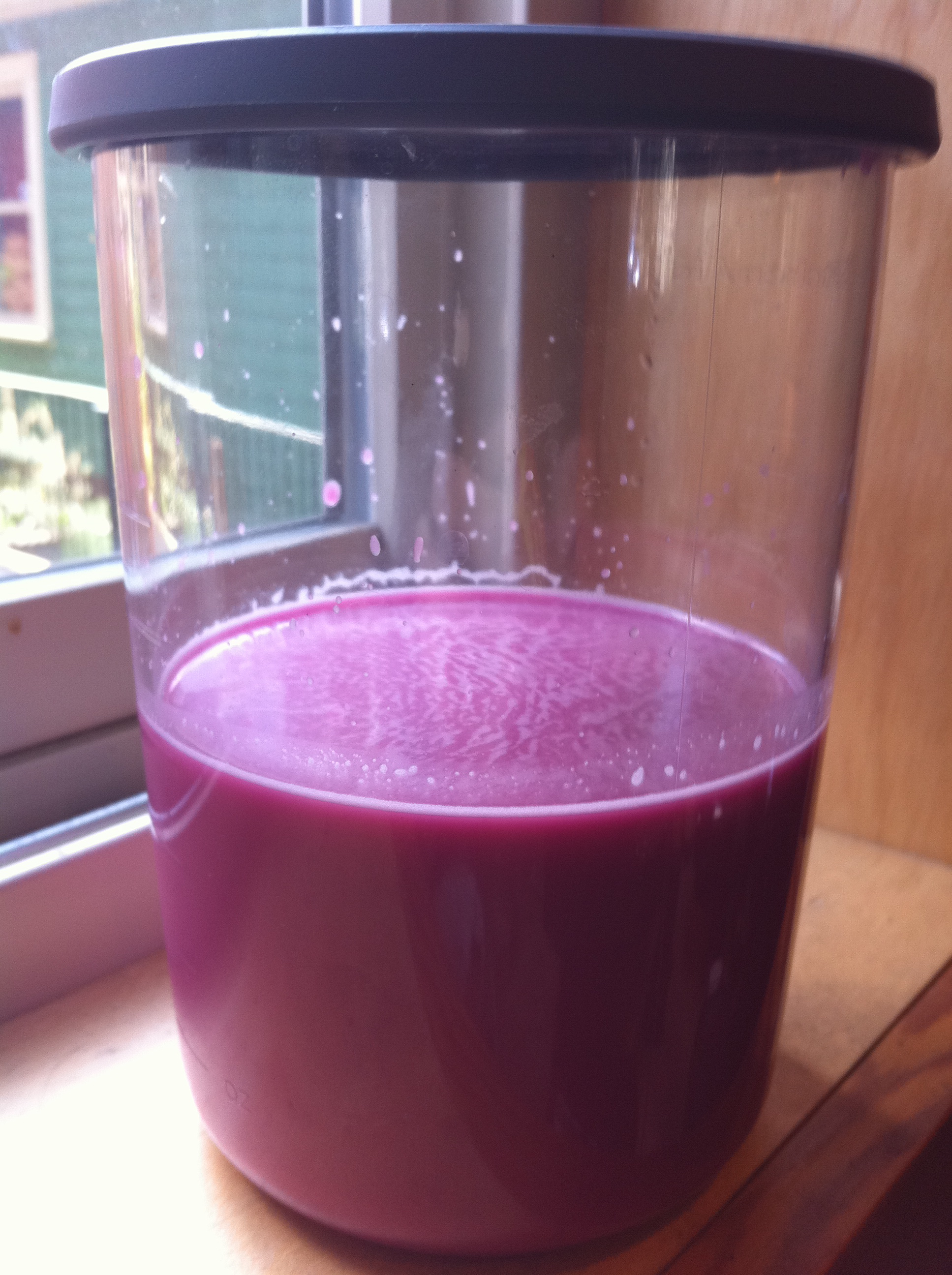
The next component up was the gazpacho itself.  Red cabbage is such an inspired choice.  The color and intense flavor of the cabbage is a real attention getter.  The next step was inspired as well.  In a traditional gazpacho recipe, week old bread is added to the vegetables and mushed together in a mortar.  Here, he apparently wanted to have a bread flavor, but not the texture.  So the recipe calls for having two pieces of bread soak in the cabbage juice for two hours, then have it strained.

Straining the gazpacho

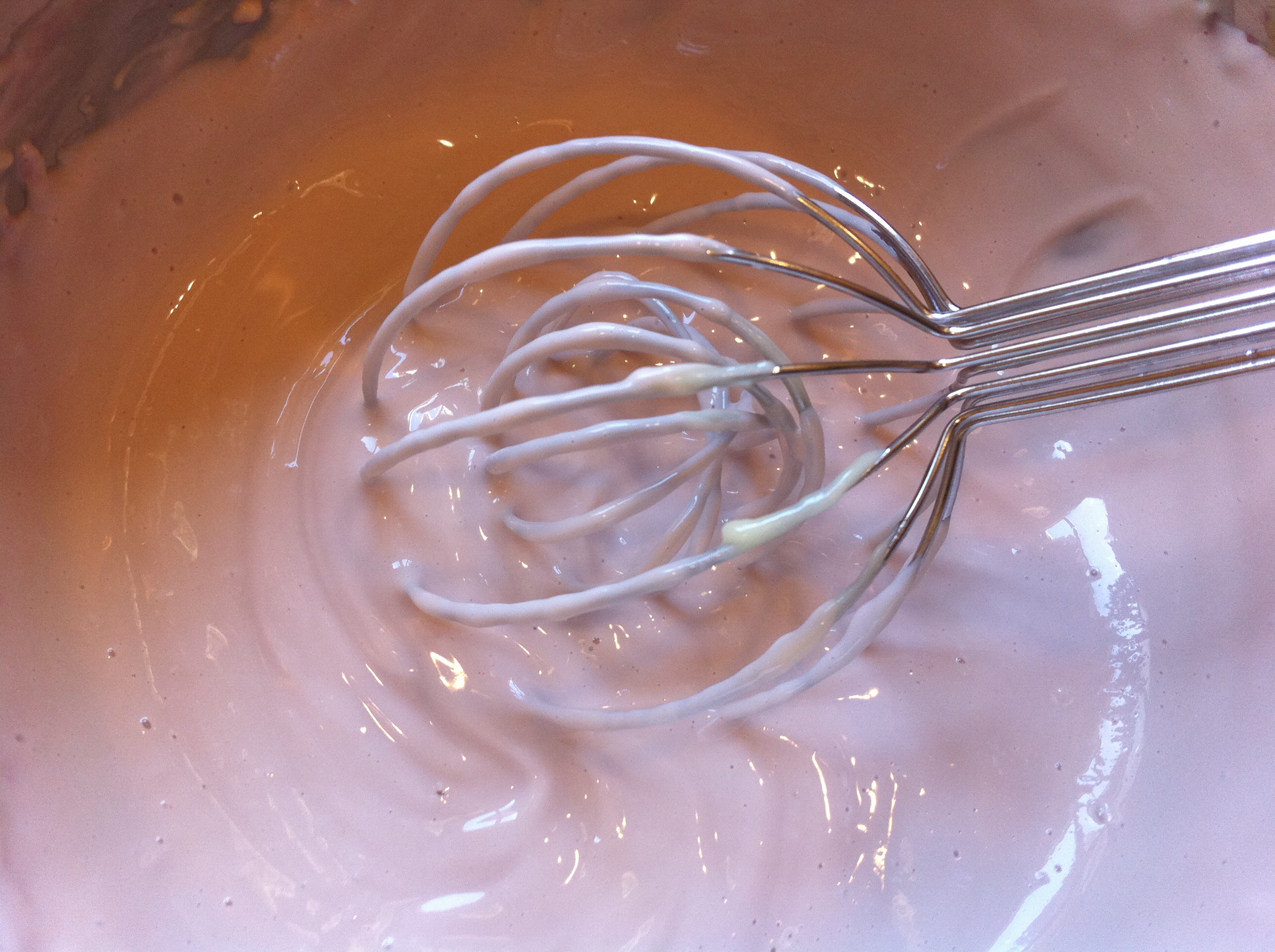
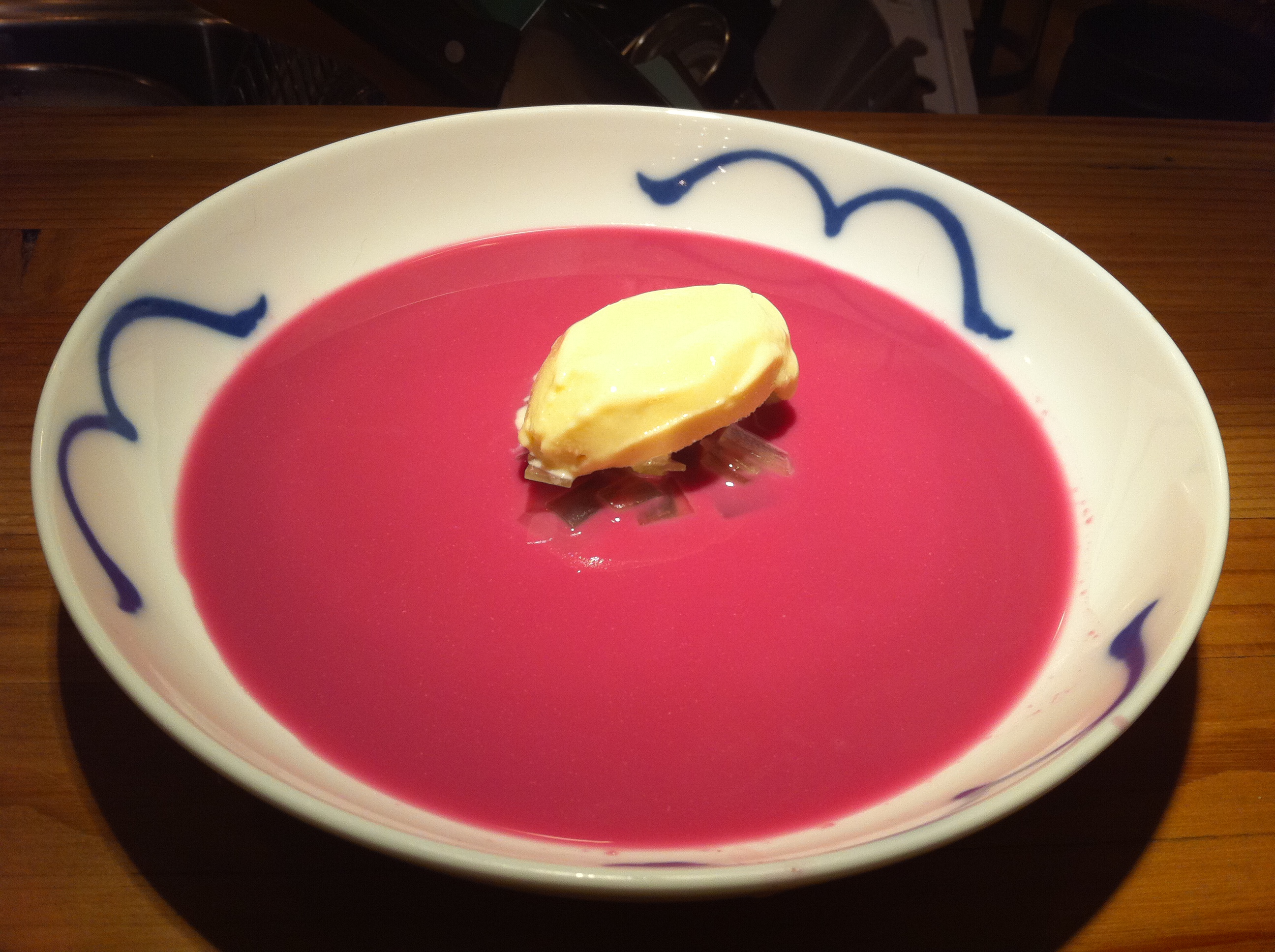
Finally, I added in the mayonnaise with some red wine vinegar and salt.  My first gazpacho was made, and it was a brilliant fuchsia.
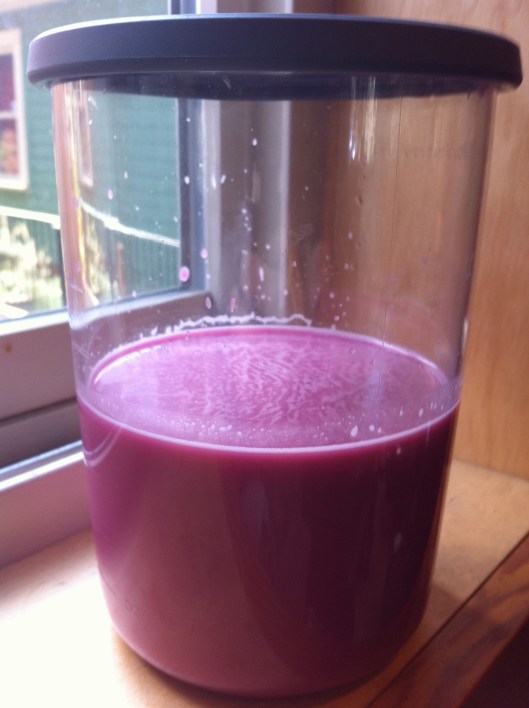
Red Cabbage Gazpacho

Gazpacho, Blumenthal style

Step Four: Cucumber brunoise

I saved this for last because this was going to be simple.  I mean, there’s only one ingredient: cucumbers.  I was terribly mistaken.

First, the cucumber needed to be sliced with a mandolin.  I had gone earlier into a Ross “Dress for Less” store to grab one.  Yes, this too was my first time using a mandolin.  I have made coffee caviar and perfect sous vide eggs, but never had needed to slice anything thinly and uniformly.  I know, backwards.  That’s how I do it.
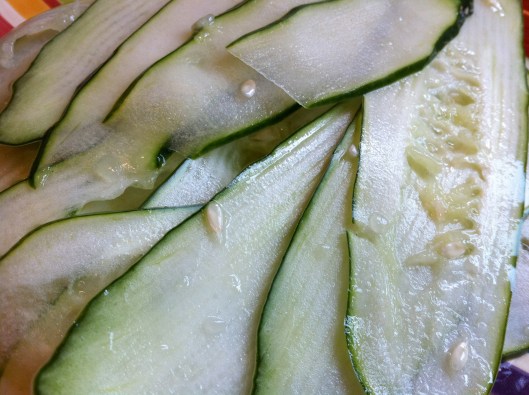
Cucumber Through the Mandolin

The next part was appliance justification, or, more appropriately, vacuum sealing.  He writes that:

As air is removed and the sous-vide bag constricts, the cucumber compresses, breaking the cell walls in an even, controlled fashion and allowing the juice they contain to combine.  Repeating the processes condenses and concentrates further. When the cucumber is removed from the bag it retains its structure but has a denser texture, a fuller flavour and – because of the removal of the air – a more intense jade-green colour.

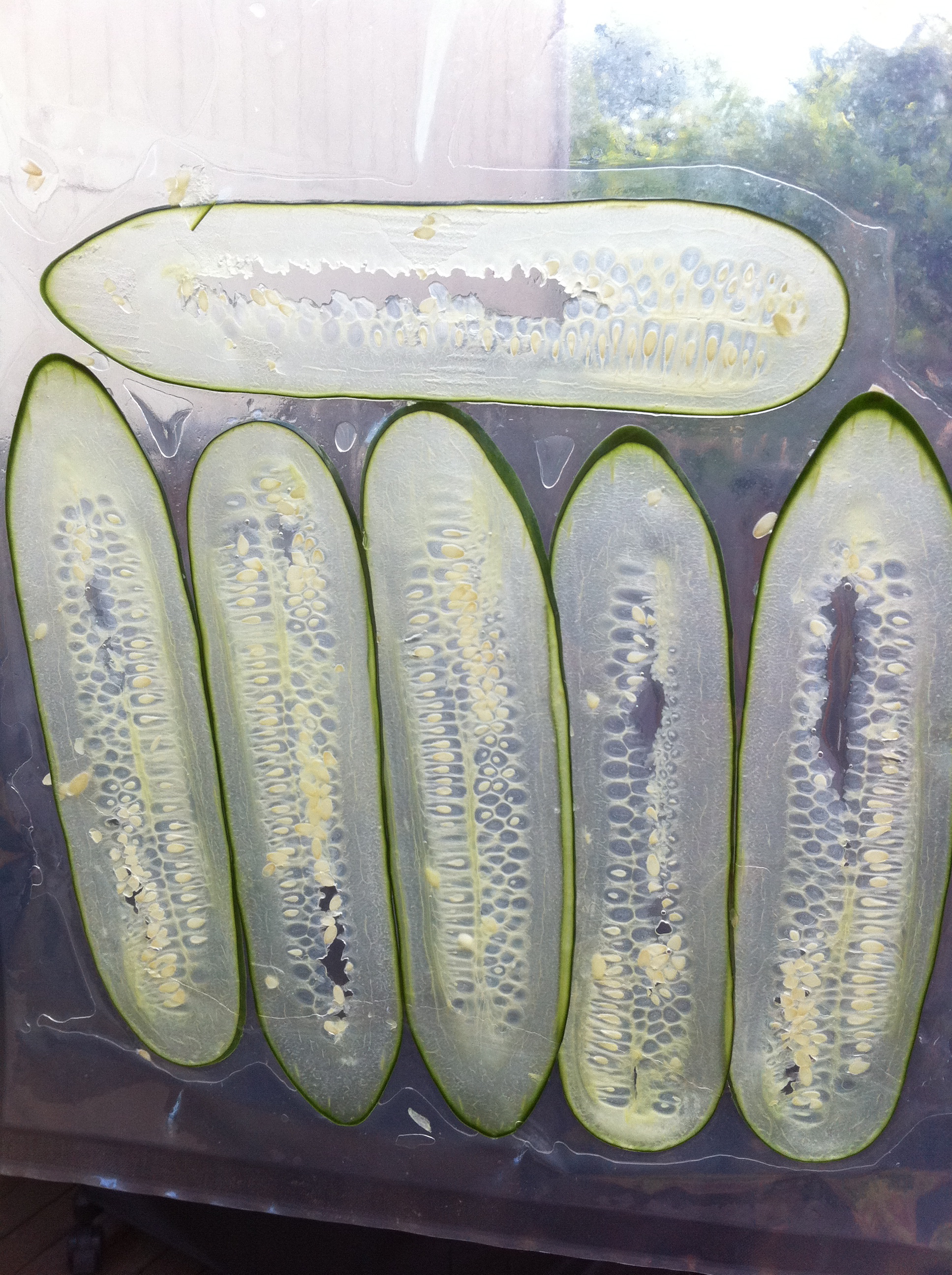
I thought it was interesting that he requires the vacuum process twice.  Once I did it though, it became clear. Literally.

Vacuumed Sealed Cucumber

Transparent Cukes

Ah, now I’m seeing where this is going!  All I have to do now is cut it up:

Remove the cucumber from the bag, then trim off and discard the skin and seeds.

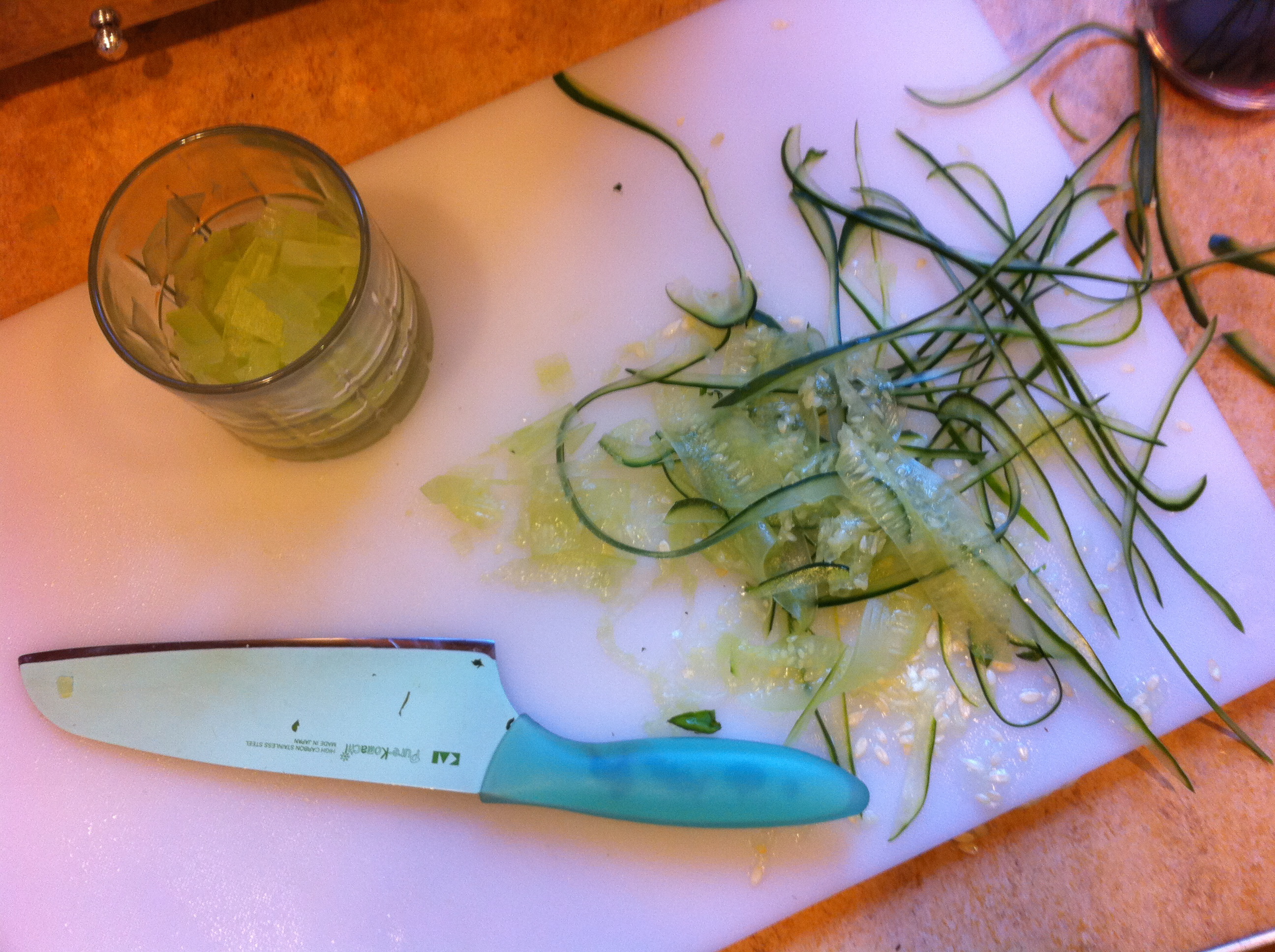
This proved to almost be my undoing.  From such a simple instruction was launched a time intensive display of tedious, repetitive, meticulous surgery. Slice after slice of paper thin cucumber went under my knife.  My dinner guests were arriving shortly, and I had other things I needed to attend to.  I hadn’t prepared for such drudgery. It was an important lesson in not only reading a recipe but visualizing the steps in order to make sure you know what you’re getting into.

Seed and Peel Removal

I've Had More Fun Than This

But the result was worth it.  Little jade chips of cucumber.  They were so cool. Genius, really.
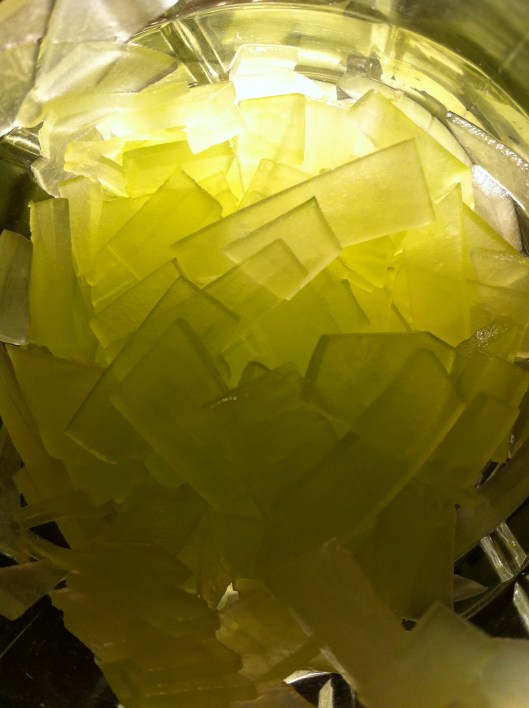
Cucumber Brunoise

The completed dish

Red Cabbage Gazpacho with Pommery Mustard Ice Cream

My First Blumenthal

With all the components created, all that was needed was to put it together.  Here I strayed from the recipe.  It calls for 2g of cucumbers to be plated.  At this point, this was course three of five for the dinner and I was just trying to get it out on the table, so I put what looked right to me.  I plunked down some cucumber, a rocher of ice cream (yes, you guessed it – my first attempt at making quenelles), and poured the gazpacho in.

It was a delicious, if complex, interplay of flavors. The sharpness of the red cabbage came at you first, and up to a point where it could be too much, but then the mayonnaise came in to soften the blow, with bright notes underneath from the cucumber.  The creaminess of the mustard ice cream had a fantastic texture counterpoint with the crunchiness of the cucumber brunoise. I think if there was grain in the mustard, that would have been another texture that really would enhance the dish.  Regardless, it was a complete success.

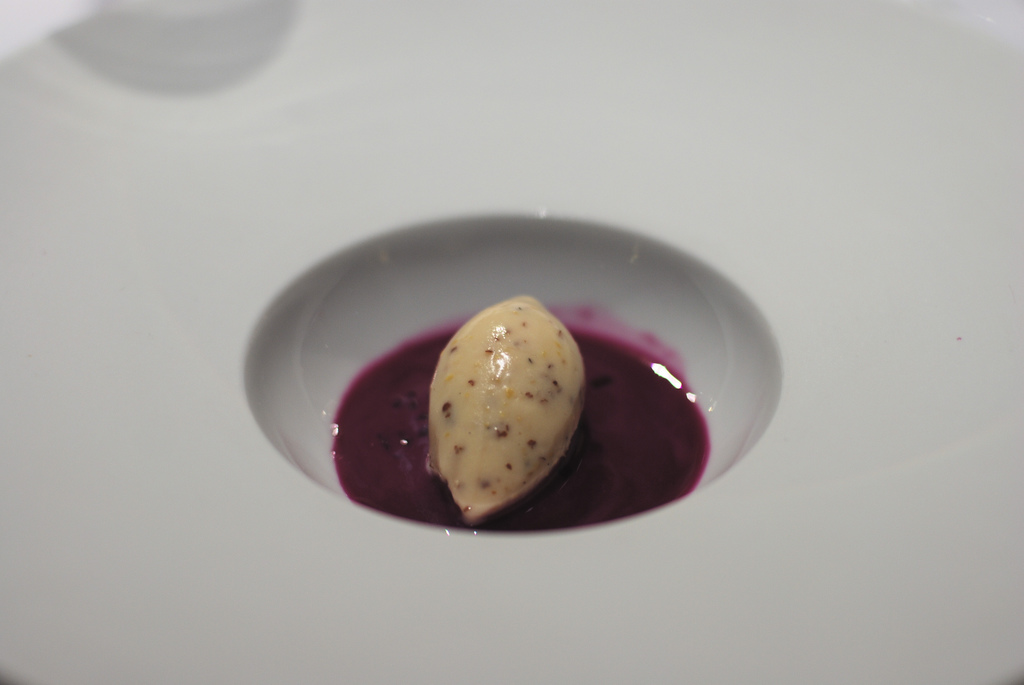
Which it all that matters, of course.  Except I was surfing the Internet  a couple of weeks later and came across an actual photo of the dish:

The Real Thing at The Fat Duck

The Real Thing at The Fat Duck (photo credit: dbriones)

I certainly got my portions wrong, but the color is what intrigues me the most.  I had that color before I added the mayonnaise.  But once I did (with exact measurements per the recipe, of course),  the color changed.  Somehow his has not.  Perhaps the mayonnaise sits underneath the ice cream?  Contact me if you happen to know.  Otherwise, I suppose I’ll have to fly out to Bray myself and find out.

But I can’t beat myself up too much.  Less than nine months prior, I was ordering take out teriyaki to feed myself.  Now I was serving a dish from one of the best restaurants in the world to my friends that I made in my little kitchen.  I thought I could do it, and I did.  Now I have my eye on the Salmon Poached in a Liquorice Gel.  Why not?

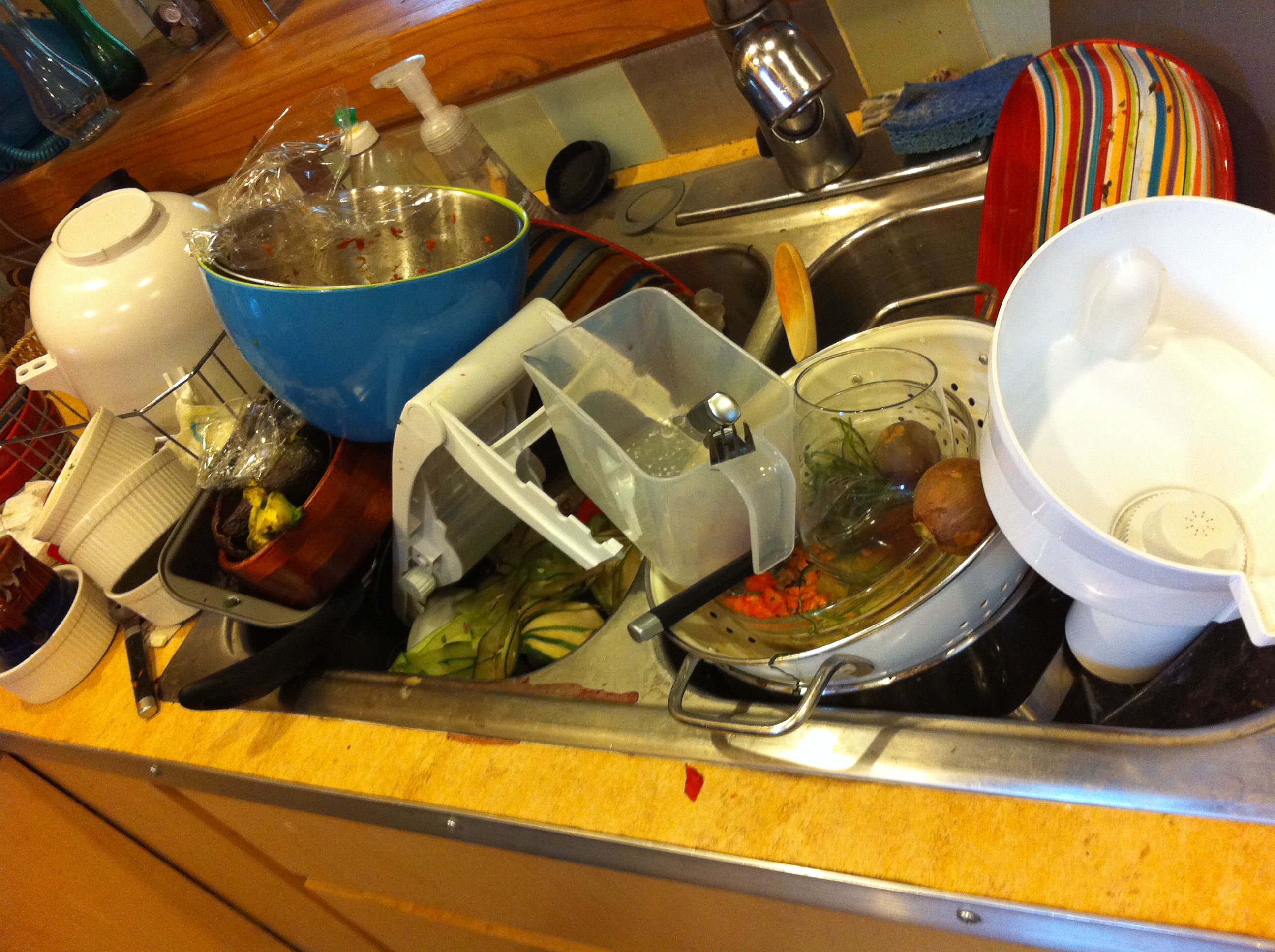
But first, I have some cleaning up to do.
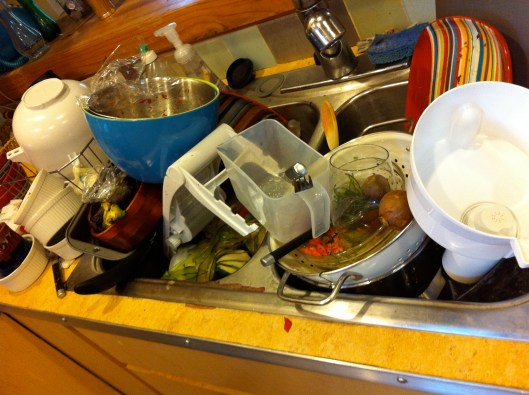
Clean Up Time

Jethro

Update 9/22/10: Since posting this, I did a little Google image search on “red cabbage gazpacho fat duck” and found several pictures from The Fat Duck where the color of the gazpacho matches my own.  Seems the color is more an issue of lighting and camera ability than the dish itself.  Nice to see they didn’t water down the cookbook and keep the secret all to themselves!

Update 9/27/10: I wrote The Fat Duck to see if they had any insights, and sure enough, they did reply:

Thank you for your internet enquiry and for sending us the picture of your red cabbage gazpacho. I have discussed it with the chefs here at the Fat Duck and they offer the following possible explanations:

1. There was less mayonnaise used in the dish in the Fat Duck picture – it is correct to mix the mayonnaise with the red cabbage but it would appear that the photograph is a particularly dark colour. It is usually somewhere in between this dark version and your fuchsia version. Less mayonnaise would make it a little darker but no less pink which makes me think that suggestion no 2 could be the problem?
2. Too much of the white of the cabbage has been juiced with the leaves – at the Fat Duck, they are extremely vigilant and obsessive when it comes to cutting out all the white parts of the cabbage (it is easy to expect this level of attention to detail when you have 36 chefs!). It is wasteful but it guarantees a glorious purple colour rather than a pinker colour. Might this have been the problem?
3. Or it could just be your particular cabbage! According to the chefs, the colour of the soup does vary from time to time. It could be due to the season or the size of the cabbage or simply how fresh it is – no one is quite sure.

I do hope you try again and get better, more purple results. Personally, I think it tastes good whatever the colour!

I commend them for taking the time to write a home cook across the ocean to help out with minor details such as the color.  Although I did core the cabbage, I didn’t carefully strip out all the white, so that along with the amount of mayonnaise most likely was the culprit.  I am now prepared for the next time I give it a go!
Meeting Four: Vacuum Sealing and the DIY Anti-Griddle

08 Wednesday Sep 2010

Posted by jethro in dry ice, vacuum sealing

≈ 6 Comments

Tags

anti-griddle, flash freezing, flash pickling

Jet City Gastrophysics had our fourth meeting in June of this year. Eric was busy working at Canlis and Blueacre, so it was up to Scott and myself to boldly forge ahead.

Vacuum Sealing

Back in May, I was scanning eBay and came across an honest-to-goodness chamber vacuum sealer with 1500 bags included.  The price was steep, but it was still 40% cheaper than getting the thing new with the bags as well.  There are many other things that I can put that money to work on, I thought to myself.  Whatever. I grabbed it.

The VacMaster

My Sweet Little Baby

And so we set about playing with it. Just sealing the watermelon alone, its clear how the color becomes much more intense.

Vacuum Sealed Watermelon

Taking a cue from Cat Cora on Iron Chef, we took slices of watermelon and sealed them with V8 juice.  Incredible.  The watermelon loses its flavor as the V8 takes over, yet retains its texture.  Your mouth doesn’t quite know what’s going on.  It would make a perfect garnish for a Bloody Mary.

The takeaway is that the watermelon’s structure survives but the flavor can be replaced with something else.  We were thinking of other foods with similar structures.  I know of some fruit I’ve had in Taiwan but I can’t recall the name.

Next up we tried flash pickling cucumber slices by vacuuming.  It definitely worked, but as neither of us had pickled anything before, we improvised the ingredients – white vinegar, sugar, salt, rosemary – with mixed results.  With a little practice we’ll nail it.

Instant Pickles

Instant Pickles, Please

DIY Anti-Griddle

The anti-griddle is the brainchild of Chef Grant Achatz at Alinea in Chicago.  The whole concept is instead of heating/frying something on a griddle, you freeze it instead. Buying one of these new can set you back $1200, which seems a little pricey for a home appliance that won’t be used everyday.  And besides, I had just started making payments on my vacuum sealer. What?  I’ll use THAT everyday. C’mon.

So we made our own. The ingredients:

  1. One block of dry ice (purchased at my local supermarket)
  2. A cookie sheet
  3. A towel

We set the towel down, put the dry ice block on top of it, and the cookie sheet on top of that.  Within minutes we had an extremely cold surface to ‘cook’ on. We tried flash freezing chocolate sauce, honey, olive oil, balsamic vinegar, raspberry jelly, watermelon and strawberries.  The honey with a short freezing time was great – the consistency was taffy-like.  The other one that worked best was a small coin of Dilettante chocolate sauce with a strawberry on top with lime zest.  A lovely little treat.

DIY Anti-Griddle

Fun with Flash Freezing

What needs further study is to nail down what products work best and what time is required to let them freeze to the right consistency.  Otherwise they get over-frozen, the anti-griddle’s analog to burning. Freezing liquids seem to taste better than solids (the watermelon and strawberries were ‘meh’).  Another issue is that because the DIY anti-griddle is a block of dry ice, you can’t control the temperature.  It’s kind of like having a griddle that’s only set to ‘High’.  So, given that restriction, what works best on its ‘setting’ is key.

And if that requires eating more chocolate, strawberries and honey, well then, call me a research scientist.

Jethro

Newer posts →

Search

Categories

From the Twitterverse

Tweets by jcgastrophysics

Feed Yourself

  • RSS - Posts

Recent Posts

  • Ferran In America
  • That One Time We Applied For A Food Patent
  • Ideas In Food At Home: Coffee Onion Rings
  • BOOM: Sansaire Circulator Raises $823k On Kickstarter
  • Dining Northwest Style at The Willows Inn
  • Sansaire, The $199 Circulator: A Brief History
  • Modernist Cuisine At Home: Barbeque Rubs And Another Sauce
  • Modernist Cuisine At Home: More Barbeque Sauces
  • The Price Of Cooking Modernist Cuisine, Part IV: More Gadgets, Ingredients and Resources
  • Modernist Cuisine At Home: Compressed Melon Terrine
  • That One Time We Were Nominated For Best Culinary Science Blog
  • Gastrophysics Labs Closes Doors; Reopens As A “Kitchen”

From the Archives

  • March 2014
  • November 2013
  • September 2013
  • August 2013
  • July 2013
  • May 2013
  • April 2013
  • March 2013
  • February 2013
  • January 2013
  • December 2012
  • November 2012
  • October 2012
  • September 2012
  • August 2012
  • July 2012
  • June 2012
  • May 2012
  • April 2012
  • March 2012
  • February 2012
  • January 2012
  • December 2011
  • November 2011
  • October 2011
  • September 2011
  • August 2011
  • July 2011
  • June 2011
  • May 2011
  • April 2011
  • March 2011
  • February 2011
  • January 2011
  • December 2010
  • November 2010
  • October 2010
  • September 2010
  • August 2010

Blogroll

  • A Practical Guide to Sous Vide Cooking
  • Alinea At Home
  • Chef Rubber
  • Cooking Issues
  • eGullet
  • Eric Rivera's Cooking Blog
  • Ideas In Food
  • Khymos
  • L'epicerie
  • LeSanctuaire
  • Modernist Cuisine
  • Modernist Pantry
  • Seattle Food Geek
  • Studio Kitchen
  • The Alinea Project
  • Willequipped
  • Willpowder

  • ericriveracooks's avatar ericriveracooks
  • jethro's avatar jethro
  • sheimend's avatar sheimend

Blog at WordPress.com.

Privacy & Cookies: This site uses cookies. By continuing to use this website, you agree to their use.
To find out more, including how to control cookies, see here: Cookie Policy
  • Subscribe Subscribed
    • Jet City Gastrophysics
    • Join 161 other subscribers
    • Already have a WordPress.com account? Log in now.
    • Jet City Gastrophysics
    • Subscribe Subscribed
    • Sign up
    • Log in
    • Report this content
    • View site in Reader
    • Manage subscriptions
    • Collapse this bar
 

Loading Comments...